

P0088 on 2019-2021 Kia Sedona: Fuel Pressure Too High Causes & Fixes
On a 2019-2021 Kia Sedona, the P0088 code almost always means the high-pressure fuel pump (HPFP) has failed. This is a well-documented factory defect. Kia has a warranty extension program (WTY034) for this exact issue, so contact a dealer with your VIN to see if the repair is covered for free (15 years / 180,000 miles) before paying for any parts.
- P0088 on a 2019-2021 Sedona is almost certainly a failed high-pressure fuel pump (HPFP) due to a known manufacturing defect.
- **Do not buy any parts first.** Immediately call a Kia dealer with your VIN to check if you are covered by the WTY034 warranty extension (15 years / 180,000 miles), which could make the repair free.
- Driving with this code is risky; the vehicle could stall or lose power suddenly.
- If the pump is replaced, the high-pressure fuel pipe and mounting bolts must also be replaced to prevent leaks, as per Kia's official procedure.
What's Unique About the 2019-2021 Kia SEDONA

The 3.3L GDI V6 engine used in the 2019-2021 Sedona is known for a specific manufacturing defect in its high-pressure fuel pump (HPFP). According to Kia's own technical service bulletin, "The fuel control valve (FCV) plunger in the vehicle's high-pressure fuel pump may wear unevenly, and, over time, become stuck in the open position," causing uncontrolled and excessive fuel pressure. This problem is so widespread that Kia issued TSB FUE067 and a corresponding warranty extension program (WTY034) to address it, making the HPFP the number one cause by a wide margin.
Diagnostic Flowchart

Tap your situation to follow the diagnostic path that matches what you're seeing on this vehicle.
Symptoms You May Notice
- Check Engine Light is on
- Rough running or rough idle
- Engine hesitation or stumbling during acceleration
- Reduced engine power or 'limp mode'
- Engine may shut off when the vehicle comes to a stop (but can be restarted immediately by shifting to Park or Neutral).
- Strong smell of fuel in the cabin or engine bay
- Gasoline smell in the engine oil (indicates a severe internal pump leak requiring immediate attention). 🎬 Watch: Common symptoms of a failing high-pressure fuel pump.
- Replacing the in-tank low-pressure fuel pump, which does not cause excessive pressure in the high-pressure rail.
- Replacing the fuel rail pressure sensor when the high-pressure fuel pump is the actual mechanical cause of the high pressure, as is almost always the case on this vehicle.
Most Likely Causes

- Failing High-Pressure Fuel Pump (HPFP) 🔴 High Probability A known defect causes the fuel control valve (FCV) plunger inside the pump to wear unevenly and stick in the open position, leading to over-pressurization. This is documented in Kia TSB FUE067.
How to confirm: Confirm with a Kia dealer if your vehicle's VIN is covered under the WTY034 warranty extension program. A technician will scan for DTC P0088 to verify the condition, which is the primary step required by the TSB for warranty coverage.
Typical fix: Replace the high-pressure fuel pump, the associated high-pressure fuel pipe, and the one-time-use mounting bolts. 🎬 Watch: Step-by-step guide to replacing the high-pressure fuel pump. This is a non-negotiable requirement of the official TSB repair.
Est. part cost: $0 (if under warranty), $400-$1200 (if not covered) - Faulty Fuel Rail Pressure Sensor (FRPS) ⚪ Low Probability
How to confirm: Use a scan tool to monitor live fuel pressure data. If the pressure reading is erratically high but the engine runs normally, the sensor may be faulty. A technician can compare the sensor's reading to a mechanical pressure gauge. 🎬 See how to diagnose P0088 and test the pressure sensor. However, this is rarely the cause on this platform.
Typical fix: Replace the fuel rail pressure sensor.
Est. part cost: $50-$150 - Wiring or Connector Issue ⚪ Low Probability
How to confirm: Visually inspect the wiring harness and connectors for the fuel rail pressure sensor and high-pressure fuel pump for any signs of damage, corrosion, or looseness. A short in the sensor circuit can cause a false high reading.
Typical fix: Repair or replace the damaged section of the wiring harness or the connector.
Est. part cost: $10-$100
Diagnosis Steps
- Check for Technical Service Bulletins (TSBs). For this vehicle, TSB FUE067 and warranty extension WTY034 are critical.
- Contact a Kia dealership with your Vehicle Identification Number (VIN) to determine if the high-pressure fuel pump is covered under the warranty extension program (15 years / 180,000 miles). The TSB applies to Sedonas manufactured from February 13, 2018, through July 8, 2020.
- If proceeding with a dealer diagnosis for warranty, be aware they must create a Vehicle Diagnosis Number (VDN) linked to DTC P0088 to process the claim.
- If not covered, use a diagnostic scan tool to confirm P0088 is the active code.
- Monitor the live fuel rail pressure data on the scan tool. Observe if the 'actual' pressure is significantly higher than the 'desired' pressure, confirming a real overpressure event.
- If the scan tool confirms excessively high pressure and the sensor wiring appears intact, the high-pressure fuel pump is the confirmed cause.
- Before replacement, a technician must release the residual pressure in the fuel line following the official service procedure to prevent injury and fire risk.
Parts You'll Likely Need

- High-Pressure Fuel Pump (HPFP)
(OEM #35320-3L110)— This is the primary point of failure for this code on this specific vehicle, as acknowledged by Kia's warranty extension.
Trusted brands: Kia (OEM), Bosch, Delphi
OEM price range: $450-$1200
Aftermarket price range: $390-$700 - High-Pressure Fuel Pipe
(OEM #35305-2E510QQK)— This is a one-time use part that must be replaced any time the high-pressure fuel pump is replaced to ensure a proper seal, as mandated by the TSB. Note: Always confirm the exact part number with your vehicle's VIN.
Trusted brands: Kia (OEM)
OEM price range: $50-$80
Related Codes That Often Appear With This One
- P0087 — P0087 (Fuel Rail/System Pressure - Too Low) can sometimes appear alongside P0088 if the failing fuel pump or sensor is causing erratic pressure readings, both high and low, though P0088 alone is the specific trigger for the warranty extension.
Technical Service Bulletins (TSBs) & Recalls
- WTY034 / FUE067: Provides information on the warranty extension program to diagnose DTC P0088 and replace the high-pressure fuel pump. It specifies the cause as an unevenly worn fuel control valve (FCV) plunger that sticks open, causing over-pressurization.
Platform-Specific Known Issues
- Kia has issued a warranty extension (WTY034) for the high-pressure fuel pump on 2019-2021 Sedona models manufactured between February 13, 2018, and July 8, 2020. It extends coverage to 15 years or 180,000 miles for failures that specifically log DTC P0088.
Mechanic-Grade Diagnostic Values
- High-Pressure Fuel System (Live Data at Idle) — expected: ~40 bar (~580 PSI). Failure: Pressure reading on scan tool significantly exceeds the 'desired' pressure value, or is stuck at a maximum reading.
- High-Pressure Fuel System (Live Data under Load/Acceleration) — expected: Increases up to 140-150 bar (2030-2175 PSI). Failure: Pressure remains excessively high regardless of engine load or does not respond to changes in throttle.
- Fuel Rail Pressure Sensor (FRPS) Power Supply Voltage — expected: 5V (KOEO, connector unplugged, test between power wire and known good ground). Failure: No voltage or significantly incorrect voltage points to a wiring or PCM issue.
- Fuel Rail Pressure Sensor (FRPS) Signal Wire Voltage — expected: 5V (KOEO, connector unplugged, test between signal wire and known good ground). Failure: Incorrect voltage can indicate a short or open in the signal wire back to the PCM.
- FRPS Wiring Continuity to PCM — expected: < 1.0 Ω. Failure: High resistance or an open circuit (OL) indicates a broken wire in the harness.
Scan Tool Commands That Help
- Kia GDS/KDS (or equivalent professional scanner): Resetting Adaptive Values — After replacing the high-pressure fuel pump, this function should be used to clear the PCM's learned fuel trim and pressure adjustments, allowing it to re-learn with the new component.
- Kia GDS/KDS (or equivalent professional scanner): ECU Upgrade — In some cases related to fuel system recalls, Kia requires a mandatory ECU software update to improve limp-home logic. This is performed by the dealer after the repair.
- Advanced Bi-Directional Scanner: HPFP Spill Valve Test / Active Test — A technician can command the high-pressure pump's control valve to operate. If the pressure does not respond as expected during this active test, it helps confirm a faulty pump rather than a sensor or wiring issue.
OEM Part Supersession History
35320-3L110→35320-3L110 (same)— The replacement part provided under warranty carries the same base part number as the original.
Heads up: While the part number has not officially been superseded in public catalogs, it is likely that the internal components of the replacement pumps have been revised to correct the original defect. Always confirm the part number with a dealer using the vehicle's VIN.
Model Year Variations Within This Range
- 2019-2021: The warranty extension (WTY034) for the high-pressure fuel pump specifically applies to Sedona models manufactured from February 13, 2018, through July 8, 2020. A 2021 Sedona manufactured after this date may have the revised part from the factory and would not be covered under this specific TSB.
Helpful Videos
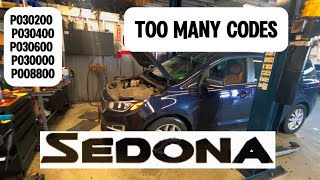
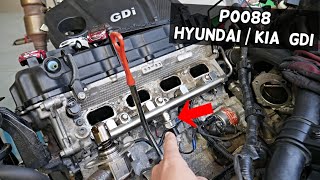
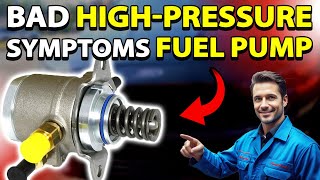
Used OEM Parts in Stock
New Aftermarket Parts Available


The information in this article is provided for general reference and educational purposes only. Vehicle specifications, procedures, and part compatibility can vary by production date, trim level, and region. Always consult your vehicle's factory service manual and verify part numbers before purchasing or performing repairs. Safety-critical components such as airbags, seat belts, and braking systems should be installed by a qualified professional.
- Kia SEDONA:
- 🎬 Helpful Videos
- 🛍️ Shop This Part
- What's Unique About the 2019-2021 Kia SEDONA
- Diagnostic Flowchart
- Symptoms You May Notice
- Most Likely Causes
- Diagnosis Steps
- Parts You'll Likely Need
- Related Codes That Often Appear With This One
- Technical Service Bulletins (TSBs) & Recalls
- Platform-Specific Known Issues
- Mechanic-Grade Diagnostic Values
- Scan Tool Commands That Help
- OEM Part Supersession History
- Model Year Variations Within This Range
- 🎟️ Get 5% Off