

P0088 on 2014 Jeep Grand Cherokee: Fuel Rail Pressure Too High (Gas vs. Diesel)
For gasoline engines (3.6L/5.7L), this code is often set erroneously and fixed with a PCM software update (TSB 18-018-14). For the 3.0L EcoDiesel, it can be a software update (TSB 18-023-15), a faulty fuel rail pressure sensor, or a failing high-pressure fuel pump (HPFP), which is a known issue with the Bosch CP4.2 pump and was subject to an extended warranty.
- First, identify if your 2014 Grand Cherokee has a gasoline or 3.0L EcoDiesel engine, as the fix is very different.
- For all engines, the first step should be checking with a dealer if a PCM software update is available, as per manufacturer TSBs.
- If you have the 3.0L EcoDiesel, check if your vehicle is part of the High-Pressure Fuel Pump recall (NHTSA 23V-411) before paying for repairs.
- On diesel models, look for metal shavings in the fuel filter as a sign of a failing HPFP; if found, the vehicle should not be driven.
- Do not replace parts randomly. This code requires a logical diagnosis with a scan tool to monitor live fuel pressure data.
What's Unique About the 2014-2014 Jeep GRAND CHEROKEE
On the 2014 Grand Cherokee, the cause and repair for P0088 are completely different depending on your engine. For the 3.6L and 5.7L gasoline engines, multiple Technical Service Bulletins (TSBs) like #18-018-14 REV. C indicate the code can be set *erroneously*, with the primary fix being a PCM software update. For the 3.0L EcoDiesel, the situation is more complex. While a software update is also a possible fix per TSB #18-023-15, the code often points to a hardware failure in the high-pressure common rail system. The Bosch CP4.2 HPFP used in these engines is notoriously prone to failure when used with lower-lubricity US diesel fuel, causing it to self-destruct and send metal fragments throughout the fuel system. This widespread issue led to a class-action lawsuit and a resulting extended warranty for the fuel system on eligible vehicles.
Diagnostic Flowchart
Tap your situation to follow the diagnostic path that matches what you're seeing on this vehicle.
Symptoms You May Notice
- Check Engine Light illuminated
- Engine running rough or stalling
- Reduced engine power ('limp mode')
- Poor acceleration or hesitation
- Decreased fuel economy
- Hard starting or no-start condition
- Abnormal engine noise (knocking or whining from the HPFP on diesel)
- Black smoke from the exhaust.
- Replacing the fuel rail pressure sensor on a gasoline model when the actual problem is a software glitch that requires a PCM update per TSB 18-018-14.
- Replacing only the high-pressure fuel pump (HPFP) on a diesel model without checking for and cleaning out metal contamination in the rest of the fuel system (tank, lines, rails, injectors), leading to a repeat failure of the new pump.
- Replacing the fuel rail pressure sensor on a diesel when the code appears intermittently, as this is often a wiring issue or a failing HPFP/regulator.
Most Likely Causes
- PCM Software Update Needed (Gasoline & Diesel) 🔴 High Probability Manufacturer TSBs #18-018-14 (for gasoline) and #18-023-15 (for diesel) explicitly state that a PCM reflash can resolve this code being set erroneously due to overly sensitive monitoring thresholds in the original software.
How to confirm: A Jeep dealer or qualified shop with a wiTECH scan tool can check the current PCM software calibration ID against the latest version available on DealerCONNECT.
Typical fix: Reprogramming the Powertrain Control Module (PCM) with the latest software.
Est. part cost: $0-$250 - Failing High-Pressure Fuel Pump (HPFP) (3.0L Diesel Only) 🔴 High Probability The Bosch CP4.2 HPFP used on these engines is a known high-failure item. A class-action lawsuit resulted in an extended warranty (often referred to as X67) for this exact issue on 2014-2016 models.
How to confirm: A technician will check the fuel filter housing and fuel pressure regulator for fine, metallic 'glitter'. This is the definitive sign of HPFP failure. Live data on a scan tool may show erratic pressure readings that don't match the desired pressure, often spiking high on deceleration.
Typical fix: Replacement of the HPFP. If metal debris is found, the entire fuel system (injectors, rails, lines, tank) must be replaced to prevent repeat failure. This is a $8,000-$12,000+ repair.
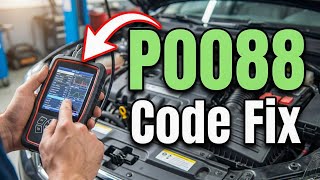
Est. part cost: $1000-$2500 for the pump, $8000+ if the whole system is contaminated. - Faulty Fuel Rail Pressure Sensor 🟡 Medium Probability The sensor provides the data that triggers the code. A faulty sensor can send an incorrect, fixed high-pressure reading to the PCM, even if the 🎬 See this video for a professional P0088 diagnosis and repair. pressure is normal.
How to confirm: Using a scan tool, check the live fuel rail pressure reading with Key On, Engine Off (KOEO). The reading should be near ambient pressure (0-50 PSI). If it reads several hundred PSI or more, the sensor is faulty. The Mopar part is 68247772AA.
Typical fix: Replace the fuel rail pressure sensor.
Est. part cost: $150-$350 - Faulty Fuel Pressure Regulator / Suction Control Valve (3.0L Diesel Only) 🟡 Medium Probability This valve, mounted on the HPFP, controls the fuel volume entering the pump. If it sticks internally, it can cause the pump to generate excessive pressure. It can also get contaminated by debris from a failing HPFP.
How to confirm: A technician can command the valve's duty cycle with a scan tool and monitor the system's pressure response. If the pressure does not respond to commands, the valve is likely stuck.
Typical fix: Replace the fuel pressure regulator valve. This is often replaced along with the HPFP.
Est. part cost: $100-$300 - Faulty In-Tank Fuel Pump / Regulator Assembly (Gasoline Engines Only) ⚪ Low Probability While less common than a software issue, the regulator integrated into the low-pressure fuel pump module can fail, causing high pressure on the supply side to the high-pressure pump.
How to confirm: This is typically diagnosed by ruling out other causes first (software, sensor). A technician would perform a fuel pressure test on the low-pressure side to confirm it's out of spec; expected pressure is 55-65 PSI.
Typical fix: Replace the entire fuel pump module, which requires dropping the fuel tank.
Est. part cost: $300-$600
Rare But Worth Checking
- Restricted Fuel Return Line: A kinked or clogged fuel return line can trap pressure in the rail. This is uncommon but worth inspecting if other tests are inconclusive, especially if recent work has been done on the fuel system.
- Wiring Harness Issue: Damage or corrosion in the wiring for the fuel rail pressure sensor can cause a short to voltage, leading to an incorrect high voltage signal being sent to the PCM. This can mimic a failed sensor.
Diagnosis Steps
- Identify Your Engine: Determine if you have a Gasoline (3.6L/5.7L) or Diesel (3.0L) engine, as the diagnostic path differs significantly.
- Check for TSBs and Warranty: The first step for any shop will be to check for applicable TSBs (like #18-018-14 for gas or #18-023-15 for diesel). For EcoDiesel models, check vehicle eligibility for the HPFP extended warranty via the Mopar owner portal.
- Scan for Codes & Freeze Frame: Use an OBD-II scanner to confirm P0088 and check for any other related codes. Analyze freeze frame data to see engine conditions (RPM, load, temp) when the code was set.
- Analyze Live Data: Use a capable scan tool to monitor 'Desired Fuel Rail Pressure' vs. 'Actual Fuel Rail Pressure'. If actual pressure is consistently much higher than desired, especially on deceleration, suspect a regulator or pump issue. If the reading is stuck at max value, suspect a sensor or wiring issue.
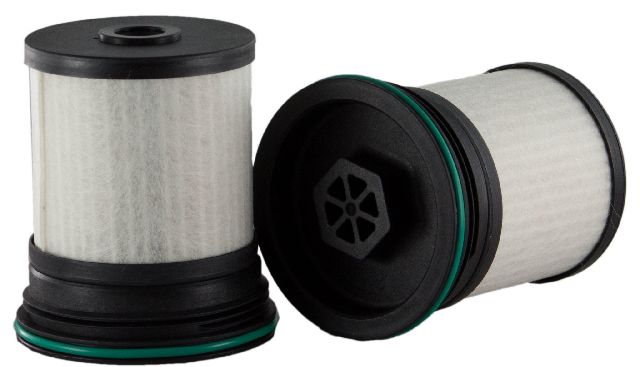
- (Diesel Only) Inspect for HPFP Failure: THIS IS THE MOST CRITICAL STEP FOR DIESEL. Carefully open the fuel filter housing and inspect the fuel and filter element 🎬 Watch: How to access and change the diesel fuel filter. for fine, metallic 'glitter'. A strong light is needed. If any is found, the HPFP has failed. Stop diagnosis; the entire fuel system needs replacement.
- Test the Fuel Rail Pressure Sensor: With the Key On, Engine Off (KOEO), check the sensor reading on the scan tool. It should be close to 0 PSI (or 0.5 volts). If it reads a high pressure, unplug the sensor. If the reading now goes to a default low value, the sensor is bad. If the reading stays high, there is a wiring issue.
- (Diesel Only) Command the Fuel Pressure Regulator: A technician can use a bidirectional scan tool to command the regulator (often called Fuel Control Actuator or Inlet Metering Valve) and observe the change in fuel pressure to determine if it is functioning correctly.
- Apply PCM Update: If TSBs are applicable and all hardware components test okay, have a dealer or qualified shop update the PCM software.
Parts You'll Likely Need
- PCM Reflash (Software) — The most common fix for gasoline engines and a frequent fix for diesels, as specified by manufacturer TSBs #18-018-14 and #18-023-15.
OEM price range: $150-$250 - High-Pressure Fuel Pump (HPFP) (3.0L Diesel)
(OEM #68211274AB (Mopar), 0445010684 (Bosch))— A known catastrophic failure point on the EcoDiesel engine. Its failure is a primary cause of P0088 and often requires replacement of the entire fuel system.
Trusted brands: Bosch, Mopar
Related Codes That Often Appear With This One
- P0087 — Fuel Rail Pressure Too Low. These codes often appear together or alternately as the system struggles to maintain correct pressure, indicating an erratic pump, sensor, or regulator.
- P016F — Closed Loop Fuel Pressure Control At Limit - Pressure Too Low. This code is listed in the same TSBs as P0088 and points to a general fuel pressure control problem that may be software-related on both gas and diesel engines.
Technical Service Bulletins (TSBs) & Recalls
- 18-018-14 REV. C: (Gasoline Engines) Addresses erroneously set P0088 and P0087 codes, recommending a PCM software reflash as the primary fix.
- 18-023-15 REV. A: (3.0L Diesel) Addresses several DTCs including P0088 that can be resolved with a PCM software update.
- NHTSA Recall 23V-411: Addresses a different issue (crankshaft position sensor tone wheel), but is often confused with the HPFP problems. The primary action for the P0088-related HPFP failure was an extended warranty campaign (X67) following a class-action settlement.
Platform-Specific Known Issues
- Owner Experience: The Misdiagnosis Trap (Gasoline): Multiple owners of 3.6L and 5.7L models have reported being quoted for expensive fuel pump or sensor replacements when P0088 appeared. However, in many documented cases on forums, the issue was resolved completely by a dealer performing the PCM software update specified in TSB 18-018-14 for $150-$250. This highlights the importance of checking for software updates first on gasoline engines.
- Owner Experience: The EcoDiesel HPFP Catastrophe: A common story for 2014 EcoDiesel owners starts with a P0088 code, sometimes accompanied by a rough idle or stalling. Upon inspection, the tell-tale sign is fine metallic 'glitter' in the fuel filter bowl. This confirms the Bosch CP4.2 HPFP has started to disintegrate, contaminating the entire fuel system. Owners report dealer repair bills from $8,000 to over $12,000 to replace the pump, fuel rails, all injectors, and drop and clean the fuel tank. The EcoDiesel settlement provided an extended warranty (up to 10 years or 120,000 miles from original sale date) for this specific failure on many vehicles.
Mechanic-Grade Diagnostic Values
- 3.0L Diesel Fuel Rail Pressure (Key On, Engine Off) — expected: 0 PSI (+/- 500 PSI). Failure: A reading of several hundred PSI or higher suggests a faulty sensor or wiring issue.
- 3.0L Diesel High Pressure Fuel System (Operating) — expected: 200-1600 bar (2,900 - 23,205 psi). Failure: Pressure significantly exceeding the desired value commanded by the PCM.
- 3.0L Diesel Fuel Quantity Solenoid (FCA) Pulse Width — expected: 18% to 24% when cranking or at idle. Failure: Values outside this range may indicate a problem with the solenoid or the command from the ECM.
- 3.6L Gasoline Low-Pressure Fuel System — expected: 55-65 PSI. Failure: Pressure significantly above this range indicates a faulty in-tank regulator or pump module.
- Fuel Rail Pressure Sensor Voltage Signal — expected: 0.5V to 4.5V. Failure: A constant 5V signal indicates a short to power or a bad ground in the sensor circuit.
Scan Tool Commands That Help
- wiTECH: Fuel Rail Pressure Solenoid Leak Quantity Test — For the 3.0L Diesel, this test helps determine if the pressure solenoid on the fuel rail is leaking internally, which can cause pressure control issues. The test involves commanding the solenoid and physically checking for fuel leakage from the return line.
- wiTECH: Relative Compression Test — On the 3.0L Diesel, if fuel pressure issues are accompanied by rough running, this test can quickly identify if a mechanical engine issue (like low compression in one cylinder) is contributing to the problem without requiring a manual compression test.
- wiTECH: PCM Reprogramming — This is the required repair procedure when TSBs #18-018-14 (Gasoline) or #18-023-15 (Diesel) apply, to update the PCM software with revised monitoring thresholds.
- Scan Tool (General): Actuate Fuel Pump — Used during fuel pressure and volume testing to run the in-tank fuel pump without the engine running, allowing a technician to safely check the low-pressure side on gasoline engines.
Wiring & Ground Locations
- Fuel Pressure Sensor (3.6L Gas) — Located at the rear of the fuel rail assembly.. This is the sensor that provides the primary reading to the PCM that triggers code P0088. Its wiring is a potential point of failure.
- Fuel Pressure Sensor (3.0L Diesel) — Located at the end of the fuel rail, just below the air intake tube. The connector is black with a yellow grommet.. This sensor provides the high-pressure reading to the PCM. Damage to its connector or wiring can cause false high-pressure readings.
- G901a (Ground) — Located at the right rear corner of the engine compartment.. This is a major chassis ground point. A poor connection here can cause floating grounds and erratic sensor readings for various engine components, potentially including the fuel pressure sensor circuit.
- Fuel Pressure Sensor Connector (3.6L Gas) — Connects to the sensor at the rear of the fuel rail.. A replacement connector repair kit (68137864AC) requires a specific change in pinout. Wiring it like the original will cause faults. Circuit K181 (cavity 1) moves to new cavity 2, K914 (cavity 2) moves to new cavity 3, and K859 (cavity 3) moves to new cavity 1.
Real Owner Repair Stories
- EcoDieselRam.com forum user (2016 Ram 1500 EcoDiesel (same engine/fuel system as 2014 Grand Cherokee)) — Check Engine Light with code P0088, but no noticeable engine performance degradation.
❌ Tried (didn't work) Replacing the fuel rail pressure sensor ($650), which did not solve the problem; the code returned within 10 miles.
✅ What actually fixed it The final fix was not confirmed, but after a technician verified that live fuel pressure data was normal during operation, the suspected cause was an intermittent open or grounding fault in the wiring harness.
"I Checked Everything" — The Actual Cause
- In the context of P0088, the equivalent of a 'smoke test clean' scenario is when live data shows fuel pressure is actually within spec, yet the code persists. In one documented case on a 3.0L EcoDiesel, a technician used a scan tool to monitor fuel pressures while driving and confirmed they were all within normal operational values. Despite the sensor having been replaced, the P0088 code remained, leading to the conclusion that the root cause was likely an intermittent wiring harness issue, not a true high-pressure condition.
When the Usual Fixes Don't Work
- While the fuel rail pressure sensor is listed as a common cause, it should not be replaced without proper diagnosis. There are multiple owner accounts for the 3.0L EcoDiesel where replacing the sensor was costly and did not fix the P0088 code. In one instance, the code returned within 10 miles, and subsequent professional diagnosis with a scan tool showed that actual fuel pressure was normal, pointing instead to an intermittent wiring fault as the likely culprit.
OEM Part Supersession History
Original Fuel Pressure Sensor Connector (3.6L)→Connector Repair Kit 68137864AC— Service replacement for a damaged connector pigtail.
Heads up: CRITICAL: The new connector has a different pinout. The vehicle harness wires must be spliced into new cavity locations on the replacement connector, not pin-to-pin. Failure to follow the procedure in STAR document S2014000003 will result in fault codes.
Helpful Videos

Used OEM Parts in Stock


New Aftermarket Parts Available


The information in this article is provided for general reference and educational purposes only. Vehicle specifications, procedures, and part compatibility can vary by production date, trim level, and region. Always consult your vehicle's factory service manual and verify part numbers before purchasing or performing repairs. Safety-critical components such as airbags, seat belts, and braking systems should be installed by a qualified professional.
- Jeep GRAND CHEROKEE:
- 🎬 Helpful Videos
- 🛍️ Shop This Part
- What's Unique About the 2014-2014 Jeep GRAND CHEROKEE
- Diagnostic Flowchart
- Symptoms You May Notice
- Most Likely Causes
- Rare But Worth Checking
- Diagnosis Steps
- Parts You'll Likely Need
- Related Codes That Often Appear With This One
- Technical Service Bulletins (TSBs) & Recalls
- Platform-Specific Known Issues
- Mechanic-Grade Diagnostic Values
- Scan Tool Commands That Help
- Wiring & Ground Locations
- Real Owner Repair Stories
- "I Checked Everything" — The Actual Cause
- When the Usual Fixes Don't Work
- OEM Part Supersession History
- 🎟️ Get 5% Off