

P0088 on 2021 Jeep Gladiator 3.0L EcoDiesel: High Fuel Pressure Causes & Fixes
On a 2021 Gladiator with the 3.0L EcoDiesel, code P0088 is most often caused by a failing High-Pressure Fuel Pump (HPFP), which was subject to a major safety recall (Stellantis Z96 / NHTSA 22V-767). A PCM software update is another common fix. Do not drive the vehicle, as HPFP failure can cause a sudden engine stall, leading to a crash.
- For a 2021 Gladiator 3.0L EcoDiesel, P0088 is a critical code that requires immediate attention.
- The most likely cause is a failing High-Pressure Fuel Pump (HPFP), which was recalled. Check your VIN with a Jeep dealer immediately.
- Do not drive the vehicle, as the engine could stall without warning, posing a significant safety risk.
- Another common fix is a simple PCM software update performed by the dealer, as specified in a TSB.
- Due to extreme fuel pressures, diagnosis and repair of this system should be left to a qualified professional.
What's Unique About the 2021-2021 Jeep GLADIATOR
For the 2021 Jeep Gladiator with the 3.0L EcoDiesel engine, code P0088 is extremely serious and points directly to a widely documented, critical failure point: the Bosch CP4.2 High-Pressure Fuel Pump (HPFP). These pumps are known to fail prematurely and catastrophically, a failure often called "grenading" by owners, which disperses metal debris throughout the entire fuel system. This widespread issue prompted Safety Recall Z96 from Stellantis (NHTSA ID: 22V-767, later updated) covering these vehicles. While other causes exist, the HPFP is the primary and most severe concern on this specific platform.
Diagnostic Flowchart
Tap your situation to follow the diagnostic path that matches what you're seeing on this vehicle.
Symptoms You May Notice
- Check Engine Light illuminated
- Sudden loss of engine power or engine stalling
- Vehicle enters 'limp mode' with reduced power
- Engine runs rough, idles poorly, or misfires
- Sluggish or poor acceleration
- Difficulty starting the engine or extended crank time
- Excessive noise coming from the high-pressure fuel pump
- Black smoke from the exhaust
- "Service Electronic Throttle Control" message on the dash
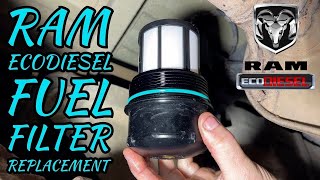
- Replacing the fuel filter. 🎬 Watch: Step-by-step guide to changing your EcoDiesel fuel filter While a clogged filter typically causes low pressure (P0087), it is rarely a cause for high pressure.
- Replacing fuel injectors. Unless the HPFP has failed and sent debris into the injectors, they are not a primary cause of P0088. They are a symptom of HPFP failure, not the root cause of the code.
Most Likely Causes
- High-Pressure Fuel Pump (HPFP) Failure 🔴 High Probability The 2021 Gladiator with the 3.0L EcoDiesel uses a Bosch CP4.2 HPFP, which is known to fail prematurely. This was the subject of a major safety recall, Stellantis Z96 (NHTSA 22V-767, updated in 2023 and 2024), covering 2021-2023 Gladiators. Failure introduces fine metal debris into the entire fuel system, causing widespread damage.
How to confirm: A dealership must check the vehicle's VIN for open recalls (Z96/22V-767). A definitive diagnostic step is to take a fuel sample from the fuel filter housing and inspect it for a metallic sheen or "glit 🎬 Watch: How to inspect your fuel for metallic debrister." The presence of metal particles confirms HPFP failure. If the vehicle stalls and won't restart, this is the most likely cause.
Typical fix: Replacement of the high-pressure fuel pump with an updated, more durable version. If the pump has failed and contaminated the system, the fix is much more extensive, requiring replacement of fuel injectors, fuel rails, all high-pressure fuel lines, and cleaning/flushing of the fuel tank 🎬 See the full process for replacing a failed fuel system and low-pressure lines. This repair should be covered free of charge under the recall.
Est. part cost: $0 (if covered by recall) - Powertrain Control Module (PCM) Software Glitch 🔴 High Probability Jeep issued Technical Service Bulletins, including #18-002-22 REV. A and the later #18-060-24, which specifically list P0088 as a code that can be resolved by a PCM software update for the 2021 Gladiator with the 3.0L diesel engine. These updates address software sensitivity that can falsely trigger the code.
How to confirm: A Jeep dealership can check your vehicle's VIN against their database to see if these TSBs apply and if the update has been performed. This should be done before any hardware is replaced, assuming no signs of HPFP failure are present.
Typical fix: Reprogramming the PCM with the latest available software. This is a quick procedure performed by a dealer with a wiTECH scan tool.
Est. part cost: $0 (if under warranty) or $150-$250 for labor. - Faulty Fuel Rail Pressure Sensor 🟡 Medium Probability The sensor that reads the fuel pressure can fail or drift out of calibration, sending an incorrect high-pressure signal to the PCM even if the pressure is normal. This is a common failure point on many modern diesel engines.
How to confirm: A technician can monitor the sensor's live data on a scan tool. With the Key On, Engine Off (KOEO), the pressure should read near 0 PSI; if it shows a reading of several hundred PSI or more, the sensor is likely faulty. The voltage should be between 0.5V and 4.5V; a constant 5V signal points to a wiring issue or bad sensor.
Typical fix: Replacement of the fuel rail pressure sensor. On the 3.0L EcoDiesel, this sensor is located on the fuel rail.
Est. part cost: $70-$200 - Wiring Harness Issue ⚪ Low Probability The wiring to the fuel rail pressure sensor can become damaged, frayed, or corroded, causing a short or open circuit that sends a false high-voltage signal to the PCM. In one documented case, a damaged and poorly repaired connector pigtail was the root cause. Rodent damage is also a possibility.
How to confirm: Visually inspect the wiring harness and connector leading to the fuel rail pressure sensor for damage. A technician can perform a continuity and resistance check on the sensor's circuit (typically checking for a 5V reference, ground, and signal return) to find an open or short.
Typical fix: Repairing the damaged section of the wiring harness or replacing the connector pigtail.
Est. part cost: $20-$100
Rare But Worth Checking
- Blocked Fuel Return Line: A kinked or clogged fuel return line can physically prevent excess fuel pressure from being bled off by the regulator, causing a true over-pressure condition.
Diagnosis Steps
- Check the vehicle's VIN for open safety recalls. The HPFP recall (Stellantis Z96 / NHTSA 22V-767 and subsequent updates) is the most critical first step for a 2021 Gladiator EcoDiesel.
- If no recall is open or if the recall has been performed, have a dealer check for applicable TSBs, specifically #18-002-22 REV. A and #18-060-24, which recommend a PCM software update.
- Carefully take a fuel sample from the fuel filter housing. Inspect the fuel for a silver or gold 'glitter-like' metallic sheen. Any metal contamination is a definitive sign of HPFP failure and requires the full recall repair procedure.
- Connect a professional scan tool to monitor live fuel rail pressure. Compare the 'Actual' pressure to the 'Desired' pressure commanded by the PCM.
- With Key On, Engine Off (KOEO), check the fuel rail pressure reading. It should be near 0 PSI. A reading of several hundred PSI or more points to a faulty sensor.
- Check the fuel rail pressure sensor signal voltage. It should be between 0.5V and 4.5V. A reading stuck at 5V indicates a short to power or a bad ground in the sensor circuit.
- Visually inspect the wiring harness and connector for the fuel rail pressure sensor for any signs of damage, corrosion, or poor previous repairs.
- If a sensor or wiring fault is suspected, a technician should test the sensor's circuit for correct voltage (typically a 5V reference), ground, and signal return.
- DO NOT attempt to disconnect fuel lines to check pressure. This is an extremely high-pressure system (up to 29,000 PSI) and requires specialized equipment to measure safely.
Parts You'll Likely Need
- High-Pressure Fuel Pump (HPFP) Recall Kit
(OEM #CSSMZ461AA)— This is the most common and severe cause of P0088 on the 3.0L EcoDiesel due to a known design flaw, leading to safety recall Z96. The full repair often involves a comprehensive kit if contamination is found.
Trusted brands: Mopar, Bosch
OEM price range: $0 (under recall), $1000-$2000+ (pump only)
Aftermarket price range: $700-$1500 - Fuel Rail Pressure Sensor
(OEM #68247772AA)— This sensor provides the pressure reading to the PCM. A failure can cause a false high-pressure code. Part number is confirmed to fit the 2021 Gladiator EcoDiesel.
Trusted brands: Mopar, Bosch
OEM price range: $120-$320
Aftermarket price range: $70-$150 - PCM Software Reflash — A known software issue can incorrectly trigger P0088. A dealer reflash is the only fix, as outlined in TSBs 18-002-22 REV. A and 18-060-24.
OEM price range: $150-$250 (Labor)
Related Codes That Often Appear With This One
- P016F — Closed Loop Fuel Pressure Control At Limit - Pressure Too Low. This and other codes are listed in TSB 18-002-22 REV. A, indicating they can be triggered by the same PCM software issue.
- P04DB — Crankcase Ventilation System Disconnected. Also listed in TSB 18-002-22 REV. A and 18-060-24 as being related to a needed PCM software update.
- P0087 — Fuel Rail/System Pressure - Too Low. Seeing both high and low pressure codes can indicate erratic behavior from a failing fuel pressure sensor or, more critically, the initial stages of HPFP failure causing pressure oscillations before a complete stall.
- P0524 — Engine Oil Pressure Too Low. This code is also mentioned in TSB 18-060-24, suggesting it can be triggered by the same software logic flaw as P0088.
Technical Service Bulletins (TSBs) & Recalls
- 18-002-22 REV. A
- 18-060-24
Platform-Specific Known Issues
- A major safety recall (Stellantis Z96 / NHTSA 22V-767) was issued for 2021-2023 Jeep Gladiator models with the 3.0L diesel engine due to catastrophic failure of the Bosch CP4.2 high-pressure fuel pump. This is the most critical issue related to P0088 on this vehicle.
Mechanic-Grade Diagnostic Values
- High-Pressure Fuel System (Operating Range) — expected: 200-1600 bar (2,900 - 23,205 PSI). Failure: Actual pressure significantly exceeds the desired pressure commanded by the PCM.
- Fuel Rail Pressure Sensor (KOEO) — expected: 0 PSI (+/- 500 PSI) or ~0.5 Volts. Failure: A reading of several hundred PSI or a voltage significantly higher than 0.5V indicates a faulty or biased sensor.
- Fuel Rail Pressure Sensor Signal Voltage (Operating) — expected: 0.5V to 4.5V. Failure: A constant 5V signal indicates a short to power or a bad ground in the sensor circuit.
- Low-Pressure Fuel System (Lift Pump) — expected: 59 +/- 2 PSI. Failure: Pressure significantly below this range indicates a weak in-tank pump or clogged filter, which typically causes P0087, not P0088.
- Fuel Quantity Solenoid (FCA) Pulse Width — expected: 18% to 24% at idle or while cranking. Failure: Values outside this range suggest a problem with the solenoid on the HPFP or the command from the ECM.
- High-Pressure Fuel System (Cranking) — expected: Must exceed 3,500 - 4,000 PSI. Failure: Failure to reach this pressure during cranking will result in a no-start condition, typically associated with P0087.
Scan Tool Commands That Help
- wiTECH or equivalent professional scan tool: Command Fuel Pressure Regulator — To test the functionality of the Fuel Control Actuator (FCA) or Inlet Metering Valve on the HPFP. A technician can command the regulator open and closed and observe the corresponding change in actual fuel rail pressure to see if it is responding correctly.
- wiTECH: Fuel Rail Pressure Solenoid Leak Quantity Test — This is a specific service function within the Jeep dealer tool to test for leaks within the high-pressure system, which can help isolate a faulty component.
Wiring & Ground Locations
- Fuel Rail Pressure Sensor Connector — Located at the end of the fuel rail, just below the air intake tube. The connector is black with a yellow grommet.. This is the direct connection to the sensor that triggers the code. Damage to the connector or its three wires (5V reference, signal, ground) can cause false high readings.
- Engine Bay Ground Studs — There are several factory ground studs in the engine bay, typically to the left side of the battery when viewed from the front.. A poor ground for the PCM or the sensor circuit can cause erratic voltage readings, potentially leading to a false P0088. Ensuring all engine grounds are clean and tight is a critical diagnostic step.
- Chassis Ground Points — Multiple ground points exist on the frame, including behind the front passenger wheel, in the passenger kick panel, and two above the spare tire.. While less likely to be the primary cause than engine grounds, compromised chassis grounds can create floating voltages and unpredictable electrical issues throughout the vehicle.
Real Owner Repair Stories
- EcoDieselRam.com forum user (Ram 1500 EcoDiesel (same engine family)) — Persistent P0088 Check Engine Light with no noticeable performance degradation.
❌ Tried (didn't work) Replacing the fuel rail pressure sensor ($650), which did not resolve the issue.
✅ What actually fixed it The issue was diagnosed as an intermittent wiring harness fault. A technician monitored live data while driving and confirmed fuel pressures were within normal operational values, ruling out a mechanical pressure problem and pointing towards an electrical issue like an intermittent open or ground in the harness. - YouTube video by 'T.C. Do-It-Yourself' (Jeep Grand Cherokee 3.0L CRD (similar Mercedes-based engine)) — P0088 - Fuel Rail Pressure Too High.
❌ Tried (didn't work) Initial diagnosis pointed towards the sensor or regulator.
✅ What actually fixed it The connector pigtail for the fuel rail pressure sensor was found to be broken and poorly repaired with solder. The final fix was to cut out the old, damaged connector and splice in a new one sourced from a Mercedes dealer (as the engine is Mercedes-derived).
"I Checked Everything" — The Actual Cause
- In the context of P0088, the equivalent of a 'smoke test clean' scenario is when live data shows that actual fuel pressure is normal, yet the code persists. In a documented case on a 3.0L EcoDiesel, after a new sensor failed to fix the code, a technician confirmed with a scan tool that pressures were within spec during a drive. The conclusion was that the root cause was an intermittent wiring harness issue, not a true high-pressure condition, which is why simply replacing parts based on the code description failed.
OEM Part Supersession History
Bosch 0281002982→Mopar 68247772AA— Mopar took over as the primary OEM supplier for this part.
Heads up: The Mopar part is a direct replacement for the original Bosch sensor on the 3.0L EcoDiesel.N/A (Original Bosch CP4.2 HPFP)→Updated HPFP in recall kit (e.g., CSSMZ461AA)— The original Bosch CP4.2 pump was prone to premature, catastrophic failure. The recall replaces it with a more durable design.
Heads up: Vehicles under recall must use the updated pump provided through the official recall procedure.
Helpful Videos
Used OEM Parts in Stock



New Aftermarket Parts Available


The information in this article is provided for general reference and educational purposes only. Vehicle specifications, procedures, and part compatibility can vary by production date, trim level, and region. Always consult your vehicle's factory service manual and verify part numbers before purchasing or performing repairs. Safety-critical components such as airbags, seat belts, and braking systems should be installed by a qualified professional.
- Jeep GLADIATOR:
- 🎬 Helpful Videos
- 🛍️ Shop This Part
- What's Unique About the 2021-2021 Jeep GLADIATOR
- Diagnostic Flowchart
- Symptoms You May Notice
- Most Likely Causes
- Rare But Worth Checking
- Diagnosis Steps
- Parts You'll Likely Need
- Related Codes That Often Appear With This One
- Technical Service Bulletins (TSBs) & Recalls
- Platform-Specific Known Issues
- Mechanic-Grade Diagnostic Values
- Scan Tool Commands That Help
- Wiring & Ground Locations
- Real Owner Repair Stories
- "I Checked Everything" — The Actual Cause
- OEM Part Supersession History
- 🎟️ Get 5% Off