

P0088 on 2010 GMC Sierra 2500 6.6L Duramax: Fuel Pressure Too High Causes & Fixes
On a 2010 GMC Sierra 2500 with the 6.6L Duramax LMM engine, code P0088 indicates that the fuel rail pressure is dangerously high, often setting when actual pressure exceeds desired pressure by 2,900 PSI or more. The most common cause is a failing fuel pressure regulator (also called the FCA or MPROP) on the CP3 high-pressure fuel pump, often due to contamination or sticking. This is a serious code that should be addressed immediately to prevent further damage to injectors and other fuel system c
- P0088 on a 2010 Sierra 2500 Duramax is a serious code indicating fuel pressure is too high and should be addressed immediately.
- The most common cause is a faulty fuel pressure regulator on the high-pressure CP3 pump.
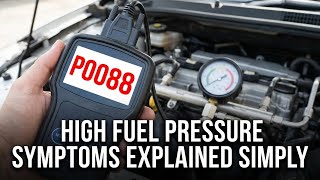
- Always start diagnosis by checking live fuel pressure data with a scan tool to see if the pressure is actually high or if it's a sensor error.
- Inspect the fuel filter for contamination (water, rust, debris) as this is a known issue that can cause the regulator to fail.
- Due to the extremely high pressures involved, this repair is best left to a qualified professional.
What's Unique About the 2010-2010 Gmc SIERRA 2500
The 2010 Sierra 2500 with the 6.6L Duramax LMM engine uses a high-pressure common rail fuel system with a reliable Bosch CP3 injection pump. Unlike later models with the more failure-prone CP4 pump, the LMM's issues with P0088 are typically related to the fuel pressure regulator (also known as the Fuel Control Actuator or FCA) on the pump or the fuel rail pressure sensor itself. The provided NHTSA TSBs also highlight that fuel contamination can be a significant issue, leading to high or low pressure faults. [Bulletin #PIP5151B] The LMM engine is mechanically very similar to the preceding LBZ engine.
Diagnostic Flowchart
Tap your situation to follow the diagnostic path that matches what you're seeing on this vehicle.
Symptoms You May Notice
- Check Engine Light is on
- Engine runs rough or has an inconsistent, loping idle
- Hard start or no-start condition [Bulletin #PIP4949E]
- Vehicle enters reduced power or "limp" mode
- Poor acceleration
- Black smoke from the exhaust
- Loud high-pressure sound from the engine area
- Replacing the fuel filter. While changing the fuel filter is good maintenance and necessary for inspection, a clogged filter typically causes low fuel pressure (P0087), not high pressure.
Most Likely Causes
- Faulty Fuel Pressure Regulator (FCA/MPROP) 🔴 High Probability The regulator on the CP3 high-pressure pump controls the volume of fuel entering the pump. It can stick, fail electronically, or become clogged with debris, causing the pump to generate excessive pressure. This is a very common failure point for the P0088 code on LMM engines.
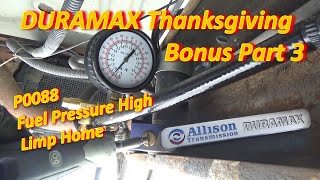
How to confirm: Use a scan tool to monitor desired vs. actual fuel rail pressure. If actual pressure is significantly higher than desired (e.g., spiking to 29,000 PSI at idle), the regulator is a prime suspect. A technician can also command the regulator with a scan tool to test its response. 🎬 Watch a technician perform a fuel pressure regulator diagnostic test. The part is located on the back of the CP3 injection pump in the engine valley and can be difficult to access.
Typical fix: Replace the fuel pressure regulator on the high-pressure fuel pump. It is highly recommended to use a genuine Bosch part, as some aftermarket parts have been reported to fail prematurely. The replacement often requires removing surrounding components for access and using modified tools.
Est. part cost: $150-$450 - Faulty Fuel Rail Pressure Sensor 🟡 Medium Probability The sensor can fail and send an incorrect, high-pressure reading to the ECM, even if the actual pressure is normal. This tricks the ECM into setting the P0088 code.
How to confirm: With the engine off and the key in the 'on' position, use a scan tool to read fuel rail pressure. The reading should be near zero PSI (or 1-1.8 MPa). If it shows a high-pressure reading, the sensor is likely faulty. You can also compare the scan tool reading to a mechanical gauge to verify if the pressure is actually high.
Typical fix: Replace the fuel rail pressure sensor. The sensor is located on the fuel rail.
Est. part cost: $50-$150 - Fuel System Contamination 🟡 Medium Probability As noted in TSB #PIP5151B, contamination from water, rust, or other debris can cause fuel system components, including the pressure regulator, to malfunction. [Bulletin #PIP5151B, 34] A Reddit user on r/Duramax described finding "a considerable amount of rusty metal bits" in their fuel filter when diagnosing a P0088 code on their LMM.
How to confirm: Remove the fuel filter and drain its contents into a clean container. Inspect the fuel for water, debris, or metallic particles. A magnet can be used to check for steel debris.
Typical fix: If contamination is found, the entire fuel system may need to be cleaned, including the tank, lines, and filter housing, and the contaminated components (like the regulator) replaced. [Bulletin #PIP5151B] In some cases, simply running a strong injector cleaner and replacing the filter can resolve minor contamination issues.
Est. part cost: $200-$2000+ - Restricted Fuel Return Line ⚪ Low Probability A kinked, clogged, or otherwise restricted fuel return line can prevent excess fuel from returning to the tank, causing pressure to build up in the rail. This was suggested as a possible cause by a moderator on DuramaxDiesels.com.
How to confirm: Visually inspect all fuel return lines from the engine back to the tank for any signs of physical damage, kinks, or blockages. Check the fuel pressure relief valve for a clogged screen.
Typical fix: Repair or replace the damaged section of the fuel return line or clean/replace the fuel pressure relief valve.
Est. part cost: $50-$200
Rare But Worth Checking
- Wiring Issues: A short or poor connection in the wiring for the fuel pressure regulator or sensor can cause erratic signals, leading to high-pressure readings or incorrect regulator commands. A loose ground wire for a dual fueler kit was found to be the cause in one forum thread. On other Duramax models, wires rubbing behind the A/C compressor are a known issue.
- Faulty High-Pressure Fuel Pump (CP3): While the CP3 pump is generally reliable, an internal failure can cause pressure regulation issues. This is less common for causing high pressure than it is for low pressure, but it is still possible, especially if the internal suction valve gets weak over time.
- Aftermarket Tuning or Lift Pump Issues: Aggressive aftermarket engine tunes can sometimes command higher-than-normal fuel pressures. Additionally, an aftermarket lift pump with its supply pressure set too high can overwhelm the CP3's regulator, causing pressure spikes, especially during deceleration. A detailed YouTube video by 'Pine Hollow Auto Diagnostics' showed that adjusting a PPE lift pump's output from ~14 PSI down to ~9 PSI resolved a P0088 code that only set when coasting downhill. Other forum users suggest adjusting the regulator current table in the tune if lift pump pressure is high. 🎬 See how an aftermarket lift pump can trigger limp mode.
Diagnosis Steps
- Connect a professional-grade OBD-II scanner and verify that P0088 is the active code.
- Access the live data stream on the scanner and monitor 'Desired Fuel Rail Pressure' vs. 'Actual Fuel Rail Pressure' at idle and while revving the engine. Note if the actual pressure is significantly higher than desired, sometimes spiking over 29,000 PSI.
- Turn the engine off, but leave the ignition on. The 'Actual Fuel Rail Pressure' should drop to near 0 PSI (1-1.8 MPa). If it stays high, the Fuel Rail Pressure Sensor is likely faulty.
- Carefully remove the fuel filter and drain the fuel into a clean, clear container. Inspect for water, rust, or metallic debris.
- Inspect the wiring and connector for the Fuel Pressure Regulator (on the CP3 pump) and the Fuel Rail Pressure Sensor for any signs of damage, corrosion, or loose connections. Pay attention to grounds.
- Inspect the fuel return lines for any visible kinks, damage, or restrictions. Check the fuel pressure relief valve on the rail for blockages.
- If the vehicle has an aftermarket lift pump, connect a low-pressure gauge and check its output pressure. If it's adjustable and set above 10-12 PSI, it may be too high and causing the CP3 regulator to be overwhelmed during deceleration.
- If the sensor tests good and no contamination or other issues are found, the Fuel Pressure Regulator (FCA/MPROP) is the most likely culprit.
Parts You'll Likely Need
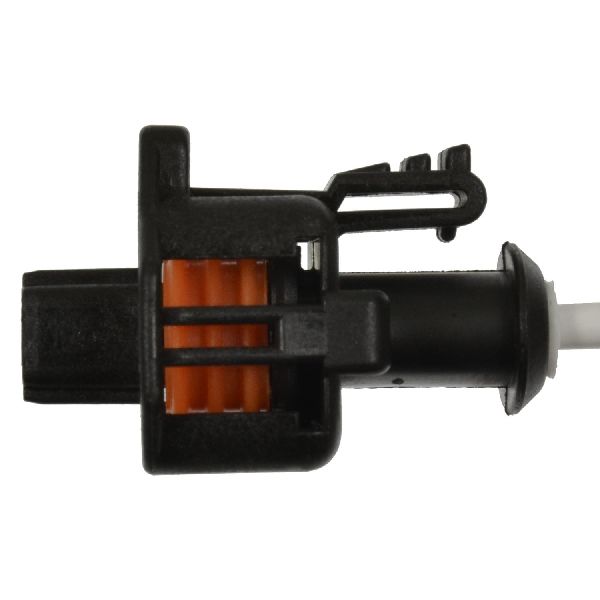
- Fuel Pressure Regulator (FCA)
(OEM #GM: 97384667 / Bosch: 0928400673 or 1465ZS0063)— This is the most common component to fail and directly cause the P0088 code by sticking and allowing excessive pressure to build.
Related Codes That Often Appear With This One
- P0087 — Fuel Rail/System Pressure - Too Low. This can appear with P0088 if the pressure regulator is failing erratically, causing pressure to swing between being too high and too low. Both codes are mentioned together in TSBs and are potential outcomes of a bad regulator. [Bulletin #PIP4949E, Bulletin #PIP5151B, 5]
- P0191 — Fuel Rail Pressure Sensor Circuit Range/Performance. This code often accompanies P0088 when the sensor itself or its wiring is the root cause of the problem. It is also cited in the same TSBs. [Bulletin #PIP4949E, Bulletin #PIP5151B, 3, 12]
- P128E — This is a manufacturer-specific code also related to fuel system faults and is mentioned alongside P0088 in the provided NHTSA TSBs. [Bulletin #PIP4949E, Bulletin #PIP5151B]
- P0089 — Fuel Pressure Regulator Performance. This code points more directly at the fuel pressure regulator (FCA) and is often seen when the regulator is the root cause of the P0088 high-pressure condition.
Technical Service Bulletins (TSBs) & Recalls
- PIP4949E
- PIP5151B
Platform-Specific Known Issues
- TSB #PIP4949E: Notes that DTC P0088 can be associated with hard start or no-start conditions. [Bulletin #PIP4949E]
- TSB #PIP5151B: Links DTC P0088 to rough running and explicitly mentions that if fuel system contamination is found, the complete fuel system will need to be cleaned. This TSB applies to 2010-2014 models with LGH and LML engines. [Bulletin #PIP5151B, 34]
- Aftermarket Lift Pump Conflict: An improperly adjusted aftermarket lift pump can supply too much fuel pressure to the CP3, causing a P0088 code specifically during deceleration when fuel demand is low. Lowering the lift pump pressure to below 10 PSI can resolve this.
Mechanic-Grade Diagnostic Values
- Fuel Rail Pressure Sensor (FRP) Signal Voltage — expected: 0.5V to 4.8V. Failure: Voltage outside this range, or stuck at a specific value, indicates a sensor or wiring fault.
- Fuel Rail Pressure (Key On, Engine Off) — expected: 1-1.8 MPa (approx. 145-261 PSI). Failure: A reading significantly outside this range, especially a high reading, points to a faulty Fuel Rail Pressure Sensor.
- Aftermarket Lift Pump Supply Pressure — expected: Typically below 10 PSI; one case resolved by lowering from 14 PSI to ~9 PSI.. Failure: Excessive supply pressure (e.g., 12-15+ PSI) can overwhelm the CP3's regulator, especially on deceleration, causing P0088.
- Fuel Pressure Relief Valve Torque Specification — expected: 75 ft-lb. Failure: Improper torque can lead to leaks (low pressure) or sealing issues.
Scan Tool Commands That Help
- Tech2 / GDS2 or equivalent professional scanner: Fuel Pressure Control / Commanded Fuel Rail Pressure — At idle with the engine at operating temperature, command rail pressure up to 21,000 PSI (145 MPa). This tests the ability of the high-pressure pump and regulator to build and control pressure. Inability to reach the commanded pressure could indicate a weak pump or a leak, while erratic control points to the regulator.
- Tech2 / GDS2 or equivalent professional scanner: Injector Balance Test / Cylinder Power Balance — While not a direct test for P0088, this can help identify if a related issue, like a faulty injector, is contributing to erratic fuel system behavior. It measures the performance of each cylinder.
Wiring & Ground Locations
- G104 — On the back of the left (driver's side) cylinder head.. This is a primary engine ground. A poor connection here can affect the Engine Control Module (ECM) and its sensors, potentially causing erratic readings or behavior from the fuel pressure sensor or regulator.
- G108 — A ground strap running from the back of the left cylinder head (near G104) up to the firewall.. This ground strap connects the engine block to the vehicle's cab/body. A faulty connection could introduce electrical noise or unstable grounds for modules and sensors, contributing to intermittent electronic faults.
- Fuel Rail Pressure Sensor Connector — On the driver's side fuel rail.. The sensor uses a 5-volt reference, a low reference (ground), and a signal wire. Checking for voltage and continuity at these pins is critical. A user on DuramaxDiesels.com fixed a P0192/P0193 (sensor voltage low/high) by replacing the sensor after verifying the codes changed when unplugging it.
- Engine Control Module (ECM) — Located in the engine compartment, on the driver's side, near the left battery and underhood fuse block.. The ECM is the control center for the fuel system. All sensor inputs and regulator control signals originate or terminate here. A poor connection at the ECM connectors (X1/X2) or a faulty ECM itself is a rare but possible cause.
Real Owner Repair Stories
- Reddit user on r/Duramax (GMC Sierra with LMM engine) — P0088 code, engine runs rough, stuck in limp mode.
❌ Tried (didn't work) Replacing the fuel filter after finding rusty metal bits inside.
✅ What actually fixed it The owner let the engine idle for about 30 minutes with a new dose of injector cleaner. The engine sputtered, and then the pressure dropped to normal, clearing the code. This suggests a minor piece of contamination was stuck in the fuel pressure regulator and was successfully dislodged. - DuramaxDiesels.com forum user (LMM with built engine, PPE dual fueler kit, and custom tunes.) — P0088 code, fuel rail pressure maxing out intermittently.
❌ Tried (didn't work) Replacing both fuel pressure regulators (FPRs).
✅ What actually fixed it The user found a loose ground wire for the dual fueler controller. After tightening the ground connection, the issue of maxing out rail pressure was resolved. - YouTube channel 'Pine Hollow Auto Diagnostics' (Duramax truck with an aftermarket PPE lift pump.) — P0088 code setting specifically when coasting off-throttle, especially downhill.
❌ Tried (didn't work) Initial diagnosis pointed towards common causes like the regulator, but the specific condition (off-throttle) was key.
✅ What actually fixed it The aftermarket lift pump's supply pressure was measured at ~14 PSI. The technician adjusted the pump's output down to approximately 9 PSI. This prevented the CP3's fuel pressure regulator from being overwhelmed during deceleration, resolving the P0088 code.
OEM Part Supersession History
GM: 97384667→This part number appears to be current for the application.— N/A
Heads up: Bosch is the OEM supplier. The equivalent Bosch part numbers are 0928400673 and 1465ZS0063. These numbers are often used interchangeably.
Helpful Videos
We Have This Part in Stock


The information in this article is provided for general reference and educational purposes only. Vehicle specifications, procedures, and part compatibility can vary by production date, trim level, and region. Always consult your vehicle's factory service manual and verify part numbers before purchasing or performing repairs. Safety-critical components such as airbags, seat belts, and braking systems should be installed by a qualified professional.
- Gmc SIERRA 2500:
- 🎬 Helpful Videos
- 🛍️ Shop This Part
- What's Unique About the 2010-2010 Gmc SIERRA 2500
- Diagnostic Flowchart
- Symptoms You May Notice
- Most Likely Causes
- Rare But Worth Checking
- Diagnosis Steps
- Parts You'll Likely Need
- Related Codes That Often Appear With This One
- Technical Service Bulletins (TSBs) & Recalls
- Platform-Specific Known Issues
- Mechanic-Grade Diagnostic Values
- Scan Tool Commands That Help
- Wiring & Ground Locations
- Real Owner Repair Stories
- OEM Part Supersession History
- 🎟️ Get 5% Off