

P0088 on 2016-2018 GMC Canyon: Fuel Rail Pressure Too High Causes and Fixes
On a 2016-2018 GMC Canyon, P0088 indicates the fuel rail pressure is dangerously high. The most common causes are a faulty fuel rail pressure sensor or a failing high-pressure fuel pump. For the 2.8L Duramax diesel, this can be an early sign of a catastrophic CP4 pump failure, which distributes metal debris throughout the fuel system.
- P0088 is a critical code indicating dangerously high fuel pressure; do not continue to drive the vehicle.
- The first diagnostic step is to determine if the pressure is actually high (mechanical issue) or if it's a sensor error (electrical issue).
- For 2.8L Duramax diesel owners, this code is a serious warning sign of a potential high-pressure fuel pump failure that can destroy the entire fuel system.
- Common causes are a bad fuel rail pressure sensor or a failing high-pressure fuel pump.
- Due to the high pressures and risk of catastrophic damage, professional diagnosis and repair are strongly recommended.
What's Unique About the 2016-2018 Gmc CANYON
The 2016-2018 GMC Canyon was available with both gasoline engines (the 3.6L LFX V6 in 2016 and the updated 3.6L LGZ V6 from 2017-2018) and the 2.8L Duramax diesel (LWN). While P0088 can occur on all engines, it is particularly critical on the Duramax. This diesel engine uses a Bosch CP4 high-pressure fuel pump, which is notoriously known to fail in a way that sends metal debris throughout the entire fuel system. This failure is often called the 'CP4 grenade' because it requires the replacement of the pump, injectors, lines, and rails, leading to extremely expensive repairs. For the gas engines, the issue is more typically related to a faulty sensor or the Fuel Pump Driver Module, which is prone to corrosion due to its location on the frame rail.
Diagnostic Flowchart
Tap your situation to follow the diagnostic path that matches what you're seeing on this vehicle.
Symptoms You May Notice
- Check Engine Light is on
- Engine running in reduced power or 'limp' mode
- Rough running or unstable idle
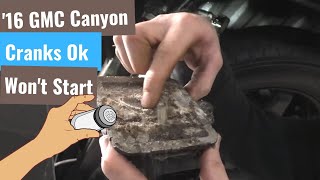
- Hard starting or no-start condition [Bulletin #PIP5151F] 🎬 Watch: Troubleshooting a Canyon that cranks but won't start
- Sudden engine stalling, potentially without the ability to restart
- Black smoke from the exhaust
- Poor fuel economy
- Smell of raw fuel
- Replacing the high-pressure fuel pump when only the fuel rail pressure sensor is bad. This is a costly mistake, which is why verifying the actual pressure with a mechanical gauge is a critical first step.
- Replacing fuel injectors. Injectors themselves do not cause a P0088 high-pressure code; they are affected by the pressure but are not the cause of it.
Most Likely Causes
- Faulty Fuel Rail Pressure Sensor 🔴 High Probability The sensor can fail electronically, sending an incorrect high-pressure signal to the ECM even when the actual pressure is normal. This is a common failure point across many modern vehicles. Rodent damage to the harness on top of the engine is also a known cause of shorts that lead to false high readings.
How to confirm: Use a scan tool to read live data. Compare the sensor's pressure reading with the engine off to a known-zero value. A reading of ~4,600 PSI with the key on, engine off, indicates the sensor signal wire is shorted to the 5V reference. Then, compare its reading to a mechanical fuel pressure gauge connected to the rail. If the scan tool shows high pressure but the mechanical gauge is normal, the sensor is bad.
Typical fix: Replace the fuel rail pressure sensor.
Est. part cost: $80-$150 - Failing High-Pressure Fuel Pump (HPFP) 🔴 High Probability This is especially common on the 2.8L Duramax diesel, which uses the failure-prone Bosch CP4 pump. The internal fuel pressure regulator (or Fuel Control Actuator/Suction Control Valve) can stick or fail, causing the pump to generate excessive pressure. Eventually, the pump can self-destruct, sending metal shavings into the entire fuel system, causing a repair that often exceeds $10,000. 🎬 Watch: How to prevent a massive CP4 repair bill
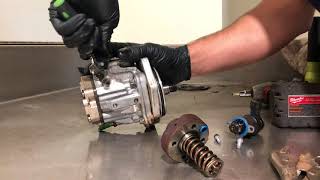
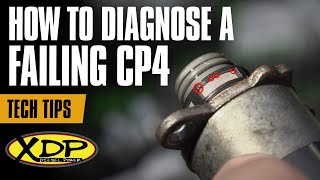
How to confirm: Diagnosis involves ruling out the sensor first. On a Duramax, check the fuel filter for metallic 'glitter'—a tell-tale sign of CP4 failure. 🎬 See how to diagnose a failing CP4 fuel pump If actual pressure is confirmed to be high via a mechanical gauge, the pump's regulator or the pump itself is the cause. This diagnosis is best left to a professional.
Typical fix: For the 2.8L Duramax, this may involve replacing the fuel pressure regulator (Suction Control Valve) on the pump. If the pump has failed and sent debris, the entire fuel system (injectors, lines, rails, tank cleaning) will need replacement.
Est. part cost: $250-$10,000+ - Fuel System Contamination 🟡 Medium Probability GM Technical Service Bulletin #PIP5151F directly links P0088 to fuel system contamination. The bulletin specifically shows examples of rust from water in the fuel or contamination from accidentally adding Diesel Exhaust Fluid (DEF) to the fuel tank, which can cause components like the pressure regulator to stick.
How to confirm: Inspect the fuel system for signs of debris, water, or improper fuel (like DEF). This is often discovered during the replacement of other fuel system parts, like when inspecting the fuel pressure regulator.
Typical fix: If contamination is found, the entire fuel system may need to be cleaned and flushed, and multiple components replaced, including the fuel filter. GM notes that damage from contaminated fuel may not be covered under warranty.
Est. part cost: $50-$5000+ - Faulty Fuel Pump Driver Module (Gasoline Engines) ⚪ Low Probability On gasoline models, the Fuel Pump Driver Module (FPDM)—also called the Chassis Control Module—controls the speed of the in-tank low-pressure pump. If it fails, it can cause the pump to run at maximum speed constantly, creating excess pressure. Its location on the frame rail near the spare tire makes it extremely vulnerable to corrosion from road salt and moisture, which is a common cause of failure.
How to confirm: A technician can monitor the commanded vs. actual duty cycle of the FPDM with an advanced scan tool. A visual inspection of the module for heavy rust and a swollen case is often a dead giveaway. A related code, U0109 (Lost Communication with Chassis Control Module), may also be present.
Typical fix: Replace the Fuel Pump Driver Module. This part may require programming after installation.
Est. part cost: $100-$200
Rare But Worth Checking
- Blocked or Restricted Fuel Return Line: If the system has a return line, a blockage can prevent excess fuel from returning to the tank, causing pressure to build up in the rail.
- Wiring Issue: A short-to-voltage in the fuel rail pressure sensor's wiring harness can cause the ECM to see a constant high-pressure signal. This can be caused by chafing or, as noted by some mechanics, rodent damage to the harness on top of the engine.
- Excessive Lift Pump Pressure (2.8L Duramax with Aftermarket Lift Pump): If an aftermarket lift pump is installed and its output pressure is set too high (e.g., over 10 PSI), the high-pressure fuel pump's regulator may be unable to bleed off enough pressure during deceleration or coasting. This can cause a momentary spike in rail pressure that triggers P0088. The fix is to adjust the lift pump's output pressure down to a lower level (e.g., 5-7 PSI).
Diagnosis Steps
- Check for any Technical Service Bulletins (TSBs) related to your vehicle's VIN and the P0088 code, especially PIP5151F.
- Using a scan tool, check for any other accompanying fault codes.
- For 2.8L Duramax models: Before any other steps, carefully remove the fuel filter and inspect the filter media and housing for fine metallic shavings or 'glitter'. This is a definitive sign of CP4 pump failure and means the vehicle should not be started or driven.
- With a scan tool, observe the live data for the fuel rail pressure sensor with the key on, engine off. The reading should be at or near zero PSI. If it shows high pressure, the sensor is likely faulty.
- If possible and safe to do so, connect a mechanical fuel pressure gauge to the fuel rail's service port.
- Start the engine and compare the reading on the mechanical gauge to the reading on the scan tool. If the scan tool shows high pressure but the mechanical gauge is normal, the fuel rail pressure sensor or its wiring is the problem.
- If the mechanical gauge confirms that the fuel pressure is actually too high, the problem lies with a regulating component, such as the high-pressure fuel pump's internal regulator (SCV) or the fuel pump driver module (on gas engines).
- Inspect the fuel rail pressure sensor wiring harness for any signs of damage, corrosion, rodent chewing, or loose connections.
- For 2.8L Duramax engines, if the high-pressure pump is suspected (especially if metal is found), it is highly recommended to have the vehicle towed to a qualified diesel mechanic to prevent catastrophic fuel system damage.
Parts You'll Likely Need
- Fuel Rail Pressure Sensor
(OEM #12679394 (or superseded ACDelco #213-4598))— This sensor is a common failure point and can send false high-pressure readings to the computer.
Trusted brands: ACDelco, Bosch
OEM price range: $100-$160
Aftermarket price range: $70-$120 - High-Pressure Fuel Pump (3.6L V6)
(OEM #13595810)— On gasoline direct injection engines, the HPFP can fail and cause over-pressurization.
Trusted brands: ACDelco, Bosch
OEM price range: $400-$600
Aftermarket price range: $250-$450 - High-Pressure Fuel Pump (2.8L Duramax) — The Bosch CP4 pump is a critical failure point. Failure often requires replacement of the entire fuel system.
Trusted brands: Bosch, ACDelco
OEM price range: $800-$1500
Aftermarket price range: $500-$1000 - Fuel Pressure Regulator (Suction Control Valve for 2.8L Duramax)
(OEM #55496933)— This regulator, mounted on the CP4 pump, can fail independently and cause P0088. Replacing it is much cheaper than replacing the entire pump if caught early.
Trusted brands: ACDelco, Bosch
OEM price range: $150-$250
Aftermarket price range: $100-$180
Related Codes That Often Appear With This One
- P0087 — Fuel Rail Pressure Too Low. This can appear with P0088 if the pressure is fluctuating erratically, often pointing to a failing high-pressure pump or regulator.
- P0191 — Fuel Rail Pressure Sensor Circuit Range/Performance. This code often accompanies P0088 when the sensor's signal is irrational or stuck, making it a prime suspect.
- P128E — A manufacturer-specific code mentioned in GM TSBs alongside P0088, indicating a related fuel system fault. [Bulletin #PIP5151F, 4]
Technical Service Bulletins (TSBs) & Recalls
- Bulletin #PIP5151F: Mentions that DTCs P0087, P0088, P0191, and P128E can be found when fuel system contamination is present. It specifically identifies water/rust and DEF contamination as potential causes and warns that repairs for such damage may not be covered by warranty.
Platform-Specific Known Issues
- On the 2.8L Duramax diesel engine, this code is a known precursor to a catastrophic failure of the CP4 high-pressure fuel pump, which can contaminate the entire fuel system with metal shavings, requiring a repair that can exceed $10,000.
- GM TSB #PIP5151F notes that P0088 can be caused by fuel system contamination, including water (causing rust) or Diesel Exhaust Fluid (DEF), which may require a complete fuel system cleaning and replacement of multiple parts.
Mechanic-Grade Diagnostic Values
- 2.8L Duramax High-Pressure Rail (Idle) — expected: 4,000 - 5,000 PSI. Failure: Actual pressure on a scan tool significantly exceeds the desired pressure for more than a few seconds.
- 2.8L Duramax High-Pressure Rail (Under Load) — expected: Up to 29,000 PSI. Failure: Actual pressure is more than 2,900 PSI higher than desired pressure, especially when coasting off-throttle.
- 3.6L V6 High-Pressure Rail (Idle) — expected: 500 - 600 PSI. Failure: Pressure confirmed with a mechanical gauge is significantly higher than the specified range.
- 3.6L V6 High-Pressure Rail (Under Load, 2017+ LGZ) — expected: 2,000 - 2,800 PSI. Failure: Actual pressure on a scan tool fails to follow desired pressure, or is stuck high.
- Fuel Rail Pressure Sensor Voltage (Key On, Engine Off) — expected: ~0.5V (Diesel) or ~1.5V-1.8V (Gasoline). Failure: Voltage is stuck high (near 5V) or reads an implausible value. A reading of 0V can indicate an open circuit.
Scan Tool Commands That Help
- GM GDS2 / Tech2: Fuel Pressure Control / Regulator Test — To command the high-pressure pump's regulator to specific duty cycles (e.g., 25%, 50%) and verify if the actual rail pressure responds. This isolates a sticking mechanical regulator from a sensor or wiring issue.
- GM GDS2 / Tech2: Live Data Graphing: Desired vs. Actual Fuel Rail Pressure — This is the primary diagnostic screen for P0088. Graphing both values allows a technician to see the exact moment the actual pressure deviates from the ECM's command, which is critical for diagnosing intermittent issues like spikes during deceleration.
- GM GDS2 / Tech2: Fuel Pump Enable — Used to manually command the low-pressure fuel pump on and off to verify the functionality of the Fuel Pump Driver Module and the pump itself, helping to diagnose control circuit issues.
Wiring & Ground Locations
- Fuel Pump Driver Module (FPDM) / Chassis Control Module — On the frame rail, typically under the vehicle near the spare tire.. This location makes the module and its connector extremely susceptible to corrosion from road salt and moisture, which is a common cause of failure leading to fuel pressure control problems on gasoline models.
- Fuel Rail Pressure (FRP) Sensor Connector — On the driver's side of the engine, mounted directly on the high-pressure fuel rail, often towards the rear/firewall.. This is the primary sensor reporting pressure to the ECM. Damage to its connector or wiring (chafing, rodent damage) can cause a short-to-voltage, resulting in a false P0088 code.
Real Owner Repair Stories
- YouTube channel 'schrodingerscat' (Duramax Diesel (LML, similar system to LWN) with an aftermarket lift pump) — P0088 code setting only when coasting downhill off-throttle.
❌ Tried (didn't work) Initial diagnosis was confusing as the code would not set under load or at idle.
✅ What actually fixed it The aftermarket lift pump's pressure was set to ~12-14 PSI. During deceleration, the HPFP's regulator couldn't bleed off this high inlet pressure fast enough, causing a spike in rail pressure. The fix was adjusting the lift pump's output down to ~5-7 PSI, which resolved the issue. - YouTube channel 'South Main Auto Repair' (2016 GMC Canyon 3.6L V6) — Crank no-start condition, towed in. Code P12A6 (Fuel Pump Driver Module Control Circuit) was present.
❌ Tried (didn't work) Scan tool bidirectional commands for the fuel pump were not working, indicating a control side issue.
✅ What actually fixed it The Fuel Pump Control Module, located on the frame rail, was found to be extremely corroded and had failed. Replacing the module restored fuel pump operation and fixed the no-start condition. This is a direct example of the FPDM failure mentioned as a common cause for gasoline engines.
Model Year Variations Within This Range
- 2016 vs 2017-2018: In 2017, the 3.6L V6 gasoline engine was updated from the LFX to the LGZ. This was a significant redesign that included changes to the fuel management system. While the causes of P0088 are similar, parts like the high-pressure fuel pump and sensors may have different part numbers and specifications between these engine versions. Always verify parts with the vehicle's VIN.
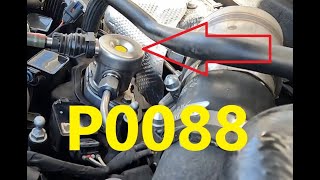
Helpful Videos
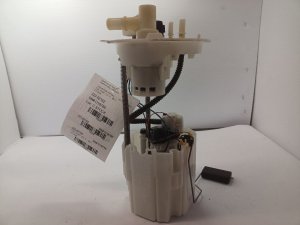
Used OEM Parts in Stock
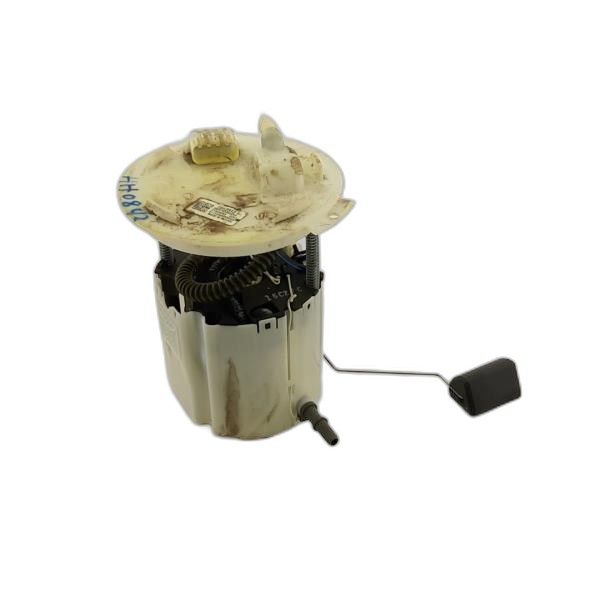
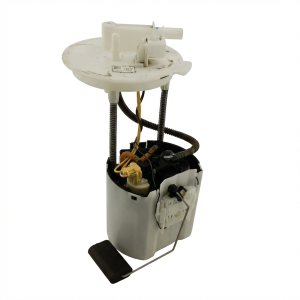


New Aftermarket Parts Available

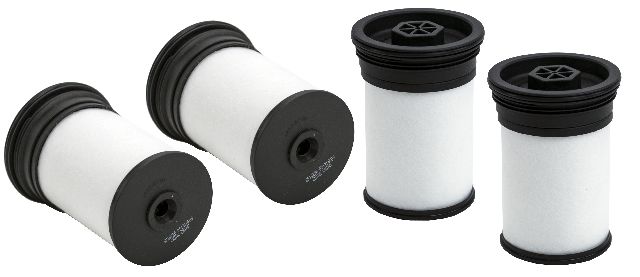

The information in this article is provided for general reference and educational purposes only. Vehicle specifications, procedures, and part compatibility can vary by production date, trim level, and region. Always consult your vehicle's factory service manual and verify part numbers before purchasing or performing repairs. Safety-critical components such as airbags, seat belts, and braking systems should be installed by a qualified professional.
- Gmc CANYON:
- 🎬 Helpful Videos
- 🛍️ Shop This Part
- What's Unique About the 2016-2018 Gmc CANYON
- Diagnostic Flowchart
- Symptoms You May Notice
- Most Likely Causes
- Rare But Worth Checking
- Diagnosis Steps
- Parts You'll Likely Need
- Related Codes That Often Appear With This One
- Technical Service Bulletins (TSBs) & Recalls
- Platform-Specific Known Issues
- Mechanic-Grade Diagnostic Values
- Scan Tool Commands That Help
- Wiring & Ground Locations
- Real Owner Repair Stories
- Model Year Variations Within This Range
- 🎟️ Get 5% Off