

P0087 on 2020-2022 Volkswagen Passat: Fuel Rail Pressure Too Low Causes and Fixes
P0087 on a 2020-2022 VW Passat most often indicates a failing High-Pressure Fuel Pump (HPFP) or a weak in-tank Low-Pressure Fuel Pump (LPFP). Diagnosis is key to avoid replacing the wrong pump; expect repair costs to range from $300 for an LPFP to over $1000 for an HPFP replacement at a shop. Always check the low-pressure side first before condemning the more expensive HPFP.
- P0087 means the fuel pressure is too low for your Passat's engine to run correctly.
- The most likely causes are a failing High-Pressure Fuel Pump (HPFP) or the in-tank Low-Pressure Fuel Pump (LPFP).
- It is critical to diagnose the system properly by testing the low-pressure pump first to avoid unnecessarily replacing the more expensive HPFP.
- Driving with this code is unsafe due to the risk of stalling and can cause further engine damage.
- This is not a recommended DIY repair for beginners due to the high pressures and special tools involved.
What's Unique About the 2020-2022 Volkswagen PASSAT
The 2020-2022 Passat uses a variant of the venerable EA888 2.0T engine. While earlier generations of this engine (FSI) were known for catastrophic cam follower issues leading to P0087, this is less common on the Gen3 version in this Passat, which uses a more durable roller-style follower. However, the high-pressure and low-pressure fuel pumps are still common failure points. Multiple Technical Service Bulletins (TSBs) from Volkswagen group P0087 with other codes like P053F and P0149, indicating a known pattern of fuel pressure regulation issues that often point towards a systemic problem with the HPFP 🎬 Watch: Diagnosing P0087 fuel pressure codes on the 2.0T engine. or its control. [Bulletin #VIN4APIN20211116, Bulletin #VIN4APIN20210930, Bulletin #VIN4APIN20210913]
Diagnostic Flowchart
Tap your situation to follow the diagnostic path that matches what you're seeing on this vehicle.
Symptoms You May Notice
- Significant loss of engine power, especially when accelerating or climbing hills.
- Engine hesitation or stumbling, often between 2,000 and 4,000 RPM.
- Rough or unstable idle.
- Engine stalling, possibly without warning.
- Difficulty starting the engine or extended cranking time.
- Illuminated Check Engine Light.
- Flashing glow plug light (on some VW models) and vehicle entering "limp mode".
- Noticeable fuel smell in the engine oil, indicating a leaking HPFP seal.
- Replacing the High-Pressure Fuel Pump (HPFP) when the actual cause is a weak in-tank Low-Pressure Fuel Pump (LPFP) or a faulty Fuel Pump Control Module. It is critical to test the entire low-pressure system first to avoid this expensive mistake.
Most Likely Causes
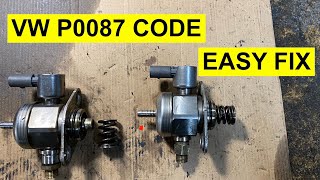
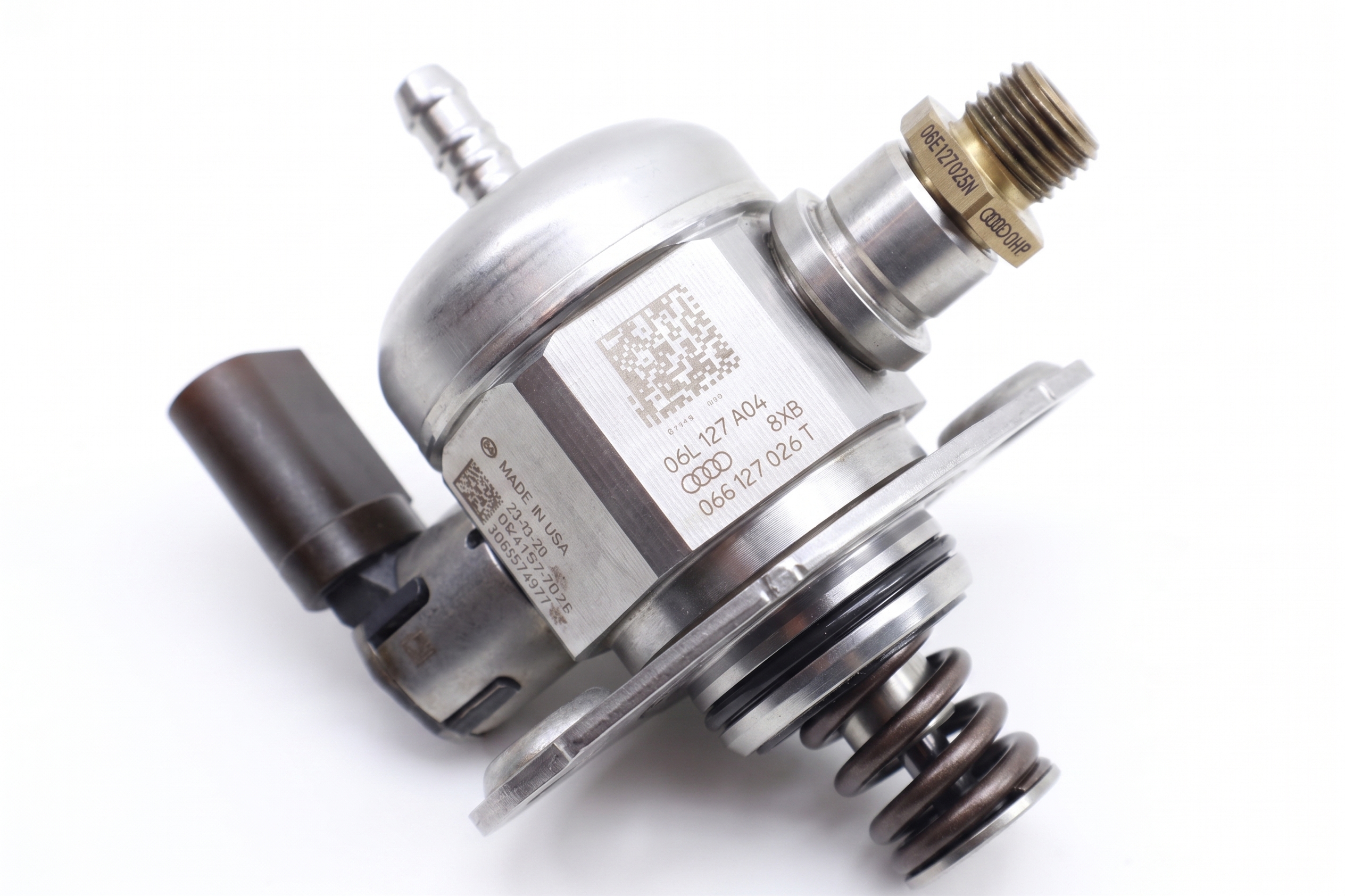
- Failing High-Pressure Fuel Pump (HPFP) 🔴 High Probability The HPFP is a complex mechanical part that is a known failure point on many modern direct-injection engines, including the VW 2.0T EA888. Internal seals can fail, causing fuel to leak into the crankcase, or the pump can mechanically fail and be unable to generate pressure.
How to confirm: A technician will use a scan tool to monitor specified vs. actual fuel rail pressure under load. If the low-pressure pump is confirmed to be working correctly (around 5 bar / 73 PSI), but the high-pressure side cannot meet the commanded pressure (e.g., drops far below 40 bar at idle), the HPFP is the likely culprit. Checking the engine oil for a gasoline smell is also a strong indicator of a failed HPFP seal.
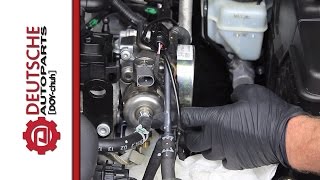
Typical fix: Replacement of the high-pressure fuel pump. 🎬 See this step-by-step HPFP replacement walkthrough. The roller-style cam follower (OEM #06L109311) should be inspected and replaced at the same time as a best practice.
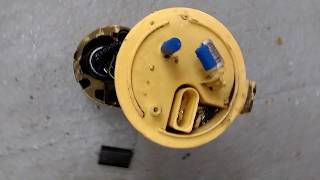
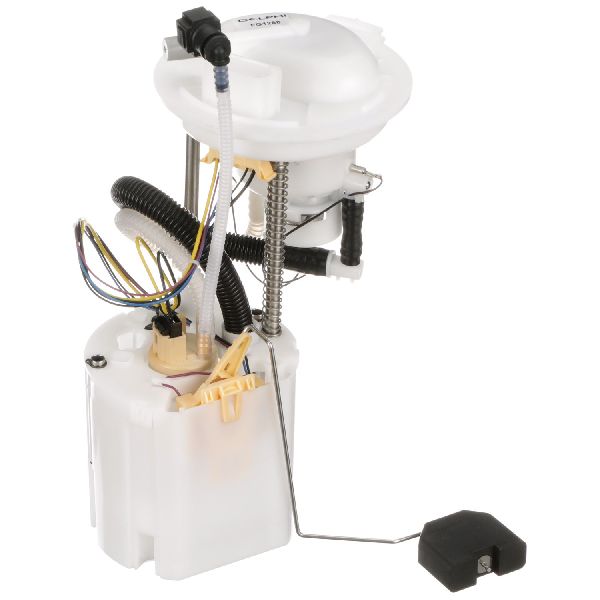
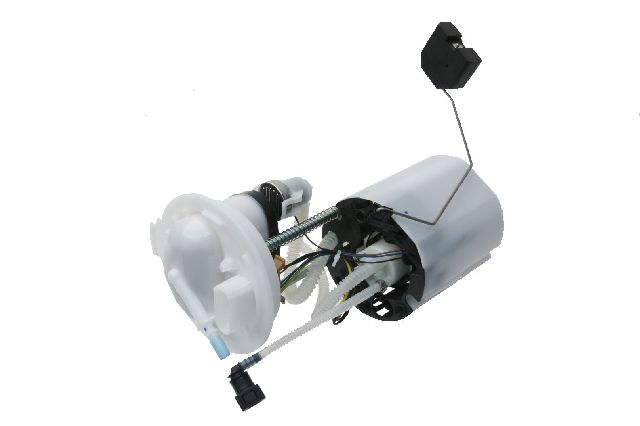
Est. part cost: $250-$700 - Failing In-Tank Low-Pressure Fuel Pump (LPFP) 🟡 Medium Probability The LPFP must supply the HPFP with a steady volume of fuel. If the in-tank pump weakens, it starves the HPFP, which then cannot build adequate high pressure, triggering P0087. This is a common failure point that must be ruled out before replacing the more expensive HPFP.
How to confirm: A fuel pressure gauge is used to test the low-pressure side of the system at the service port. Pressure should be stable and within the manufacturer's specification (typically around 5 bar or ~73 PSI). This should always be the first diagnostic step.
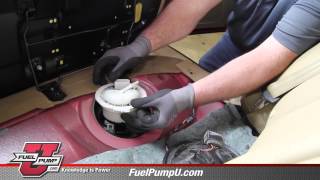
Typical fix: Replace the in-tank fuel pump assembly.
Est. part cost: $150-$350 - Faulty Fuel Pump Control Module ⚪ Low Probability The fuel pump control module (J538) regulates the voltage to the in-tank fuel pump. These modules can fail, often due to heat, cutting power to the pump and causing a sudden loss of fuel pressure. This can be an intermittent problem, making it tricky to diagnose.
How to confirm: In a Reddit thread concerning a similar VW platform, an owner fixed a persistent P0087 by replacing the fuel pump module after both pumps had been replaced without success. Diagnosis involves checking for power at the LPFP connector while the fault is occurring. Using VCDS to activate the pump can help confirm if the module is receiving the command but not sending power.
Typical fix: Replacement of the fuel pump control module.
Est. part cost: $50-$150 - Faulty Fuel Rail Pressure Sensor (G247) ⚪ Low Probability This sensor reports the fuel pressure to the ECM. If it sends an inaccurate low reading, the ECM will log a P0087 code even if the pressure is actually correct. This can happen due to internal failure or corrosion in the connector.
How to confirm: Compare the pressure reading from the sensor (via a scan tool) to a reading from a mechanical pressure gauge connected to the fuel rail. If the readings differ significantly, the sensor is likely faulty. Also, inspect the sensor's wiring and connector for damage or corrosion.
Typical fix: Replacement of the fuel rail pressure sensor.
Est. part cost: $50-$150 - Clogged Fuel Filter ⚪ Low Probability The fuel filter is a maintenance item. If it becomes severely clogged, it can restrict fuel flow from the tank, starving the fuel pumps. This is more likely on higher-mileage vehicles or if fuel quality has been poor. On the Passat, the filter is typically part of the in-tank fuel pump assembly and not serviced separately.
How to confirm: A low-side fuel pressure test will show low and unstable pressure. Since the filter is integrated with the pump, if it's suspected to be clogged, the entire LPFP assembly is usually replaced.
Typical fix: Replace the in-tank fuel pump assembly.
Est. part cost: $30-$80
Rare But Worth Checking
- Leaking Fuel Injector:
- Damaged Wiring to HPFP or Rail Sensor:
Diagnosis Steps
- Connect a VW-specific scan tool (like VCDS) to read fault codes and view live data. 🎬 Watch: How to test your fuel rail pressure with VCDS.
- Monitor 'Fuel Rail Pressure (Requested)' vs. 'Fuel Rail Pressure (Actual)' in live data. Note any significant deviation, especially under load.
- Connect a mechanical fuel pressure gauge to the low-pressure fuel system test port. Verify the in-tank pump is supplying adequate pressure (typically ~5 bar or 73 PSI). This is the most critical first step.
- If low-side pressure is low or unstable, test the fuel pump control module by checking for power at the pump connector. Use the scan tool to command the pump on.
- If low-side pressure is good, but high-side pressure is low under load, the HPFP is the primary suspect.
- Check the engine oil for any smell of gasoline, which points to a leaking HPFP seal.
- If high-side pressure reads low on the scan tool but appears normal on a mechanical gauge, inspect the Fuel Rail Pressure Sensor (G247) and its wiring.
- Inspect fuel lines for any kinks, restrictions, or leaks.
- If timing-related codes are present, check camshaft adaptation values. Values exceeding +/- 8 degrees can indicate a timing chain issue affecting the HPFP drive.
Parts You'll Likely Need
- High-Pressure Fuel Pump (HPFP)
(OEM #06L127025R (supersedes K, M, N, P, Q, T))— This is the most common cause of P0087 on the 2.0T engine once a failing low-pressure pump has been ruled out.
Trusted brands: Bosch, Hitachi
OEM price range: $450-$700
Aftermarket price range: $250-$500 - In-Tank Low-Pressure Fuel Pump (LPFP) — This pump supplies the HPFP and is a common failure point that can mimic HPFP failure. It must be tested before condemning the HPFP.
Trusted brands: VDO, Bosch
OEM price range: $250-$400
Aftermarket price range: $150-$350 - HPFP Cam Follower
(OEM #06L109311)— This roller follower is a wear item that supports the HPFP. While more durable than older designs, it should be inspected and replaced with the HPFP as a best practice to prevent premature failure of the new pump.
Trusted brands: INA, Genuine Volkswagen
OEM price range: $40-$60
Aftermarket price range: $25-$50
Related Codes That Often Appear With This One
- P053F — This code for "Fuel Pressure Regulator Performance" is frequently cited alongside P0087 in Volkswagen TSBs, indicating a problem with the control of the high-pressure pump. [Bulletin #VIN4APIN20230315, Bulletin #VIN4APIN20211116, 2]
- P0149 — This code relates to fuel timing errors and is mentioned in several TSBs with P0087, suggesting a related mechanical or control issue with the fuel pump. [Bulletin #VIN4APIN20211116, Bulletin #VIN4APIN20210930]
- P0300-P0304 — These are misfire codes. Insufficient fuel pressure can cause a lean air/fuel mixture, leading to cylinder misfires.
Technical Service Bulletins (TSBs) & Recalls
- Bulletin #VIN4APIN20230315: Customer states MIL-on with P0087, P1020, P053F and/or P0148
- Bulletin #VIN4APIN20211116: Customer states MIL-on with P0087 P0149 P053F in the ECM
- Bulletin #VIN4APIN20210930: Customer states MIL-on with P0087 P0149 P053F in the ECM
- Bulletin #VIN4APIN20210913: Customer states MIL-on with P0087 P0149 P053F in the ECM
- Technical Tip #TT 20-18-05 (2053220/1): Provides specific diagnostic procedures for P0087 on gasoline engines, emphasizing the need for manual low-side pressure testing.
Platform-Specific Known Issues
- Multiple Technical Service Bulletins (TSBs) have been issued by VW that mention P0087 in conjunction with other fuel system codes. Bulletins VIN4APIN20211116, VIN4APIN20210930, and VIN4APIN20210913 all group P0087 with P0149 and P053F, pointing to a recognized pattern of fuel pressure regulation faults on this platform, often related to the HPFP.
- VW Technical Tip TT 20-18-05 provides specific guidance for diagnosing low fuel pressure on TSI engines, noting that some scan tool readouts for low-side pressure are invalid and a mechanical gauge must be used.
Mechanic-Grade Diagnostic Values
- Low-Pressure Fuel System (LPFP) at idle — expected: 5.0 bar +/- 0.5 bar (~73 PSI). Failure: Pressure below ~4.5 bar (~65 PSI). A failing pump was recorded producing under 50 PSI (~3.4 bar).
- High-Pressure Fuel System (HPFP) at idle — expected: 25.0 to 50.0 bar. Failure: Actual pressure is significantly below specified pressure (e.g., actual is 10 bar when specified is 40 bar). The deviation should not exceed 5.0 bar.
- Low-Pressure Fuel Sensor (G410) Accuracy Test — expected: The scan tool reading from MVB 103 should be within +/- 1.0 bar of the mechanical gauge reading (plus an offset of 1 bar).. Failure: If the deviation is more than +/- 1.0 bar, the G410 sensor is likely faulty.
- Camshaft Adaptation Phase Shift Value (VCDS) — expected: Between -8.0 and +8.0 degrees.. Failure: Values exceeding this range can indicate a stretched timing chain or timing issue, which can affect the HPFP's mechanical drive and cause pressure faults.
Scan Tool Commands That Help
- VCDS / ODIS: Fuel Pump Electronics / Fuel Supply Pump Activation (Output Test or Basic Setting) — Use this to manually run the in-tank low-pressure fuel pump. This helps determine if the pump itself is dead or if the issue lies with the fuel pump control module (J538) or wiring, especially if no sound is heard from the pump when the driver's door is opened.
- VCDS / ODIS: High-Pressure Rail Test (Post-Shutdown Monitoring) — To test for leaking fuel injectors. After getting the engine to operating temperature, shut it off and monitor the 'Fuel Rail Pressure (Actual)' value. Due to heat soak, the pressure should rise and then hold steady. A steady or rapid drop in pressure indicates a leak in the high-pressure system, most commonly a stuck-open injector.
Wiring & Ground Locations
- Fuel Pump Control Module (J538) — Under the rear seat, typically on the passenger side.. This module provides power to the in-tank low-pressure fuel pump. A failure here will cut all fuel supply from the tank, starving the HPFP and causing P0087.
- High-Pressure Fuel Rail Sensor (G247) — Mounted on the fuel rail, which is located underneath the intake manifold.. This sensor provides the 'Actual' pressure reading to the ECM. A faulty sensor can send an erroneously low signal, triggering P0087 even if the mechanical pressure is correct.
- Low-Pressure Fuel Sensor (G410) — On the low-pressure fuel supply line in the engine compartment, often near the HPFP.. This sensor monitors the supply pressure from the in-tank pump. A faulty sensor can cause the ECM to misdiagnose the health of the low-pressure system.
Real Owner Repair Stories
- Forum report on a similar VW 2.0TSI platform (2009 Volkswagen CC 2.0TSI) — P0087 (Fuel rail system pressure too low) and P0172 (System too rich).
❌ Tried (didn't work) Replaced the High-Pressure Fuel Pump (HPFP)., Replaced the high-pressure sensor on the fuel rail.
✅ What actually fixed it The in-tank Low-Pressure Fuel Pump (LPFP) was replaced. The old pump was only producing under 50 PSI, while the new pump produced 80-90 PSI.
When the Usual Fixes Don't Work
- While the High-Pressure Fuel Pump (HPFP) is a primary suspect for P0087 on the EA888 engine, it is not always the root cause. There are documented cases where both the HPFP and the rail pressure sensor were replaced without resolving the issue. The actual fix was replacing a weak in-tank Low-Pressure Fuel Pump (LPFP) that was unable to supply the HPFP with adequate volume, even though it may have seemed to be working. This strongly reinforces the critical diagnostic rule: always mechanically test the low-pressure fuel system's pressure and volume before condemning the more expensive high-pressure components.
OEM Part Supersession History
06L127025K/M/N/P/Q→06L127025R, then 06L127025T— Revisions included improved diaphragm materials to better resist degradation from ethanol-blended fuels and upgraded internal bearings to increase durability.
Heads up: While later revisions are generally backward compatible and preferred, always verify the latest required part number with a dealer using the vehicle's VIN.Unknown, multiple early versions→06E906051K— An improved Low-Pressure Fuel Sensor (G410) was released to address premature failures causing false low-pressure readings.
Heads up: After replacing, the system may require adaptation via Basic Settings (Group 103) with a tool like VCDS.
Helpful Videos
Used OEM Parts in Stock

New Aftermarket Parts Available



The information in this article is provided for general reference and educational purposes only. Vehicle specifications, procedures, and part compatibility can vary by production date, trim level, and region. Always consult your vehicle's factory service manual and verify part numbers before purchasing or performing repairs. Safety-critical components such as airbags, seat belts, and braking systems should be installed by a qualified professional.
- Volkswagen PASSAT:
- 🎬 Helpful Videos
- 🛍️ Shop This Part
- What's Unique About the 2020-2022 Volkswagen PASSAT
- Diagnostic Flowchart
- Symptoms You May Notice
- Most Likely Causes
- Rare But Worth Checking
- Diagnosis Steps
- Parts You'll Likely Need
- Related Codes That Often Appear With This One
- Technical Service Bulletins (TSBs) & Recalls
- Platform-Specific Known Issues
- Mechanic-Grade Diagnostic Values
- Scan Tool Commands That Help
- Wiring & Ground Locations
- Real Owner Repair Stories
- When the Usual Fixes Don't Work
- OEM Part Supersession History
- 🎟️ Get 5% Off