

P0087 on 2009-2016 Volkswagen Jetta: Low Fuel Pressure Causes & Fixes
On 2009-2016 VW Jettas, especially TDI models with the CJAA/CBEA engine, P0087 often points to a clogged fuel filter or a failing in-tank low-pressure fuel pump. However, it is infamously known as the primary indicator of a catastrophic High-Pressure Fuel Pump (HPFP) failure, a very expensive repair that involves replacing the entire fuel system due to metal contamination. For TSI (gasoline) models, a worn cam follower is also a very common cause.
- For any Jetta with P0087, the first and cheapest step is to replace the fuel filter.
- On a TDI model, immediately check the fuel filter housing for metal shavings. If you see any, stop, and prepare for a major fuel system repair.
- Do not drive a vehicle with an active P0087 code, as it can stall at any time, which is a serious safety hazard.
- If you have a 2009-2014 TDI, contact a VW dealer to check for any applicable extended warranties related to the fuel system before authorizing expensive repairs.
- The symptoms of a simple clogged fuel filter can be identical to a catastrophic HPFP failure (limp mode, loss of power), so always diagnose systematically starting with the easiest items.
What's Unique About the 2009-2016 Volkswagen JETTA

For the 2009-2014 Jetta TDI with the 2.0L Common Rail engine (engine codes CBEA, CJAA), the P0087 code is infamous. It is frequently the first warning of a catastrophic failure of the Bosch CP4 High-Pressure Fuel Pump (HPFP). These pumps can disintegrate internally, sending metallic shavings throughout the entire fuel system, requiring a complete and very costly replacement of the pump, injectors, fuel lines, and fuel tank. This issue was so prevalent that it led to class-action lawsuits and a specific Extended Warranty from Volkswagen for the HPFP on certain 2009-2012 models, covering the pump for 10 years or 120,000 miles if specific conditions were met, such as having a misfueling guard installed and no fuel contamination.
Diagnostic Flowchart

Tap your situation to follow the diagnostic path that matches what you're seeing on this vehicle.
Generation note: This range covers the late Volkswagen Jetta A5 (Mk5, 2009-2010) and the entire A6 (Mk6, 2011-2016) generation. The most significant issue, the HPFP failure, is primarily associated with the 2.0L TDI Common Rail engines (CBEA/CJAA) found in 2009-2014 models. Gasoline (TSI) models can also get this code, but the causes are typically a worn cam follower or the HPFP itself, without the same risk of system-wide metal contamination.
Symptoms You May Notice

- Flashing glow plug light on the dashboard (TDI models)
- Check Engine Light is on
- Vehicle enters "limp mode" with severely reduced power, often limiting RPMs to around 3000.
- Engine stalling, sometimes without warning, and failure to restart
- Hesitation or sputtering during acceleration
- Lack of power, especially when climbing hills or under load
- Rough idle
- Long crank time or difficulty starting
- Whining noise from the fuel pump area (either in-tank or under the hood).
- Immediately assuming HPFP failure on a TDI without checking the basics. Always start with replacing the fuel filter and inspecting for metal shavings.
- Replacing the high-pressure sensor (G247) or regulator (N276) when the root cause is a weak in-tank pump (LPFP) or a clogged filter. Log requested vs. actual pressure to see if the system is mechanically unable to keep up.
- On TSI engines, replacing the HPFP without first inspecting the inexpensive cam follower. The follower is the most common failure point. 🎬 Watch: How to inspect and replace a worn cam follower
Most Likely Causes
- Clogged Fuel Filter 🔴 High Probability Diesel fuel is more susceptible to contamination and gelling in cold weather. Owners may also neglect the filter's 20,000-mile replacement interval. A collapsed or old filter can't flow enough fuel, starving the high-pressure system.
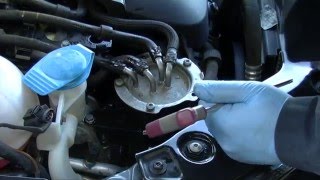
How to confirm: Check service records for the last replacement. A visual inspection may show a deformed or twisted filter element, indicating it has collapsed under suction. Replacing the filter is a low-cost first diagnostic step. 🎬 Watch: How to change your Jetta TDI fuel filter DIY
Typical fix: Replace the fuel filter and its housing seals. Prime the system using a scan tool like VCDS before starting.
Est. part cost: $25-$50 - High-Pressure Fuel Pump (HPFP) Failure (TDI Engines) 🔴 High Probability The Bosch CP4 pump used on 2.0L TDI engines (CJAA/CBEA) is known to fail, sending metal debris through the fuel system. This can be caused by misfueling (gasoline in a diesel), poor fuel quality, air in the system, or inherent design flaws.
How to confirm: The definitive test is to inspect the fuel filter housing and the fuel pressure regulator valve (on the HPFP) for metallic glitter or shavings. A loss of power followed by a no-start condition is a classic symptom. As one owner reported, 'LIFTING THE COVER, I SAW METAL P…' A VCDS log of Measuring Block 020 will show actual pressure failing to meet specified pressure under load. 🎬 See this detailed explanation of TDI HPFP failure and repair
Typical fix: This is a catastrophic failure requiring replacement of the entire fuel system: HPFP, all injectors, fuel rail, all hard and soft lines, in-tank lift pump, and the fuel tank itself must be dropped and cleaned or replaced. This is a multi-thousand dollar repair, though it may be covered by VW's extended warranty on eligible vehicles.
Est. part cost: $2000-$6000+ - Failing In-Tank Low-Pressure Fuel Pump (LPFP) 🟡 Medium Probability The LPFP (lift pump) must supply the HPFP with a steady volume and pressure of fuel. If it weakens with age, it can't keep up with demand, starving the HPFP and triggering P0087 under load.
How to confirm: Use a scan tool (like VCDS) to run the fuel pump activation test in 'Basic Settings'; a lack of buzzing from under the rear seat indicates failure. You can also test for voltage at the pump connector. Monitoring low-side fuel pressure with a gauge is another definitive test; it should be around 4-5 bar (58-72 PSI).
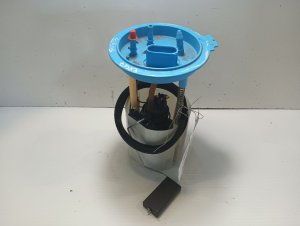
Typical fix: Replace the in-tank low-pressure fuel pump assembly. It is accessed from under the rear seat.
Est. part cost: $150-$350 - Worn Cam Follower (TSI Engines) 🔴 High Probability
How to confirm: Remove the HPFP from the cylinder head. The cam follower sits inside the housing. Inspect its black friction surface for wear or a hole. Also inspect the camshaft lobe for scoring.
Typical fix: Replace the cam follower. If the follower has worn through, the HPFP and potentially the intake camshaft may also need replacement.
Est. part cost: $20-$40
Rare But Worth Checking
- Faulty Fuel Pressure Regulator Valve (N276): This solenoid is located on the high-pressure fuel rail. It can fail electrically or get stuck, causing erratic pressure control. Sometimes it is contaminated by debris from a failing HPFP. One NHTSA complaint noted a leaking regulator was the cause.
- Leaking Fuel Injectors: An injector can stick open or leak internally, causing a drop in rail pressure as it returns too much fuel to the tank instead of holding pressure. This can be diagnosed by performing an injector leak-off test.
- Faulty Fuel Rail Pressure Sensor (G247): The sensor can fail and send incorrect low-pressure readings to the ECM, even if the pressure is normal. However, this is less common than a mechanical failure in the system. A good diagnostic step is to compare the sensor reading in VCDS to a reading from a mechanical gauge.
Diagnosis Steps

- Scan the vehicle for all stored fault codes with a VW-specific tool like VCDS. Note any other codes that appear with P0087.
- Check the fuel level. A very low fuel level can cause fuel starvation.
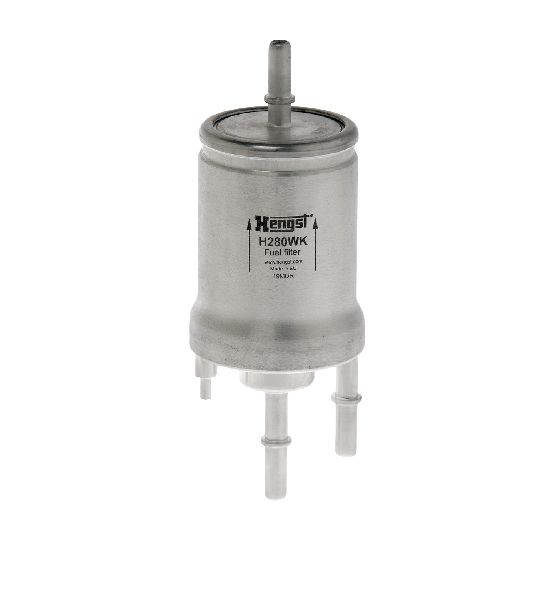
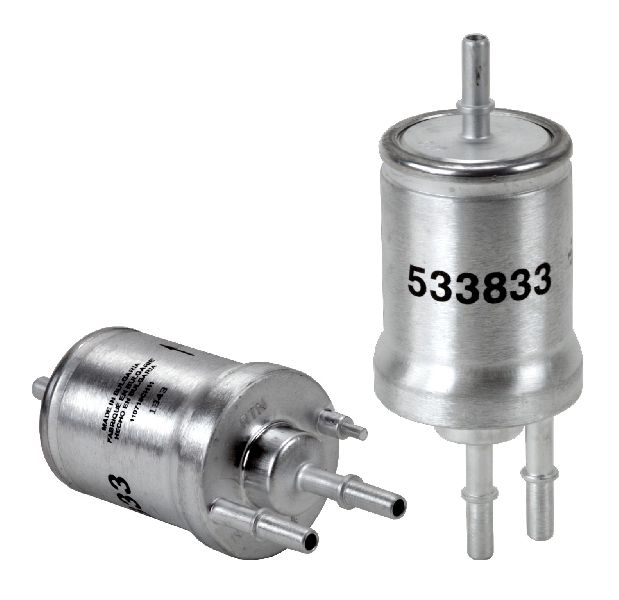
- Critical First Step (TDI): Replace the fuel filter (Part # 1K0127434B or similar). While the housing is open, carefully inspect the old filter and the fuel inside the housing for any signs of metallic glitter or shavings. Use a clean cloth and a magnet. The presence of metal confirms HPFP failure.
- TSI Specific Check: If the engine is a TSI, remove the HPFP and inspect the cam follower for wear or damage. This is a primary failure point.
- Use a scan tool (VCDS) to monitor fuel pressure. For TDI, log Measuring Block 020 (Requested vs. Actual High Pressure) while driving. For TSI, check both low and high pressure blocks. A large deviation where 'Actual' cannot keep up with 'Specified' under acceleration points to a fuel delivery issue.
- Test the in-tank low-pressure fuel pump (LPFP). Listen for it to prime when the key is turned. Use VCDS to run the pump activation test. If possible, measure the low-side pressure; it should be stable and within spec (approx. 4-5 bar or 58-72 PSI).
- Perform a fuel injector leak-off test. Connect test bottles to the return lines of each injector
Parts You'll Likely Need

- Fuel Filter
(OEM #1K0127434B)— This is the most common maintenance item and the first diagnostic step. A clogged filter is a frequent cause of P0087. - High-Pressure Fuel Pump (HPFP)
(OEM #03L130755AL (TDI), 06H127025Q (TSI))— The infamous failure point on TDI models, and a common failure on TSI models as well. - In-Tank Low-Pressure Fuel Pump (LPFP)
(OEM #1K0919050AB)— A weak lift pump cannot supply enough fuel to the HPFP, causing pressure drops under load. - HPFP Cam Follower (TSI Only)
(OEM #06H109311B)— A critical wear item on TSI engines that directly causes P0087 when it fails. - Fuel Pressure Regulator (N276)
(OEM #057130764H)— Can fail or become contaminated with debris, leading to incorrect pressure regulation.
Related Codes That Often Appear With This One
- P0088 — Fuel Rail/System Pressure - Too High. Seeing both P0087 and P0088 can point to a faulty fuel pressure regulator or sensor that is providing erratic readings, causing the pressure to swing wildly.
- P0300-P0304 — Cylinder Misfire Codes. Insufficient fuel pressure leads to a lean condition, causing the engine to misfire, especially under load.
- P1065 — Fuel Pressure Regulation - Control Difference. This VW-specific code often accompanies P0087/P0088 and points directly to a problem with the system's ability to match actual pressure to the ECM's requested pressure.
Technical Service Bulletins (TSBs) & Recalls
- VW TSB 01-10-11 (TPI 2023624): Addresses issues related to contaminated fuel found in the fuel system of Common Rail TDI engines.
- VW TSB 20-14-03 (TPI 2036169): Discusses concerns with Diesel fuel that has insufficient winterization blending, which can cause gelling and fuel starvation.
- VW Extended Warranty VWP-15-06: Details the 10-year/120,000-mile warranty extension for the HPFP on certain 2009-2012 TDI models, outlining the conditions for coverage.
Platform-Specific Known Issues
- TDI HPFP Failure and Extended Warranty: The failure of the Bosch CP4 HPFP on 2009-2014 2.0L TDI engines is the most significant issue related to this code. Volkswagen of America extended the warranty on these components due to a class-action settlement. Owners should check with a VW dealer to see if their vehicle is still covered by any extended warranty for the fuel system before paying for repairs.
- TSI Cam Follower Wear: On 2.0T TSI gasoline engines, the cam follower for the HPFP is a known wear item. A worn follower can cause P0087 and should be inspected regularly.
Mechanic-Grade Diagnostic Values
- Low-Pressure Fuel System (LPFP) pressure at idle — expected: 4.0 - 5.0 bar (58 - 72 PSI). Failure: Pressure below 4.0 bar indicates a weak LPFP or clogged filter.
- High-Pressure Fuel Rail (TDI) at idle — expected: Approx. 230-300 bar (3335-4351 PSI). Failure: Actual pressure significantly and consistently below specified pressure in VCDS Measuring Block 20.
- High-Pressure Fuel Rail (TDI) under load — expected: Can exceed 1,600 bar (23,200 PSI). Failure: Actual pressure fails to rise with requested pressure during acceleration, indicating a fuel delivery deficit.
- Fuel Pressure Sensor (G247) wiring resistance — expected: Max 1.5 ohms. Failure: Higher resistance indicates a wiring issue between the sensor and the ECM.
- VCDS Fuel Pressure Sensor (G247) vs. Mechanical Gauge — expected: Readings should be within 5 bar of each other.. Failure: A deviation greater than 5 bar suggests the G247 sensor is faulty.
Scan Tool Commands That Help
- VCDS (VAG-COM): Engine -> Basic Settings -> Group 035 (or 'Fuel Supply Pump Activation') — To manually activate the in-tank low-pressure fuel pump (LPFP) for 30 seconds to test its operation (listen for buzzing) and to prime the fuel system after replacing the fuel filter or other components.
- VCDS (VAG-COM): Engine -> Measuring Blocks -> Group 020 — To log and compare 'Fuel Pressure (specified)' against 'Fuel Pressure (actual)' on the high-pressure side while driving. This is crucial for diagnosing if the HPFP can meet demand under load.
- VCDS (VAG-COM): Engine -> Measuring Blocks -> Group 013 — To check injector correction values at idle. While not a direct pressure test, large deviations can indicate a leaking injector that is causing a loss of rail pressure.
Wiring & Ground Locations
- Fuel Pump Relay (J17) — On the relay panel located under the driver's side dashboard, above the pedals. Access requires removing several trim panels.. A faulty relay will prevent the in-tank low-pressure fuel pump from activating, starving the entire system of fuel and causing a P0087 code.
- Main Engine Ground Strap — Typically runs from the battery negative terminal to a point on the chassis below the battery tray, and another from the transmission housing to the chassis.. A corroded or loose ground can cause intermittent electrical issues for the entire engine management system, including the fuel pumps and sensors, leading to erratic behavior and fault codes.
- G247 Fuel Rail Pressure Sensor Connector — Screwed into the end of the high-pressure fuel rail, typically on the driver's side of the engine.. The connector and its wiring are a common point of failure. A diagnostic test involves checking for 5V reference, signal, and ground at the connector pins to rule out a wiring issue before replacing the sensor.
Real Owner Repair Stories
- YouTube channel 'Intelligent Auto' (2008 Volkswagen Passat 2.0 TDI (Engine Code CBA - similar common rail system)) — P0087 code, random engine stalling, difficulty restarting. VCDS showed actual rail pressure dropping to zero.
❌ Tried (didn't work) Initial diagnosis pointed towards HPFP or sensor issues.
✅ What actually fixed it The in-tank low-pressure fuel pump was the ultimate cause. The technician confirmed power was reaching the pump's connector using VCDS basic settings, but the pump itself was dead when tested directly with a 12V battery. Replacing the in-tank pump resolved the P0087 code and stalling issues.
OEM Part Supersession History
03L130755 (and revisions A, D, L, M, AA, AF)→03L130755AL (or newer revisions)— Revisions to the Bosch CP4 HPFP to improve reliability and address internal failure modes.
Heads up: While many revisions exist, it is critical to use the latest available part number for replacement to benefit from design improvements. Using old stock or a used pump with an early part number re-introduces the original failure risk.
Model Year Variations Within This Range
- 2009-2014 TDI: The Jetta used two main 2.0L TDI engine codes: CBEA (primarily 2009-2010) and CJAA (2010-2014). While both use a CP4 HPFP and are susceptible to failure, they have key internal differences. The CBEA has a balance shaft module in the oil pan which the CJAA lacks. This has little effect on the P0087 diagnosis itself, but is a critical distinction when sourcing a replacement engine or related parts. Some sensors and wiring harnesses may also have slight differences between the two.
Helpful Videos
Used OEM Parts in Stock
New Aftermarket Parts Available

The information in this article is provided for general reference and educational purposes only. Vehicle specifications, procedures, and part compatibility can vary by production date, trim level, and region. Always consult your vehicle's factory service manual and verify part numbers before purchasing or performing repairs. Safety-critical components such as airbags, seat belts, and braking systems should be installed by a qualified professional.
- Volkswagen JETTA:
- 🎬 Helpful Videos
- 🛍️ Shop This Part
- What's Unique About the 2009-2016 Volkswagen JETTA
- Diagnostic Flowchart
- Symptoms You May Notice
- Most Likely Causes
- Rare But Worth Checking
- Diagnosis Steps
- Parts You'll Likely Need
- Related Codes That Often Appear With This One
- Technical Service Bulletins (TSBs) & Recalls
- Platform-Specific Known Issues
- Mechanic-Grade Diagnostic Values
- Scan Tool Commands That Help
- Wiring & Ground Locations
- Real Owner Repair Stories
- OEM Part Supersession History
- Model Year Variations Within This Range
- 🎟️ Get 5% Off