

P0087 on 2021-2022 Volkswagen GTI: Low Fuel Rail Pressure Causes and Fixes
P0087 on the Mk8 GTI indicates fuel pressure is too low. This is often caused by a failing high-pressure fuel pump (HPFP) or low-pressure fuel pump (LPFP). Diagnosis is critical, but the HPFP is a common failure point for this code on VWs, often flagged alongside codes P053F and P0149 per multiple Technical Service Bulletins.
- P0087 on your GTI means the fuel pressure is dangerously low, and you should diagnose it promptly to avoid stalling and potential engine damage.
- The issue is most likely one of the two fuel pumps: the low-pressure pump in the tank (LPFP) or the high-pressure pump on the engine (HPFP).
- Multiple manufacturer TSBs link P0087 with codes P0149 and P053F, indicating a recognized pattern related to the fuel system.
- Proper diagnosis involves using a scan tool to compare requested vs. actual fuel pressure to determine if the low-pressure or high-pressure side is at fault.
- Do not replace parts without diagnosis; verify the low-pressure pump is working before condemning the more expensive high-pressure pump.
What's Unique About the 2021-2022 Volkswagen GTI

The 2021-2022 GTI uses the advanced EA888 evo4 direct-injection engine. This system features an updated high-pressure fuel injection system that operates at up to 5,076 PSI (350 bar), a significant increase from the previous generation's 2,900 PSI. It relies on both a low-pressure fuel pump (LPFP) in the tank and a camshaft-driven high-pressure fuel pump (HPFP). This dual-pump system is precise but adds complexity. The provided NHTSA Technical Service Bulletins (TSBs) repeatedly group P0087 with codes P0149 (Fuel Timing Error) and P053F (Cold Start Fuel Pressure Performance), strongly suggesting a known issue with the high-pressure fuel system's ability to build and maintain pressure under specific conditions.
Diagnostic Flowchart

Tap your situation to follow the diagnostic path that matches what you're seeing on this vehicle.
Symptoms You May Notice
- Check Engine Light (MIL) is on
- Significant loss of engine power, especially during acceleration or high RPMs
- Engine hesitation or stumbling
- Rough or unstable idle
- Engine stalling, sometimes intermittently at junctions
- Difficulty starting the engine, or extended crank time
- Reduced fuel economy
- Replacing oxygen sensors, which are unlikely to be the root cause of a fuel pressure code.
- Replacing only the fuel filter when it's part of the entire LPFP assembly on this vehicle.
- Immediately replacing the HPFP without first verifying that the LPFP is supplying it with adequate pressure and volume (target 4-6 bar).
Most Likely Causes

- Failing High-Pressure Fuel Pump (HPFP) 🔴 High Probability The HPFP is a mechanical pump driven by the camshaft and is a common failure point in direct-injection systems that can lead to low pressure. The grouping of P0087, P0149, and P053F in multiple TSBs points toward a systemic HPFP-related issue. Forum discussions for modern GTIs frequently point to the HPFP as the likely culprit when this code appears.
How to confirm: Use a scan tool (like VCDS) to log 'Fuel Rail Pressure (Requested)' vs. 'Fuel Rail Pressure (Actual)'. A significant and consistent discrepancy where the actual pressure is lower than requested, especially under load, points to the HPFP. At idle, the HPFP should maintain around 50 bar (725 PSI).
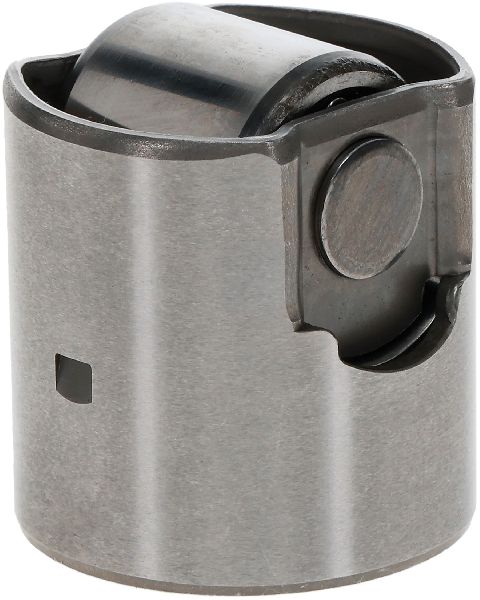
Typical fix: Replace the high-pressure fuel pump and the associated cam follower.
Est. part cost: $200-$500 - Failing Low-Pressure Fuel Pump (LPFP) 🟡 Medium Probability The in-tank LPFP feeds the HPFP. If it cannot supply a sufficient volume of fuel, the HPFP will be starved and cannot build adequate pressure. A user on the r/GolfGTI subreddit diagnosed their P0087 issue as a failing LPFP after noticing their pressure was only 2 bar, when it should be between 4-6 bar.
How to confirm: Test the low-pressure fuel system's pressure. A scan tool may show the low-pressure side struggling to maintain its target, which should be around 4-6 bar (58-87 PSI). If the pressure is low, the LPFP is the likely cause.
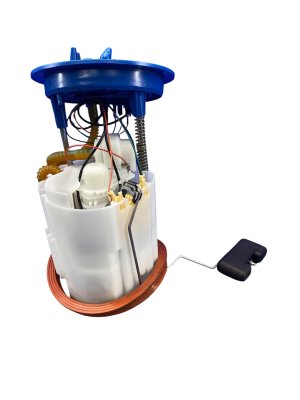
Typical fix: Replace the in-tank low-pressure fuel pump module.
Est. part cost: $250-$600 - Clogged Fuel Filter 🟡 Medium Probability The fuel filter is integrated into the LPFP assembly on this platform. While designed to last, poor fuel quality can cause premature clogging, restricting flow to the HPFP. This is often a preventative replacement when addressing fuel pressure issues.
How to confirm: This is often diagnosed by ruling out other causes or by inspecting the filter during LPFP replacement. A diagnostic test showing low fuel volume during a flow test can also indicate a clog. In some extreme cases on other VW models, the filter media has been found to degrade into a jelly-like substance.
Typical fix: Replace the low-pressure fuel pump assembly, which includes the integrated filter.
Est. part cost: $250-$600 - Faulty Fuel Rail Pressure Sensor (G247) ⚪ Low Probability The sensor can fail and send incorrect low-pressure readings to the ECM, triggering the code even if the pressure is normal. On older generations, this was a known issue with several part revisions.
How to confirm: With the engine off (but ignition on), the rail pressure sensor reading should be close to the low-pressure system's reading. Compare the sensor's live data to a mechanical gauge if possible. If the readings don't match, the sensor is likely faulty. A deviation greater than 5 bar between the sensor reading and a mechanical gauge suggests a faulty sensor.
Typical fix: Replace the fuel rail pressure sensor.
Est. part cost: $50-$150
Rare But Worth Checking
- Worn Camshaft Lobe or HPFP Cam Follower: While more common on older EA888 engine generations, excessive wear on the camshaft lobe that drives the HPFP or the follower can reduce the pump's stroke, leading to low pressure. It's considered best practice to inspect and often replace the cam follower whenever the HPFP is replaced.
- Leaking Fuel Injector: A fuel injector stuck open can cause a drop in rail pressure. This would typically be accompanied by other symptoms like a rich running condition, black smoke, and misfire codes (P0300-P0304) for a specific cylinder. A leak-down test using VCDS after the engine is hot can help identify this; pressure should rise and hold steady, not drop.
- Wiring Issue: A damaged wire or loose connection at the fuel pressure sensor or either fuel pump can cause erratic readings or loss of power, triggering the code. Forum users on older GTIs have reported that loose pins in the rail pressure sensor connector can cause intermittent P0087 codes.
- Faulty Fuel Pump Control Module (J538): The fuel pump control module regulates the voltage to the LPFP. A failure in this module can prevent the LPFP from running at the correct speed, starving the HPFP of fuel. A diagnostic scan may show the pump duty cycle at 0% even when it should be active. On modern VWs, this module requires programming ('Component Protection' adaptation) after replacement.
Diagnosis Steps
- Connect an OBD-II scanner (VCDS or OBDeleven recommended) and confirm P0087 is present. Note any other codes, especially P053F and P0149, as they point to a systemic issue identified in VW TSBs.
- Using the scanner's live data function, monitor 'Fuel Rail Pressure (Requested)' and 'Fuel Rail Pressure (Actual)'. Also monitor 'Low Fuel Pressure: actual'.
- At idle, the low-pressure system should read between 4.0 and 6.0 bar. The high-pressure rail should be around 50 bar.
- Observe the pressures during a short drive and under heavy acceleration (if safe to do so). If 'Actual' high pressure consistently fails to meet 'Requested' pressure, there is a genuine pressure loss. If the 'Low Fuel Pressure' reading drops below 4.0 bar under load, the problem lies with the in-tank pump (LPFP) or its filter.
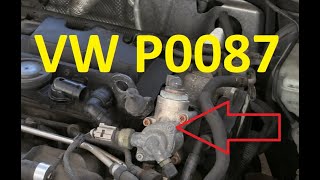
- If the low-pressure system is healthy (maintains 4-6 bar) but the high-pressure side is low, the issue is likely the HPFP, the rail pressure sensor, or a leak 🎬 Watch: Diagnosing and fixing P0087 high pressure fuel pump issues. in the high-pressure system.
- Visually inspect the HPFP, fuel lines, and injectors for any signs of fuel leaks. Be extremely cautious as the system is under high pressure.
- If the HPFP is suspected, inspect the camshaft follower for wear upon removal, as a worn follower will cause the new pump to fail prematurely.
Parts You'll Likely Need
- High-Pressure Fuel Pump (HPFP)
(OEM #06Q127025R)— This is the most probable cause when the low-pressure fuel system is confirmed to be working correctly, especially given the TSBs linking P0087 to other fuel timing and pressure codes.
Trusted brands: Genuine Volkswagen/Audi, Bosch
OEM price range: $400-$600
Aftermarket price range: $170-$450 - Low-Pressure Fuel Pump (LPFP) / In-Tank Fuel Pump Assembly
(OEM #5WA919051P (supercedes 5Q0919051CN))— If diagnostic tests show the low-pressure side is failing to supply the HPFP, this is the part to replace. It contains the pump, sending unit, and integrated fuel filter.
Trusted brands: Genuine Volkswagen/Audi, VDO, Continental, Bosch
OEM price range: $450-$650
Aftermarket price range: $230-$400 - Fuel Rail Pressure Sensor
(OEM #06L906054D)— Replaced when diagnostics confirm the sensor is providing incorrect readings, but the actual fuel pressure is verified to be correct.
Trusted brands: Genuine Volkswagen/Audi, Bosch, Standard Motor Products
OEM price range: $50-$150
Aftermarket price range: $30-$90
Related Codes That Often Appear With This One
- P053F — Indicates 'Cold Start Fuel Pressure Performance' is out of spec. It often appears with P0087 because a weak fuel pump may struggle most to build pressure when the engine is cold and fuel is denser.
- P0149 — Means 'Fuel Timing Error'. This code can be triggered alongside P0087 because incorrect fuel pressure directly affects the ECM's ability to time fuel injection events accurately.
- P0300-P0304 — These are misfire codes. Insufficient fuel pressure can lead to a lean condition, causing the air-fuel mixture to fail to ignite properly in one or more cylinders.
Technical Service Bulletins (TSBs) & Recalls
- VIN4APIN20230315: Mentions customer states MIL-on with P0087, P1020, P053F and/or P0148.
- VIN4APIN20211116: Mentions customer states MIL-on with P0087, P0149, P053F in the ECM.
- VIN4APIN20211013: Mentions customer states MIL-on with P0087, P0149, P053F in the ECM.
- VIN4APIN20210913: Mentions customer states MIL-on with P0087, P0149, P053F in the ECM.
- VIN4APIN20210819: Mentions customer states MIL-on with P0087, P0149, P053F in the ECM.
Platform-Specific Known Issues
- Multiple Technical Service Bulletins (TSBs) for the 2021-2022 model years list customer complaints of a Malfunction Indicator Lamp (MIL) on with code P0087 stored, often accompanied by P0149 and P053F.
- The EA888 evo4 engine operates with a significantly higher fuel pressure (up to 350 bar / 5,076 PSI) compared to previous generations, making the system more sensitive to any flow restrictions or pump weaknesses.
Mechanic-Grade Diagnostic Values
- Low-Pressure Fuel System Pressure (Actual) — expected: 4.0 to 6.0 bar (58 to 87 PSI) at idle and under load.. Failure: Pressure dropping below 4.0 bar, especially under acceleration.
- High-Pressure Fuel Rail Pressure (Actual vs. Specified) — expected: Actual should closely match Specified. At idle, this is typically around 50 bar (725 PSI).. Failure: Actual pressure is consistently and significantly lower than Specified pressure, especially under load.
- Fuel Rail Pressure Sensor (G247) vs. Mechanical Gauge — expected: The VCDS reading and the mechanical gauge reading should be within 5 bar of each other.. Failure: A deviation greater than 5 bar between the electronic reading and the mechanical gauge.
- Fuel Rail Pressure Leak-Down Test (Engine Off) — expected: After running the engine to operating temperature and shutting it off, the rail pressure should rise due to heat soak and then hold steady.. Failure: A steady drop in pressure after shutdown indicates a leak, likely from an injector or check valve in the HPFP.
Hidden / Shadow Codes Worth Checking
- 16471: This is the VAG-specific fault code number that corresponds to the generic OBD-II code P0087. (see via Professional VW/Audi scan tools like VCDS or ODIS will display this alongside the P-code.)
Scan Tool Commands That Help
- VCDS (VAG-COM): Basic Settings > Fuel Supply Pump Activation — Use this to command the in-tank low-pressure fuel pump to run. This is a critical test to verify if the pump and its control module are receiving the command and are functional. If the pump doesn't make a buzzing sound, it confirms a problem in the low-pressure circuit (pump, module, or wiring).
- VCDS (VAG-COM): Basic Settings > Fuel Supply Pump Activation (Priming) — After replacing a fuel pump or filter, this function should be run for at least 30-60 seconds to prime the fuel system, purge air from the lines, and ensure the system is ready before attempting to start the engine.
Wiring & Ground Locations
- Fuel Pump Control Module (J538) — Located under the rear seat, typically on the passenger's side. The module is often clipped to the access cover for the in-tank fuel pump assembly.. This module directly controls the low-pressure fuel pump. A failure of the module or its wiring/connector will starve the high-pressure pump of fuel, directly causing a P0087 code. Its location makes it susceptible to damage or liquid spills from the cabin.
Real Owner Repair Stories
- Reddit user EtechEmmanuel on r/GolfGTI (2022 Volkswagen GTI (Mk8), tuned on 93 octane fuel) — Engine cut power and would not exceed 4,000 RPM during a highway overtake, triggering a P0087 CEL. Car would still drive, idle, and start fine.
❌ Tried (didn't work) Clearing the code (it came back immediately).
✅ What actually fixed it Diagnosis pointed to a failing Low-Pressure Fuel Pump (LPFP). Live data showed the low-pressure side was only at 2 bar, while the expected range is 4-6 bar, indicating the LPFP was unable to supply enough fuel to the HPFP under load. - YouTube video on a 2008 Passat 2.0 TDI (2008 VW Passat 2.0 TDI (different engine, but identical diagnostic principle)) — P0087, random engine shutdowns, difficulty restarting.
✅ What actually fixed it The in-tank low-pressure fuel pump was confirmed to be dead and was replaced. The technician used VCDS to command the pump on, but it was silent. They then used a 12V battery to power the pump's terminals directly, and it still did not run, confirming the pump itself had failed.
OEM Part Supersession History
5Q0919051CN, 5Q0919051AP, 5Q0919051BK, 5WA919051C→5WA919051P— Standard part evolution for improved reliability or manufacturing changes.
Heads up: Always verify the correct part number for your specific VIN, but 5WA919051P is the widely listed replacement for the Mk8 GTI LPFP assembly.
Helpful Videos
Used OEM Parts in Stock


New Aftermarket Parts Available



The information in this article is provided for general reference and educational purposes only. Vehicle specifications, procedures, and part compatibility can vary by production date, trim level, and region. Always consult your vehicle's factory service manual and verify part numbers before purchasing or performing repairs. Safety-critical components such as airbags, seat belts, and braking systems should be installed by a qualified professional.
- Volkswagen GTI:
- 🎬 Helpful Videos
- 🛍️ Shop This Part
- What's Unique About the 2021-2022 Volkswagen GTI
- Diagnostic Flowchart
- Symptoms You May Notice
- Most Likely Causes
- Rare But Worth Checking
- Diagnosis Steps
- Parts You'll Likely Need
- Related Codes That Often Appear With This One
- Technical Service Bulletins (TSBs) & Recalls
- Platform-Specific Known Issues
- Mechanic-Grade Diagnostic Values
- Hidden / Shadow Codes Worth Checking
- Scan Tool Commands That Help
- Wiring & Ground Locations
- Real Owner Repair Stories
- OEM Part Supersession History
- 🎟️ Get 5% Off