

P0087 on 2010-2017 VW Golf: Fuel Rail Pressure Too Low Causes and Fixes
On a 2010-2017 VW Golf, P0087 is most often caused by a failing high-pressure fuel pump (HPFP), a worn HPFP cam follower (on TSI engines), or a clogged fuel filter. On TDI diesel models, start by replacing the fuel filter, as it's a common and inexpensive fix. If that doesn't work, suspect the Bosch CP4 HPFP, which is notorious for failing and sending metal debris throughout the entire fuel system. On TSI gasoline models, the primary suspect is a worn-through HPFP cam follower, which is a known
- P0087 on a VW Golf indicates dangerously low fuel pressure and should be addressed immediately to avoid stalling.
- For all engines, especially TDI, the first and cheapest diagnostic step is to replace the fuel filter.
- On 2.0T TSI engines, the HPFP cam follower is a known weak point and should be inspected.
- On TDI engines, be aware of the potential for a catastrophic HPFP failure that can contaminate the entire fuel system, requiring a very costly repair.
- Due to the high pressures and complexity, this is not a beginner-friendly DIY repair. Professional diagnosis is strongly recommended.
What's Unique About the 2010-2017 Volkswagen GOLF

The 2010-2017 Golf spans the Mk6 and Mk7 generations, both heavily utilizing direct injection (TSI and TDI). These systems require a secondary, engine-driven high-pressure fuel pump (HPFP) in addition to the standard in-tank low-pressure pump. This complexity creates more potential failure points. The 2.0T TSI engine (engine code EA888) is known for wear on its flat tappet cam follower, which directly drives the HPFP. The 2.0L TDI engines (engine code CJAA) use a Bosch CP4.1 HPFP, which is infamous for a specific failure mode where it disintegrates internally, contaminating the entire fuel system with metallic debris. This turns a single component failure into a catastrophic, multi-thousand-dollar repair requiring replacement of the pump, injectors, lines, and fuel tank.
Diagnostic Flowchart

Tap your situation to follow the diagnostic path that matches what you're seeing on this vehicle.
Generation note: This range covers the VW Golf Mk6 (2010-2014) and Mk7 (2015-2017). While the P0087 code is common to both, specific causes can differ. Wear of the HPFP cam follower is a well-documented issue on the 2.0T FSI/TSI engine often found in the Mk6 GTI. Catastrophic failure of the Bosch CP4 HPFP is a known, and feared, issue on TDI models across both generations. The NHTSA has investigated this TDI pump failure.
Symptoms You May Notice

- Check Engine Light (MIL) illuminated
- Flashing glow plug light (on TDI models)
- Engine enters 'limp mode' with severely reduced power
- Engine hesitation or stumbling, especially under load or during acceleration
- Rough idle
- Difficulty starting, long cranking times, or failure to start
- Engine stalling, sometimes randomly while driving
- Noticeable loss of power, feels like the turbo isn't working
- Replacing fuel injectors when the issue is a fuel supply problem (pump or filter).
- Replacing only the HPFP on a TDI without checking for and cleaning metal contamination from the entire system, leading to a repeat failure of the new pump.
- Replacing the HPFP on a TSI engine without first inspecting the inexpensive cam follower.
Most Likely Causes

- Clogged Fuel Filter 🔴 High Probability Especially common on TDI models where diesel fuel quality and filter service intervals are critical. A neglected filter can become saturated, collapse, or even look like jelly, severely restricting flow. Many owners report this as the first and easiest fix. A tell-tale sign of a severely clogged filter is a twisted or collapsed appearance upon removal.
How to confirm: The easiest and cheapest first step. If the filter's age is unknown or it's past the 20,000-mile service interval, replace it. Upon removal, the filter may look twisted or collapsed.
Typical fix: Replace the fuel filter. On TDI models, the filter housing should be cleaned of any old fuel or debris and primed with fresh fuel or a diesel additive.
Est. part cost: $25-$60 - Failing High-Pressure Fuel Pump (HPFP) 🔴 High Probability This is a primary failure point. On TDI models, the Bosch CP4 pump can self-destruct, sending metal shavings throughout the fuel system. 🎬 Watch how these TDI high pressure fuel pumps fail internally. This is a widely documented issue. On TSI models, it can be a mechanical failure within the pump itself, separate from the cam follower.
How to confirm: For TDI models, check the fuel filter housing and the fuel metering valve on the HPFP for metallic glitter/shavings. For TSI models, after ruling out the cam follower and low-pressure system, a scan tool monitoring rail pressure under load is the best test. If actual pressure cannot keep up with specified pressure, the HPFP is weak. For example, seeing an actual pressure of 7 bar when 50 bar is specified points to a major issue.
Typical fix: Replace the HPFP. For TDI models with metal contamination, the entire fuel system (tank, lines, rail, injectors) must be cleaned or replaced. Some owners opt for a more robust CP3 pump conversion to prevent future failures.
Est. part cost: $300-$800 for the pump, but a full TDI system kit can be $3,000+. - Worn HPFP Cam Follower (TSI Engines) 🔴 High Probability The 2.0T TSI/FSI engine uses a flat tappet 'cam follower' that is a known wear item. As the black DLC coating wears off, the follower thins and can be punctured, reducing the HPFP piston's stroke and causing low pressure. It is recommended to inspect it every 15,000-20,000 miles.
How to confirm: Physically remove the HPFP and inspect the cam follower. It is a small, thimble-shaped piece. Look for a hole worn through the surface or significant thinning of the metal face.
Typical fix: Replace the cam follower (Part # 06D109309C). If it has worn completely through, the HPFP and intake camshaft may also be damaged and require replacement, which is a much more involved repair.
Est. part cost: $40-$70 - Failing In-Tank Low-Pressure Fuel Pump (LPFP) 🟡 Medium Probability The HPFP requires a steady supply of fuel from the in-tank pump. If the LPFP is weak or its controller fails, it will starve the HPFP, causing P0087.
How to confirm: A technician will connect a fuel pressure gauge to the low-pressure line feeding the HPFP to verify it meets specification (typically 60-80 psi). One can also use VCDS software to activate and test the pump. If the pressure is low, like under 50 psi, the LPFP is suspect.
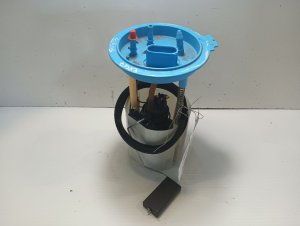
Typical fix: Replace the in-tank low-pressure fuel pump assembly. It is located under the rear seat.
Est. part cost: $150-$350 - Faulty Fuel Rail Pressure Sensor (G247) ⚪ Low Probability While not as common as pump failures, the sensor that reads the pressure can fail or send inaccurate signals to the ECM.
How to confirm: Compare the sensor's reading on a scan tool with a mechanical gauge reading. If there's a significant discrepancy (more than 5 bar), the sensor is likely faulty. Also, check for corrosion on the connector.
Typical fix: Replace the fuel rail pressure sensor. Part numbers include 06J906051D and 06J906051F.
Est. part cost: $50-$150
Rare But Worth Checking
- Leaking Fuel Injectors: A stuck-open injector can cause a drop in rail pressure as it constantly bleeds off fuel. This is often diagnosed with a leak-off test and may be accompanied by misfire codes or a knocking noise. A visual inspection with a borescope may reveal a wet, fuel-puddled piston top in one cylinder.
- Faulty Fuel Pressure Regulator Valve (N276): This valve, often located on the HPFP itself, controls the pressure in the rail. It can fail, but it is less common than the pump or sensor. On some models, it's part of the HPFP assembly. An open circuit on this valve can trigger a P2294 code alongside P0087.
- Worn Intake Camshaft Lobe (TSI Engines): This is the worst-case scenario for a worn cam follower. If the follower wears through, the camshaft lobe that drives the HPFP can be ground down, requiring a much more expensive camshaft replacement. A visual inspection after removing the HPFP will show a flattened or scored cam lobe.
Diagnosis Steps
- Scan the ECM for P0087 and any other stored codes. Note codes like P053F, P2293, or misfire codes.
- For TDI models, start by replacing the fuel filter, especially if its service history is unknown. Inspect the old filter and housing for any metallic debris (a sign of HPFP failure).
- Connect a scan tool and monitor 'Fuel Rail Pressure (specified)' and 'Fuel Rail Pressure (actual)' values. In a test drive, observe if the actual pressure drops significantly below specified under acceleration.
- Test the low-pressure fuel system. The in-tank pump should provide a steady supply pressure (typically 60-80 PSI) to the HPFP. This can be checked with a mechanical gauge at the HPFP inlet.
- For TSI engines, the next step is to physically inspect the HPFP cam follower for wear. This is a critical and common failure point. If the follower is damaged, also inspect the intake camshaft lobe for scoring.
- If the low-pressure system is healthy and the cam follower (TSI) is good, the HPFP itself is the most likely suspect.
- A diesel injector leak-off test can be performed to check if a faulty injector is bleeding off rail pressure.
- The fuel rail pressure sensor (G247) and regulator valve (N276) can also be at fault, but are less common failures than the pump itself.
Parts You'll Likely Need
- High-Pressure Fuel Pump (HPFP)
(OEM #03L130755AB (TDI, part of kit))— This is a primary point of failure. The TDI's Bosch CP4 pump is known to fail and contaminate the system.
Trusted brands: Bosch
OEM price range: $500-$900
Aftermarket price range: $300-$600 - HPFP Cam Follower (TSI only)
(OEM #06D109309C)— A critical wear item on TSI engines that directly causes P0087 when it fails. Should be inspected regularly.
Trusted brands: INA, Genuine VW/Audi
OEM price range: $50-$70
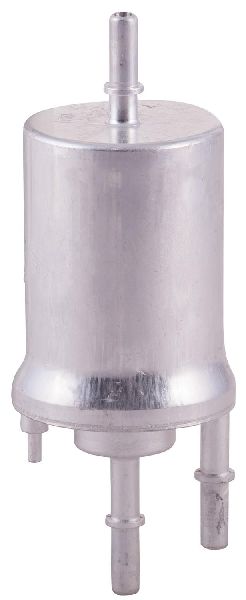
Aftermarket price range: $30-$50 - Fuel Filter — A clogged fuel filter is a very common and inexpensive cause of P0087, especially on TDI models.
Trusted brands: Mann, Mahle, Bosch
OEM price range: $40-$60
Aftermarket price range: $25-$40 - TDI HPFP Failure Kit — If the TDI HPFP fails and sends metal through the system, a complete kit is required, including the HPFP, injectors, fuel lines, rail, and sometimes tank pump.
Trusted brands: Cascade German, IDParts
OEM price range: N/A (dealer sources parts individually)
Aftermarket price range: $2500-$3500
Related Codes That Often Appear With This One
- P053F — This code indicates 'Cold Start Fuel Pressure Performance'. It frequently appears with P0087, suggesting the low-pressure condition is most apparent when the engine is first started. The NHTSA has linked this code combination in TSBs. [NHTSA ODI #VIN4APIN20220126, NHTSA ODI #VIN4APIN20220118]
- P0300, P0301, P0302, P0303, P0304 — These are random or cylinder-specific misfire codes. Insufficient fuel pressure causes a lean condition, leading to misfires. [17, NHTSA ODI #VIN4APIN20220118]
- P2293 — This code for 'Fuel Pressure Regulator 2 Performance' often appears with P0087, pointing more specifically towards an issue with the high-pressure side of the system, including the HPFP or its regulator.
Technical Service Bulletins (TSBs) & Recalls
- NHTSA TSB VIN4APIN20220126 / VIN4APIN20220118: Mentions P0087 appearing with P053F (Cold Start Fuel Pressure) and misfire codes.
- VW TSB 2015153 / Audi TSB 2013147: Addresses worn intake camshafts on TFSI engines, a potential consequence of a failed cam follower.
- VW TSB 2027458: Notes an improved Fuel Pressure Sensor (G410) for some 2.0L TFSI engines.
- The TSB 23-17-06 mentioned in pass 1 could not be directly verified, but the issue of TDI HPFP failure is widely documented in other TSBs and NHTSA investigations.
Platform-Specific Known Issues
- Catastrophic Bosch CP4 HPFP Failure: The most severe and well-known issue. The pump can fail internally, sending metal particles throughout the entire fuel system. This requires a full system replacement (pump, injectors, lines, rail, tank cleaning) costing thousands of dollars. Checking for metal shavings in the fuel filter housing is the key diagnostic step.
- HPFP Cam Follower Wear: The flat tappet cam follower is a sacrificial part that wears down over time. If not inspected and replaced (recommended every 15-20k miles), it can wear completely through, causing P0087 and potentially damaging the HPFP and the intake camshaft lobe.
Mechanic-Grade Diagnostic Values
- Low-Pressure Fuel System Pressure (at HPFP inlet) — expected: 60-90 PSI (approx. 4-6 bar). Failure: Pressure below 50 PSI indicates a weak in-tank pump (LPFP) or clogged filter.
- High-Pressure Fuel Rail at Idle — expected: Approx. 40 bar (580 PSI) for TSI engines, 50 bar for some MK5 GTI models.. Failure: Actual pressure significantly lower than specified (e.g., 7 bar actual vs. 40 bar specified) points to a high-pressure side failure (HPFP, cam follower, N276).
- High-Pressure Fuel Rail Under Load — expected: Ramps up to 110-170 bar depending on tune and demand.. Failure: Actual pressure fails to rise with specified pressure during acceleration.
- Fuel Pressure Regulator Valve (N276) Resistance — expected: 25 to 35 Ω at approx. 20°C.. Failure: Resistance outside this range indicates a faulty valve.
- Fuel Pressure Sensor (G247) Plausibility Check — expected: Scan tool reading should be within 5 bar of a mechanical gauge connected to the rail.. Failure: A deviation greater than 5 bar suggests a faulty G247 sensor.
Scan Tool Commands That Help
- VCDS/ODIS: Monitor Measuring Value Blocks (MVB) 106, 140, 141 — Used to log and compare 'Fuel Rail Pressure (specified)' vs. 'Fuel Rail Pressure (actual)' during idle and test drives to identify pressure deviations.
- ODIS (Official Dealer Software): Guided Fault Finding (GFF) Test Plan for N276 - Fuel Pressure Regulator Valve — This is a specific bidirectional test to diagnose the HPFP. The tool commands the N276 valve, and the technician listens for an audible 'click' from the HPFP. If no click is heard, the pump is suspect.
- VCDS: Output Test Mode (DTM) - 005 — Similar to the ODIS test, this can be used to check the operation of the N276 pressure regulator and listen for the audible click from the HPFP.
Wiring & Ground Locations
- G247 Sensor Connector — On the end of the high-pressure fuel rail.. A poor connection, corrosion, or damaged wiring at the G247 sensor can cause incorrect pressure readings, leading to a false P0087 code. A wiring check for continuity between the sensor connector and the ECM is a valid diagnostic step if the sensor itself tests good.
- N276 Regulator Valve Connector — On the High-Pressure Fuel Pump (HPFP).. An open circuit or bad connection at this two-wire connector will prevent the ECM from controlling fuel pressure and can trigger P0087 along with P2294 (Fuel Pressure Regulator Valve Open Circuit).
Real Owner Repair Stories
- Reddit user bmwmandeep (2012 Golf TDI (CJAA engine) with Malone stage 2 tune) — Intermittent P0087 code, flashing glow plug light, feeling underpowered under load between 2000-2250 rpm.
❌ Tried (didn't work) Checking for metal shavings (none found), Planning to replace fuel filter
✅ What actually fixed it The owner reported that replacing the fuel metering valve, the fuel rail pressure sensor, and the regulator resolved the issue. They suspected bad fuel had contaminated the components. - YouTube channel 'DiagnoseDan' (2013 VW Beetle 2.0T TSI) — Long crank, engine shutting off, P0087 code. Scan tool showed actual rail pressure at 10 bar while specified was 40 bar.
❌ Tried (didn't work) Initially considered the fuel pressure sensor.
✅ What actually fixed it The long crank symptom pointed directly to the high-pressure fuel pump (HPFP). Replacing the HPFP (a used unit in this case) resolved the long crank and low pressure issue. - YouTube channel 'Car Confections' (MK6 VW GTI 2.0T TSI) — Misfire codes (P0300, P0303, etc.), cylinder disabling code (P130A), and low fuel rail pressure (P0087).
❌ Tried (didn't work) Diagnosing as a fuel pump or filter issue.
✅ What actually fixed it A leaking fuel injector was stuck wide open, causing fuel to flood a cylinder and preventing the rail from building pressure. This was confirmed with a borescope showing a puddled piston. Replacing the single faulty injector fixed all codes.
OEM Part Supersession History
06H127025M, 06H127025N, 06H127025P→06H127025Q— Internal revisions by the manufacturer (Bosch/Hitachi) to improve reliability.
Heads up: Early 2.0T TSI engines may use a different fuel line fitting. If replacing an older pump with the newest 'Q' revision pump, an adapter for the fuel line may be required.N/A→06D109309C (with DLC coating)— The original cam followers were prone to rapid wear. The latest revision includes a more durable Diamond-Like Carbon (DLC) coating to extend its life.
Heads up: Always use the latest revision (06D109309C) when replacing. There is no reason to use an older, uncoated version.
Model Year Variations Within This Range
- 2010-2014 (MK6): The 2.0T TSI engines in the Mk6 GTI (CCTA/CBFA) are well-known for the HPFP cam follower wear issue. Inspection is critical on these models.
- 2015-2017 (MK7): The Mk7 GTI uses the updated EA888 Gen 3 engine, which features a roller-style cam follower instead of the flat tappet design of the Mk6. While HPFP failure can still occur, the specific 'cam follower wear-through' failure is not a common issue on the Mk7 platform.
- 2010-2015 (TDI Models): TDI models in this range (like the CJAA engine) primarily use the Bosch CP4.1 HPFP, which is the pump notorious for catastrophic failure and system-wide metal contamination. Later TDI engines in other VW models switched to an improved CP4.2, but the Golf models in this timeframe are at high risk for the CP4.1 failure mode.
Helpful Videos

Used OEM Parts in Stock

New Aftermarket Parts Available


The information in this article is provided for general reference and educational purposes only. Vehicle specifications, procedures, and part compatibility can vary by production date, trim level, and region. Always consult your vehicle's factory service manual and verify part numbers before purchasing or performing repairs. Safety-critical components such as airbags, seat belts, and braking systems should be installed by a qualified professional.
- Volkswagen GOLF:
- 🎬 Helpful Videos
- 🛍️ Shop This Part
- What's Unique About the 2010-2017 Volkswagen GOLF
- Diagnostic Flowchart
- Symptoms You May Notice
- Most Likely Causes
- Rare But Worth Checking
- Diagnosis Steps
- Parts You'll Likely Need
- Related Codes That Often Appear With This One
- Technical Service Bulletins (TSBs) & Recalls
- Platform-Specific Known Issues
- Mechanic-Grade Diagnostic Values
- Scan Tool Commands That Help
- Wiring & Ground Locations
- Real Owner Repair Stories
- OEM Part Supersession History
- Model Year Variations Within This Range
- 🎟️ Get 5% Off