

P0087 on 2009-2016 Volkswagen CC: Fuel Pressure Too Low Causes and Fixes
On a 2009-2016 VW CC with the 2.0T engine, code P0087 almost always points to a worn high-pressure fuel pump (HPFP) cam follower or the HPFP itself. The cam follower (OEM P/N 06D109309C) is a known wear item and should be inspected first. Expect to pay $20-$50 for a new follower and $250-$500 for a new HPFP (OEM P/N 06H127025Q). Neglecting this can damage the intake camshaft, leading to a much more expensive repair.
- For a 2009-2016 VW CC with a P0087 code, the first and most important step is to physically inspect the high-pressure fuel pump's cam follower.
- This code indicates a serious issue that can leave you stranded; do not ignore it.
- The cam follower is a cheap part that can prevent a very expensive repair. Consider replacing it as preventative maintenance.
- Always replace the cam follower when replacing the high-pressure fuel pump to prevent premature failure of the new pump.
- Check if your vehicle has had the fuel pump control module recall (VW 20AE) performed by a dealer.
What's Unique About the 2009-2016 Volkswagen CC

The 2.0T TSI engine (engine codes CCTA, CBFA) in the VW CC is known for issues within its high-pressure fuel system. The most notable characteristic is the use of a flat-tappet cam follower to drive the high-pressure fuel pump (HPFP). This follower is a sacrificial part designed to wear out over time. Its failure is a very common cause for P0087 and, if neglected, can lead to the destruction of the HPFP's plunger and the intake camshaft's tri-lobe, turning a minor maintenance job into a very expensive repair. While the TSI engine uses a more durable roller-style follower compared to the earlier FSI engine, wear is still a critical inspection point.
Diagnostic Flowchart
Tap your situation to follow the diagnostic path that matches what you're seeing on this vehicle.
Symptoms You May Notice
- Check Engine Light is on
- Flashing EPC (Electronic Power Control) light on the dashboard
- Engine hesitation or sputtering, especially under acceleration or at high speeds
- Significant loss of engine power or entering 'Limp Mode'
- Rough or unstable idle
- Engine stalling unexpectedly
- Long crank times or difficulty starting the engine
- Increased fuel consumption
- Gasoline smell in the engine oil, indicating a leaking HPFP
- Replacing the fuel pressure sensor when the actual cause is a mechanical failure of the HPFP or a worn cam follower.
- Replacing the high-pressure fuel pump without inspecting and replacing the worn cam follower, leading to a repeat failure of the new pump.
- Replacing oxygen sensors because of lean condition or misfire codes that are symptoms of the low fuel pressure, not the root cause.
Most Likely Causes

- Worn High-Pressure Fuel Pump (HPFP) Cam Follower 🔴 High Probability The 2.0T TSI engine uses a flat-tappet cam follower that is a known, sacrificial wear item. It is the most common failure point leading to P0087 on this platform and should be checked every 30,000-40,000 miles.
How to confirm: Physical inspection is required. Remove the HPFP from the cylinder head to access and inspect the cam follower. Look for a hole worn through the black surface, deep scoring, or significant thinning. A worn follower can quickly destroy a new HPFP.
Typical fix: Replace the cam follower. It is highly recommended to replace this part preventatively. Always replace the follower when replacing the HPFP.
Est. part cost: $20-$50 - Failing High-Pressure Fuel Pump (HPFP) 🔴 High Probability The HPFP can fail internally due to normal wear or, more commonly, as a result of a worn-through cam follower destroying the pump's plunger. A manufacturer TSB also notes that the HPFP can be out of time/sync, causing this code. [⭐ MANUFACTURER TSB — highest authority]
How to confirm: After confirming the cam follower is intact and the low-pressure system is supplying adequate fuel (typically 4-6 bar or 60-90 PSI), the HPFP is the next likely culprit. A scan tool monitoring high-pressure rail values can show actual pressure failing to meet the specified value under load (e.g., actual is 40 bar when 100+ is requested).
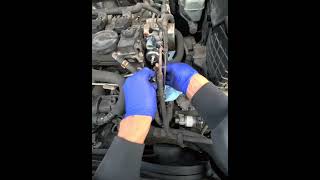
Typical fix: Replace the high-pressure fuel pump and its cam follower. 🎬 Watch: Step-by-step HPFP and cam follower replacement walkthrough. It is critical to use new T30 Torx bolts and torque them evenly to avoid damaging the new pump.
Est. part cost: $250-$500 - Failing In-Tank Low-Pressure Fuel Pump (LPFP) 🟡 Medium Probability The LPFP must supply the HPFP with a steady base pressure. If the in-tank pump weakens, it can starve the HPFP, leading to a P0087 code. The associated fuel pump control module is also a known failure point.
How to confirm: Connect a fuel pressure gauge to the low-pressure service port (Schrader valve) on or near the HPFP. The pressure should be stable, typically between 4-6 bar (around 60-90 PSI). If pressure is low or erratic, the LPFP or its control module is likely failing. A scan tool may show the LPFP duty cycle exceeding 60% at idle, which suggests it is working too hard.
Typical fix: Replace the in-tank low-pressure fuel pump assembly and/or the fuel pump control module.
Est. part cost: $150-$300 - Faulty Fuel Pressure Sensor (G247) ⚪ Low Probability The high-pressure sensor on the fuel rail can fail and send incorrect low-pressure readings to the ECM, triggering the code even if the pressure is normal. It is located on the fuel rail, often under the intake manifold.
How to confirm: Use a scan tool to compare the fuel rail pressure reading from the sensor with the actual pressure measured by a mechanical gauge. A significant discrepancy points to a bad sensor. However, measuring actual high-side pressure is difficult; this is often diagnosed by ruling out all other mechanical causes.
Typical fix: Replace the fuel rail pressure sensor (G247). OEM part number is often 06J906051D or a similar revision.
Est. part cost: $50-$100 - Clogged Fuel Filter ⚪ Low Probability A severely clogged fuel filter can restrict flow from the in-tank pump, starving the HPFP. This is more likely if the filter has not been changed per the maintenance schedule. Ensure the replacement filter is rated for the correct pressure (6.6 bar).
How to confirm: Perform a low-pressure fuel system test. If pressure drops significantly under load, a clogged filter is a possibility. Replacement is often done as maintenance before suspecting the LPFP itself.
Typical fix: Replace the fuel filter.
Est. part cost: $20-$50
Rare But Worth Checking
- Worn Intake Camshaft Lobe: If the cam follower wears completely through, it can cause the HPFP plunger to ride directly on the camshaft's tri-lobe, destroying the lobe. This is a severe and expensive repair that requires camshaft replacement.
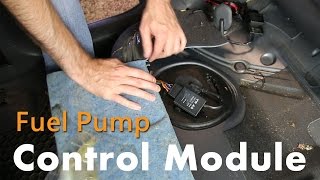
- Faulty Fuel Pump Control Module: A recall was issued for the fuel pump control module on 2009-2016 CC models (NHTSA Campaign ID: 17V509000, VW Recall #20AE). A faulty module can cut power to the fuel pump, causing a stall and P0087. The remedy involves replacing the module and relocating it to reduce thermal stress. 🎬 Watch: How to replace the fuel pump control module.
- Debris in HPFP Inlet Restrictor: The low-pressure inlet hose fitting for the HPFP contains a small 1.5mm restrictor orifice. Debris from a deteriorating fuel line or a failing LPFP can become lodged here, starving the HPFP of fuel.
Diagnosis Steps

- Scan the ECM for all stored fault codes. Note any other codes that appear with P0087, such as misfires (P030x) or other fuel system codes (P2293, P053F).
- Using a scan tool (like VCDS), monitor live data for both specified and actual fuel rail pressure at idle and under a brief, full-throttle acceleration in a safe location. A large discrepancy or inability for actual pressure to meet specified pressure confirms a problem.
- Check the engine oil for a strong smell of gasoline, which would indicate the internal seals of the HPFP have failed and it is leaking fuel into the crankcase.
- Perform a low-pressure fuel system test. Connect a pressure gauge to the Schrader valve test port 🎬 See how to properly test your low-pressure fuel system. on the low-pressure line. At idle, pressure should be stable around 4-6 bar (60-90 PSI). If it's low (e.g., under 50 PSI), the LPFP, its control module, or the fuel filter is the likely issue.
- Visually inspect the HPFP cam follower. This is a critical mechanical check. Safely depressurize the system, then remove the HPFP (typically three T30 bolts) and check the follower for wear or damage. This is the most common failure point.
- Check for the fuel pump control module recall (NHTSA Campaign ID: 17V509000) and ensure it has been performed on your vehicle.
- If the low-pressure side is healthy and the cam follower is intact, the HPFP itself is the most likely failed component.
- Inspect the wiring and connectors to the HPFP and fuel pressure sensor for any damage or corrosion.
Parts You'll Likely Need

- High-Pressure Fuel Pump Cam Follower
(OEM #06D109309C)— This is a sacrificial part designed to wear out and is the most common point of failure leading to P0087 on the 2.0T TSI engine.
Trusted brands: INA, Volkswagen Genuine
OEM price range: $30-$50
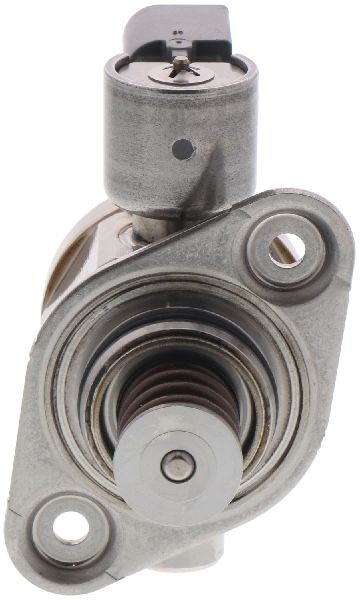
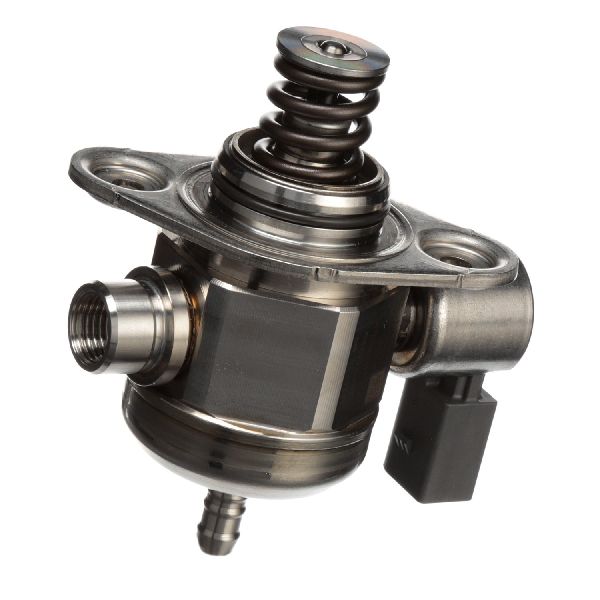
Aftermarket price range: $20-$40 - High-Pressure Fuel Pump (HPFP)
(OEM #06H127025Q (latest revision, supersedes N, P, M, K, G, E))— The pump itself can fail mechanically or be damaged by a worn cam follower. It is the primary component responsible for generating high fuel pressure.
Trusted brands: Bosch, Hitachi, Volkswagen Genuine
OEM price range: $400-$600
Aftermarket price range: $160-$450 - In-Tank Low-Pressure Fuel Pump — If the low-pressure pump is weak, it cannot supply the HPFP with enough fuel, causing the entire system's pressure to drop.
Trusted brands: VDO, Bosch
OEM price range: $250-$350
Aftermarket price range: $150-$250 - Fuel Rail Pressure Sensor (G247)
(OEM #06J906051D)— This sensor can fail and provide false low-pressure readings to the ECU.
Trusted brands: Bosch, Standard Motor Products, Vemo
OEM price range: $70-$110
Aftermarket price range: $40-$80
Related Codes That Often Appear With This One
- P2293 — This code for 'Fuel Pressure Regulator 2 Performance' is often triggered along with P0087 as they both relate to the performance of the high-pressure fuel system and can point directly to a worn cam follower.
- P053F — Mentioned in a TSB alongside P0087, this code relates to 'Cold Start Fuel Pressure Performance' and can be set when the HPFP is out of sync or failing. [⭐ MANUFACTURER TSB — highest authority, 11]
- P0300-P0304 — Misfire codes (e.g., P0301 for cylinder 1) are common because low fuel pressure leads to a lean air/fuel mixture, causing incomplete combustion. The fuel pressure fault must be addressed first.
- P0172 — This code for 'System Too Rich' can paradoxically appear with P0087. One owner on the Ross-Tech forums reported this combination when a failing LPFP was causing erratic fuel control.
Technical Service Bulletins (TSBs) & Recalls

- TT 01 20 05_4: Notes that DTCs P053F, P0087, P0088, P1025 may set due to the high pressure fuel pump being out of time (sync). [⭐ MANUFACTURER TSB — highest authority]
- TT 20-18-05: Provides diagnostic advice for P0087, warning that some scan tool readouts for low pressure are invalid and a mechanical gauge must be used.
Platform-Specific Known Issues
- HPFP Cam Follower Wear: The 2.0T TSI engine is widely known for wearing out the HPFP cam follower. Regular inspection (every 30-40k miles) is recommended by enthusiasts to prevent P0087 and related engine damage.
- HPFP Timing Sync Issue: Volkswagen TSB #TT 01 20 05_4 states that DTC P0087 may be set if the high-pressure fuel pump is out of time (sync). [⭐ MANUFACTURER TSB — highest authority]
- Fuel Pump Control Module Recall: NHTSA recall 17V509000 (VW Recall 20AE) was issued for 2009-2016 CC models because a faulty fuel pump control module could cut power to the fuel pump, causing a stall.
Mechanic-Grade Diagnostic Values
- High-Pressure Fuel Rail at Idle (VCDS Measuring Block 106) — expected: ~40-50 bar (~580-725 PSI). Failure: Pressure is significantly below 40 bar, or drops to 6-10 bar in case of severe HPFP failure.
- High-Pressure Fuel Rail under Load (VCDS Measuring Block 106) — expected: Rises to 110+ bar. Failure: Fails to rise significantly above idle pressure during acceleration.
- Low-Pressure Fuel System at Idle (VCDS Measuring Block 103) — expected: 4.0 - 6.0 bar (58 - 87 PSI). Failure: Pressure is consistently below 4.0 bar or is erratic.
- Low-Pressure Fuel Pump Duty Cycle at Idle — expected: Around 50-55%. Failure: Duty cycle is excessively high (e.g., over 63%), indicating the pump is working too hard to maintain pressure.
- G247 Fuel Pressure Sensor Harness to ECM Resistance — expected: Max 1.5 ohms. Failure: Resistance is higher than 1.5 ohms, indicating an open circuit, high resistance, or short in the wiring.
Scan Tool Commands That Help
- VCDS (VAG-COM): Engine -> Final Control Diagnosis -> Fuel Pump Electronics — This function cycles the low-pressure fuel pump from slow to maximum speed, which helps verify the functionality of the pump and its control module (J538) independently of the high-pressure system.
Wiring & Ground Locations
- Fuel Pump Control Module (J538) — Under the rear seat on the passenger side, typically mounted on or near the fuel pump access cover. The recall repair (20AE) often relocates this module to a cooler, less stressed position.. This module directly controls the in-tank low-pressure fuel pump. A failure of this module due to overheating or internal defects will cut power to the pump, starving the HPFP and causing a P0087 code and potential engine stall. Its failure was subject to a major safety recall.
- Fuel Pressure Sensor (G247) — Screwed into the high-pressure fuel rail, which is typically located under the intake manifold on the 2.0T TSI engine.. This sensor provides the primary data for the P0087 code. If the sensor's wiring is damaged or has high resistance, it can send an artificially low voltage signal to the ECM, triggering the code even if the mechanical fuel pressure is correct.
Real Owner Repair Stories
- Ross-Tech Forums user 'nickm1979' (2009 Volkswagen CC 2.0 TSI) — P0087 (Fuel pressure too low) and P0172 (System too rich). High-pressure rail was only reaching 60 bar under load.
❌ Tried (didn't work) Replaced High-Pressure Fuel Pump (HPFP), Replaced fuel rail pressure sensor (G247)
✅ What actually fixed it The user measured the low-side fuel pressure and found it was under 50 PSI. Replacing the in-tank Low-Pressure Fuel Pump (LPFP) brought the low-side pressure to 80-90 PSI and the high-pressure rail to 160-170 bar, resolving the issue. - YouTube channel 'Mo's Car Uncut' (2011 VW Tiguan (with same 2.0T TSI engine)) — P0087 and random misfire codes.
❌ Tried (didn't work) Initial diagnosis pointed towards a common HPFP failure.
✅ What actually fixed it Upon removing the High-Pressure Fuel Pump (HPFP), the mechanic discovered the pump's internal plunger had physically broken off from the main body. The pump was moving, but the broken internal piece was not, creating no pressure. Replacing the entire HPFP assembly fixed the code.
OEM Part Supersession History
06D 906 051 A, 06H 906 051 A→06J 906 051 C— Part revision and update by the manufacturer for early production models.
Heads up: These part numbers are for early BPY-engine Passats and are generally not interchangeable with later CC models which use a different series. Installing the wrong sensor can cause persistent lean running conditions. Always verify by VIN.06J 906 051 B→06J 906 051 D— Part revision and update by the manufacturer for later production models.
Heads up: The 'B' and 'D' revision sensors are not interchangeable with the 'A' or 'C' revisions. Using the wrong series sensor will lead to incorrect fuel trim calculations by the ECM. The 'D' revision is often orange in color. Always verify by VIN.Various older revisions→06H127025Q (or newer)— The HPFP has undergone several revisions to improve reliability.
Heads up: It is critical to install the most current version of the HPFP available for your vehicle's VIN to ensure reliability.
Model Year Variations Within This Range
- 2009-2016: A major safety recall (NHTSA 17V509000 / VW 20AE) was issued for the Fuel Pump Control Module. The dealer fix involves replacing the module and relocating it to a different position (often from under the seat to under the rocker panel trim) to prevent overheating and failure. A vehicle that has not had this recall performed is more susceptible to module failure causing a P0087.
Helpful Videos
Used OEM Parts in Stock


New Aftermarket Parts Available



The information in this article is provided for general reference and educational purposes only. Vehicle specifications, procedures, and part compatibility can vary by production date, trim level, and region. Always consult your vehicle's factory service manual and verify part numbers before purchasing or performing repairs. Safety-critical components such as airbags, seat belts, and braking systems should be installed by a qualified professional.
- Volkswagen CC:
- 🎬 Helpful Videos
- 🛍️ Shop This Part
- What's Unique About the 2009-2016 Volkswagen CC
- Diagnostic Flowchart
- Symptoms You May Notice
- Most Likely Causes
- Rare But Worth Checking
- Diagnosis Steps
- Parts You'll Likely Need
- Related Codes That Often Appear With This One
- Technical Service Bulletins (TSBs) & Recalls
- Platform-Specific Known Issues
- Mechanic-Grade Diagnostic Values
- Scan Tool Commands That Help
- Wiring & Ground Locations
- Real Owner Repair Stories
- OEM Part Supersession History
- Model Year Variations Within This Range
- 🎟️ Get 5% Off