

P0087 on 2014-2019 Toyota 4Runner: Fuel Pressure Too Low Causes & Fixes
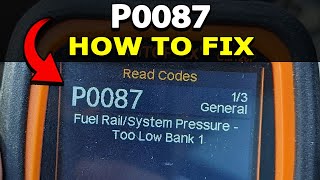
P0087 on a 2014-2019 Toyota 4Runner indicates the fuel pressure is too low. This is most often caused by a failing in-tank fuel pump or a clogged fuel filter, which are typically replaced as a single assembly. Many of these vehicles were part of a major recall for this exact issue. Expect to pay $300-$600 for the part.
- P0087 on a 2014-2019 4Runner means your fuel pressure is dangerously low.
- The most likely cause is a failing fuel pump, which was subject to a major recall for this model range. Check your VIN with a Toyota dealer.
- Other symptoms include engine hesitation, power loss, and potential stalling.
- The fix almost always involves replacing the entire fuel pump and filter assembly, which is located inside the fuel tank.
- This code is often accompanied by lean codes P0171 and P0174, as confirmed by a Toyota TSB.
What's Unique About the 2014-2019 Toyota 4RUNNER

The 2014-2019 4Runner uses the highly reliable 4.0L 1GR-FE V6 engine, which has a returnless fuel system. This design means the fuel filter is integrated into the fuel pump assembly inside the gas tank and is not considered a separate, routinely serviceable item. While generally robust, this platform was part of a major Toyota fuel pump recall (NHTSA Campaign 20V682000) for faulty Denso pumps that could fail prematurely, causing a loss of fuel pressure and triggering a P0087 code. The recall documentation specifically notes that if the pump fails, the engine may run rough, stall, and be unable to restart, increasing the risk of a crash.
Diagnostic Flowchart
Tap your situation to follow the diagnostic path that matches what you're seeing on this vehicle.
Symptoms You May Notice
- Check Engine Light is on
- Engine hesitation or stumbling during acceleration
- Significant loss of power, especially under load
- Rough idle
- Difficulty starting or long crank times
- Engine stalling, especially at low speeds or idle
- Engine may not restart after stalling
- TRAC OFF light may illuminate along with the Check Engine Light
- Replacing only the fuel filter. On this vehicle, the filter is part of the fuel pump module and is not sold or serviced separately.
- Replacing fuel injectors. While faulty injectors can cause drivability issues, they are very unlikely to cause a system-wide low-pressure code like P0087.
Most Likely Causes
- Failing Fuel Pump 🔴 High Probability Many 2014-2019 4Runners were included in a large recall for faulty Denso low-pressure fuel pumps whose impellers could crack and degrade, causing a loss of pressure. Even outside the recall, the fuel pump is a wear-and-tear item that is the most common culprit for this code. The recall specifically covered 2018-2019 4Runners, with expansions covering other years.
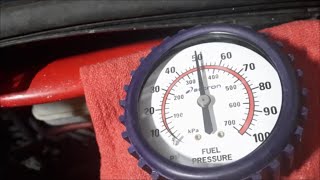
How to confirm: A technician can perform a fuel pressure test. On the 1GR-FE, the target pressure is approximately 40.8 to 41.7 psi. An advanced OBD-II scanner can read live 'Fuel Rail Pressure' data. If the pressure is low and voltage tests to the pump connector are good, the pump is faulty. A DIY approach involves checking for 12V at the pump connector when cranking; if voltage is present but the pump doesn't run, it has failed.
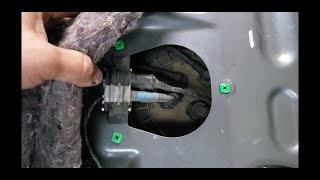
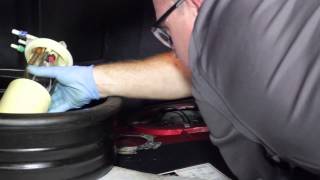
Typical fix: Replace the entire in-tank fuel pump and filter assembly. Accessing it requires either dropping the fuel tank or cutting a larger access hole in the floor under the rear seats, a method popular in the DIY community. 🎬 Watch: How to replace the fuel pump without dropping the tank. Dealerships will drop the tank.
Est. part cost: $300-$600 - Clogged Fuel Filter 🟡 Medium Probability The fuel filter is an integrated, non-serviceable part of the fuel pump module. If it becomes clogged with sediment or debris, often from running the tank low or using poor quality fuel, it will restrict fuel flow and cause low pressure. Since it cannot be replaced separately, this fault also requires replacing the entire fuel pump assembly.
How to confirm: This is difficult to confirm directly and is often a diagnosis of exclusion. If the fuel pump is being replaced, the old filter sock can be inspected for excessive dirt and debris, which would confirm the clog.
Typical fix: Replace the fuel pump and filter assembly.
Est. part cost: $300-$600 - Faulty Fuel Pressure Sensor ⚪ Low Probability
How to confirm: Compare the live data reading from the sensor on a scan tool with a reading from a mechanical fuel pressure gauge. If the readings differ significantly (e.g., the gauge shows 41 psi but the scanner shows 20 psi), the sensor is likely faulty. This is an uncommon failure on this platform.
Typical fix: Replace the fuel pressure sensor located on the fuel rail. The part is sometimes referred to as a fuel pressure pulsation damper.
Est. part cost: $50-$150
Rare But Worth Checking
- Restricted Fuel Line: A physically kinked, pinched, or internally blocked fuel line can restrict flow and cause low pressure. This is uncommon but worth inspecting, especially if the vehicle has been used heavily off-road or has had recent underbody work.
- Fuel Pump Resistor or Relay Failure: The fuel pump system uses a Circuit Opening Relay (COR) and sometimes a resistor to control pump speed and provide power. A failure in this circuit can cause the pump to run at a low speed or not at all, leading to low pressure. The COR is a known, though infrequent, failure point on Toyota trucks and is located behind the passenger side kick panel.
Diagnosis Steps

- Verify the code is present using an OBD-II scanner.
- Check for any related TSBs or recalls for your vehicle's VIN. The 2018-2019 4Runner was part of a major fuel pump recall (NHTSA 20V682000, Toyota 20TA02). Check Toyota's owner site with your VIN.
- Using a scan tool, monitor the live data for 'Fuel Rail Pressure'. At idle, it should be stable around 41 psi. Observe the pressure while driving under load; a significant drop indicates a problem.
- If the scan tool data is inconclusive or suspect, perform a manual fuel pressure test. Note that on the 1GR-FE, there is no dedicated test port, requiring a special adapter to be installed in-line with the fuel line. 🎬 See how to perform a manual fuel pressure test on Toyotas.
- Inspect all visible fuel lines for any signs of damage, kinking, or leaks.
- Test the fuel pump circuit. Check for 12V at the fuel pump connector during engine cranking. Check the Circuit Opening Relay (COR) and related fuses.
- If the pressure is confirmed to be low and the electrical circuit is good, the most likely cause is the in-tank fuel pump assembly.
Parts You'll Likely Need

- Fuel Pump and Filter Assembly
(OEM #77020-35161)— This is the primary cause for P0087 on this vehicle, often due to internal pump failure or a clogged integrated filter. The entire module inside the tank must be replaced.
Trusted brands: Toyota OE, Denso (OEM supplier)
OEM price range: $450-$600
Aftermarket price range: $300-$450 - Fuel Pressure Sensor
(OEM #89458-30011)— A rare but possible cause. Replaced if a mechanical gauge shows correct pressure but the ECU reads low pressure. It is located on the fuel rail.
Trusted brands: Toyota OE
OEM price range: $70-$120
Aftermarket price range: $40-$80
Related Codes That Often Appear With This One
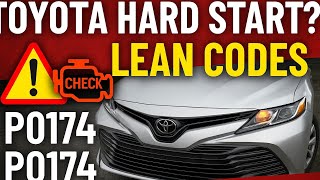
- P0171 — System Too Lean (Bank 1) - Low fuel pressure means not enough fuel is being injected, leading to a lean air/fuel mixture. Toyota TSB T-SB-0009-23 specifically links 🎬 Watch: How this TSB explains lean codes and hard starts. P0087 with P0171.
- P0174 — System Too Lean (Bank 2) - For the same reason as P0171, the other bank of the V6 engine also reports a lean condition due to fuel starvation. Toyota TSB T-SB-0009-23 also links P0087 with P0174.
Technical Service Bulletins (TSBs) & Recalls
- T-SB-0009-23: Confirms that a MIL ON condition with DTC P0087, P0171, and/or P0174 can be caused by a no-pressure condition in the fuel system and applies to the 2014-2019 4Runner.
Platform-Specific Known Issues
- Fuel Pump Recall (NHTSA 20V682000 / Toyota 20TA02): Toyota issued a massive recall for faulty Denso fuel pumps affecting millions of vehicles, including the 2018-2019 4Runner. The impeller in these pumps could fail, causing a sudden loss of fuel pressure, engine stalling, and a no-start condition. Owners should check if their VIN was part of this recall, as the repair is performed free of charge by dealers. Many owners report being notified years after the initial recall announcement.
- TSB T-SB-0009-23: A Technical Service Bulletin was issued for 2014–2019 4Runners (among other models) that may exhibit a MIL ON with DTC P0087, often accompanied by lean codes (P0171/P0174). The bulletin confirms this is related to a loss of fuel pressure and points towards a repair procedure involving the fuel system, essentially confirming the diagnostic path for this code.
Mechanic-Grade Diagnostic Values
- Fuel Pressure at Idle — expected: 281 to 287 kPa (40.8 to 41.7 psi). Failure: Pressure significantly below this range indicates a fault in the low-pressure fuel system.
- Residual Fuel Pressure — expected: 147 kPa (21 psi) or more, 5 minutes after stopping the engine. Failure: Pressure dropping below this value indicates a leak in the system, possibly from a faulty check valve in the pump, a leaky injector, or the pressure regulator.
- Fuel Pump Resistance — expected: 0.2 to 3.0 Ω at 20°C (68°F). Failure: Resistance outside this range indicates a faulty fuel pump motor.
- Fuel Pump Resistor Resistance — expected: 0.941 to 0.999 Ω at 20°C (68°F). Failure: An open circuit (infinite resistance) or a reading outside this narrow range indicates the resistor has failed and needs replacement.
Scan Tool Commands That Help
- Toyota Techstream: Active Test: Control the Fuel Pump / Speed — Use this command with the key on, engine off. It allows a technician to manually activate the fuel pump to verify its operation audibly and to check for fuel pressure without needing to crank the engine. This is a crucial first step to isolate a pump failure from a relay or wiring issue.
Wiring & Ground Locations
- Fuel Pump Connector — Under an access panel in the floor, located beneath the rear driver's side seat.. This is the primary location to perform a voltage test to confirm if power is reaching the fuel pump. On many Toyotas, the power wire is Blue (sometimes with a stripe) and the ground is White/Black. Verifying 12V during cranking confirms the circuitry to the pump is likely good.
- Circuit Opening Relay (COR) — Typically located in the interior fuse/relay panel, often behind the driver or passenger side kick panel. On many Toyota trucks, it is a black relay at the bottom of the panel.. The COR is the primary relay that sends power to the fuel pump. It has two coils: one is energized during cranking, and the other is energized when the ECM detects the engine is running. A failure of this relay will result in no power to the fuel pump, causing a no-start and P0087.
- Fuel Pump Resistor — Bolted to the chassis in the engine bay, typically in front of the battery and behind the driver's side headlight.. This resistor is used to control the fuel pump speed (high/low). If the resistor fails or its wiring corrodes, the pump may be stuck in low-speed mode, causing insufficient pressure under load and triggering P0087.
Real Owner Repair Stories
- 5th Gen 4Runner Owner Forum Post (5th Gen Toyota 4Runner with 185,000 miles) — Intermittent crank-no-start condition, which progressed to a complete failure to start. The issue was diagnosed as a fuel delivery problem.
❌ Tried (didn't work) Initial diagnosis was difficult as the problem was intermittent.
✅ What actually fixed it The owner replaced the in-tank fuel pump assembly. He noted that after 185,000 miles, the fuel filter sock was visibly dirty and clogged. The owner chose to cut a larger access panel in the floor under the rear seat to replace the pump without dropping the fuel tank. The new Bosch fuel pump resolved the starting issue.
Helpful Videos
Used OEM Parts in Stock

New Aftermarket Parts Available


The information in this article is provided for general reference and educational purposes only. Vehicle specifications, procedures, and part compatibility can vary by production date, trim level, and region. Always consult your vehicle's factory service manual and verify part numbers before purchasing or performing repairs. Safety-critical components such as airbags, seat belts, and braking systems should be installed by a qualified professional.
- Toyota 4RUNNER:
- 🎬 Helpful Videos
- 🛍️ Shop This Part
- What's Unique About the 2014-2019 Toyota 4RUNNER
- Diagnostic Flowchart
- Symptoms You May Notice
- Most Likely Causes
- Rare But Worth Checking
- Diagnosis Steps
- Parts You'll Likely Need
- Related Codes That Often Appear With This One
- Technical Service Bulletins (TSBs) & Recalls
- Platform-Specific Known Issues
- Mechanic-Grade Diagnostic Values
- Scan Tool Commands That Help
- Wiring & Ground Locations
- Real Owner Repair Stories
- 🎟️ Get 5% Off