

P0087 on 2017-2024 Subaru Crosstrek: Low Fuel Pressure Causes & Fixes
On a 2017-2024 Subaru Crosstrek, code P0087 is most often caused by a failing high-pressure fuel pump (HPFP). The original pump design was susceptible to failure, prompting Subaru to issue a Technical Service Bulletin (TSB #09-123-24) and release a redesigned pump (part #16625AA190). An ECM software update may also be required as part of the fix.
- P0087 on a 2017-2024 Crosstrek is a serious code indicating low fuel pressure, which can cause stalling and engine hesitation.
- The most likely cause is a faulty high-pressure fuel pump (HPFP), a known issue addressed by Subaru with a redesigned part (TSB #09-123-24).
- Before replacing parts, ensure the vehicle's engine control software is up to date, as a TSB (#09-120-24R) was also issued for a logic update.
- This is not a DIY-friendly repair due to the safety risks of working with a high-pressure fuel system. Professional service is strongly recommended.
- Expect the repair to be costly, primarily due to the high price of the OEM high-pressure fuel pump.
What's Unique About the 2017-2024 Subaru CROSSTREK

The second-generation Crosstrek (2018-2023) and related models with direct injection are known to be susceptible to this code. The issue is so recognized that Subaru released a Technical Service Bulletin (TSB #09-123-24) announcing a redesigned high-pressure fuel pump. The TSB states the new pump has an optimized internal discharge valve to prevent unstable fuel pressure caused by engine vibrations, directly addressing a known weakness in the original design.
Diagnostic Flowchart

Tap your situation to follow the diagnostic path that matches what you're seeing on this vehicle.
Generation note: The 2017-2024 range covers the end of the first generation (2017), the full second generation (2018-2023), and the start of the third generation (2024+). The provided TSBs from Subaru specifically cover the 2017-2024 Crosstrek, indicating the high-pressure fuel pump issue is relevant across these models. The direct-injection gas powertrains carried over from the 2nd to the 3rd generation, so the issue persists in newer models until the production change to the new pump.
Symptoms You May Notice

- Check Engine Light is on
- Engine hesitation or stumbling on acceleration
- Reduced engine power or 'limp mode'
- Rough or fluctuating idle
- Engine stalling, especially under load or after hot-soaking
- Difficulty starting the engine or long crank times
- Decreased fuel economy
- Engine misfires 🎬 Watch: Common causes and fixes for the P0087 code
- Replacing the low-pressure fuel pump when the high-pressure pump is the actual cause.
- Replacing fuel injectors when the issue is pressure delivery, not injection itself.
- Replacing the fuel pressure sensor without verifying its readings against a mechanical gauge.
Most Likely Causes

- Failing High-Pressure Fuel Pump (HPFP) 🔴 High Probability Subaru issued TSB #09-123-24 for the 2017-2024 Crosstrek, acknowledging this issue and releasing a redesigned pump to optimize an internal valve and prevent unstable fuel pressure. This is a well-documented failure point.
How to confirm: A technician will use a scan tool to monitor desired vs. actual fuel rail pressure. If actual pressure is consistently low or drops significantly under load and the low-pressure system is working correctly, the HPFP is the likely culprit.
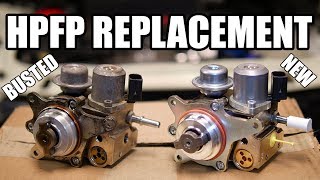
Typical fix: Replace the high-pressure fuel pump with the updated part (OEM #16625AA190). 🎬 Watch: A step-by-step guide to replacing a high pressure fuel pump Per the TSB, if DTC P0087 is detected, the HPFP requires replacement.
Est. part cost: $300-$450 - Outdated Engine Control Module (ECM) Software 🟡 Medium Probability Subaru released TSB #09-120-24R and #09-118-24, which include enhanced diagnostic logic for P0087 and improved fuel pressure stabilization. This implies the original software may be too sensitive or have incorrect parameters for managing fuel pressure.
How to confirm: A Subaru dealership or qualified shop can check the current software version (CID) on the ECM and compare it to the latest available version listed in the TSBs.
Typical fix: Reprogram the ECM with the updated software file provided by Subaru. This should be done before replacing hardware, as it may resolve the issue.
Est. part cost: $0-$150 - Faulty Fuel Pressure Sensor ⚪ Low Probability
How to confirm: Compare the pressure reading from the sensor (via a scan tool) to a reading from a mechanical fuel pressure gauge. If the readings differ significantly, or if the sensor reading is erratic while actual pressure is stable, the sensor is likely faulty.
Typical fix: Replace the fuel rail pressure sensor.
Est. part cost: $50-$150 - Failing Low-Pressure In-Tank Fuel Pump ⚪ Low Probability Some models were part of a recall and warranty extension for the low-pressure pump impeller (TSB #09-129-24R). While this is a separate issue from the HPFP, a weak low-pressure pump can starve the HPFP, causing P0087.
How to confirm: Test the pressure of the low-pressure fuel pump at the point where it feeds the high-pressure pump. If the pressure is below specification (typically 45-58 psi), the in-tank pump is weak.
Typical fix: Replace the in-tank fuel pump assembly. Check for recall or warranty extension coverage first.
Est. part cost: $353-$600
Rare But Worth Checking
- Clogged Fuel Filter or Restricted Fuel Line: A restriction in the fuel supply can starve the high-pressure pump, causing it to underperform. The fuel filter is often part of the in-tank pump assembly and can be a point of failure.
- Other System Failures: In one NHTSA complaint, P0087 was logged alongside several other codes, with the primary fault being a failed Engine Coolant Bypass Valve (P26A6). This suggests other system issues can sometimes trigger a P0087 code as a secondary fault.
- Worn Camshaft Lobe: The high-pressure fuel pump is mechanically driven by a lobe on the camshaft. Excessive wear on this lobe can reduce the pump's stroke and its ability to generate pressure, though this is a very rare cause.
Diagnosis Steps
- Read all diagnostic trouble codes (DTCs) with a professional OBD-II scanner and check freeze frame data.
- Check for applicable Technical Service Bulletins (TSBs) for your vehicle's VIN, specifically #09-123-24 (HPFP), #09-120-24R (ECM logic), and #09-129-24R (LPFP warranty extension).
- If an ECM update TSB applies, perform the software update first, as it may correct the diagnostic logic and resolve the code.
- Use a scan tool to monitor live data for 'Desired Fuel Rail Pressure' and 'Actual Fuel Rail Pressure' during idle, steady cruising, and wide-open throttle.
- If actual pressure consistently fails to meet desired pressure, especially under load, proceed with mechanical diagnosis. 🎬 See how to diagnose and fix low fuel rail pressure
- Test the low-pressure fuel system to ensure the HPFP is receiving adequate fuel supply (typically 45-58 psi). If low-pressure is weak, investigate the in-tank pump and filter.
- Inspect for any visible fuel leaks in the high-pressure lines and at the pump itself.
- If the low-pressure system is healthy and there are no leaks, the high-pressure fuel pump is the primary suspect, as per TSB #09-123-24.
- Before ordering, visually inspect and record the part number on the top of the existing HPFP to confirm it is the older design (e.g., 16625AA120).
Parts You'll Likely Need
- High-Pressure Fuel Pump Assembly
(OEM #16625AA190)— This is the most common failure part for P0087 on this vehicle, as confirmed by Subaru's own Technical Service Bulletin #09-123-24. The new part number 16625AA190 replaces the older, prone-to-failure part 16625AA120.
Trusted brands: Subaru (OEM)
OEM price range: $300-$450
Aftermarket price range: Not widely available
Related Codes That Often Appear With This One
- P2004 — Intake Manifold Runner Control Stuck Open. Seen in an owner complaint alongside P0087.
- P2005 — Intake Manifold Runner Control Stuck Open. Seen in an owner complaint alongside P0087.
- P26A6 — Engine Coolant Bypass Valve Position Sensor Circuit. An owner reported this as the primary failure when P0087 was also present.
- P0016, P0017, P0018, P0019 — Crankshaft/Camshaft Position Correlation. These codes are addressed alongside P0087 in the same ECM software update TSB (#09-120-24R), suggesting a potential link in the diagnostic logic.
Technical Service Bulletins (TSBs) & Recalls
- 09-123-24: Announces a design change to the high-pressure fuel pump to prevent DTC P0087. Specifies the cause as an internal valve issue affected by engine vibration.
- 09-120-24R: Provides an ECM software update with enhanced logic for the self-diagnosis of P0087 and other codes for 2018-2022 models.
- 09-118-24: Provides an ECM software update for 2024 models to stabilize fuel pressure and prevent P0087.
- 09-129-24R: Details a warranty extension for the low-pressure fuel pump impeller on certain 2018-2020 models, which can be a related cause.
Platform-Specific Known Issues
- Subaru has identified a design issue with the original high-pressure fuel pump on 2017-2024 models. TSB #09-123-24 states that the internal discharge valve's performance was improved in a new part to prevent unstable fuel pressure caused by engine vibrations.
- Subaru also provides an ECM software update under TSB #09-120-24R and #09-118-24 to enhance the self-diagnosis program and stabilize fuel pressure logic related to P0087.
- A separate warranty extension (TSB #09-129-24R) exists for the low-pressure fuel pump on some 2018-2020 models, which could be a contributing factor if it fails to supply the HPFP.
Mechanic-Grade Diagnostic Values
- Low-Pressure Fuel System Pressure (at HPFP inlet) — expected: 340 — 400 kPa (3.5 — 4.1 kgf/cm², approx. 49-58 psi). Failure: Pressure below this range indicates a problem with the in-tank low-pressure fuel pump, filter, or lines.
- High-Pressure Fuel System Pressure (Live Data at Idle) — expected: Typically 4.0 - 7.0 MPa (580 - 1015 PSI). Varies with engine temp and load.. Failure: Actual pressure significantly and consistently below desired pressure, especially when revving the engine, points to a failing HPFP.
- Fuel Pump Duty Cycle (Live Data at Idle) — expected: 30-40%. Failure: A duty cycle significantly higher than normal while actual fuel pressure remains low suggests the pump is working hard but cannot build pressure, indicating a leak or failing pump.
- Fuel Pressure Sensor Voltage (Key-On, Engine-Off) — expected: Typically around 0.5V at atmospheric pressure.. Failure: Voltage that is stuck low, high, or does not change with pressure indicates a faulty sensor or wiring issue.
Scan Tool Commands That Help
- Subaru Select Monitor (SSM): Current Data Display / Save — To monitor and log live data parameters like 'Fuel Pump Duty', 'Mani. Absolute Pressure', and compare 'Target fuel pressure' vs 'Fuel pressure' to diagnose discrepancies in the fuel system.
- Subaru Select Monitor (SSM): Freeze Frame Data — To view the exact engine conditions (RPM, load, temp, etc.) at the moment the P0087 code was triggered, which can provide critical context for the failure.
- High-End Aftermarket Scanners (e.g., Autel): Learned Values Reset / Fuel Pump Learning Value Reset — After replacing a major fuel system component like the high-pressure fuel pump, resetting learned values may be necessary to clear old adaptations and allow the ECM to learn the characteristics of the new part.
Wiring & Ground Locations
- B114 — Connector at the High-Pressure Fuel Pump.. This is the primary electrical connector for the HPFP. Checking for voltage, ground, and signal integrity at these pins is a key diagnostic step.
- B50 — Connector at the Fuel Pressure Sensor on the fuel rail.. A poor connection or damaged wire at this connector can cause incorrect pressure readings, leading the ECM to falsely trigger P0087.
- Fuel Pump Controller Ground — Under the backseat, there is a connector that contains the ground wire for the fuel pump controller.. A compromised ground for the fuel pump controller can lead to erratic low-pressure fuel pump operation, starving the high-pressure pump and causing P0087. The wire is typically black.
Real Owner Repair Stories
- Reddit user in r/SubaruAscent (2019 Subaru Ascent, 70,000 miles) — After driving for an hour in hot weather, the car would not restart after being off for 10-15 minutes. When it did try to start, it would misfire, run terribly, and shut off. Code P0087 was stored.
❌ Tried (didn't work) Dealer was initially unable to replicate the issue and did not want to 'throw parts at it'.
✅ What actually fixed it The final diagnosis was that the low-pressure fuel pump was not properly supplying fuel to the high-pressure side. The low-pressure fuel pump was replaced, which resolved the issue.
OEM Part Supersession History
16625AA120→16625AA190— The new pump (16625AA190) has an optimized internal discharge valve to prevent unstable fuel pressure caused by engine vibrations, directly addressing the root cause of P0087 as stated in TSB 09-123-24.
Model Year Variations Within This Range
- 2017+: The 2017 model year Crosstrek introduced the FB20D direct-injection engine, replacing the previous port-injected version. This change introduced the high-pressure fuel system (and the associated P0087 failure mode) to the platform.
- 2021+: The 2.5L engine option became available. While it is also a direct-injection engine and susceptible to the same P0087 issues, technicians should verify the correct part numbers as some auxiliary components may differ from the 2.0L.
Helpful Videos

Used OEM Parts in Stock


New Aftermarket Parts Available


The information in this article is provided for general reference and educational purposes only. Vehicle specifications, procedures, and part compatibility can vary by production date, trim level, and region. Always consult your vehicle's factory service manual and verify part numbers before purchasing or performing repairs. Safety-critical components such as airbags, seat belts, and braking systems should be installed by a qualified professional.
- Subaru CROSSTREK:
- 🎬 Helpful Videos
- 🛍️ Shop This Part
- What's Unique About the 2017-2024 Subaru CROSSTREK
- Diagnostic Flowchart
- Symptoms You May Notice
- Most Likely Causes
- Rare But Worth Checking
- Diagnosis Steps
- Parts You'll Likely Need
- Related Codes That Often Appear With This One
- Technical Service Bulletins (TSBs) & Recalls
- Platform-Specific Known Issues
- Mechanic-Grade Diagnostic Values
- Scan Tool Commands That Help
- Wiring & Ground Locations
- Real Owner Repair Stories
- OEM Part Supersession History
- Model Year Variations Within This Range
- 🎟️ Get 5% Off