

P0087 on 2014-2020 Ram 3500: Fuel Rail Pressure Too Low Causes and Fixes
On a 2014-2020 Ram 3500 with the 6.7L Cummins, P0087 is most often caused by clogged fuel filters. Always replace both the engine-mounted and frame-mounted filters first ($100-$150 for parts) as this is the cheapest and most common fix. If the code persists, suspect a weak lift pump or a leaking pressure relief valve (PRV). On 2019-2020 models, P0087 is a critical warning of a potential high-pressure CP4.2 pump failure, which was subject to a major recall.
- Always start by replacing both fuel filters with high-quality parts; this is the most common and cheapest fix.
- For 2019-2020 models, P0087 is a serious warning. Immediately check for metal shavings in the fuel filter housing to rule out a catastrophic CP4.2 pump failure.
- Do not immediately assume the expensive high-pressure pump has failed. Thoroughly diagnose the low-pressure fuel system (lift pump, lines, filters) first.
- Continued driving is not recommended, as the engine could stall at any time, creating a dangerous situation.
What's Unique About the 2014-2020 Ram 3500

The 2014-2020 model years span a critical change in the high-pressure fuel system for the 6.7L Cummins. 2014-2018 models use the highly reliable Bosch CP3 high-pressure pump. For these years, P0087 is almost always a fuel supply issue like clogged filters, a weak lift pump, or a leaking Pressure Relief Valve (PRV). In contrast, 2019-2020 models switched to the Bosch CP4.2 pump, which is known for a higher failure rate due to being a poor match for the lubricity of US diesel fuel. This pump was subject to a major recall (NHTSA 21V-880). On these later models, P0087 can be a severe warning of a catastrophic pump failure that contaminates the entire fuel system with metal debris.
Diagnostic Flowchart

Tap your situation to follow the diagnostic path that matches what you're seeing on this vehicle.
Generation note: This range covers the end of the fourth generation (2014-2018) and the start of the fifth generation (2019-2020) Ram HD trucks. The most significant difference is the high-pressure fuel pump: 2014-2018 models use the robust Bosch CP3, while 2019-2020 models use the failure-prone Bosch CP4.2. This distinction is critical for diagnosis, as P0087 on a 2019-2020 truck demands an immediate inspection for CP4 failure.
Symptoms You May Notice
- Check Engine Light is on
- Loss of power, especially under acceleration or when towing
- Engine hesitation, stuttering, or surging
- Engine may go into "limp mode" with reduced power
- Engine stalling, sometimes unexpectedly, even at highway speeds
- Hard starting or extended cranking
- No-start condition
- Truck feels weak or delayed on hard acceleration
- Shaking or jerking when power is lost
- Replacing the expensive high-pressure fuel pump (CP3 or CP4) without first replacing the fuel filters and testing the low-pressure lift pump.
- Replacing fuel injectors without performing a return flow test to confirm one is leaking.
- On 2014-2018 models, assuming a CP3 pump failure before ruling out the much more common PRV leak or lift pump issue.
Most Likely Causes

- Clogged Fuel Filters 🔴 High Probability The 6.7L Cummins uses a two-filter system (one on the frame, one on the engine) that is critical for protecting the high-pressure components. The 15,000-mile service interval is often neglected, leading to fuel restriction and P0087.
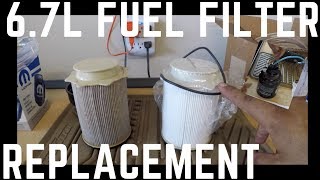
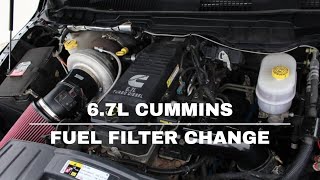
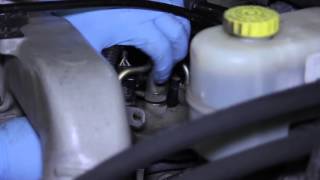
How to confirm: Check service records for the last filter change. If unknown or over 15,000 miles, replace them. This is the cheapest and most important first step. 🎬 Watch: Step-by-step guide to replacing both fuel filters. When replacing, pour the contents of the old filter bowl into a clean, clear container and inspect for water or metallic glitter.
Typical fix: Replace both the frame-mounted and engine-mounted fuel filters. Use high-quality OEM (Mopar) or OEM-equivalent (Fleetguard) filters. Many owners report Mopar filters are re-branded Fleetguard.
Est. part cost: $100-$150 - Failing In-Tank Lift Pump 🟡 Medium Probability The lift pump supplies low-pressure fuel from the tank to the high-pressure pump. If it weakens, it cannot supply enough volume under load, starving the high-pressure pump and triggering P0087.
How to confirm: A technician can perform a fuel flow test at the test port on the engine fuel filter housing. The specification is a minimum of 500-570mL in 10 seconds. A weak or intermittent stream indicates a failing lift pump.
Typical fix: Replace the in-tank fuel lift pump module. This requires dropping the fuel tank.
Est. part cost: $300-$600 - Clogged In-Tank Lift Pump Pre-filter/Sock 🟡 Medium Probability The lift pump has a mesh sock on its inlet that acts as a pre-filter. This sock can become clogged with debris from the tank, restricting fuel flow to the lift pump itself. This is often overlooked as it is a non-serviceable part.
How to confirm: This can only be confirmed by dropping the fuel tank and removing the lift pump module to visually inspect the sock. A heavily contaminated sock is a clear indicator.
Typical fix: The sock is not sold separately. The entire lift pump module must be replaced. Some owners have successfully cleaned the sock as a temporary measure.
Est. part cost: $300-$600 - High-Pressure Fuel Pump (CP4.2) Failure (2019-2020 Models) 🟡 Medium Probability The Bosch CP4.2 pump used in 2019-2020 models is known to fail, sending metal debris throughout the entire fuel system. This was the subject of NHTSA recall 21V-880 (FCA recall Y78). The failure is often attributed to the lower lubricity of US diesel fuel compared to European standards for which the pump was designed.
How to confirm: When replacing the fuel filters, pour the contents of the filter bowl into a clean, clear container and inspect for metallic glitter. The presence of metal shavings is a definitive sign of CP4.2 failure. Do not start the engine if metal is found.
Typical fix: This is a catastrophic failure requiring complete replacement of the high-pressure pump, fuel injectors, fuel rails, and all high-pressure lines, plus flushing the tank and low-pressure lines. The recall remedy involves a dealer replacing the CP4 with a more robust CP3 pump. Out of warranty, this repair can cost over $10,000.
Est. part cost: $5000-$10000+
Rare But Worth Checking
- Failing Fuel Pressure Limiting Valve (PRV): The PRV is a mechanical safety valve on the fuel rail. It can weaken over time and leak pressure back to the tank, causing P0087, especially under high load. A common diagnostic test is to cap the PRV port on the rail with a test plug; if the code no longer sets under load, the PRV is faulty.
- Failing Fuel Rail Pressure Sensor: The sensor that reads the fuel pressure can fail and send inaccurate low readings to the ECM, triggering the code even if the pressure is normal. It can be tested by checking its voltage reading at key-on, engine-off (should be ~0.5V).
- Leaking Fuel Injector(s): An injector can fail internally and 'return' too much fuel back to the tank instead of injecting it into the cylinder. This causes a drop in overall rail pressure. An injector return flow test can identify a leaking injector.
- High-Pressure Fuel Pump (CP3) Failure (2014-2018 Models): While the CP3 pump is very reliable, it can still fail, though it is a much less common cause for P0087 on these models compared to fuel supply issues. Failure is more likely at high mileage (>200,000 miles) or if the pump has been starved of fuel by a weak lift pump.
- Failing Fuel Control Actuator (FCA): Also known as the MPROP or fuel pressure regulator, this solenoid on the high-pressure pump meters fuel entering the pump. A faulty FCA can cause erratic rail pressure, stalling, and P0087.
Diagnosis Steps
- Read all Diagnostic Trouble Codes (DTCs) with a quality OBD-II scanner.
- Replace both the engine-mounted and frame-mounted fuel filters. This is the most common fix and should always be the first step.
- After replacing filters, clear the codes and drive the vehicle under various loads (e.g., accelerating onto a highway) to see if the code returns.
- If the code returns, inspect the contents of the old fuel filters for water or metallic debris. Metal debris on 2019-2020 models indicates a likely CP4.2 pump failure and you should not restart the engine.
- Use a scan tool to monitor commanded vs. actual fuel rail pressure. A large discrepancy, especially under load (e.g., commanding 26,000 PSI but only achieving 12,400 PSI), confirms the low-pressure condition.
- Test the low-pressure lift pump's flow. The spec is at least 500-570mL in 10 seconds. If flow is low, suspect a weak lift pump or clogged in-tank sock.
- If the lift pump is healthy, test the Pressure Relief Valve (PRV) by temporarily capping its port on the fuel rail. If the code no longer sets under load, the PRV is faulty.
- If the PRV is good, perform a fuel injector return flow test to check for an injector that is leaking excessively.
- If all other components test good, the final step is to diagnose the high-pressure pump.
Parts You'll Likely Need

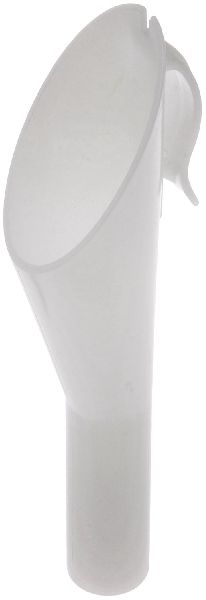
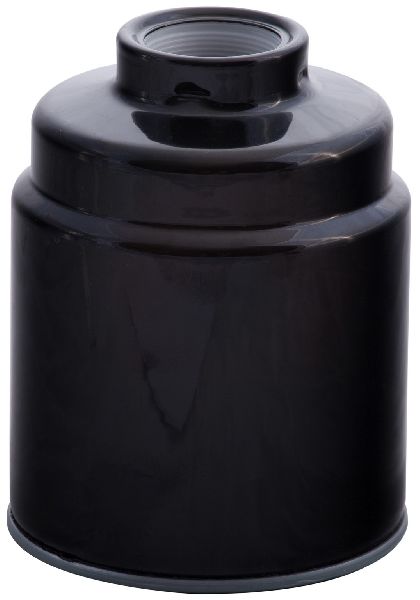
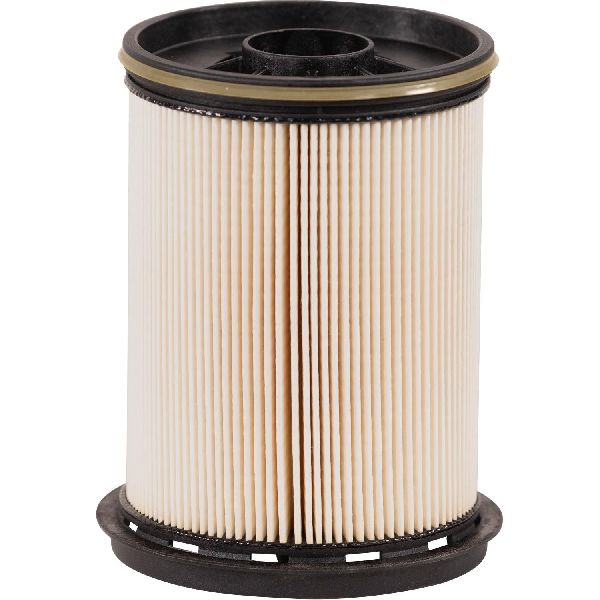
- Fuel Filter Kit (Engine & Frame Mounted)
(OEM #Mopar: 68436631AA (Frame) & 68157291AA (Engine))— This is the most common cause of P0087 due to neglected maintenance.
Trusted brands: Mopar, Fleetguard
OEM price range: $100-$150
Aftermarket price range: $70-$120 - In-Tank Fuel Lift Pump — The second most common cause after filters; the pump weakens over time and can't supply enough fuel under load.
Trusted brands: Bosch, Mopar
OEM price range: $400-$600
Aftermarket price range: $250-$450 - High-Pressure Fuel Pump Kit (CP4 to CP3 Conversion)
(OEM #Mopar: CSRLY781AA)— For 2019-2020 models with a failed CP4.2 pump, this is the official recall repair kit which replaces the CP4 with a more reliable CP3.
Trusted brands: Mopar
OEM price range: $2000-$4000
Aftermarket price range: $1500-$3000
Related Codes That Often Appear With This One
- P008A — This code means "Low Pressure Fuel System Pressure - Too Low," which directly relates to a weak lift pump or clogged filters feeding the high-pressure system. It is often seen with P0087 as noted in TSB #18-099-22 REV. A.
- P0201-P0206 — These are injector circuit codes. On 2019-2020 models, a failing CP4.2 pump can send debris into the injectors, causing them to fail and trigger these codes alongside P0087, as mentioned in TSB #18-099-22 REV. A.
- P0191 — This code for "Fuel Rail Pressure Sensor Circuit Range/Performance" can also be triggered by a failing CP4.2 pump causing erratic pressure readings.
Technical Service Bulletins (TSBs) & Recalls
- 18-099-22 REV. A: Links P0087, P008A, and injector codes (P0201-P0206) to CP4 fuel pump failure and system contamination on 2019 models. Superseded by recall Y78.
- 18-042-20: Lists P0087 as one of several DTCs that may be addressed by a software update on 2014 models.
- 18-045-15 REV A: Mentions a software update for 2014 models that could address a false P0087 code.
- NHTSA Recall 21V-880 (FCA Recall Y78): A major safety recall for 2019-2020 Ram 2500/3500/4500/5500 trucks to replace the failure-prone Bosch CP4.2 high-pressure fuel pump with a more robust CP3 pump.
Platform-Specific Known Issues
- 2019-2020 CP4.2 High-Pressure Fuel Pump Failures: These model years are equipped with the Bosch CP4.2 pump, which is prone to failure. NHTSA Campaign 21V880000 was issued for this problem, which can cause sudden stalling. TSB #18-099-22 REV. A also addresses DTCs related to this failure.
- Software Updates: Several TSBs, including #18-042-20 and #1805416, mention P0087 in the context of software updates for the powertrain control module. In some cases, an outdated software calibration could make the system overly sensitive to minor pressure fluctuations.
Mechanic-Grade Diagnostic Values
- Scan Tool: Commanded vs. Actual Fuel Rail Pressure — expected: Actual pressure should track commanded pressure closely.. Failure: A deviation greater than 1,000-2,000 PSI under load, where actual pressure fails to meet the commanded value.
- Low-Pressure Lift Pump Flow Test — expected: A minimum of 500-570 mL of fuel collected in 10 seconds.. Failure: Significantly less volume collected, indicating a weak lift pump or clogged pre-filter sock.
- Low-Pressure Lift Pump Pressure (at CP3 inlet) — expected: 5-7 PSI while cranking; minimum of 10 PSI at idle.. Failure: Pressure below these minimums indicates a weak lift pump or restriction. Note: It is considered normal for this pressure to drop near zero under heavy load on stock systems.
- Fuel Rail Pressure Sensor Voltage (Key On, Engine Off) — expected: ~0.5 Volts.. Failure: Voltage significantly different from 0.5V, or a scan tool reading pressure significantly above 0 PSI, indicates a biased or failed sensor.
- Fuel Rail Pressure Sensor Resistance (Bosch P/N 0281006327) — expected: Between pins 1 & 3: ~24.04 kOhms. Between pins 2 & 3: ~2.31 MOhms.. Failure: Open resistance (infinity) between pins 1 & 2, or significant deviation from expected resistance values.
- Injector Return Flow Test (Total System) — expected: Maximum of 210 mL in 30 seconds.. Failure: Total return volume exceeding 210 mL indicates excessive leakage from one or more injectors or the pressure limiting valve.
- Fuel Control Actuator (FCA) Resistance — expected: Less than 5 Ohms.. Failure: Resistance reading higher than 5 Ohms.
- Required Rail Pressure for Starting — expected: Approximately 4,000 PSI.. Failure: If the system cannot build at least 4,000 PSI while cranking, the engine will not start. This points to a major leak or a failed high-pressure pump.
Scan Tool Commands That Help
- wiTECH or equivalent professional scan tool: Fuel Pressure Override Test — This function commands the high-pressure pump to its maximum pressure (e.g., 26,107 PSI) in a controlled, non-running state. It is the definitive test for quantifying excessive injector return flow to isolate leaking injectors.
- wiTECH or equivalent professional scan tool: In-Tank Fuel Lift Pump Module Actuation — This allows a technician to run the lift pump on command for a set duration (e.g., 10-20 seconds) to safely and accurately perform a fuel volume/flow test without needing to crank or start the engine.
- Any OBD-II scanner with live data: Live Data Monitoring: Commanded vs. Actual Fuel Pressure — This is the most fundamental diagnostic step after checking for codes. Observing the gap between what the ECM is requesting and what the pump is delivering under load is the primary method for confirming a P0087 condition in real-time.
Wiring & Ground Locations
- Fuse F22 — In the under-hood Power Distribution Center (fuse box).. This 30A fuse supplies power to the Engine Control Module (ECM). While not a common failure point, a poor connection or intermittent fault at this fuse could cause erratic ECM behavior related to fuel system control.
- Injector Connector Tube Nuts — Under the valve cover, connecting the high-pressure fuel lines to the body of each fuel injector.. These nuts can loosen over time, creating an internal high-pressure fuel leak that returns to the tank, directly causing a drop in rail pressure and triggering P0087. They require re-torquing to specification (e.g., 37-41 ft-lb) to fix the leak.
Real Owner Repair Stories
- YouTube: Backyard Diesels (2017 Ram 2500 6.7L Cummins) — P0087 code, truck goes into limp mode, loss of power, intermittent issue.
❌ Tried (didn't work) Replacing the main fuel filters did not resolve the issue.
✅ What actually fixed it The pre-filter screen (sock) on the in-tank lift pump module was found to be severely clogged with debris. Replacing the entire lift pump assembly, which includes the non-serviceable sock, resolved the fuel starvation issue. - YouTube: HighMileageHelper (2012 Ram 3500 6.7L Cummins (with the same CP3 pump as 2014-2018 models)) — P0087 code, progressively worse stalling when coming to a stop, rough/shaky idle, hesitation on takeoff.
❌ Tried (didn't work) Diagnosing low-pressure side (lift pump) and air-side issues.
✅ What actually fixed it The Fuel Control Actuator (FCA), also known as the MPROP or fuel pressure regulator, located on the CP3 high-pressure pump, was failing. Replacing just the FCA resolved the stalling, rough idle, and the P0087 code. - YouTube: JVFIX (2016 Ram 3500 6.7L Cummins) — P0087 code, loss of power, jerking while driving.
❌ Tried (didn't work) Driving the vehicle while the issue was present.
✅ What actually fixed it The primary cause was extremely clogged and dirty fuel filters (both engine-mounted and frame-mounted). Replacing both filters with new ones immediately solved the power loss and cleared the code after driving.
"I Checked Everything" — The Actual Cause
- The equivalent for P0087 is when a fuel flow test passes but the problem is intermittent. This can happen when debris in the fuel tank temporarily clogs the lift pump's pre-filter sock, causing P0087 under load. When the truck is turned off, the debris can fall away from the sock, allowing the truck to run normally and pass a subsequent flow test. The problem then reappears unpredictably when the debris is sucked back onto the screen.
OEM Part Supersession History
Bosch CP4.2 High-Pressure Pump (Stock on 2019-2020)→Bosch CP3 High-Pressure Pump (Mopar Kit P/N CSRLY781AA, Industrial Injection Kit P/N 23S401)— The original CP4.2 pump is prone to catastrophic failure. The recall and aftermarket solution is to replace it with the more durable and reliable CP3 pump design used in earlier and later model years.
Heads up: These conversion kits are specifically designed to work with the factory engine calibration and do not require custom tuning.Bosch 0281002850 (Fuel Rail Pressure Sensor)→Bosch 0281006327 / Mopar 68210175AA / Cummins 5261237— Component and specification updates for improved reliability and accuracy.
Model Year Variations Within This Range
- 2019-2020: These models use the failure-prone Bosch CP4.2 high-pressure fuel pump. A P0087 code on these trucks is a critical warning that demands an immediate check of the fuel filters for metal shavings, as pump failure is catastrophic and common. The engine block was also changed to a compacted graphite iron design with hydraulic roller lifters.
- 2014-2018: These models use the highly reliable Bosch CP3 high-pressure fuel pump. P0087 on these trucks is almost always caused by a fuel supply or pressure regulation issue, such as clogged filters, a weak lift pump, a failing PRV, or a faulty FCA. Catastrophic CP3 failure is rare.
Helpful Videos


We Have This Part in Stock


The information in this article is provided for general reference and educational purposes only. Vehicle specifications, procedures, and part compatibility can vary by production date, trim level, and region. Always consult your vehicle's factory service manual and verify part numbers before purchasing or performing repairs. Safety-critical components such as airbags, seat belts, and braking systems should be installed by a qualified professional.
- Ram 3500:
- 🎬 Helpful Videos
- 🛍️ Shop This Part
- What's Unique About the 2014-2020 Ram 3500
- Diagnostic Flowchart
- Symptoms You May Notice
- Most Likely Causes
- Rare But Worth Checking
- Diagnosis Steps
- Parts You'll Likely Need
- Related Codes That Often Appear With This One
- Technical Service Bulletins (TSBs) & Recalls
- Platform-Specific Known Issues
- Mechanic-Grade Diagnostic Values
- Scan Tool Commands That Help
- Wiring & Ground Locations
- Real Owner Repair Stories
- "I Checked Everything" — The Actual Cause
- OEM Part Supersession History
- Model Year Variations Within This Range
- 🎟️ Get 5% Off