

P0087 on 2014-2020 Ram 2500 6.7L Cummins: Causes and Fixes for Low Fuel Rail Pressure
On a 2014-2020 Ram 2500 with the 6.7L Cummins, P0087 is almost always caused by clogged fuel filters. Replacing both filters (~$100-$150) is the first and most common fix. If the code persists, suspect a weak lift pump, a clogged in-tank pre-filter sock, or a leaking pressure relief valve. On 2019-2020 models, a P0087 code is a critical warning of a potential failure of the Bosch CP4 high-pressure fuel pump, which was subject to a major recall (NHTSA 21V-880 / Mopar Y78).
- For a P0087 code on a 6.7L Cummins, ALWAYS replace both fuel filters first; this is the most common and cheapest solution.
- If you own a 2019-2020 model, this code is a critical warning. Immediately check your fuel filter for metal shavings, as it may indicate a failing CP4.2 high-pressure pump. Check if your truck is covered by recall Y78.
- Do not immediately assume the most expensive part has failed. Thoroughly diagnose the low-pressure fuel system (lift pump, lines, pre-filter sock) before suspecting the high-pressure pump.
- Driving with this code is a safety risk due to the potential for sudden engine stalling.
What's Unique About the 2014-2020 Ram 2500

The 2014-2020 year range spans a critical change in the high-pressure fuel system for the 6.7L Cummins. 2014-2018 models use the robust and reliable Bosch CP3 injection pump. While P0087 can occur on these trucks, it's typically due to maintenance issues like fuel filters, a failing lift pump, or a weak pressure relief valve. In contrast, 2019-2020 models were equipped with the Bosch CP4.2 pump, which is notoriously prone to catastrophic failure due to a design mismatch with the lubricity of North American diesel fuel. On these later models, P0087 is a much more serious warning sign that could indicate the beginning of a pump failure that can send metal debris throughout the entire fuel system, leading to a very expensive repair, often exceeding $10,000. This widespread issue led to a major safety recall (Y78 / NHTSA 21V-880) to replace the CP4.2 pump with a more reliable CP3-style pump and update the ECM software.
Diagnostic Flowchart


Tap your situation to follow the diagnostic path that matches what you're seeing on this vehicle.
Generation note: This range covers the end of the fourth generation (2014-2018) and the start of the fifth generation (2019-2020). The key difference is the high-pressure fuel pump: 2014-2018 models have the Bosch CP3, while 2019-2020 models have the failure-prone Bosch CP4.2. A P0087 code on a 2019-2020 truck requires immediate inspection of the fuel filters for metal shavings, as this is the definitive sign of CP4 failure.
Symptoms You May Notice

- Check Engine Light (MIL) illumination
- Reduced engine power or "limp mode," often limiting speed to 40 mph
- Engine hesitation or stuttering, especially under acceleration or load
- Longer crank times or hard starting
- Engine stalling unexpectedly, sometimes when coming to a stop
- Abnormal engine noise, including a "chatter" at idle after a CP4 to CP3 recall conversion
- Rough or fluctuating idle
- Immediately replacing the high-pressure fuel pump (HPFP) without first replacing fuel filters and testing the lift pump. The problem is most often on the cheaper, low-pressure side of the system.
- Replacing the lift pump when the actual problem is a clogged, non-serviceable pre-filter sock on the lift pump module in the tank.
Most Likely Causes
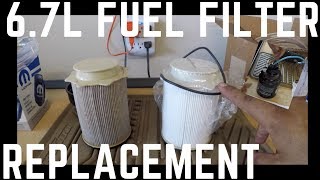
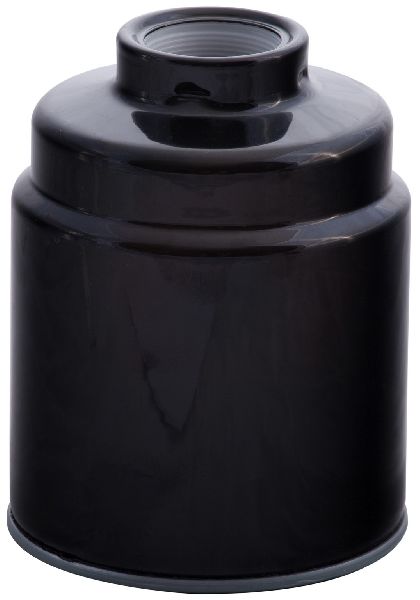
- Clogged Fuel Filters 🔴 High Probability The 6.7L Cummins uses a two-stage filtration system that is sensitive to contamination and requires replacement every 15,000 miles. Neglecting this is the number one cause of fuel restriction and P0087. Using low-quality aftermarket filters can also lead to issues.
How to confirm: Check service records. If filter age is unknown or exceeds the service interval, replace them. When replacing, pour the contents of the old filter housing into a clear container and inspect for water, debris, or metallic glitter. In one owner's experience, a dealer failed to replace the filters during service, leading to a P0087 code which was fixed by a proper filter change.
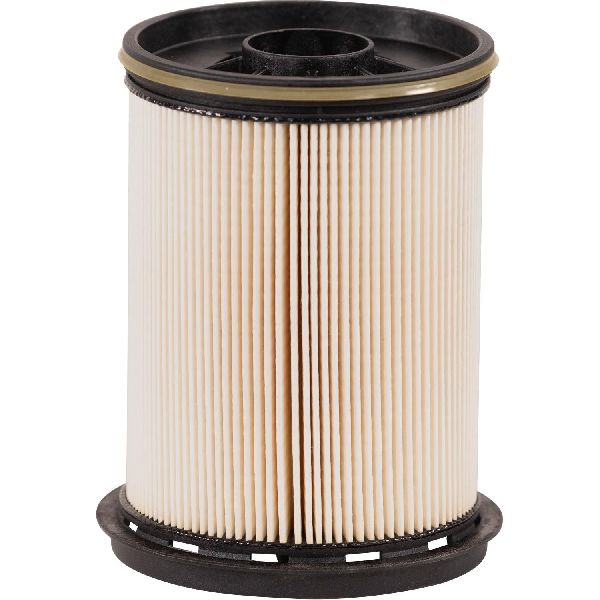
Typical fix: Replace both the engine-mounted and frame-mounted fuel filters. Use high-quality OEM (Mopar) or OEM-equivalent (Fleetguard) parts. Mopar and Fleetguard are often identical parts.
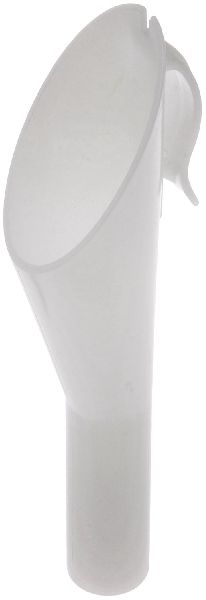
Est. part cost: $100-$150 - Failing Lift Pump (Low-Pressure Fuel Pump) 🟡 Medium Probability The in-tank lift pump supplies fuel from the tank to the high-pressure pump. If it becomes weak, it cannot provide enough volume under load, starving the high-pressure side. A clogged pre-filter sock on the pump module inside the tank is also a common, related issue that is often misdiagnosed.
How to confirm: Perform a lift pump flow test. The specification is a minimum of 500-570mL of fuel in 10 seconds. A common DIY method is to remove the starter relay, bump the starter to activate the pump for its 20-second cycle, and measure the volume collected from the fuel line; it should fill about a 1-quart container. A weak or intermittent stream indicates a failing lift pump or a clogged in-tank sock.
Typical fix: Replace the in-tank lift pump module. If the pump tests good, the fuel tank may need to be dropped to clean or replace the pre-filter sock.
Est. part cost: $300-$600 - Failing High-Pressure Fuel Pump (HPFP) 🟡 Medium Probability On 2019-2020 models, the Bosch CP4.2 pump is a known failure point due to a design flaw that causes it to self-destruct from inadequate lubrication with US diesel fuel. On 2014-2018 models with the CP3 pump, failure is much less common but still possible, usually from contamination.
How to confirm: The definitive sign is finding metallic shavings ('forbidden glitter') in the fuel filter bowl. A technician can also monitor actual vs. desired rail pressure with a scan tool; a large deviation under load that isn't caused by the low-pressure system points to the HPFP. By the time P0087 appears, the pump may have 30-40% wear.
Typical fix: On 2019-2020 models, this is covered by recall Y78 (NHTSA 21V-880), which replaces the CP4.2 with a CP3 pump and updates software. If the pump has already failed and contaminated the system, the entire fuel system (injectors, rails, lines, tank) must be replaced, a repair that can exceed $10,000.
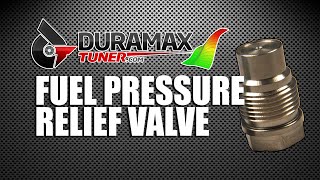
Est. part cost: $1,500-$15,000+ - Leaking Fuel Rail Pressure Relief Valve (PRV) ⚪ Low Probability The PRV is a mechanical spring valve on the fuel rail designed to bleed off excess pressure. Over time, the spring can weaken, causing it to open prematurely and dump rail pressure back to the tank, triggering P0087 under heavy load.
How to confirm: A common diagnostic method is to temporarily cap the PRV port with a test plug and perform a test drive under load. If the code does not return, the PRV is faulty. This should only be done for a short test as it removes a key safety feature.
Typical fix: Replace the fuel rail pressure relief valve. The valve itself should be torqued to 52 ft-lbs during installation.
Est. part cost: $100-$250
Rare But Worth Checking
- Leaking Fuel Injector(s): An injector can fail internally and return too much fuel back to the tank instead of spraying it into the cylinder. This causes a drop in rail pressure. This can be diagnosed with an injector return flow test. For the 6.7L Cummins, maximum allowable leakage for all injectors combined is 210 ml in 30 seconds.
- Faulty Fuel Rail Pressure Sensor: The sensor itself can fail and send inaccurate low-pressure readings to the ECM, even if the actual pressure is correct. This is less common than a mechanical fault. On 2019-2020 models, the Bosch part number is 0 281 006 928.
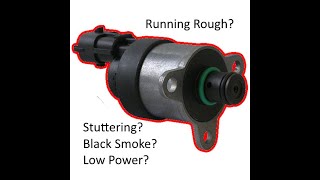
- Faulty Fuel Control Actuator (FCA): Also known as the MPROP or fuel pressure regulator, this solenoid on the high-pressure pump controls how much fuel enters the main pumping chambers. If it sticks or fails, it can cause erratic rail pressure and trigger P0087.
Diagnosis Steps
- Check for and record any other DTCs. Pay close attention if P008A is present, as it points to the low-pressure side.
- Replace both fuel filters with high-quality Mopar or Fleetguard parts. This is the most common fix and a required first step.
- Carefully inspect the contents of the old fuel filter housing for water, debris, or metallic shavings. The presence of metal on a 2019-2020 model is a strong indicator of CP4 pump failure and means you should stop immediately to avoid further damage.
- If filters do not solve the issue, test the low-pressure fuel system. Perform a lift pump flow test. The specification is a minimum of 500-570mL in 10 seconds. A simple DIY method is to bump the starter (with starter relay removed) to run the pump for its 20-second prime cycle and check for strong, steady flow.
- If lift pump flow is low, inspect the in-tank pre-filter sock for clogging before replacing the pump module.
- With a scan tool, monitor 'Desired Fuel Pressure' vs. 'Actual Fuel Pressure' under load. A significant deviation (e.g., actual pressure is 12,400 PSI when 26,000 PSI is commanded) confirms a pressure loss.
- If pressure drops primarily under heavy load, test the Fuel Rail Pressure Relief Valve (PRV) by temporarily capping its port. If the code no longer sets, the PRV is faulty.
- If the low-pressure system and PRV are good, perform an injector return flow test. Total return flow should not exceed 210 mL in 30 seconds.
- As a final step, test the Fuel Control Actuator (FCA) and the high-pressure pump itself.
Parts You'll Likely Need
- Fuel Filter Kit (Engine & Frame Mounted)
(OEM #Mopar Kit: 68157291AA (engine) & 68436631AA (frame, 2019+))— This is the most common cause of P0087 due to neglect or poor fuel quality. It is a standard maintenance item. Mopar filters are widely considered to be re-branded Fleetguard filters. - In-Tank Fuel Lift Pump Module — The second most likely cause after filters. The entire module, including the often-clogged pre-filter sock, is typically replaced.
- Fuel Rail Pressure Relief Valve (PRV) — A common failure point on the high-pressure rail, especially on trucks that are frequently under heavy load. Causes pressure to bleed off.
- High-Pressure Fuel Pump (HPFP)
(OEM #Bosch CP4.2 (2019-2020), Bosch CP3 (2014-2018))— The primary cause on 2019-2020 models, addressed by recall Y78. Less common failure on earlier models but possible due to contamination.
Related Codes That Often Appear With This One
- P008A — This code means "Low Pressure Fuel System Pressure - Too Low." Seeing it with P0087 strongly suggests the problem is on the supply side (filters, lift pump) before the high-pressure pump. The TSBs for this vehicle also list them together. [Bulletin #18-099-22 REV. A]
- P0191 — This code for "Fuel Rail Pressure Sensor Circuit Range/Performance" can appear alongside P0087, especially during a CP4 pump failure event.
- P0201-P0206 — These are fuel injector circuit codes. TSB #18-099-22 REV. A lists these alongside P0087, indicating that a major fuel system issue can sometimes trigger injector-related faults.
Technical Service Bulletins (TSBs) & Recalls
- 18-099-22 REV. A
- 1805416
- 18-045-15 REV A
- 1805314REVB
- Y78 / NHTSA 21V-880 (Recall)
Platform-Specific Known Issues
- Recall Y78 / NHTSA 21V880: Affects 2019-2020 models equipped with the Bosch CP4.2 high-pressure fuel pump. The recall involves replacing the failure-prone CP4.2 with a more robust CP3 pump and inspecting the fuel system for contamination. Owners should check with a dealer to see if their vehicle is covered.
- Software Updates: For some earlier models (e.g., 2014), TSBs were issued to update the PCM software to prevent false P0087 codes when no mechanical fault was present.
Mechanic-Grade Diagnostic Values
- Injector Return Flow (Running Test) — expected: Maximum 210 mL in 30 seconds. Failure: Flow greater than 210 mL indicates excessive leakage from one or more injectors.
- Injector Return Flow (No-Start Cranking Test) — expected: Maximum 40 mL in 10 seconds at 200 RPM. Failure: Flow greater than 40 mL indicates a significant leak preventing the rail from building starting pressure.
- Lift Pump Flow Test — expected: Minimum 500-570 mL in 10 seconds. Failure: A lower volume indicates a weak lift pump, clogged filters, or a clogged in-tank pre-filter sock.
- Fuel Rail Pressure Sensor Voltage (Key On, Engine Off) — expected: ~0.5 Volts. Failure: Voltage significantly different from 0.5V suggests a faulty sensor or wiring issue.
- Fuel Control Actuator (FCA) Resistance — expected: Maximum of 5 ohms. Failure: Resistance higher than 5 ohms indicates a failing FCA solenoid.
- High-Pressure Connector Nut Torque — expected: 42 ft-lbs. Failure: Loose connectors can cause leaks and pressure loss.
- Fuel Rail Pressure Sensor Torque — expected: 52 ft-lbs. Failure: Improper torque can lead to leaks or damage to the sensor.
Scan Tool Commands That Help
- wiTECH or equivalent professional scan tool: Fuel Pressure Override Test — This function commands the high-pressure pump to a specific high pressure (e.g., 26,107 PSI) and the engine to a set RPM (e.g., 1200 RPM). It is used to create a stable, high-pressure condition to accurately measure total injector return flow and diagnose leaking injectors.
- wiTECH or equivalent professional scan tool: Actuate In-Tank Fuel Lift Pump Module — This command runs the lift pump on demand for a set duration (e.g., 10 seconds) without needing to crank the engine. It is the standard procedure for performing an accurate lift pump flow test.
- Manual Diagnostic (CP3 Models): Unplug Fuel Control Actuator (FCA) — As a quick diagnostic test on CP3-equipped trucks (2014-2018), unplugging the FCA's electrical connector causes the rail pressure to default to its maximum. If the truck starts (or pressure builds significantly) when it wouldn't before, it strongly suggests the FCA is faulty and was preventing pressure build-up. The engine should be shut off immediately after starting to avoid damage from uncontrolled high pressure.
Real Owner Repair Stories
- YouTube channel 'Backyard Dieselz' (2017 Ram 2500 6.7L) — P0087 code, limp mode, intermittent issue that would run fine for a while and then return.
❌ Tried (didn't work) The video focuses on diagnosing the low-pressure side after filters have been checked.
✅ What actually fixed it The non-serviceable pre-filter sock on the in-tank lift pump module was severely clogged with debris. Replacing the entire lift pump assembly resolved the fuel starvation issue. - YouTube channel 'HighMileageHelper' (2012 Ram 3500 6.7L (CP3 engine, relevant to 2014-2018 models)) — P0087 code, progressively worsening. Rough/shaky idle, stalling when coming to a stop, RPMs dipping low.
❌ Tried (didn't work) Replacing the turbocharger, Replacing the aftermarket lift pump, Replacing the fuel rail pressure sensor
✅ What actually fixed it Replacing the Fuel Control Actuator (FCA) on the CP3 high-pressure pump. The owner deduced the issue was on the high-pressure side because it occurred during regulation phases (takeoff and deceleration), not at wide-open throttle. - Reddit user 'welder-dude' on r/Cummins (2017 Ram 6.7L, fully deleted) — Persistent P0087 code that appears once the truck warms up. Deleting the code makes it run fine for a few miles. Rail pressure drops drastically above 2,000 RPM.
❌ Tried (didn't work) New fuel filter and water separator, New in-tank fuel pump, New fuel sensors (on rail and CP3), New CP3 high-pressure pump, New injectors and tubes
✅ What actually fixed it The user did not post a final resolution. However, community suggestions pointed to causes outside the replaced parts, including a bad custom tune (since the truck was deleted), a clogged intake plenum, or a defective aftermarket water separator filter not properly opening the check valve. This story highlights how modifications can complicate diagnosis.
"I Checked Everything" — The Actual Cause
- A common misdiagnosis is replacing the lift pump based on low flow readings without checking the in-tank pre-filter. The pump itself may be functional, but a severely clogged pre-filter sock on the pickup module inside the fuel tank can starve it of fuel. This is a purely mechanical blockage that won't be detected by electrical tests of the pump.
When the Usual Fixes Don't Work
- While clogged filters and weak lift pumps are the most common causes, numerous owner accounts show that P0087 can persist after these items are replaced. In a documented case on a 2017 model, the ultimate cause was not the lift pump itself, but a severely clogged, non-serviceable pre-filter sock inside the fuel tank, which starved the new pump. In another case involving a 2012 model, the issue was not on the low-pressure side at all, but was resolved by replacing the Fuel Control Actuator (FCA) on the high-pressure pump after other sensors and even the turbo were needlessly replaced. These cases prove that while starting with filters is correct, a full system diagnosis is required if the simple fixes don't work.
OEM Part Supersession History
68002436AA, 68002436AB, 68002436AC, 68002436AD→Mopar 68210175AA— Standard part revision and consolidation.
Heads up: This sensor is for the CP3-equipped trucks. The 2019-2020 CP4 trucks use a different sensor (Bosch 0 281 006 928).Cummins 4936097, Mopar 68005241AA→Bosch 0928400642 (Often sold under all three numbers)— Bosch is the Original Equipment Manufacturer for the Fuel Control Actuator (FCA/MPROP).
Model Year Variations Within This Range
- 2014-2018 (CP3 Pump): Diagnosis should heavily focus on the low-pressure supply (filters, lift pump), PRV, and FCA. The high-pressure CP3 pump itself is very robust and a less likely failure point. TSBs for false P0087 codes due to software glitches primarily apply to the early years of this range (e.g., 2014).
- 2019-2020 (CP4 Pump): P0087 is a critical warning of potential catastrophic CP4.2 high-pressure pump failure. The first diagnostic step after checking codes should be inspecting the fuel filter housing for metallic debris. The recall (Y78 / NHTSA 21V-880) replaces this pump with a CP3.
Helpful Videos

We Have This Part in Stock


The information in this article is provided for general reference and educational purposes only. Vehicle specifications, procedures, and part compatibility can vary by production date, trim level, and region. Always consult your vehicle's factory service manual and verify part numbers before purchasing or performing repairs. Safety-critical components such as airbags, seat belts, and braking systems should be installed by a qualified professional.
- Ram 2500:
- 🎬 Helpful Videos
- 🛍️ Shop This Part
- What's Unique About the 2014-2020 Ram 2500
- Diagnostic Flowchart
- Symptoms You May Notice
- Most Likely Causes
- Rare But Worth Checking
- Diagnosis Steps
- Parts You'll Likely Need
- Related Codes That Often Appear With This One
- Technical Service Bulletins (TSBs) & Recalls
- Platform-Specific Known Issues
- Mechanic-Grade Diagnostic Values
- Scan Tool Commands That Help
- Real Owner Repair Stories
- "I Checked Everything" — The Actual Cause
- When the Usual Fixes Don't Work
- OEM Part Supersession History
- Model Year Variations Within This Range
- 🎟️ Get 5% Off