

P0087 on 2018 Nissan Versa: Fuel Pressure Too Low Causes and Fixes
On a 2018 Nissan Versa, code P0087 is frequently caused by a software glitch in the Engine Control Module (ECM). A dealer reprogram, as outlined in Nissan TSB NTB19-045b, is the most likely fix. This TSB addresses how the ECM improperly stores a permanent DTC. If the software is up to date, the next most common cause is a failing in-tank fuel pump.
- Before buying any parts for a P0087 code on a 2018 Versa, check with a dealer about TSB NTB19-045b. An ECM reprogram is the most likely and cheapest fix.
- Symptoms include engine hesitation, stalling, and loss of power. Do not ignore this code, as stalling can be dangerous.
- If a mechanical part has failed, it is most likely the in-tank fuel pump assembly.
- The fuel filter is part of the fuel pump module and is not replaced separately.
- The same software issue affects the 2018 Versa Note and 2018-2019 Nissan Kicks with the same 1.6L engine.
What's Unique About the 2018-2018 Nissan VERSA
For the 2018 Nissan Versa with the 1.6L HR16DE engine, a P0087 code doesn't automatically mean a part has failed. Nissan issued Technical Service Bulletins (TSBs), specifically NTB19-045b, stating that due to calibration errors, the ECM can improperly store this code as a permanent DTC. This makes checking for and performing an ECM software update a critical first step before attempting any costly parts replacements. The TSB explicitly states the reprogram updates the way the permanent DTC is stored and allowed to be erased after a proper diagnosis and repair is performed.
Diagnostic Flowchart
Tap your situation to follow the diagnostic path that matches what you're seeing on this vehicle.
Symptoms You May Notice
- Check Engine Light is on
- Engine hesitation or stumbling during acceleration
- Rough idle
- Loss of engine power or sluggish performance
- Difficulty starting the engine or long crank times
- Engine stalling unexpectedly
- Reduced fuel efficiency
- Replacing the fuel pump before verifying the ECM software is up to date. Given the known TSBs, this can be a costly and unnecessary repair.
- Replacing the fuel pressure sensor without comparing its reading to a mechanical gauge first. The sensor may be reporting the low pressure correctly, meaning the problem lies elsewhere in the system.
Most Likely Causes
- ECM Software Calibration Error 🔴 High Probability Nissan has officially recognized this issue in TSBs NTB19-045b and P9328_P9343_P934, stating the ECM may improperly store a permanent diagnostic trouble code due to calibration errors. This applies specifically to the 2018 Versa Sedan and Note with the HR16DE engine, among other Nissan models.
How to confirm: A Nissan dealership or a qualified shop with access to Nissan's CONSULT-III plus diagnostic tool can check if your vehicle's VIN is covered by TSB NTB19-045b and if the ECM software is outdated by comparing the current ECM part number to the list in the bulletin.
Typical fix: Reprogram the Engine Control Module (ECM) 🎬 Watch: How to reprogram and reflash a Nissan ECU with the updated software. The TSB notes this is to be done *after* confirming no other mechanical faults exist.
Est. part cost: $0 - $200 (Labor for reprogram) - Failing Fuel Pump 🟡 Medium Probability The fuel pump is a wear-and-tear item. If the ECM software is correct, the pump is the next most likely mechanical part to fail and cause low pressure. The entire module, including the pump, filter, and sending unit, is replaced as one assembly.
How to confirm: Perform a fuel pressure test using a mechanical gauge connected to the fuel line. With the ignition on, pressure should be around 34-35 PSI. Some replacement pumps for this platform are rated higher, between 47-54 PSI. If the pressure is below specification or bleeds down to zero immediately after the pump primes, the check valve in the pump assembly is likely bad.
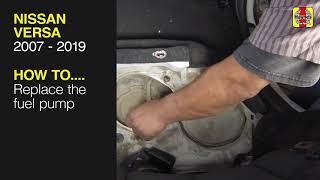
Typical fix: Replace the in-tank fuel pump module assembly. This requires removing the rear seat cushion to access the pump cover. 🎬 See this walkthrough for replacing the fuel pump assembly
Est. part cost: $250-$450 - Clogged Fuel Filter ⚪ Low Probability The fuel filter is integrated into the fuel pump module on the 2018 Versa. While it can become clogged and restrict flow, it is not serviced separately. This is a less frequent cause than the pump motor itself failing.
How to confirm: This is diagnosed by low results during a fuel pressure test. It's not visually inspected without removing the fuel pump module. If fuel pressure is low, the entire module is typically condemned.
Typical fix: Replace the entire fuel pump module assembly, which includes a new filter.
Est. part cost: $250-$450 - Faulty Fuel Pressure Sensor ⚪ Low Probability While less common than a pump failure, the fuel pressure sensor can fail and send incorrect readings to the ECM, falsely triggering the P0087 code. The sensor is located on the fuel rail.
How to confirm: Compare the live data from the fuel pressure sensor (using an OBD-II scan tool) to the reading from a mechanical fuel pressure gauge. If the readings differ significantly (e.g., gauge shows 50 PSI but scan tool shows 40 PSI), the sensor is likely faulty. With key on, engine off, the sensor's signal wire should read approximately 0.5V.
Typical fix: Replace the fuel pressure sensor. An aftermarket part number example is Dorman 926-409. An OEM equivalent is 22365-1TV1B.
Est. part cost: $50-$200
Rare But Worth Checking
- Kinked or Leaking Fuel Line: A physical inspection of the fuel lines from the tank to the engine should be performed to rule out any obvious damage, leaks, or restrictions.
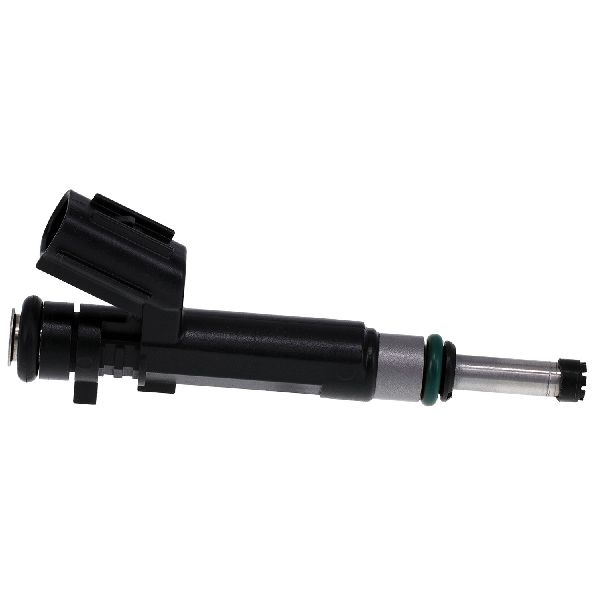
- Leaking Fuel Injector: A fuel injector stuck open can cause a drop in rail pressure. This is less common but possible and may be accompanied by other misfire codes.
- Faulty Fuel Pump Driver/Control Module: The module that controls the fuel pump's speed can fail, leading to low pressure. This is an electrical issue that would require testing the circuit. Not all vehicles have a separate module; on the Versa, this function may be integrated into the ECM.
Diagnosis Steps
- Check for Technical Service Bulletins (TSBs): The first and most important step is to check if your vehicle is affected by TSB NTB19-045b or P9328_P9343_P934. This is the most likely cause.
- ECM Reprogram: If the TSB applies and no other faults are found, have a Nissan dealer reprogram the ECM. This resolves the issue for a significant number of vehicles.
- Check Fuel Level: Ensure the vehicle has an adequate amount of fuel. Running the tank very low can sometimes cause temporary pressure drops or strain the fuel pump.
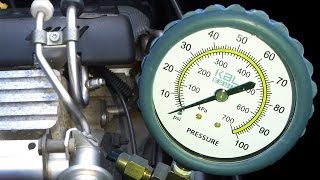
- Perform a Fuel Pressure Test: 🎬 Watch: How to perform a professional fuel pressure test If the ECM reprogram does not apply or fix the code, connect a fuel pressure gauge to the fuel system. Start the engine and observe the pressure. It should be around 34-35 PSI at idle, though some replacement pumps are rated higher.
- Interpret Pressure Results: If pressure is below specification, the issue is likely the fuel pump or a clogged filter. If pressure is normal, the issue could be the fuel pressure sensor or its wiring.
- Test Fuel Pressure Sensor: If fuel pressure is mechanically normal but the code persists, test the fuel pressure sensor by comparing its output on a scan tool to the mechanical gauge. A significant discrepancy points to a bad sensor. Check for approximately 0.5V on the signal wire with the key on, engine off.
- Inspect Fuel Pump and Wiring: If pressure is low, inspect the fuel pump's electrical connector under the rear seat for corrosion or damage. Check the associated fuse (Fuse #48, 15A in the under-hood fuse box for Versa Note) and relay.
- Inspect for Leaks: Visually inspect all fuel lines from the tank to the engine for signs of physical damage or fuel leaks.
Parts You'll Likely Need
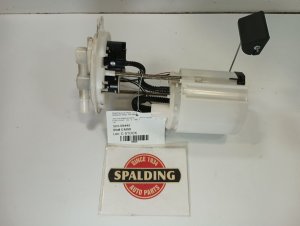
- Fuel Pump Module Assembly
(OEM #17040-5EE0A)— If the cause is mechanical and not a software issue, the in-tank fuel pump is the most common component to fail. The assembly includes the pump, sending unit, and integrated fuel filter. This part number fits 2020+ Versa models, but is often cross-referenced for the 2018 model as a replacement.
Trusted brands: Nissan Genuine, Bosch, Carter, Delphi, TRQ
OEM price range: $400-$450
Aftermarket price range: $150-$350 - Fuel Pressure Sensor
(OEM #22365-1TV1B)— If the fuel pressure tests normal with a mechanical gauge but the code persists, the sensor itself may be faulty, sending incorrect data to the ECM.
Trusted brands: Nissan Genuine, Dorman (926-409), Standard Motor Products (AS382)
OEM price range: $150-$200
Aftermarket price range: $40-$100
Related Codes That Often Appear With This One
- P0101 — This Mass Air Flow (MAF) sensor code is also mentioned in TSB NTB19-045b as being potentially caused by the same ECM calibration error. Some owners on forums have reported MAF sensor issues concurrently.
- P0448 — This EVAP system code is also listed in TSB NTB19-045b as being potentially caused by the same ECM calibration error.
- P2008 — This Intake Manifold Runner Control code is also listed in TSB NTB19-045b as being potentially caused by the same ECM calibration error.
Technical Service Bulletins (TSBs) & Recalls
- NTB19-045b: 'MIL ON WITH DTC P0087, P0101, P0448, OR P2008, VEHICLES REGISTERED OUTSIDE OF CALIFORNIA'. This is the main TSB indicating a software update is needed. It was issued January 8, 2020, superseding previous versions.
- P9328_P9343_P934: Mentions reprogramming the ECM to correct improper storage of P-DTCs, including P0087, due to calibration errors.
- NTB19-045a: An earlier version of the TSB from September 19, 2019.
- NTB19-045: The original version of the TSB from June 14, 2019, which also lists the 2018 Versa Sedan and Note.
Platform-Specific Known Issues
- A primary issue for the 2018 Versa is an ECM calibration error that can incorrectly trigger code P0087. Nissan TSB NTB19-045b and P9328_P9343_P934 directly address this, recommending an ECM reprogram as the fix.
- The TSB NTB19-045b clearly states that the reprogram is intended to update 'the way the permanent DTC is stored and allowed to be erased' and should be performed *after* a proper diagnosis confirms no other mechanical fault is present.
Mechanic-Grade Diagnostic Values
- Fuel Pressure Sensor Signal Voltage (Key On, Engine Off) — expected: ~0.5 V. Failure: Voltage is stuck at 0V, 5V, or does not correlate with pressure changes when the engine is running.
- Fuel Pressure Sensor Signal Voltage (Engine Running) — expected: 0.5V to 4.5V, rising with engine load/RPM. Failure: Voltage does not respond smoothly to throttle changes or is inconsistent with mechanical gauge readings.
- Fuel Pump Module Pressure (Aftermarket example) — expected: 47.9 PSI to 53.6 PSI. Failure: Pressure is significantly below this range, indicating a weak pump.
- ECM Ground Pins at Connector E16 — expected: Less than 0.1V (or near zero resistance to chassis ground). Failure: High resistance or voltage reading indicates a bad ground, which can affect sensor readings.
Scan Tool Commands That Help
- Nissan CONSULT-III plus or equivalent: Fuel Pump Driver Circuit Bidirectional Test — Use this function to command the fuel pump on/off or to a specific duty cycle. A 'failed' response or no change in fuel pressure points to a problem with the control module (likely integrated in the ECM) or the pump's wiring.
Wiring & Ground Locations
- ECM Connector E16 — In the engine bay, specific location varies but typically near the battery or firewall.. This is the main connector for the Engine Control Module. Testing sensor signals, power, and grounds often happens here.
- ECM Ground Pins 159 & 162 — On the main ECM connector (E16). Both are black wires.. A poor ECM ground can cause erratic behavior and incorrect readings from various sensors, including the fuel pressure sensor, potentially triggering a false P0087 code.
- Fuel Pump Fuse (Versa Note) — Fuse #48 (15A) in the engine compartment fuse box.. This fuse supplies power to the fuel pump relay. If it's blown, the pump will not receive power, causing a no-start and a P0087 code.
- Fuel Pump Access Cover — Under the rear seat cushion.. This is the access point for testing the fuel pump's electrical connector and for replacing the fuel pump module assembly.
Real Owner Repair Stories
- Reddit user AreaNo7848 (Nissan truck (model not specified, but behavior is relevant)) — Intermittent P0087 code.
❌ Tried (didn't work) Initial diagnosis pointed towards component failure.
✅ What actually fixed it The user found the code would only appear if they hit the start button immediately without pausing. Allowing the fuel system to pressurize first (turning key to 'ON', waiting a few seconds for the pump to prime, then starting) prevented the code from returning.
"I Checked Everything" — The Actual Cause
- In the context of P0087, the equivalent scenario is when a mechanical fuel pressure gauge shows normal pressure, but the code persists. This often points directly to either the known ECM software glitch (where the code is stored improperly) or a faulty fuel pressure sensor that is sending incorrect low-pressure readings to the ECM.
OEM Part Supersession History
Unknown (for 2018 model)→17040-5EE0A— Service replacement part.
Heads up: The part number 17040-5EE0A is officially listed for the 2020-2025 Nissan Versa but is commonly sold and used as the service replacement for the 2018 model. Technicians should verify fitment with the supplier, but it is the generally accepted replacement.
Helpful Videos

Used OEM Parts in Stock
New Aftermarket Parts Available


The information in this article is provided for general reference and educational purposes only. Vehicle specifications, procedures, and part compatibility can vary by production date, trim level, and region. Always consult your vehicle's factory service manual and verify part numbers before purchasing or performing repairs. Safety-critical components such as airbags, seat belts, and braking systems should be installed by a qualified professional.
- Nissan VERSA:
- 🎬 Helpful Videos
- 🛍️ Shop This Part
- What's Unique About the 2018-2018 Nissan VERSA
- Diagnostic Flowchart
- Symptoms You May Notice
- Most Likely Causes
- Rare But Worth Checking
- Diagnosis Steps
- Parts You'll Likely Need
- Related Codes That Often Appear With This One
- Technical Service Bulletins (TSBs) & Recalls
- Platform-Specific Known Issues
- Mechanic-Grade Diagnostic Values
- Scan Tool Commands That Help
- Wiring & Ground Locations
- Real Owner Repair Stories
- "I Checked Everything" — The Actual Cause
- OEM Part Supersession History
- 🎟️ Get 5% Off