

P0087 on 2019 Nissan KICKS: Fuel Pressure Low Causes & Fixes
On a 2019 Nissan KICKS, code P0087 is most often caused by a software glitch in the Engine Control Module (ECM), not a failed part. A TSB-documented ECM reprogram at a Nissan dealership is the primary fix, especially for vehicles registered outside of California. Do not replace the fuel pump until this software issue is ruled out. This is especially important as the vehicle uses a standard port-injection system, not a complex high-pressure direct-injection system, making the software fault a ver
- For a 2019 Nissan Kicks, P0087 is very likely a software issue, not a hardware failure.
- Before replacing any parts, have a Nissan dealer check if TSB NTB19-045b (ECM reprogram) applies to your vehicle.
- This code often appears with P0101, P0448, and P2008, all pointing to the same ECM software glitch.
- Ignoring the TSB can lead to spending hundreds or thousands of dollars on unnecessary fuel pump replacements.
- If the software update doesn't fix the issue, then proceed with standard diagnostics for a failing fuel pump or clogged filter.
What's Unique About the 2019-2019 Nissan KICKS
What's unique about the 2019 Nissan Kicks is that P0087 is frequently a "ghost code" caused by a software calibration error, not a mechanical failure. Nissan issued several Technical Service Bulletins (TSBs) acknowledging that the ECM can improperly store this code. [NTB19-045b, P9328_P9343_P934] This is particularly unusual because P0087 is more commonly associated with more complex Gasoline Direct Injection (GDI) systems that use a high-pressure fuel pump. Since the Kicks uses a simpler, standard port-injection system, the fact that a software bug is the primary cause makes correct diagnosis critical to avoid unnecessarily replacing the standard in-tank fuel pump.
🎬 Watch: Understanding common causes and fixes for the P0087 code.Diagnostic Flowchart
Tap your situation to follow the diagnostic path that matches what you're seeing on this vehicle.
Symptoms You May Notice
- Check Engine Light is on
- Engine hesitation or stumbling, especially during acceleration
- Loss of engine power or sluggish performance
- Rough idling
- Engine stalling, sometimes when coming to a stop
- Difficulty starting the engine
- Decreased fuel economy
- Replacing the in-tank fuel pump or fuel pressure sensor before checking for and performing the ECM software update specified in TSB NTB19-045b. This is the most common mistake and leads to unnecessary, expensive repairs.
Most Likely Causes
- ECM Software Calibration Error 🔴 High Probability Nissan has officially documented this issue for 2019 Kicks models registered outside of California. The ECM's programming may improperly store a permanent P0087 code, even after a transient issue or no issue at all. [P9328_P9343_P934, NTB19-045b]
How to confirm: Check the vehicle's service history for TSB NTB19-045b or have a Nissan dealer check if the reprogram applies to your vehicle's VIN and current ECM part number using their CONSULT tool.
Typical fix: Reprogram the Engine Control Module (ECM) at a Nissan dealership. The TSB clarifies this update changes how permanent DTCs are stored and erased, and should be done after diagnosing and repairing any underlying mechanical fault if one exists.
Est. part cost: $0 (if under warranty) - $250 - Failing In-Tank Fuel Pump ⚪ Low Probability While less common than the software issue, the in-tank fuel pump is a mechanical part that can wear out and is the primary component responsible for generating fuel pressure in this system.
How to confirm: A technician must perform a mechanical fuel pressure test to verify the actual pressure in the fuel rail against manufacturer specifications. This reading can be compared to the fuel pressure sensor data on a scan tool.
Typical fix: Replace the in-tank fuel pump assembly, which typically includes the pump, sending unit, and fuel filter.
Est. part cost: $130-$615 - Clogged Fuel Filter ⚪ Low Probability The fuel filter is a maintenance item that can become restricted over time, impeding fuel flow and causing pressure to drop.
How to confirm: On the Kicks, the fuel filter is integrated into the in-tank fuel pump module. If a fuel pressure test shows low pressure and the pump is audible, a clogged filter is a strong possibility, but it requires replacing the entire assembly.
Typical fix: Replace the in-tank fuel pump module.
Est. part cost: $130-$615
Rare But Worth Checking
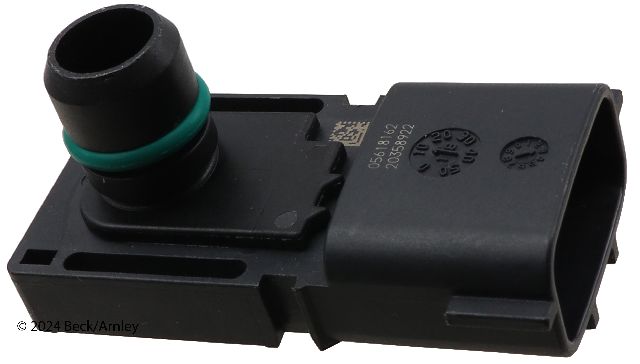
- Faulty Fuel Pressure Sensor: The sensor that reads the fuel pressure can fail and send incorrect low-pressure data to the ECM, causing it to trigger P0087 even if the pressure is normal. This can be diagnosed by comparing the sensor's live data reading to a mechanical fuel pressure gauge.
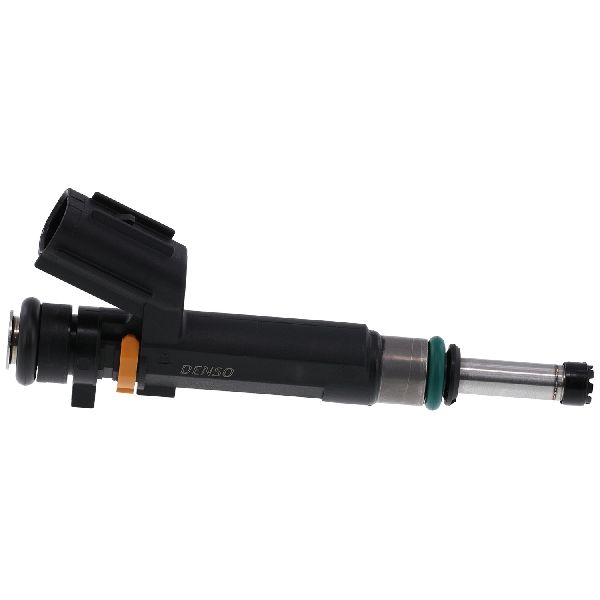
- Leaking Fuel Injector: A fuel injector stuck open or leaking can cause a drop in overall rail pressure, leading to this code.
- Damaged Fuel Line: A kinked, pinched, or damaged fuel line between the tank and the engine can restrict flow and cause a pressure drop.
Diagnosis Steps
- Read the trouble codes with an OBD-II scanner. Note if P0101, P0448, or P2008 are also present, as this strongly points to the TSB issue.
- CRITICAL STEP: Check for TSBs. Contact a Nissan dealer with your VIN to determine if NTB19-045b or P9328_P9343_P934 apply to your vehicle, especially if it was registered outside of California.
- If a TSB applies, the recommended procedure is to first diagnose any potential mechanical fault, repair it, and then perform the ECM reprogram to prevent the code from being stored improperly in the future. If no mechanical fault is found, the reprogram itself is the fix.
- If no TSBs apply or the code returns after the reprogram, begin traditional diagnosis.
- Use a scan tool to monitor live data for 'Fuel Rail Pressure' (requested vs. actual).
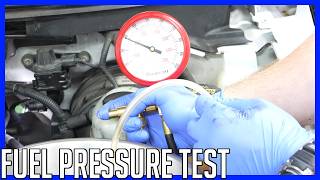
- Perform a mechanical fuel pressure test to confirm the scan tool readings are accurate. This is the definitive test for actual fuel pressure. 🎬 See how to perform a professional fuel pressure test.
- Inspect all visible fuel lines for kinks, damage, or leaks.
- If pressure is confirmed to be low, test the in-tank fuel pump to determine if it is failing.
- If pressure is good but the code persists, test the fuel pressure sensor and its wiring by comparing its output to the mechanical gauge.
Parts You'll Likely Need
- ECM Reprogram (Service) — This is a software update, not a physical part. It is the most common documented fix for this specific code on a 2019 Kicks, per Nissan's own TSBs. [NTB19-045b, P9328_P9343_P934]
OEM price range: $150-$250
Aftermarket price range: N/A - In-Tank Fuel Pump Assembly
(OEM #17040-5RL0A)— If a mechanical fault is confirmed via a pressure test, the entire module (which includes the pump, filter, and sending unit) is the component to replace.
Trusted brands: Nissan Genuine, Autopart Premium
OEM price range: $430-$615
Aftermarket price range: $100-$300 - Fuel Pressure Sensor
(OEM #16638-5CA0A)— If mechanical pressure tests good but the ECM still sees a low pressure value, the sensor itself may be faulty, sending incorrect information. 🎬 Watch: How to replace a fuel pressure sensor the right way. This is a rare but possible cause.
Trusted brands: Nissan Genuine
OEM price range: $250-$310
Aftermarket price range: $100-$180
Related Codes That Often Appear With This One
- P0101 — Mass Air Flow (MAF) Circuit Range/Performance. This code is explicitly mentioned in Nissan TSB NTB19-045b as being potentially resolved by the same ECM software calibration update. [NTB19-045b]
- P0448 — EVAP System Vent Control Circuit Shorted. Also listed in TSB NTB19-045b as part of the same ECM software problem. [NTB19-045b]
- P2008 — Intake Manifold Runner Control Circuit Open. This is the fourth code mentioned in TSB NTB19-045b that can be resolved with the ECM reprogram. [NTB19-045b]
Technical Service Bulletins (TSBs) & Recalls
- NTB19-045b: "MIL ON WITH DTC P0087, P0101, P0448, OR P2008, VEHICLES REGISTERED OUTSIDE OF CALIFORNIA". This is the primary bulletin advising an ECM reprogram. It clarifies the reprogram updates how the permanent DTC is stored and should be performed after any mechanical fault is diagnosed and repaired.
- P9328_P9343_P934: Explains that due to calibration errors, the ECM may improperly store a permanent DTC for P0087 and others, requiring an ECM reprogram. [P9328_P9343_P934]
- NTB19-045a / NTB19-045: Earlier versions of the same bulletin addressing the MIL on with DTC P0087. [NTB19-045a, NTB19-045, 32]
- PM945: A dealer inventory quality action for 16,641 specific MY2020 Kicks to reprogram the ECM to fix an engine stall condition when coming to a stop, related to alternator and idle speed control.
Platform-Specific Known Issues
- A significant number of 2019 Nissan Kicks registered outside of California are prone to incorrectly storing a permanent P0087 trouble code due to an ECM calibration error. Nissan addressed this with TSB NTB19-045b, which instructs dealers to reprogram the ECM. [NTB19-045b, P9328_P9343_P934]
- A separate quality action campaign (PM945) was issued for some 2020 Kicks models to reprogram the ECM for an engine stall condition, indicating a pattern of software-related engine control issues in this vehicle line.
Mechanic-Grade Diagnostic Values
- Fuel Pressure (Key On, Engine Off or Idling) — expected: Approximately 51 PSI (350 kPa) or more.. Failure: Pressure is significantly below 51 PSI.
- Fuel Pressure Leak-Down Test — expected: Pressure should not drop below 30 PSI (207 kPa) within 30 minutes after turning the engine off.. Failure: A rapid drop in pressure below 30 PSI indicates a leaking fuel injector or a faulty check valve in the fuel pump assembly.
- Fuel Pressure Sensor Signal Voltage (Key On, Engine Off) — expected: Approximately 1.0V to 2.0V.. Failure: Voltage is stuck high (e.g., near 5V) or shows 0V.
- Fuel Pressure Sensor Reference Voltage — expected: 5 Volts.. Failure: Voltage is significantly lower or higher than 5V, indicating a wiring or ECM issue.
Scan Tool Commands That Help
- Nissan CONSULT: Fuel Pump Active Test — This bidirectional command allows a technician to manually activate the in-tank fuel pump with the engine off. It is used to verify the pump is receiving power and is operational, and to build pressure for a static mechanical pressure test without cranking the engine.
Wiring & Ground Locations
- Fuel Pump Fuse/Relay — Located in the IPDM E/R (Intelligent Power Distribution Module Engine Room) or interior fuse panel. Consult the owner's manual or wiring diagram for the specific location.. A blown fuse or faulty relay will cut power to the fuel pump, directly causing a no-pressure or low-pressure condition.
- ECM and Fuel System Grounds — Various points in the engine bay and under the dashboard. A specific electrical wiring diagram for the 2019 Kicks is required for exact locations.. A poor ground connection for the ECM, fuel pump, or fuel pressure sensor can cause erratic signals and incorrect readings, potentially triggering a false P0087 code.
- Fuel Pressure Sensor Connector — Mounted on the fuel rail on the engine.. This 3-pin connector provides power, ground, and signal return for the sensor. Corrosion or damage to these pins can cause incorrect pressure readings. Testing for 5V reference, ground, and signal voltage should be done here.
OEM Part Supersession History
16638-5CA0B→16638-5CA0A— Part revision or manufacturer change. The newer part (5CA0A) is the current replacement.
Heads up: While the new part replaces the old, using the outdated 16638-5CA0B if found as new-old-stock may not have the latest internal revisions. Always use the latest part number.
Helpful Videos



Used OEM Parts in Stock


New Aftermarket Parts Available



The information in this article is provided for general reference and educational purposes only. Vehicle specifications, procedures, and part compatibility can vary by production date, trim level, and region. Always consult your vehicle's factory service manual and verify part numbers before purchasing or performing repairs. Safety-critical components such as airbags, seat belts, and braking systems should be installed by a qualified professional.
- Nissan KICKS:
- 🎬 Helpful Videos
- 🛍️ Shop This Part
- What's Unique About the 2019-2019 Nissan KICKS
- Diagnostic Flowchart
- Symptoms You May Notice
- Most Likely Causes
- Rare But Worth Checking
- Diagnosis Steps
- Parts You'll Likely Need
- Related Codes That Often Appear With This One
- Technical Service Bulletins (TSBs) & Recalls
- Platform-Specific Known Issues
- Mechanic-Grade Diagnostic Values
- Scan Tool Commands That Help
- Wiring & Ground Locations
- OEM Part Supersession History
- 🎟️ Get 5% Off