

P0087 on 2017-2020 Lexus RX350: Fuel Rail Pressure Too Low Causes and Fixes
P0087 on a 2017-2020 Lexus RX350 most often indicates a problem with either the high-pressure fuel pump (HPFP) or the in-tank low-pressure fuel pump. First, check your VIN for the widespread '20LA01' recall on the low-pressure pump, as all 2017-2020 RX350 models were included. A related TSB (L-SB-0005-23) also covers this condition, pointing to a faulty fuel pump as the primary cause when P0087 is seen with lean codes.
- P0087 means your engine is starving for fuel due to low pressure in the fuel rail.
- The first step for any owner of a 2017-2019 model should be to check if their vehicle is part of the massive fuel pump recall (20LA01).
- The two most likely culprits are the in-tank low-pressure fuel pump or the engine-mounted high-pressure fuel pump.
- Do not ignore this code. Driving with low fuel pressure can cause unsafe stalling and may lead to expensive engine or exhaust system damage.
- If you also have codes P0171 or P0174, it strongly confirms the issue is fuel delivery, not a bad sensor.
What's Unique About the 2017-2020 Lexus RX350
The Lexus RX350 from this period uses the 2GR-FKS engine with Toyota's D-4S dual-injection system, featuring both port and direct injectors. 🎬 Learn how the Toyota D-4S dual-injection system works. This complex system relies on both a low-pressure and a high-pressure fuel pump working in concert. A widespread recall (20LA01 / NHTSA 20V682) for failing low-pressure fuel pumps explicitly included 2017-2020 RX350 models, making it a critical first check for any owner seeing this code. Additionally, a Technical Service Bulletin (LSB000523) specifically links P0087 with lean codes (P0171/P0174) on this vehicle, pointing directly to a fuel delivery problem.
Diagnostic Flowchart
Tap your situation to follow the diagnostic path that matches what you're seeing on this vehicle.
Symptoms You May Notice
- Check Engine Light illuminated
- Engine hesitation or sputtering, especially when accelerating or climbing hills.
- Significant loss of engine power, may enter 'limp mode'.
- Engine stalling, possibly when slowing down, at idle, or even at higher speeds.
- Difficulty starting the engine or long crank times.
- Rough or uneven idle.
- Reduced fuel economy.
- Replacing oxygen (O2) sensors. Because P0087 is often accompanied by lean codes like P0171 and P0174 (as noted in TSB LSB000523), a mechanic might mistakenly blame the O2 sensors. The lean condition is a symptom of the low fuel pressure, not the cause.
Most Likely Causes
- Failing Low-Pressure Fuel Pump (In-Tank) 🔴 High Probability A massive recall (Lexus code 20LA01, NHTSA 20V682) was issued for failing low-pressure fuel pumps. The 2017-2020 RX350 was explicitly included in this recall. The Denso-made pump impeller could crack and deform, causing it to stop operating entirely.
How to confirm: First, check your VIN for the open recall on the NHTSA or Lexus website. A technician can perform a fuel pressure test on the low-pressure side; it should be within a specified range (e.g., 38-47 PSI) and not drop under load.
Typical fix: If the recall applies, a Lexus dealer will replace the fuel pump module free of charge. Otherwise, the in-tank fuel pump module needs to be replaced. 🎬 Watch: Step-by-step guide to replacing the in-tank fuel pump.
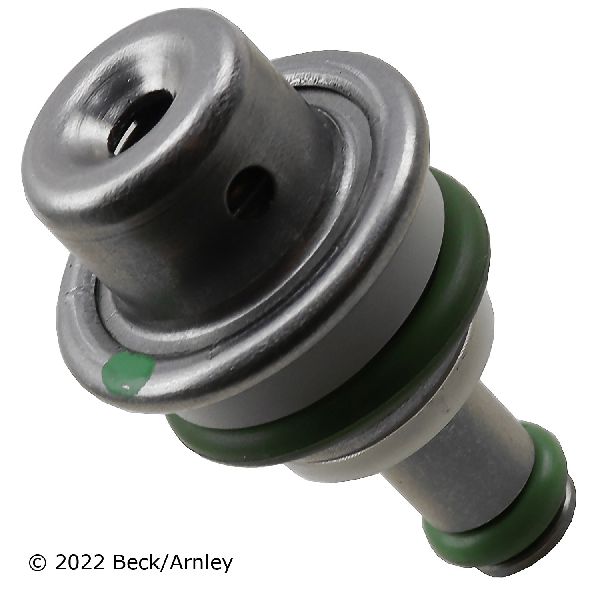
Est. part cost: $250-$500 - Failing High-Pressure Fuel Pump (HPFP) 🔴 High Probability The HPFP is a mechanical pump driven by the camshaft. It is a common failure point on direct injection engines that can lead directly to code P0087 when it can no longer meet the pressure demanded by the ECM under load.
How to confirm: Requires monitoring the desired vs. actual fuel rail pressure on a diagnostic scan tool like Techstream. If the low-pressure side is confirmed to be working correctly but the high-pressure reading is low or erratic under load, the HPFP is the likely cause. A ClubLexus user with an IS250 confirmed a bad HPFP by swapping it with a known-good part from another vehicle, which resolved the P0087 code.
Typical fix: Replacement of the high-pressure fuel pump. 🎬 See this walkthrough for replacing the high-pressure fuel pump.
Est. part cost: $400-$800 - Clogged Fuel Filter 🟡 Medium Probability The fuel filter is integrated into the low-pressure fuel pump assembly in the tank. It is not designed to be a standalone service item and can become clogged over time, restricting fuel flow to the HPFP.
How to confirm: A low-pressure fuel system test will show pressure dropping under load. Often diagnosed during the inspection or replacement of the low-pressure pump assembly.
Typical fix: Replacement of the fuel filter sock or the entire fuel pump assembly.
Est. part cost: $20-$500 (depending on whether the whole assembly is replaced) - Faulty Fuel Rail Pressure Sensor ⚪ Low Probability
How to confirm: If both low and high-pressure pumps test good mechanically, but the scan tool shows erratic or incorrect pressure readings (e.g., pressure reads low when a mechanical gauge shows it is normal), the sensor itself may be faulty. The sensor typically operates on a 5V reference and its signal voltage should be between 0.5V and 4.5V.
Typical fix: Replacement of the fuel rail pressure sensor.
Est. part cost: $70-$150
Rare But Worth Checking
- Restricted or Kinked Fuel Line: Physical damage to a fuel line can restrict flow. This is uncommon but worth a visual inspection, especially if the vehicle has had recent underbody work or ran over debris.
- Worn Camshaft Lobe or Follower: The HPFP is driven by a specific lobe on the camshaft via a lifter or 'follower'. In rare, high-mileage cases, this lobe or follower can wear down, preventing the pump from generating sufficient pressure. This can sometimes lead to fuel contaminating the engine oil. A ClubLexus user on a different model found their P0087 was caused by a missing gasket on the HPFP, which allowed the cam lobe to destroy the pump's follower.
- Faulty Fuel Pump Driver Module: Modern fuel systems use a control module to vary the speed of the in-tank fuel pump. A failure in this module or its wiring can prevent the pump from delivering the correct volume of fuel, even if the pump itself is mechanically sound. On some Lexus models, this is called a 'fuel pump resistor' and may be located in the engine bay.
Diagnosis Steps
- Check for Recalls: Use your vehicle's VIN to check for the '20LA01' fuel pump recall on the NHTSA or Lexus website. This is a critical first step as the repair is free if it applies.
- Scan for Codes & Freeze Frame Data: Read all stored trouble codes. Note if P0171 or P0174 are present with P0087. Analyze the freeze frame data to see the engine conditions (RPM, load, temp) when the code was set.
- Analyze Live Data: Use a capable OBD-II scanner to monitor live data. Observe 'Desired Fuel Rail Pressure' and 'Actual Fuel Rail Pressure'. At idle, they should be close. Rev the engine or drive under load and watch if the actual pressure fails to keep up with the desired pressure.
- Test Low-Pressure System: If possible, connect a mechanical fuel pressure gauge to the low-pressure line. The pressure should meet manufacturer specifications (typically 38-47 PSI) and hold steady. If it drops, the low-pressure pump or filter is suspect.
- Inspect High-Pressure System: If the low-pressure side is healthy, the focus shifts to the high-pressure pump. Visually inspect the HPFP (located on the engine) for any leaks from its housing or connections.
- Test Fuel Pressure Sensor: If scan tool pressure readings seem illogical (e.g., stuck at a low value) despite mechanical checks suggesting otherwise, the sensor's wiring and function should be tested.
- Professional Diagnosis: If the cause is not apparent, a professional technician should perform advanced diagnostics, as this may involve testing the fuel pump driver module or inspecting the camshaft lobe for wear.
Parts You'll Likely Need
- Low-Pressure Fuel Pump Assembly
(OEM #23221-31421 (Note: Part numbers can vary by production date, always verify with VIN))— A primary cause of P0087, and subject to a major recall. This part is located inside the fuel tank.
Trusted brands: Denso (OEM)
OEM price range: $400-$600
Aftermarket price range: $250-$450 - High-Pressure Fuel Pump
(OEM #23101-31081 (Note: Part numbers can vary, always verify with VIN))— The other primary cause of P0087 on this direct-injection engine. This pump is mechanically driven by the engine's camshaft.
Trusted brands: Denso (OEM), Bosch
OEM price range: $600-$900
Aftermarket price range: $400-$700
Related Codes That Often Appear With This One
- P0171 — System Too Lean (Bank 1). The engine is not receiving enough fuel, causing an excess of oxygen in the exhaust, which is detected by the Bank 1 oxygen sensor. This is a direct result of the low fuel pressure.
- P0174 — System Too Lean (Bank 2). Same as P0171, but for the second bank of cylinders. The presence of both codes along with P0087 strongly indicates a global fuel delivery issue.
Technical Service Bulletins (TSBs) & Recalls
- LSB000523: Notes that a MIL ON condition with DTC P0087 may be seen in conjunction with P0171 and P0174 (System Too Lean).
Platform-Specific Known Issues
- Technical Service Bulletin LSB000523 was issued for some 2017 models experiencing a Check Engine Light with P0087, often accompanied by lean codes P0171 and/or P0174. [⭐ MANUFACTURER TSB — highest authority]
- A major safety recall (Lexus #20LA01, NHTSA #20V682) was issued for a faulty low-pressure fuel pump that could fail and cause the engine to stall. This recall explicitly covers 2017-2020 Lexus RX350 models.
Mechanic-Grade Diagnostic Values
- Low-Pressure Fuel System Pressure (at idle) — expected: 38-47 psi (262-324 kPa). Failure: Pressure is below 38 psi or drops significantly under load.
- High-Pressure Fuel System Pressure (range) — expected: 2.4 to 20 MPa (348 to 2900 psi). Failure: Actual pressure on scan tool fails to meet target pressure commanded by the ECM, especially under load.
- Low-Pressure Fuel Pump Resistance — expected: 0.2 to 3.0 ohms at 20°C (68°F). Failure: Resistance is outside the specified range.
- Fuel Rail Pressure Sensor Signal Voltage — expected: 0.5V to 4.5V (Key On, Engine Off). Failure: Voltage is stuck at a specific value or is outside the normal operating range.
- P0087 DTC Trigger Threshold (Direct Injection) — expected: N/A. Failure: The actual fuel pressure is lower than the target fuel pressure by 5 MPa (725 psi) or more for at least 10 seconds.
- P0087 DTC Trigger Threshold (Port Injection) — expected: N/A. Failure: The actual fuel pressure is lower than the target fuel pressure by 2 MPa (290 psi) or more for at least 15 seconds.
Scan Tool Commands That Help
- Techstream: Control the Fuel Pump / Speed — This active test allows a technician to command the low-pressure fuel pump to run, verifying its operation and allowing for pressure testing without starting the engine. It helps isolate a failed pump from a relay or wiring issue.
- Techstream: Control the Injection Mode — This test, detailed in Lexus service bulletin L-SB-0021-21, allows a technician to force the engine to switch between port and direct injection modes. It can be used to see if the pressure drop issue is specific to one mode of operation, helping to diagnose the D-4S system.
- Techstream: Activate the Circuit Relay — This active test can be used to check the operation of the fuel pump control ECU and its circuit by forcing the output duty cycle to 50%. This helps determine if the control module is receiving commands and functioning correctly.
Wiring & Ground Locations
- FUEL PMP Relay (R10) — In the engine compartment fuse box, located on the left (driver's) side of the underhood area.. This relay provides power to the low-pressure fuel pump. A failure of this relay will cut all power to the pump, leading to a no-start and P0087.
- FUEL PMP Fuse — In the engine compartment fuse box, located on the left (driver's) side of the underhood area.. This fuse protects the fuel pump circuit. If it blows due to a short or a failing pump drawing too much current, the pump will lose power and cause P0087.
- Fuel Pump Driver Module / Resistor — Location can vary. On some Lexus models, a 'fuel pump resistor' is located in the engine bay under a plastic cover near the master cylinder. On other vehicles, the module is under the rear seat or near the fuel tank.. This module controls the voltage and speed of the low-pressure fuel pump. A malfunction can cause the pump to run slow or not at all, starving the high-pressure pump of fuel.
Real Owner Repair Stories
- ClubLexus user (2011 Lexus IS250 (similar D-4S fuel system)) — Check Engine Light with P0087, engine starving for fuel. Live data showed actual pressure at ~200 kPa while target was 40-41 MPa.
❌ Tried (didn't work) Cleaned the in-tank fuel pump mesh screen., Replaced the in-tank fuel pump filter., Swapped the entire low-pressure fuel pump assembly with a known-good one.
✅ What actually fixed it The high-pressure fuel pump (HPFP) was faulty. The problem was confirmed by swapping the HPFP from a known-good vehicle, which immediately resolved the code and symptoms. - ClubLexus user (2008 Lexus IS F (V8 with dual HPFPs)) — Sudden onset of P0087, loss of power.
❌ Tried (didn't work) Initial diagnosis pointed towards injectors or fuel pumps.
✅ What actually fixed it The passenger side high-pressure fuel pump (HPFP) had been previously installed without its gasket. This allowed the camshaft lobe to wear down the pump's follower, causing it to fail and no longer generate pressure.
OEM Part Supersession History
23101-31080→23101-0P010— Part has been updated by the manufacturer.23101-36080→23101-36090— Part has been updated by the manufacturer. This part number is for the HPFP on related Lexus models.
Heads up: Always verify part numbers with VIN, as different engines and model years may use different parts.
Helpful Videos
Used OEM Parts in Stock


New Aftermarket Parts Available


The information in this article is provided for general reference and educational purposes only. Vehicle specifications, procedures, and part compatibility can vary by production date, trim level, and region. Always consult your vehicle's factory service manual and verify part numbers before purchasing or performing repairs. Safety-critical components such as airbags, seat belts, and braking systems should be installed by a qualified professional.
- Lexus RX350:
- 🎬 Helpful Videos
- 🛍️ Shop This Part
- What's Unique About the 2017-2020 Lexus RX350
- Diagnostic Flowchart
- Symptoms You May Notice
- Most Likely Causes
- Rare But Worth Checking
- Diagnosis Steps
- Parts You'll Likely Need
- Related Codes That Often Appear With This One
- Technical Service Bulletins (TSBs) & Recalls
- Platform-Specific Known Issues
- Mechanic-Grade Diagnostic Values
- Scan Tool Commands That Help
- Wiring & Ground Locations
- Real Owner Repair Stories
- OEM Part Supersession History
- 🎟️ Get 5% Off