

P0087 on 2014-2018 Lexus IS 350: Fuel Pressure Too Low Causes and Fixes
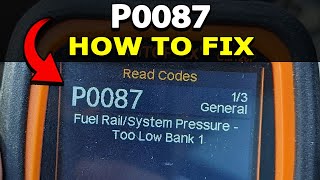
P0087 on a Lexus IS 350 indicates low pressure in the high-pressure fuel rail. The most common causes are a failing in-tank (low-pressure) fuel pump, often covered by a major recall, or a faulty high-pressure fuel pump (HPFP). Diagnosis should always confirm the low-pressure pump is working correctly before replacing the more expensive HPFP, as a starved HPFP will mimic failure.
- P0087 on the IS 350 means the high-pressure fuel system is below spec, but the problem could be the low-pressure pump in the tank.
- Before replacing any parts, use a scan tool to check live data for both the low-pressure and high-pressure fuel systems.
- Check your VIN for the major Denso fuel pump recall (NHTSA 20V-012), as a failing in-tank pump is a very common cause.
- Do not replace the expensive High-Pressure Fuel Pump (HPFP) until you have confirmed the in-tank pump is supplying it with adequate pressure.
- This code is often accompanied by lean codes P0171 and P0174, as stated in Lexus TSB LSB000523.
What's Unique About the 2014-2018 Lexus IS 350

The 2014-2018 Lexus IS 350 is equipped with the 2GR-FSE engine, which features Toyota's D-4S dual-injection system. This sophisticated setup uses both traditional port injectors and high-pressure direct injectors. Consequently, it has two fuel pumps: a low-pressure pump in the fuel tank and a high-pressure fuel pump (HPFP) driven by the engine's camshaft. Code P0087 specifically points to a problem on the high-pressure side, but the fault can originate from either pump starving the other, making proper diagnosis critical to avoid unnecessary expensive repairs.
🎬 Watch: Expert advice on diagnosing the P0087 engine code.Diagnostic Flowchart
Tap your situation to follow the diagnostic path that matches what you're seeing on this vehicle.
Symptoms You May Notice
- Check Engine Light is on
- Engine hesitation or sputtering, especially during acceleration or when going uphill.
- Significant loss of engine power, sometimes described as 'limp mode' where RPMs are limited.
- Engine stalling, sometimes without warning, even at high speeds.
- Rough or unstable idle.
- Difficulty or long cranking when starting the engine.
- Reduced fuel economy.
- Loud whining or humming noise from the rear of the vehicle (fuel tank area), indicating a struggling low-pressure pump.
- Replacing the High-Pressure Fuel Pump (HPFP) when the in-tank low-pressure pump was the actual cause of fuel starvation. This is a costly mistake.
- Replacing oxygen sensors due to lean codes (P0171/P0174) without first addressing the underlying low fuel pressure, which is the root cause of the lean condition.
Most Likely Causes

- Failing In-Tank (Low-Pressure) Fuel Pump 🔴 High Probability A massive recall was issued for failing Denso low-pressure fuel pumps. The impeller material could absorb fuel, swell, and seize the pump. This recall is identified by NHTSA campaign 20V-012 and Lexus campaign 20LA01. Even if the recall was performed, these pumps can still fail. The high-pressure pump cannot function correctly if it is starved of fuel from the tank.
How to confirm: Use a scan tool like Toyota's Techstream to monitor low-pressure fuel system data. A mechanic can also perform a manual pressure test on the low-pressure line; one user reported a minimum spec of 1.5 bar (21.7 PSI) and a measurement of 2 bar (29 PSI) on their vehicle, while another source suggests a target of 60+ PSI. If pressure is below spec, the pump is faulty.
Typical fix: Replace the in-tank fuel pump assembly. It is accessed via a panel under the rear seat. If the vehicle is under recall, this is a no-cost repair at a Lexus dealer.
Est. part cost: $300-$500 - Failing High-Pressure Fuel Pump (HPFP) 🟡 Medium Probability The HPFP is a mechanical pump driven by a lobe on the camshaft. Over time, internal wear can reduce its ability to generate the very high pressures required for direct injection. Some owners report a 'chirping' noise from the engine area as a symptom of a failing HPFP. Forum discussions confirm this is a cause of P0087, especially after the low-pressure pump is ruled out.
How to confirm: Using a capable scan tool, compare the 'desired' fuel rail pressure with the 'actual' fuel rail pressure under load (e.g., revving the engine). If the low-pressure pump is confirmed healthy, but the actual high pressure consistently fails to meet the desired pressure (which can be 4 to 13 MPa or 580 to 1,885 psi), the HPFP is the likely culprit. Also, check the engine oil for a gasoline smell, which indicates a leaking HPFP seal.
Typical fix: Replace the high-pressure fuel pump located on the engine.
Est. part cost: $700-$1100 - Clogged Fuel Filter 🟡 Medium Probability The primary fuel filter is integrated into the in-tank fuel pump assembly and is not separately serviceable. If it becomes clogged with sediment or debris (especially if using high-ethanol fuel blends), it will restrict fuel flow to the HPFP, causing low pressure.
How to confirm: This is diagnosed by confirming low fuel volume/pressure from the in-tank pump. Since the filter is part of the assembly, it's always replaced along with the pump.
Typical fix: Replace the in-tank fuel pump assembly, which includes a new filter sock/strainer.
Est. part cost: $300-$500 - Faulty Fuel Rail Pressure Sensor ⚪ Low Probability
How to confirm: With the engine running, compare the live data reading from the sensor on a scan tool to a reading from a manual pressure gauge (if a port is available). If the readings differ significantly, the sensor is likely bad. A user on ClubLexus found that unplugging the sensor allowed the car to crank when it previously would not, pointing to a bad sensor. The sensor is located under the intake manifold.
Typical fix: Replace the fuel pressure sensor located on the high-pressure fuel rail. This requires removing the intake manifold for access. 🎬 See this walkthrough for replacing the fuel pressure sensor.
Est. part cost: $70-$150
Rare But Worth Checking
- Leaking Fuel Injector(s): A direct injector stuck open can cause a drop in rail pressure. This would typically be accompanied by other symptoms like a strong fuel smell, black smoke, and misfire codes for a specific cylinder. A Reddit user noted this as a possibility after a fuel pump replacement didn't solve a hard-start issue.
- Restricted Fuel Line: Physical damage, such as a kink or crush in the fuel line from road debris, can restrict flow. This is rare but worth a visual inspection under the vehicle.
- Improper HPFP Installation: In one documented case on ClubLexus, a P0087 code appeared after service. The cause was found to be a missing gasket during the re-installation of the high-pressure fuel pump, which allowed the cam lobe to destroy the pump's follower.
- Faulty Fuel Pump Control Module: This module regulates the voltage sent to the low-pressure fuel pump. While uncommon, a failure can prevent the pump from running at the correct speed, leading to low pressure. It is often located under the rear seat or in the trunk area.
Diagnosis Steps

- Connect an OBD-II scanner to confirm the P0087 code and check for any other codes, especially P0171 or P0174, as noted in TSB L-SB-0005-23. 🎬 Watch: Overview of Lexus factory TSBs for low fuel pressure.
- Check your vehicle's VIN on the NHTSA or Lexus recall website to see if it is affected by the low-pressure fuel pump recall (NHTSA 20V-012, Lexus 20LA01). If the recall is open, have it performed by a dealer.
- Use a scan tool with live data to monitor both low-pressure and high-pressure fuel system readings. This is the most critical diagnostic step.
- Observe the low-pressure fuel pump's commanded pressure vs. actual pressure. If the actual pressure is low (below ~30 PSI) or erratic, suspect the in-tank pump or filter.
- If low-pressure readings are stable and within spec, focus on the high-pressure side. Compare the 'desired' fuel rail pressure to the 'actual' fuel rail pressure while revving the engine or under a light load.
- If the actual high pressure fails to rise with the desired pressure, and the low-pressure side is healthy, the High-Pressure Fuel Pump (HPFP) is the primary suspect.
- If scan tool data is inconclusive, a manual fuel pressure test on the low-pressure system can be performed to verify the in-tank pump's output.
- Check the engine oil for any signs of fuel contamination (a strong gasoline smell). This can indicate a leaking HPFP seal, which is a serious internal failure.
- Visually inspect all accessible fuel lines for kinks, damage, or leaks.
Parts You'll Likely Need

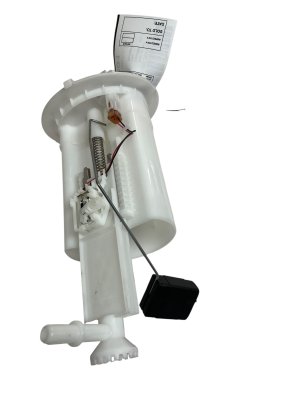
- In-Tank Fuel Pump Assembly
(OEM #23220-31480)— This is a very common failure point due to the massive Denso recall (NHTSA 20V-012). It addresses both a failing low-pressure pump and a clogged integrated fuel filter. Part number is for the IS250 but is often cross-referenced.
Trusted brands: Denso (OEM), Delphi
OEM price range: $350-$480
Aftermarket price range: $150-$300 - High-Pressure Fuel Pump (HPFP)
(OEM #23100-31030)— If the low-pressure system is working correctly, the HPFP is the next most likely cause for the low pressure reading on the fuel rail.
Trusted brands: Denso (OEM)
OEM price range: $800-$1100
Aftermarket price range: $500-$750 - Fuel Rail Pressure Sensor
(OEM #89458-30011 (supersedes 89458-30010))— A less common but possible cause where the sensor itself fails, sending incorrect low-pressure readings to the ECM.
Trusted brands: Lexus (OEM), Standard Motor Products
OEM price range: $100-$150
Aftermarket price range: $50-$100
Related Codes That Often Appear With This One
- P0171 — System Too Lean (Bank 1) - Low fuel pressure prevents the correct amount of fuel from being injected, leading to an excess of air in the air-fuel mixture. TSB L-SB-0005-23 explicitly links this code with P0087.
- P0174 — System Too Lean (Bank 2) - Same as P0171, but for the opposite cylinder bank. TSB L-SB-0005-23 also links this code with P0087.
Technical Service Bulletins (TSBs) & Recalls
- L-SB-0005-23: A comprehensive TSB for many 2013-2020 Lexus models, including the IS 350. It notes that a MIL ON condition with DTC P0087 may be seen in conjunction with lean codes P0171 and/or P0174 and outlines the diagnostic procedure, pointing towards a potential fuel pump failure.
Platform-Specific Known Issues
- A major safety recall (NHTSA Campaign 20V-012) was issued for the low-pressure fuel pump on these models. The failure of this pump is a primary cause of P0087.
Mechanic-Grade Diagnostic Values

- High-Pressure Fuel System (Direct Injection) — expected: 4 to 13 MPa (580 to 1,885 psi), varies with engine load.. Failure: Actual pressure on scan tool (e.g., Techstream) fails to meet target pressure under load.
- Low-Pressure Fuel System (In-Tank Pump) — expected: Approximately 420 kPa (60+ PSI) at the inlet to the HPFP.. Failure: Pressure is significantly below 60 PSI, or erratic. One user noted a minimum spec of 1.5 bar (22 PSI).
- Fuel Rail Pressure Sensor Voltage (Key On, Engine Off) — expected: Approximately 0.5V to 4.5V, depending on residual pressure.. Failure: Voltage is stuck at 0V, 5V, or does not change when pressure should be present.
Scan Tool Commands That Help
- Techstream: Active Test: 'Control the Fuel Pump / Speed' — To manually command the in-tank (low-pressure) fuel pump to run at various speeds to verify its operation independently of the ECM's normal control. This helps isolate a faulty low-pressure pump.
- Techstream: Active Test: 'Control the Target Fuel Pressure' — Allows the technician to manually increase or decrease the target high-side fuel pressure by up to 25%. Observing if the actual pressure follows the commanded target helps test the responsiveness of the high-pressure fuel pump and its control system.
- Techstream: Utility: 'Reset Memory' — After replacing a fuel system component like a pump or sensor, this function clears the fuel trim adaptations and other learned values from the ECM, forcing it to relearn. This is crucial for resolving performance issues after a repair.
Wiring & Ground Locations
- Engine Harness Ground (Flywheel Side) — On the side of the cylinder head, directly underneath the throttle body.. A poor ground here can affect multiple sensors, including those critical for fuel system management, potentially causing false readings or erratic behavior.
- Engine Harness Ground (Front) — On the front valve cover.. This is a primary ground point for the engine harness. Corrosion or a loose connection can lead to various electrical issues, including problems with fuel pump or sensor circuits.
- Fuel Pump Control Module — Often located under the rear seat near the fuel pump access panel, or sometimes in the trunk area.. This module directly controls the low-pressure fuel pump. Its connections and ground must be secure for the pump to receive correct voltage and operate properly.
Real Owner Repair Stories
- ClubLexus Forum User (2011 Lexus IS250 (with similar 4GR-FSE engine)) — P0087, engine starving for fuel. Live data showed actual fuel pressure at ~200 kPa while target was 40-41 MPa.
❌ Tried (didn't work) Cleaned fuel system components., Swapped the in-tank (low-pressure) fuel pump with a known-good unit from another car; the fault remained.
✅ What actually fixed it Swapping the High-Pressure Fuel Pump (HPFP) with a known-good unit resolved the P0087 code and symptoms, confirming the original HPFP had failed. - ClubLexus Forum User (Lexus IS-F (similar fuel system principles)) — P0087, car jerking, limp mode, loss of power above ~2500 RPM.
❌ Tried (didn't work) Replacing the in-tank low-pressure fuel pump., Clearing codes (they returned under load).
✅ What actually fixed it The user discovered the passenger side High-Pressure Fuel Pump (HPFP) had been previously installed without its gasket. This caused the camshaft lobe to destroy the pump's follower, resulting in no pump actuation and zero pressure. Replacing the HPFP and installing the gasket correctly fixed the issue.
When the Usual Fixes Don't Work
- In one case from a Reddit user, the P0087 code appeared intermittently, mostly in warm weather or after long drives. The user replaced the high-pressure fuel pump first, but the problem persisted. This suggests that while the HPFP is a common cause, heat-soak related issues with the in-tank low-pressure pump or the fuel pressure sensor should also be considered, as they were the remaining suspects.
OEM Part Supersession History
89458-30010→89458-30011— Likely an internal revision for improved reliability or accuracy.
Heads up: While the parts may look physically similar, using the older part number on a vehicle specified for the newer one could lead to incorrect readings or premature failure. One user reported receiving a -30010 part when ordering a replacement and it did not function correctly.
Helpful Videos
Used OEM Parts in Stock



New Aftermarket Parts Available


The information in this article is provided for general reference and educational purposes only. Vehicle specifications, procedures, and part compatibility can vary by production date, trim level, and region. Always consult your vehicle's factory service manual and verify part numbers before purchasing or performing repairs. Safety-critical components such as airbags, seat belts, and braking systems should be installed by a qualified professional.
- Lexus IS 350:
- 🎬 Helpful Videos
- 🛍️ Shop This Part
- What's Unique About the 2014-2018 Lexus IS 350
- Diagnostic Flowchart
- Symptoms You May Notice
- Most Likely Causes
- Rare But Worth Checking
- Diagnosis Steps
- Parts You'll Likely Need
- Related Codes That Often Appear With This One
- Technical Service Bulletins (TSBs) & Recalls
- Platform-Specific Known Issues
- Mechanic-Grade Diagnostic Values
- Scan Tool Commands That Help
- Wiring & Ground Locations
- Real Owner Repair Stories
- When the Usual Fixes Don't Work
- OEM Part Supersession History
- 🎟️ Get 5% Off