

P0087 on 2014-2019 Lexus GX460: Low Fuel Pressure Causes and Fixes
On a 2014-2019 Lexus GX460, code P0087 indicates low fuel pressure and is most often caused by a failing in-tank fuel pump. A major safety recall (NHTSA Campaign ID 20V012000, Lexus code 20LA01) was issued for this part on 2014-2015 and 2018-2019 models. A professional replacement is the most common fix and can be costly if not covered by the recall.
- P0087 on a GX460 means the fuel pressure is too low, most likely due to a failing in-tank fuel pump.
- IMMEDIATELY check if your vehicle is covered by Lexus Safety Recall 20LA01, as this could result in a no-cost repair at a dealership. This applies to 2014-2015 and 2018-2019 models.
- Do not continue to drive with this code. The risk of the engine stalling in traffic is high and poses a serious safety risk, as noted by the NHTSA.
- Diagnosis requires a mechanical fuel pressure test to confirm the fault before replacing the expensive fuel pump assembly. The target pressure is 28-85 psi.
- This is not a DIY-friendly repair for most people due to the fire hazard and the need to access the fuel tank.
What's Unique About the 2014-2019 Lexus GX460
The Lexus GX460's 4.6L V8 (1UR-FE) engine uses a traditional port fuel injection system, not a gasoline direct injection (GDI) system. This is a key distinction because it means there is no high-pressure fuel pump (HPFP) driven by the camshaft, which can be a point of failure on other Lexus engines. All diagnostic efforts for P0087 on the GX460 should focus on the low-pressure fuel system, which consists of the in-tank fuel pump, fuel filter/strainer, fuel pressure regulator, and associated wiring.
Diagnostic Flowchart
Tap your situation to follow the diagnostic path that matches what you're seeing on this vehicle.
Symptoms You May Notice
- Check Engine Light is on
- Engine hesitation, stumbling, or jerking, especially under acceleration or load
- Loss of power, sometimes described as 'limp mode' where RPMs won't exceed a certain level (e.g., 2,500 RPM)
- Engine runs rough or misfires
- Difficulty starting the engine, or extended cranking time
- Engine stalls, potentially while driving at speed
- Strong fuel smell from the exhaust if the condition leads to misfires
- Replacing the fuel pressure sensor when the fuel pump is the actual cause.
- Replacing fuel injectors, which are unlikely to cause a system-wide low-pressure code like P0087. Leaking injectors typically cause rich conditions (P0172/P0175) or misfires on specific cylinders.
- Assuming the issue is with the high-pressure fuel system, which the GX460's 1UR-FE engine does not have.
Most Likely Causes
- Failing In-Tank Fuel Pump 🔴 High Probability A widespread safety recall (Lexus 20LA01 / NHTSA 20V012000) was issued for a defective low-pressure fuel pump on 2014-2015 and 2018-2019 GX460 models. The pump's impeller could degrade and cause the pump to stop operating entirely.
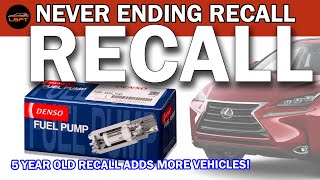
How to confirm: A technician will perform a fuel pressure test using a gauge connected to the fuel line. The pressure should be within the 28-85 psi range. If pressure is low, they will check for power and ground at the pump. If power is present but pressure is low, the pump is faulty. Owners can check VIN eligibility for the recall 🎬 Watch: Learn more about the expanding Toyota and Lexus fuel pump recalls. on the Lexus or NHTSA websites.
Typical fix: Replace the fuel pump module assembly with the improved part under the recall campaign. If not covered, the assembly must be replaced at the owner's expense.
Est. part cost: $480-$1965 - Clogged Fuel Filter/Strainer 🟡 Medium Probability The fuel filter and strainer are integrated into the fuel pump module assembly (part # 77020-35151). They are not typically serviced separately. Debris in the fuel tank can clog the strainer, restricting flow and causing low pressure, mimicking a weak pump.
How to confirm: This is usually diagnosed during fuel pump replacement. If a pressure test shows low pressure but the pump motor itself is functional, a restriction is the likely cause. The strainer will appear visibly dirty upon removal.
Typical fix: Replace the entire fuel pump module assembly, as the filter/strainer is an integral part.
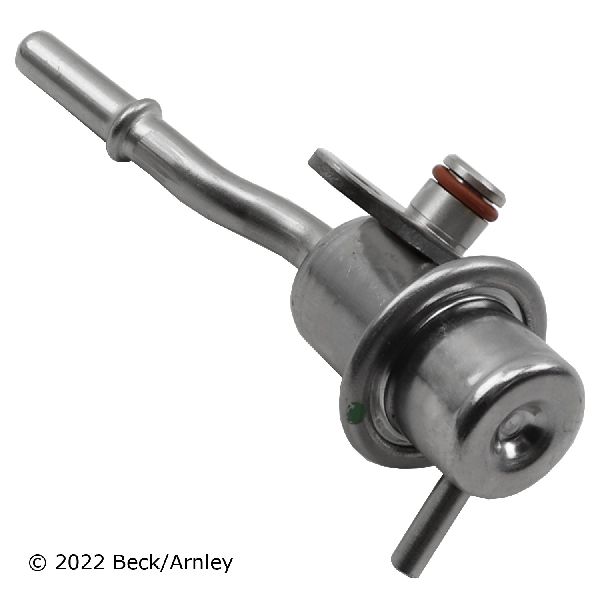
Est. part cost: $480-$1965 - Faulty Fuel Pressure Regulator ⚪ Low Probability The regulator is part of the low-pressure system. While less common to fail than the pump, it can get stuck open, returning too much fuel to the tank and preventing the rail from reaching its target pressure.
How to confirm: This is diagnosed via a comprehensive fuel system pressure test. If the pump holds pressure when the return line is clamped but fails to do so otherwise, the regulator is a likely suspect. The system should hold pressure for at least 5 minutes after the engine is shut off.
Typical fix: Replace the fuel pressure regulator. This may be part of the fuel pump assembly depending on the specific component design.
Est. part cost: $50-$150 - Faulty Fuel Pressure Sensor ⚪ Low Probability
How to confirm: A technician can compare the sensor's reading on a scan tool (e.g., Techstream) to a reading from a manual fuel pressure gauge connected to the rail. If the readings differ significantly, the sensor is sending incorrect data to the ECM.
Typical fix: Replace the fuel pressure sensor.
Est. part cost: $70-$200
Rare But Worth Checking
- Kinked or Damaged Fuel Line: A physical restriction in a fuel line can mimic a failing pump. This is uncommon but worth inspecting, especially if the vehicle has had underbody work done or has been driven off-road where debris could cause damage.
- Electrical Issues (Wiring, Relay, Fuel Pump Control Module): A problem with the fuel pump relay, a corroded connector, or a faulty Fuel Pump Control Module (Part # 89570-60180 or 89570-60170) can cause the pump to operate intermittently or not at all, leading to low pressure. This can be misdiagnosed as a failed pump if voltage isn't tested correctly at the pump connector.
Diagnosis Steps
- Verify the P0087 code is present using an OBD-II scanner. Check for any pending or stored codes.
- Check for any accompanying codes, such as P0171, P0174, or misfire codes, which reinforce the low-pressure diagnosis.
- Check the vehicle's VIN on www.nhtsa.gov/recalls or www.lexus.com/recall to see if it is covered under Safety Recall 20LA01 for the fuel pump.
- Use a scan tool's live data function to monitor fuel trim values (Short Term and Long Term). High positive numbers (>10%) suggest the ECM is trying to compensate for a lack of fuel.
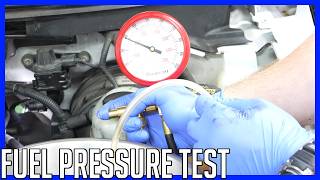
- Perform a manual fuel pressure test. 🎬 See this video for a step-by-step guide on testing fuel pressure. Connect a mechanical fuel pressure gauge to the low-pressure fuel system. The specified pressure for the 1UR-FE engine is 196-588 kPa (28-85 psi).
- With the gauge connected, start the engine and observe the pressure at idle and under light throttle. If the pressure is below 28 psi, the low-pressure system is faulty.
- Test residual pressure: Turn the engine off and monitor the gauge. Pressure should remain above 147 kPa (21 psi) for at least 5 minutes. A rapid drop could indicate a faulty check valve in the pump or a leaking injector.
- If pressure is low, check for proper voltage at the fuel pump connector while an assistant cranks the engine. If voltage is present but pressure is low, the fuel pump module is the primary suspect.
- Inspect for any visible leaks or physical damage to the fuel lines from the tank to the engine.
Parts You'll Likely Need
- Fuel Pump Module Assembly
(OEM #77020-35151 (replaces 77020-35150))— This is the most common cause of P0087 on the GX460 and was subject to a major safety recall. The assembly includes the pump motor, strainer, fuel level sending unit, and regulator, which are replaced as a single unit.
Trusted brands: Lexus (Genuine OEM), Denso, Aisin, Delphi
OEM price range: $500-$710
Aftermarket price range: $480-$750 - Fuel Pump (Motor Only)
(OEM #23220-31430)— For those not replacing the entire assembly, the pump motor itself is the core failure point. The recall kit contains an improved version of this pump. This is a more involved repair as it requires disassembling the module.
Trusted brands: Lexus (Genuine OEM), Denso
OEM price range: $370-$530
Aftermarket price range: $150-$250
Related Codes That Often Appear With This One
- P0171 — System Too Lean (Bank 1) - Low fuel pressure starves the engine of fuel, creating a lean air/fuel mixture that the oxygen sensors detect. This is mentioned in TSB #LSB000523.
- P0174 — System Too Lean (Bank 2) - Same as P0171, but for the opposite cylinder bank. Also mentioned in TSB #LSB000523.
- P0300-P0308 — Random or specific cylinder misfire codes can occur when low fuel pressure becomes severe enough to prevent proper combustion.
Technical Service Bulletins (TSBs) & Recalls
- LSB000523: Notes that a MIL ON condition may occur with P0087 along with lean codes P0171 and/or P0174, confirming the link between low fuel pressure and a lean running condition.
- 20LA01 (Technical Instructions): Provides dealers with the step-by-step procedure for replacing the recalled fuel pump. It specifies technician certification levels and warns that the remedy is being rolled out in phases.
Platform-Specific Known Issues
- Safety Recall 20LA01 / 20V012000: A massive safety recall was issued for the low-pressure fuel pump on 2014-2015 and 2018-2019 GX 460 models, among many other Toyota/Lexus vehicles. The original Denso fuel pump impeller could absorb fuel, deform, and stop operating, leading to engine stalling. The remedy is a free replacement of the fuel pump module with an improved part at any Lexus dealership.
- Owner Experience: Post-Recall Failure: In some forum discussions across various Lexus models, owners have reported experiencing P0087 even after having the fuel pump recall performed, raising questions about the longevity of the replacement parts or the possibility of other related components failing.
- DIY Repair Story: A user on ClubLexus with a different model but similar P0087 issue documented their troubleshooting. They confirmed low pressure with a gauge, replaced the in-tank pump, and saw their long-term fuel trims, which were highly positive (+36%), return to a normal range (0 +/- 3%) after the fix, confirming the new pump solved the fuel starvation issue.
Mechanic-Grade Diagnostic Values
- Fuel Pump Motor Resistance — expected: 0.2 to 3.0 Ω at 68°F (20°C). Failure: A reading outside this range, particularly an open circuit (infinite resistance) or a reading at the high end of the spec, suggests a failing pump motor.
- Fuel Pressure Sensor Signal Voltage — expected: Approx. 0.5V to 4.5V (Key On, Engine Off/Running). Failure: Voltage is stuck at 0V, 5V, or fluctuates erratically without relation to engine load. The voltage should change smoothly as throttle is applied and released.
- Long-Term Fuel Trim (LTFT) Live Data — expected: Within +/- 10% at idle and steady cruise.. Failure: Sustained positive values greater than +15% to +20% indicate the ECM is adding significant amounts of fuel to compensate for a lean condition, which is a classic symptom of low fuel pressure.
Hidden / Shadow Codes Worth Checking
- P008700: This is an extended format of the P0087 code, often seen on professional scan tools like Techstream. It does not indicate a different failure but provides a more specific identifier for the same "Fuel Rail/System Pressure – Too Low" fault. (see via Toyota Techstream or other professional-grade diagnostic scanners.)
Scan Tool Commands That Help
- Techstream: Active Test: Control the Fuel Pump / Speed — This allows a technician to command the fuel pump to run at various speeds independent of the engine running. It's used to verify pump operation and check for pressure response while monitoring a mechanical gauge, helping to isolate a faulty pump from a control-side issue.
- Techstream: Data List: Fuel Press — Used to monitor the fuel pressure reading from the vehicle's sensor in real-time. This value should be compared against a mechanical gauge to confirm the sensor's accuracy.
- Techstream: ECU Reprogramming / Calibration Check — For some Lexus/Toyota models, a TSB was issued to update the ECM logic to prevent erroneous P0087 codes. This function is used to check if the vehicle has the latest software calibration and to apply it if needed.
Wiring & Ground Locations
- Fuel Pump Control Module — Located in the rear of the vehicle. On the GX460, it is typically found near the spare tire area, sometimes attached to a frame crossmember. Some sources specify the LH (driver's side) inner quarter panel area.. This module controls the voltage supplied to the in-tank fuel pump. A failure of this module or its wiring/ground can cut power to the pump, causing low fuel pressure that mimics a failed pump.
- Fuel Pump Relay & Ground — The 'Fuel pmp relay' and 'Fuel pump control ecu assembly' are listed in ground distribution diagrams, often tied to ground points in the dash or engine bay area. Specific ground points like G67 and G68 are referenced in diagrams for the rear of the vehicle.. A poor ground for the fuel pump relay or control module circuit can cause intermittent or total loss of fuel pump operation, leading directly to a P0087 code.
Real Owner Repair Stories
- ClubLexus Forum User (Lexus IS-F (different model, but same code and port-injection fuel system principles)) — Car jerks and stumbles above ~2,500 RPM, P0087 code is set. Idles fine.
❌ Tried (didn't work) Initial diagnosis was uncertain between fuel pump, injectors, or sensor.
✅ What actually fixed it Replacing the in-tank low-pressure fuel pump. The user monitored live data and confirmed Long Term Fuel Trims were at +36% before the repair, indicating severe fuel compensation. After the new pump was installed, trims returned to a normal range of 0 +/- 3%, confirming the pump was the root cause.
OEM Part Supersession History
89570-60170→89570-60180— Standard part revision or update by the manufacturer.
Heads up: Part numbers 89570-60170 and 89570-60180 are both listed for the Fuel Pump Control Module for this vehicle generation. Compatibility should be verified by VIN before ordering, as there may be mid-generation changes.
Model Year Variations Within This Range
- 2014-2015, 2018-2019: These specific model years were included in the major safety recall (20LA01) for the low-pressure in-tank fuel pump. The 2016-2017 models were not included, suggesting they used a different pump design or batch that was not prone to the same impeller failure.
Helpful Videos
Used OEM Parts in Stock

New Aftermarket Parts Available


The information in this article is provided for general reference and educational purposes only. Vehicle specifications, procedures, and part compatibility can vary by production date, trim level, and region. Always consult your vehicle's factory service manual and verify part numbers before purchasing or performing repairs. Safety-critical components such as airbags, seat belts, and braking systems should be installed by a qualified professional.
- Lexus GX460:
- 🎬 Helpful Videos
- 🛍️ Shop This Part
- What's Unique About the 2014-2019 Lexus GX460
- Diagnostic Flowchart
- Symptoms You May Notice
- Most Likely Causes
- Rare But Worth Checking
- Diagnosis Steps
- Parts You'll Likely Need
- Related Codes That Often Appear With This One
- Technical Service Bulletins (TSBs) & Recalls
- Platform-Specific Known Issues
- Mechanic-Grade Diagnostic Values
- Hidden / Shadow Codes Worth Checking
- Scan Tool Commands That Help
- Wiring & Ground Locations
- Real Owner Repair Stories
- OEM Part Supersession History
- Model Year Variations Within This Range
- 🎟️ Get 5% Off