

P0087 on 2014-2019 Land Rover Range Rover Sport: Low Fuel Pressure Causes & Fixes
Code P0087 on a 2014-2019 Range Rover Sport means the fuel pressure is too low. This is most often caused by a clogged fuel filter or a failing high-pressure fuel pump (HPFP). For diesel models, a clogged fuel filter is a very frequent culprit. For petrol V6/V8 models, failure of one or both HPFPs is also common. Start by replacing the fuel filter, as it's a common and less expensive first step before suspecting the more costly pumps.
- P0087 means the fuel pressure is too low for your Range Rover Sport's engine.
- Always start diagnosis by replacing the fuel filter, as it's the most common and cheapest fix.
- Symptoms will be very noticeable, including a "Restricted Performance" warning and significant power loss.
- If the filter doesn't fix it, the issue is likely the high-pressure fuel pump (HPFP), a much more expensive repair.
- Due to the high pressures involved, this repair is best left to a professional mechanic with the right tools.
What's Unique About the 2014-2019 Land Rover RANGE ROVER SPORT

The 2014-2019 Range Rover Sport (L494 generation) uses sophisticated direct-injection fuel systems which are sensitive to fuel quality and maintenance. The 3.0L V6 and 5.0L V8 supercharged petrol engines use two high-pressure fuel pumps (HPFPs), which should ideally be replaced in pairs. The 3.0L TDV6/SDV6 diesel engines are particularly notorious for P0087 caused by a clogged fuel filter, 🎬 See this breakdown of P0087 causes and common fixes which can mimic the symptoms of a failing HPFP. HPFP replacement on the diesel models is a very labor-intensive job that often requires lifting the vehicle's body from the frame for access, making misdiagnosis very costly. While the HPFPs can fail, owners and even some shops may jump to diagnosing the expensive pumps when a much cheaper filter replacement could solve the problem, especially on the diesels.
Diagnostic Flowchart

Tap your situation to follow the diagnostic path that matches what you're seeing on this vehicle.
Symptoms You May Notice
- "Restricted Performance" message on the dashboard
- Check Engine Light is on
- Significant loss of engine power and poor acceleration
- Engine hesitation or stuttering, especially under load or when accelerating hard
- Rough or unstable idle
- Engine stalling or difficulty starting, sometimes requiring longer cranking times
- Engine may not rev up when the gas pedal is pressed
- Replacing the High-Pressure Fuel Pump (HPFP) before the fuel filter. The filter is a much cheaper and more common failure point that produces the exact same symptoms and code, especially on diesel models.
- Assuming the HPFP is bad when the fuel rail pressure sensor is faulty. A bad sensor can report low pressure when it's actually normal, leading to an expensive and unnecessary pump replacement.
Most Likely Causes

- Clogged Fuel Filter 🔴 High Probability The fuel filter is a maintenance item designed to catch debris. It is a very common failure point, especially on the 3.0L diesel engines, where a clogged filter can starve the high-pressure fuel pump and trigger a P0087 code under load. Owners on forums for the Jaguar XF, which shares the 3.0L diesel engine, report fixing P0087 simply by changing the fuel filter.
How to confirm: Start by replacing the fuel filter as part of regular maintenance or as a first diagnostic step. It is a relatively low-cost item compared to other components in the system. If the issue is resolved after a filter change, this was the cause.
Typical fix: Replace the fuel filter and housing. For diesel models, the OEM part number is LR045519. For petrol models, the filter is often part of the in-tank pump assembly.
Est. part cost: $50-$150 - Failing High-Pressure Fuel Pump (HPFP) 🟡 Medium Probability The HPFP is a mechanical pump driven by the engine that can wear out over time. The V6/V8 petrol engines use two HPFPs, and it's recommended to replace them in pairs. On the 3.0L diesel, HPFP failure is a known, albeit complex, issue. Wear on the pump's internal components or the camshaft lobe that drives it can lead to insufficient pressure.
How to confirm: A technician will use a scan tool to monitor desired vs. actual fuel rail pressure under load. If the low-pressure system provides adequate volume but the high-pressure side still drops significantly below the desired pressure, the HPFP is the likely culprit.
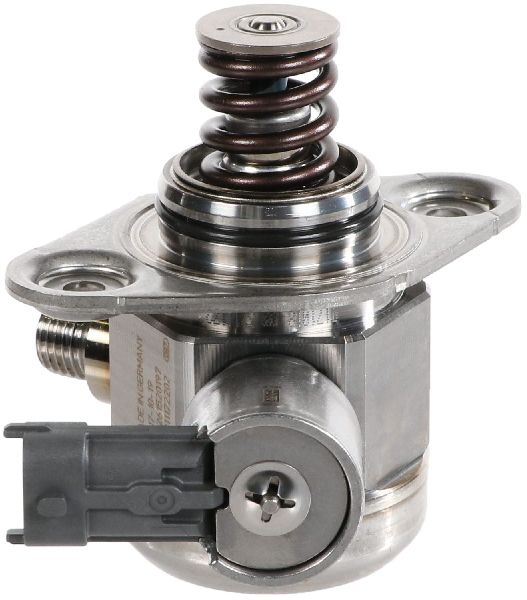
Typical fix: Replacement of the high-pressure fuel pump(s). This is a labor-intensive job. On the 3.0L diesel, it often requires lifting the body from the frame. On the 5.0L/3.0L petrol engines, it requires removing the alternator for access. The Bosch OEM part number for the petrol V6/V8 HPFP is LR081595 (Bosch 0261520197).
Est. part cost: $500-$1500+ - Failing Low-Pressure Fuel Pump (In-tank) ⚪ Low Probability The in-tank pump's job is to lift fuel from the tank and supply it to the HPFP. If it weakens, it cannot provide enough volume for the HPFP to pressurize, leading to the P0087 code. A forum post on Australian Land Rover Owners mentioned that P0087 on a Discovery 4 (a platform mate) was traced back to the low-pressure pump and filter.
How to confirm: A technician can test the pressure and volume of the low-pressure fuel system at the feed line to the HPFP. The pressure should meet the manufacturer's specification at idle. For the 5.0L engine, this pressure should be around 79 PSI after warm-up, but can be as high as 105 PSI on startup.
Typical fix: Replace the in-tank low-pressure fuel pump assembly. This requires accessing the top of the fuel tank.
Est. part cost: $300-$700 - Faulty Fuel Rail Pressure Sensor ⚪ Low Probability The sensor itself can fail and send incorrect low-pressure readings to the PCM, even if the actual pressure is fine. TSB SSM74336 directly points to this sensor as a cause for P0087 variations. [⭐] Forum users have reported fixing P0087 by replacing this sensor after experiencing intermittent issues.
How to confirm: Compare the pressure reading from the sensor (via a scan tool) to a reading from a mechanical fuel pressure gauge connected to the rail. If the readings differ significantly, the sensor is likely faulty. A faulty sensor might also give erratic readings at idle or when the engine is off.
Typical fix: Replace the fuel rail pressure sensor. On the 2.7/3.0 TDV6, a common part number is 55PP19-02.
Est. part cost: $100-$250
Rare But Worth Checking
- Leaking Fuel Injector: An injector stuck open can cause a drop in rail pressure. This would likely be accompanied by other symptoms like a rich running condition, misfires (P0300-P0308), and possibly a fuel smell.
- Damaged Fuel Lines: A kinked, crushed, or leaking fuel line between the tank and the engine can restrict flow and cause a pressure drop. This requires a thorough visual inspection of the underbody.
- Cracked Intake Manifold (Diesel Engines): On the SDV6/TDV6 diesel engines, a cracked plastic intake manifold is a very common cause for the 'Restricted Performance' warning. While it typically throws codes related to intake pressure (MAP sensor), the general performance loss can sometimes be misdiagnosed or occur alongside fuel pressure issues.
- Weak Battery or Alternator: A forum member reported that a failing battery and alternator caused P0087, as the low-pressure fuel pump's output is dependent on system voltage. Before replacing expensive components, ensuring the battery and charging system are healthy is a wise step.
Diagnosis Steps
- Read all stored fault codes with an OBD-II scanner to check for any related codes (e.g., for misfires or other fuel system sensors).
- Use the scanner's live data function to monitor 'Desired Fuel Rail Pressure' vs. 'Actual Fuel Rail Pressure'. Observe the values at idle and during a short test drive under load. A significant lag or drop in actual pressure vs. desired pressure under acceleration points to a delivery problem.
- Perform a visual inspection of all accessible fuel lines and the fuel rail for any signs of leaks.
- If not recently done, replace the fuel filter. This is a high-probability, low-cost fix, especially on diesel engines.
- Test the low-pressure fuel system. Connect a fuel pressure gauge to the low-pressure feed line to ensure the in-tank pump is delivering adequate pressure and volume to the HPFP. Low pressure here points to the in-tank pump or a line restriction.
- If the low-pressure system is healthy but the actual high pressure still drops far below the desired pressure under load, the High-Pressure Fuel Pump (HPFP) is the primary suspect.
- If a mechanical gauge shows good pressure but the scanner shows low pressure, investigate the fuel rail pressure sensor and its wiring for faults.
Parts You'll Likely Need
- Fuel Filter (Diesel)
(OEM #LR045519) - High-Pressure Fuel Pump (HPFP) - Petrol V6/V8
(OEM #LR081595) - In-Tank Low-Pressure Fuel Pump
- Fuel Rail Pressure Sensor
Related Codes That Often Appear With This One
- P0088 — This code for "Fuel Rail/System Pressure - Too High" can sometimes appear with P0087 if the fuel pressure regulator or sensor is behaving erratically.
- P0191 — This code indicates a performance problem with the fuel rail pressure sensor circuit, pointing more directly towards a faulty sensor or wiring issue.
- P0300-P0308 — Misfire codes (e.g., P0300 for random misfire, P0301 for cylinder 1 misfire) are common because low fuel pressure prevents proper combustion.
Technical Service Bulletins (TSBs) & Recalls
- SSM74336: "Variations of DTC P0087 are stored in the PCM for the fuel rail pressure sensor." [⭐]
Platform-Specific Known Issues

- A known Land Rover Technical Service Bulletin (TSB SSM74336) directly addresses variations of code P0087, indicating it's a recognized issue related to the fuel rail pressure sensor on these vehicles. [⭐]
- On the 3.0L diesel engines, replacement of the HPFP is a very involved job that often requires lifting the body from the frame. An owner on an Australian forum was quoted over $7,000 for the job including timing belt service.
- For the 3.0L/5.0L petrol engines, there are two HPFPs. A guide on Go-Parts.com notes they often fail around the same time and should be replaced as a pair to ensure reliability.
- A user on landroverforums.com with a 2013 LR4 (platform mate) and P0087 was quoted $3200 for an HPFP replacement by a dealer, but found the issue was resolved by using a fuel system cleaner (BG 44K), suggesting a partially clogged injector or component.
Mechanic-Grade Diagnostic Values
- Low-Pressure Fuel System (5.0L Petrol) — expected: Around 105 PSI at startup, settling to ~79 PSI after warm-up. Can drop to 65 PSI and still be within spec.. Failure: Pressure significantly below 65 PSI at idle or failing to reach ~105 PSI on startup.
- High-Pressure Fuel System (5.0L Petrol) — expected: Should be no lower than 2,000 PSI on startup, leveling out to ~500 PSI at idle. Should rise back to ~2,000 PSI when held at 3,000 RPM.. Failure: Pressure significantly below 2,000 PSI on startup or under load, or pressure that does not respond to RPM changes.
- Low-Pressure Fuel System (3.0L EcoDiesel - similar platform) — expected: Should be stable between 54-64 PSI when tested with a mechanical gauge.. Failure: Pressure dropping below 54 PSI, especially during cranking.
Scan Tool Commands That Help
- Land Rover SDD (Symptom Driven Diagnostics): High Pressure System Test — This function is used to diagnose issues with the two high-pressure mechanical pumps on the V8 petrol engine. The tool can command each pump's electric regulator valve off one at a time to monitor the pressure performance of the other, helping to isolate a single faulty pump.
Wiring & Ground Locations
- Fuel Pump Harness Connector — In the left rear wheel well, a harness plug couples the main body harness to the frame harness.. A forum user reported that a fuel pump ground shorted out at this specific connector. Cleaning the contacts resolved a no-start and fuel pressure issue, indicating this is a potential point of failure due to its exposed location.
- Fuel Pump Module Electrical Connector — On top of the fuel tank, accessed from under the rear seats.. This is the primary connection for the in-tank low-pressure pump. According to wiring diagrams, the feed wire from the fuel pump relay is typically White/Blue, and the ground wire is Black. A poor connection here will disable the low-pressure pump.
Real Owner Repair Stories
- Australian Land Rover Owners (AULRO.com) (2010 Discovery 4 2.7L Diesel (platform mate with similar engine architecture)) — Restricted Performance warning and transmission fault, code P0087-00, occurring at cruising speed (90-110kph).
❌ Tried (didn't work) New fuel filter (changed twice), Overlay wiring between HPFP and ECU, Checked earth grounds, ECU reprogram, Replaced High-Pressure Fuel Pump (HPFP), Replaced ECU, Replaced fuel pressure sensor with an aftermarket one
✅ What actually fixed it The owner eventually ordered a new genuine Land Rover fuel rail which comes with a new sensor. Swapping this new OEM sensor for the aftermarket one they had tried previously resolved the issue, suggesting the aftermarket sensor was not compatible or faulty.
OEM Part Supersession History
LR026192→LR044427, LR057235, LR072234— Standard part evolution and supplier changes for the in-tank fuel pump assembly.
Heads up: These part numbers are often associated with the Evoque but are sometimes cross-referenced. It is critical to verify the correct part for the Range Rover Sport L494 by VIN, as petrol and diesel models use different in-tank pumps.
Model Year Variations Within This Range
- 2018-2019: The 2018 model year marked a significant facelift for the L494 Range Rover Sport. While the core 3.0L V6 and 5.0L V8 petrol engines remained, the 5.0L was uprated to 525 PS (+15 PS). More significantly, a new 2.0L Si4 petrol engine (300 PS) was introduced as a base model, and the previous diesel-hybrid was replaced with a new 2.0L petrol plug-in hybrid (P400e). These new powertrains have entirely different fuel system components (pumps, injectors, lines) compared to the V6/V8 models that dominated the 2014-2017 range.
Helpful Videos


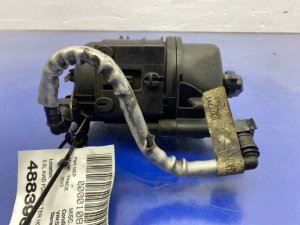
Used OEM Parts in Stock


New Aftermarket Parts Available


The information in this article is provided for general reference and educational purposes only. Vehicle specifications, procedures, and part compatibility can vary by production date, trim level, and region. Always consult your vehicle's factory service manual and verify part numbers before purchasing or performing repairs. Safety-critical components such as airbags, seat belts, and braking systems should be installed by a qualified professional.
- Land Rover RANGE ROVER SPORT:
- 🎬 Helpful Videos
- 🛍️ Shop This Part
- What's Unique About the 2014-2019 Land Rover RANGE ROVER SPORT
- Diagnostic Flowchart
- Symptoms You May Notice
- Most Likely Causes
- Rare But Worth Checking
- Diagnosis Steps
- Parts You'll Likely Need
- Related Codes That Often Appear With This One
- Technical Service Bulletins (TSBs) & Recalls
- Platform-Specific Known Issues
- Mechanic-Grade Diagnostic Values
- Scan Tool Commands That Help
- Wiring & Ground Locations
- Real Owner Repair Stories
- OEM Part Supersession History
- Model Year Variations Within This Range
- 🎟️ Get 5% Off