

P0087 on 2020-2024 Kia Telluride: Low Fuel Rail Pressure Causes and Fixes
On a 2020-2024 Kia Telluride, the P0087 code is most often caused by a failing High-Pressure Fuel Pump (HPFP). This can lead to stalling, hesitation, and loss of power, especially in hot weather after idling. The primary fix is replacing the HPFP and its associated one-time-use fuel pipe. Expect a repair cost of $700-$1500 at a shop due to the part's price and labor.
- P0087 on your Telluride means the high-pressure fuel system is failing to provide enough fuel to the engine.
- The most probable cause is a failing High-Pressure Fuel Pump (HPFP), which can cause stalling and is a serious safety concern.
- Some owners report this problem happens specifically in very hot weather, causing the vehicle to stall and not restart until it cools down.
- This is not a DIY-friendly repair. The fuel system operates under extremely high pressure and requires special procedures to service safely.
- Always diagnose the low-pressure fuel pump first to avoid misdiagnosing and unnecessarily replacing the expensive HPFP.
What's Unique About the 2020-2024 Kia Telluride
The Kia Telluride uses the 3.8L Lambda II GDI V6 engine, which relies on extremely high fuel pressures (often over 2,000 PSI) for direct injection. While generally reliable, the High-Pressure Fuel Pump (HPFP) is a known failure point across many GDI engines that can trigger this code. Some Telluride owners have experienced intermittent stalling associated with P0087 specifically in high ambient heat (over 100°F) after the vehicle has been idling for an extended period (e.g., 30 minutes). This suggests the HPFP may be susceptible to heat-soak failure, where high under-hood temperatures cause a temporary malfunction.
Symptoms You May Notice
- Engine stalling, sometimes intermittently and refusing to restart for a period, especially in high heat.
- Reduced engine power and poor acceleration.
- Engine hesitation or stumbling, particularly under load.
- Rough or uneven idle.
- Check Engine Light is on.
- Difficulty starting the engine, requiring multiple cranks.
- Strong smell of gasoline in the engine oil, indicating a severe internal HPFP leak.
- Replacing the High-Pressure Fuel Pump (HPFP) without first testing the low-pressure fuel pump in the tank. If the HPFP is starved of fuel, it will not be able to build pressure, but the pump itself may not be faulty.
Most Likely Causes
- Failing High-Pressure Fuel Pump (HPFP) 🔴 High Probability The HPFP is a mechanically driven pump that is a common failure point on GDI engines. Forum reports for the Telluride and its platform-mate, the Hyundai Palisade, point to this as the primary culprit for P0087. 🎬 Watch: How to easily repair P0087 on Kia GDI engines. The heat-soak issue reported by owners in hot climates further suggests a vulnerability in this component. NHTSA ODI #11728277 describes a situation where a diagnostic scan confirmed P0087 and a secondary diagnosis confirmed the HPFP had failed, posing a risk of rear-end collision due to power loss.
How to confirm: Use a scan tool to monitor 'Desired Fuel Rail Pressure' vs. 'Actual Fuel Rail Pressure'. If the actual pressure consistently fails to meet the desired pressure, especially under load, and the low-pressure system is confirmed to be working, the HPFP is likely faulty. Another strong indicator is the smell of fuel in the engine oil.
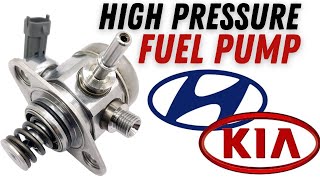
Typical fix: Replace the High-Pressure Fuel Pump, the high-pressure fuel line, and the mounting bolts, as these are 🎬 Watch: Step-by-step high pressure fuel pump replacement walkthrough. often one-time-use parts.
Est. part cost: $400-$800 - Failing Low-Pressure In-Tank Fuel Pump 🟡 Medium Probability The HPFP cannot generate high pressure if it isn't being supplied with adequate fuel from the in-tank pump. A weak low-pressure pump will 'starve' the high-pressure pump, causing P0087. This can be an intermittent failure, sometimes occurring when the pump gets hot. NHTSA ODI #11282157 notes a case where a vehicle lacked acceleration and kept stalling, accompanied by a service engine light and code P0087 related to fuel pressure.
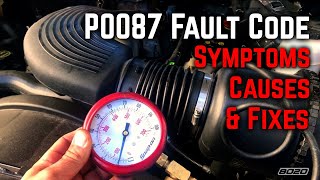
How to confirm: Connect a mechanical fuel pressure gauge to the low-pressure fuel line. The pressure should meet the manufacturer's specification (typically 50-70 PSI) before the HPFP. If the pressure is low, the in-tank pump is the likely cause.
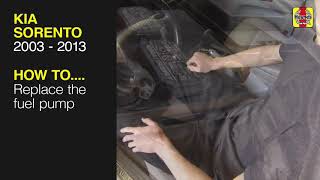
Typical fix: Replace the in-tank fuel pump assembly, which often includes the fuel filter and sending unit.
Est. part cost: $200-$400 - Faulty Fuel Rail Pressure Sensor (FRPS) ⚪ Low Probability
How to confirm: Compare the live data reading from the sensor on a scan tool to a reading from a known-good mechanical pressure gauge on the high-pressure rail (requires special adapters). If the readings differ significantly, the sensor is likely bad. This is less common than a pump failure.
Typical fix: Replace the fuel rail pressure sensor.
Est. part cost: $50-$150
Rare But Worth Checking
- Clogged Fuel Filter: The fuel filter is typically integrated into the low-pressure fuel pump assembly in the tank. While not a separate part to replace, a clogged filter can cause the same symptoms as a failing low-pressure pump. NHTSA ODI #11581569 mentions frequent fuel pump and fuel injector replacements due to defects, often appearing with P0087 and P0171.
- Leaking Fuel Injector(s): A fuel injector stuck open can cause a drop in rail pressure. This would often be accompanied by other codes like a misfire (e.g., P0301, P0302) or a rich condition code. NHTSA ODI #11499800 reports a vehicle showing P0087 alongside multiple misfire codes (P0300-P0306), indicating a widespread fuel delivery failure.
- Incorrect Fuel Line Routing: A manufacturer service bulletin, TSB Bulletin #TSB_FUE048, notes that an incorrectly routed fuel line may cause a MIL with DTC P0087 and the vehicle may exhibit poor acceleration or hesitation during low speed operation.
Diagnosis Steps
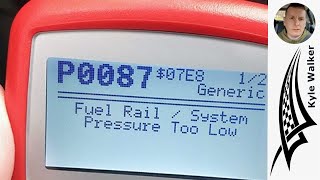
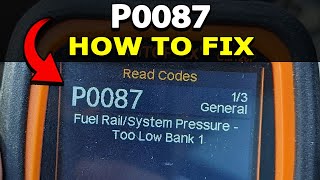
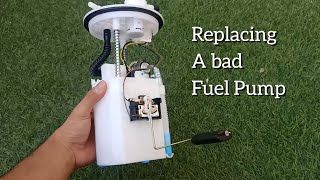
- Connect an OBD-II scanner and verify P0087 is the active code. Note any 🎬 See this guide on how to diagnose and fix low pressure. other codes present, such as misfire codes (P030x).
- Using the scanner's live data function, monitor 'Desired Fuel Rail Pressure' and 'Actual Fuel Rail Pressure'.
- Observe the pressure readings at idle, during a steady cruise, and under hard acceleration. Note if the actual pressure drops significantly below the desired pressure, especially under load.
- If pressure is low, the next step is to rule out the low-pressure side. Connect a mechanical fuel pressure gauge to the low-pressure line feeding the HPFP. Check if the pressure meets Kia's specifications (typically 50-70 PSI).
- If low-pressure is out of spec, diagnose the in-tank fuel pump, its wiring, or the integrated fuel filter.
- If low-pressure is within spec, the issue is in the high-pressure system. Carefully inspect the engine oil for a strong gasoline smell, which points to a failed internal seal on the HPFP.
- Inspect the HPFP and fuel rail pressure sensor wiring and connectors for damage or corrosion.
- If wiring is okay, low-pressure is good, and actual high-pressure readings are verifiably low, the High-Pressure Fuel Pump (HPFP) is the most likely cause.
- If actual pressure readings are low on the scan tool but a mechanical gauge (if one could be safely adapted) shows good pressure, suspect a faulty Fuel Rail Pressure Sensor (FRPS).
Parts You'll Likely Need
- High-Pressure Fuel Pump (HPFP)
(OEM #35320-3L100 (Verification with VIN is required))— This is the most common failure point for code P0087 on Kia/Hyundai GDI engines, responsible for generating the high pressure needed for direct injection.
Trusted brands: Bosch, Delphi, Hyundai/Kia Genuine
OEM price range: $500-$900
Aftermarket price range: $350-$600 - High-Pressure Fuel Pipe
(OEM #35305-2GGA0 (Verification with VIN is required))— This is the metal line connecting the HPFP to the fuel rail. It is considered a one-time-use part by the manufacturer and should be replaced anytime it is removed to prevent dangerous, high-pressure fuel leaks.
Trusted brands: Hyundai/Kia Genuine
OEM price range: $40-$80 - Low-Pressure Fuel Pump Assembly
(OEM #31110-S1500 (Verification with VIN is required))— If diagnosis shows the low-pressure side is at fault, this entire assembly in the fuel tank is replaced. It includes the pump, filter, and sending unit.
Trusted brands: Hyundai/Kia Genuine
OEM price range: $250-$450
Aftermarket price range: $150-$300
Related Codes That Often Appear With This One
- P0088 — If the fuel pressure regulator or sensor is failing erratically, it could cause both low (P0087) and high (P0088) pressure readings at different times.
- P0300-P0306 — Low fuel pressure can lead to a lean condition, causing random or cylinder-specific misfires as the engine isn't receiving enough fuel for proper combustion.
Technical Service Bulletins (TSBs) & Recalls
- code: TSB ENG 142 / Service Campaign 943 (for other Kia models) | why: While not specific to the Telluride, this TSB for other Kia GDI vehicles with P0087 instructs technicians to replace the high-pressure fuel pump, fuel pipe, and bolts, indicating a known issue with this component on similar engines.
- code: TSB ELE328 | why: While not directly related to P0087, this TSB addresses a software issue on 2023-2024 Tellurides where the instrument cluster may show a lower fuel level than actual after refueling, which could cause confusion if fuel level is suspected as a cause.
- code: TSB Bulletin #TSB_FUE048 | why: A manufacturer service bulletin notes that an incorrectly routed fuel line may cause a Malfunction Indicator Lamp (MIL) with DTC P0087 and the vehicle may exhibit poor acceleration and/or hesitation during low speed operation.
Platform-Specific Known Issues
- There are multiple owner reports of P0087 appearing intermittently on the Telluride, specifically during very hot weather (100°F+) after extended idling. The vehicle may stall and not restart until it has cooled down, pointing to a potential heat-soak issue with the high-pressure fuel pump. One owner noted that pouring cool water over the fuel pressure regulator on top of the engine allowed the car to restart, further supporting the heat-soak theory.
Mechanic-Grade Diagnostic Values
- Low-Pressure Fuel System Pressure (at idle or key-on, engine-off) — expected: 50-70 PSI. Failure: Pressure below this range indicates a failing in-tank fuel pump or a clogged filter, which will starve the HPFP.
- High-Pressure Fuel Rail Pressure (at idle) — expected: Approximately 400-500 PSI. Failure: A reading significantly below this, or one that doesn't rise with RPM, points to a high-pressure side fault (HPFP, sensor, or leak).
Scan Tool Commands That Help
- Kia GDS (or equivalent professional scanner): Fuel Pump/System Test — This bidirectional test allows the technician to command the fuel pump on and monitor the system's response, helping to isolate whether a failure is with the pump itself, the control module, or the wiring.
- Kia GDS (or equivalent professional scanner): Clear Fault Memory — After a repair, this function is used to clear the P0087 code. A test drive is then necessary to confirm the check engine light does not return, verifying the fix.
Wiring & Ground Locations
- Fuel Pump Control Module (FPCM) / Fuel Pump Driver Module — While not definitively documented for the Telluride specifically, on modern Hyundai/Kia vehicles it is typically located either under the rear seat near the fuel pump access panel, in the trunk/cargo area behind a trim panel, or mounted to the vehicle frame near the fuel tank.. The FPCM controls the voltage and speed of the low-pressure in-tank fuel pump. A failure or poor connection at this module can starve the high-pressure pump and trigger a P0087 code.
- Engine Control Unit (ECU) — Located in the engine bay, next to the air filter box on the driver's side.. The ECU receives data from the fuel rail pressure sensor and commands both the low-pressure and high-pressure fuel systems. A fault here, though rare, can cause P0087.
- Ground Cable (Part # 91862-S9010) — A primary ground cable for the wiring assembly is located on the left (driver's) side.. A poor ground connection for the fuel pump control module or the ECU can cause erratic voltage and lead to incorrect fuel pressure readings or poor pump performance, triggering P0087.
OEM Part Supersession History
35320-3L100→35320-3L200— This is a common supersession for the high-pressure fuel pump on the 3.8L Lambda II engine family. Revisions often address reliability or performance issues.35320-3L200→35326-3L200— Further revision of the high-pressure fuel pump.
Model Year Variations Within This Range
- 2020-2024: The 2023 model year introduced a cosmetic facelift and new trim levels (X-Line, X-Pro), but the core powertrain, the 3.8L Lambda II GDI V6 engine and 8-speed automatic transmission, remained unchanged from the 2020-2022 models. Therefore, the causes and fixes for P0087 are consistent across this entire year range.
Diagnostic Flowchart
Other Known Issues on This Vehicle
Issues unrelated to this code that are worth knowing about as an owner of this generation:
- Spontaneously Cracking Windshields 🟠 Medium — Widespread reports from early model years (2020-2021), leading to a class-action lawsuit. Less frequent on later models but still reported. (Ref: Kia offered a 'goodwill' replacement program for some owners but did not issue a formal recall.)
- Tow Hitch Wiring Harness Fire Risk 🔴 High — Affects 2020-2022 models equipped with the genuine Kia 4-pin tow hitch harness. Can cause a fire while parked or driving. (Ref: NHTSA Recall 22V-626 (Kia Service Campaign SC247). Owners were advised to park outside until the fix was performed.)
- Driveshaft Disengagement / Rollaway Risk 🔴 High — Affects over 427,000 Tellurides from 2020-2024 model years due to improperly assembled driveshafts that may not fully engage. (Ref: NHTSA Recall 24V-214 (Kia Service Campaign SC303). The fix involves a software update and, if necessary, replacement of the driveshaft.)
- Power Seat Motor Overheating / Fire Risk 🔴 High — Affects over 462,000 Tellurides from 2020-2024. A stuck power seat slide knob can cause the motor to overheat. (Ref: NHTSA Recall 24V-407. Owners advised to park outside. The fix involves installing a bracket for the switch cover.)
- Transmission Hesitation or Failure 🟠 Medium — Some owners report harsh shifting, hesitation, or getting stuck in gear, sometimes requiring a full transmission replacement even at low mileage.
Used vs. New Parts: Buying Guide for This Vehicle
When a used part is the smart pick: Given the high cost of a new OEM High-Pressure Fuel Pump (HPFP), a used unit from a reputable auto dismantler can be a cost-effective option, especially if it comes with a warranty. A used HPFP from a low-mileage, late-model Telluride or Palisade is a viable choice.
Donor-vehicle mileage cap: roughly under 50000 miles for the part to have meaningful remaining life.
What to inspect on the donor part:
- Verify the part number matches or is a valid supersession for your vehicle.
- Obtain the VIN of the donor vehicle to check its service history for any related fuel system issues.
- Inspect the part for any physical damage, corrosion, or signs of leaking.
- Purchase from a seller that offers a warranty (e.g., 1 year) on the used part.
OEM-only on this vehicle (don't cheap out):
- High-Pressure Fuel Pipe: This is a one-time-use, torque-to-yield part. Never reuse or buy a used one, as it can cause dangerous high-pressure leaks. Always buy new from the dealer.
- Fuel Rail Pressure Sensor (FRPS): While aftermarket sensors exist, the critical nature of this sensor and the potential for incorrect readings make using a genuine OEM part the safest choice to avoid misdiagnosis.
Aftermarket brands forum-validated for this vehicle:
- Bosch: As an original equipment manufacturer for many fuel system components, Bosch is a trusted name for parts like the HPFP if an OEM-branded part is unavailable.
Brands owners have reported issues with on this vehicle:
- Unbranded, no-name parts from online marketplaces. For a critical high-pressure fuel system component, the risk of premature failure, leaks, or incorrect performance is too high.
Real Owner Stories
Aggregated from forums and TSBs cited above. Mileages and costs reflect what owners reported in those sources.
2021 Kia Telluride 3.8L V6
Symptoms: The vehicle repeatedly stalled in 100°F+ heat after idling. It would not restart until the engine cooled down. The code P0087 was triggered twice in two years under these exact conditions.
What fixed it: The mechanic suspected the High-Pressure Fuel Pump (HPFP) due to a heat-soak issue.
Source hint: tellurideforum.org - Thread 'Code P0087 - happened twice in two years - similar conditions'
2020-2024 Kia Telluride 3.8L V6
Symptoms: Code P0087 appeared; owner attempted to restart the car by pouring cool water over the fuel pressure regulator on top of the engine.
What fixed it: The cooling of the regulator allowed the car to restart, pointing to a heat-related failure of the high-pressure fuel system components.
Source hint: vehicle_specific_issues
Documented NHTSA Reports
Manufacturer Service Bulletin
Report: TSB Bulletin #TSB_FUE048 notes that an incorrectly routed fuel line may cause a Malfunction Indicator Lamp (MIL) with DTC P0087 and the vehicle may exhibit poor acceleration and/or hesitation during low speed operation.
NHTSA ODI #11728277
Symptoms: An owner reported losing power, posing a significant risk of a rear-end collision. Diagnostic scans confirmed code P0087 for Low Fuel Rail Pressure, and a secondary diagnosis confirmed the HPFP had failed.
NHTSA ODI #11581569
Symptoms: Multiple reports of codes P0171 (System too lean bank 1), P0138, and P0087 (Fuel pressure too low). The report indicates frequent fuel pump and fuel injector replacements due to defects.
NHTSA ODI #11282157
Symptoms: An owner noticed the car was not giving proper acceleration and kept stalling. A service engine soon light came on with code P0087, which has to do with the fuel pressure.
NHTSA ODI #11499800
Symptoms: A vehicle started showing several codes including P0506, P0087, P0300, and cylinder-specific misfire codes P0301 through P0306, all related to fuel delivery issues.
Related OBD-II Codes
Frequently Asked Questions
Why does my Telluride stall in 100°F+ weather but restart after cooling down?
Does the Palisade have the same P0087 issues as the Telluride?
Could my P0087 code be related to the instrument cluster showing the wrong fuel level?
Is there a TSB for the High-Pressure Fuel Pump on the Telluride?
Can a bad HPFP cause gasoline to smell in my engine oil?
What is the estimated cost to replace the HPFP on a 2020-2024 Telluride?
Helpful Videos



Used OEM Parts in Stock

New Aftermarket Parts Available


The information in this article is provided for general reference and educational purposes only. Vehicle specifications, procedures, and part compatibility can vary by production date, trim level, and region. Always consult your vehicle's factory service manual and verify part numbers before purchasing or performing repairs. Safety-critical components such as airbags, seat belts, and braking systems should be installed by a qualified professional.
- Kia Telluride:
- 🎬 Helpful Videos
- 🛍️ Shop This Part
- What's Unique About the 2020-2024 Kia Telluride
- Symptoms You May Notice
- Most Likely Causes
- Rare But Worth Checking
- Diagnosis Steps
- Parts You'll Likely Need
- Related Codes That Often Appear With This One
- Technical Service Bulletins (TSBs) & Recalls
- Platform-Specific Known Issues
- Mechanic-Grade Diagnostic Values
- Scan Tool Commands That Help
- Wiring & Ground Locations
- OEM Part Supersession History
- Model Year Variations Within This Range
- Diagnostic Flowchart
- Other Known Issues on This Vehicle
- Used vs. New Parts: Buying Guide for This Vehicle
- Real Owner Stories
- 2021 Kia Telluride 3.8L V6
- 2020-2024 Kia Telluride 3.8L V6
- Documented NHTSA Reports
- Manufacturer Service Bulletin
- NHTSA ODI #11728277
- NHTSA ODI #11581569
- NHTSA ODI #11282157
- NHTSA ODI #11499800
- Related OBD-II Codes
- Frequently Asked Questions
- 🎟️ Get 5% Off