

P0087 on 2012-2014 Kia Sedona: Fuel Rail Pressure Too Low Causes and Fixes
P0087 on a 2012-2014 Kia Sedona indicates the fuel pressure is too low for the engine to run correctly. For this vehicle's Multi-Point Injection (MPI) engine, this is most often caused by a failing in-tank fuel pump or a faulty fuel pressure regulator. A clogged fuel filter, which is part of the pump assembly, is also a common culprit.
- P0087 means the high-pressure fuel system is failing to provide enough pressure for the GDI engine.
- The most likely cause on a 2012-2014 Sedona is a failing high-pressure fuel pump (HPFP).
- Before replacing expensive parts, always diagnose the low-pressure fuel system first to rule out a clogged filter or weak in-tank pump.
- Due to the risk of stalling and the co
What's Unique About the 2012-2014 Kia SEDONA

The 2012-2014 Sedona uses a 3.5L V6 MPI engine (Lambda II family). A critical distinction from many other modern Kias is the absence of a high-pressure fuel pump (HPFP). Therefore, diagnosis for P0087 on this vehicle focuses entirely on the low-pressure side of the fuel system: the in-tank fuel pump, the integrated fuel filter, and the fuel pressure regulator. Failures in the in-tank pump assembly are a common wear item on these vehicles.
🎬 Watch: Step-by-step guide to replacing the in-tank fuel pump.Diagnostic Flowchart

Tap your situation to follow the diagnostic path that matches what you're seeing on this vehicle.
Symptoms You May Notice
- Check Engine Light is on
- Engine hesitation or stumbling during acceleration
- Significant loss of engine power
- Engine running rough or idling poorly
- Engine stalling, especially under load or at idle
- Extended crank time (takes longer to start)
- Whining noise from the fuel tank area
- Decreased fuel efficiency
- Replacing the fuel rail pressure sensor without first verifying the actual fuel pressure with a mechanical gauge.
- Mistaking the issue for a GDI-related problem and searching for a high-pressure fuel pump that does not exist on this vehicle.
Most Likely Causes

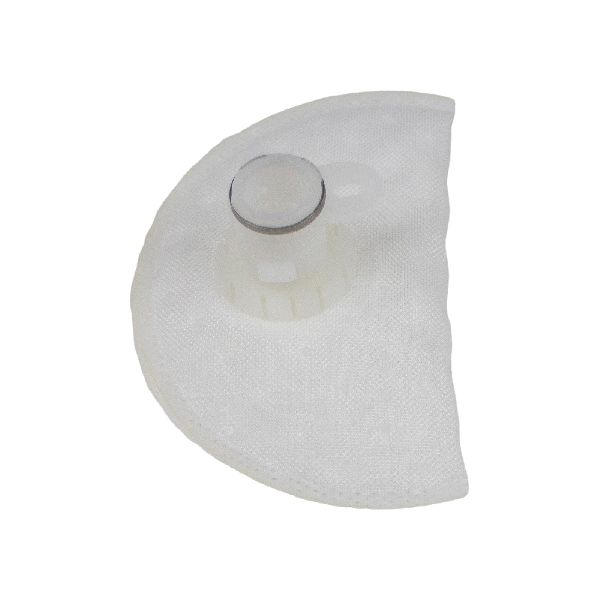
- Failing In-Tank Fuel Pump 🔴 High Probability The in-tank fuel pump is a common failure point over time. It can wear out, leading to insufficient pressure to supply the fuel rail, especially under demand.
How to confirm: Connect a fuel pressure gauge to the fuel line. The pressure at idle should be stable and within the manufacturer's specification. If the pressure is low, erratic, or drops off during acceleration, the pump is likely failing.
Typical fix: Replacement of the in-tank fuel pump and filter assembly.
Est. part cost: $150-$350 - Clogged Fuel Filter 🔴 High Probability The fuel filter is integrated with the in-tank fuel pump assembly and is not serviced separately. Over time, it can become restricted with debris, starving the system of fuel and causing the pump to work harder, leading to low pressure and eventual pump failure.
How to confirm: This is diagnosed concurrently with the fuel pump. If a low-pressure condition is confirmed with a fuel pressure gauge, the entire pump/filter assembly is suspect.
Typical fix: Replacement of the in-tank fuel pump and filter assembly. It is not possible to replace just the filter.
Est. part cost: $150-$350 - Faulty Fuel Pressure Regulator 🟡 Medium Probability The regulator maintains steady pressure in the fuel rail by returning excess fuel to the tank. If it sticks open, it can bleed off too much pressure, causing the P0087 code.
How to confirm: After confirming the fuel pump can produce adequate pressure, the regulator is a likely suspect. Diagnosis can sometimes involve pinching the return line to see if pressure builds; if it does, the regulator is likely faulty. This should be done with extreme caution.
Typical fix: Replacement of the fuel pressure regulator.
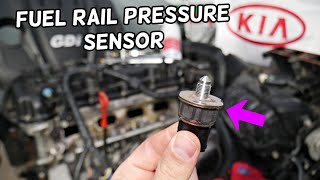
Est. part cost: $70-$150 - Faulty Fuel Rail Pressure Sensor ⚪ Low Probability
How to confirm: With the engine running, compare the live data reading from the fuel rail pressure sensor on a scan tool to a reading from a manual pressure gauge. If the readings differ significantly, the sensor is likely faulty.
Typical fix: Replacement of the fuel rail pressure sensor.
Est. part cost: $50-$150
Rare But Worth Checking
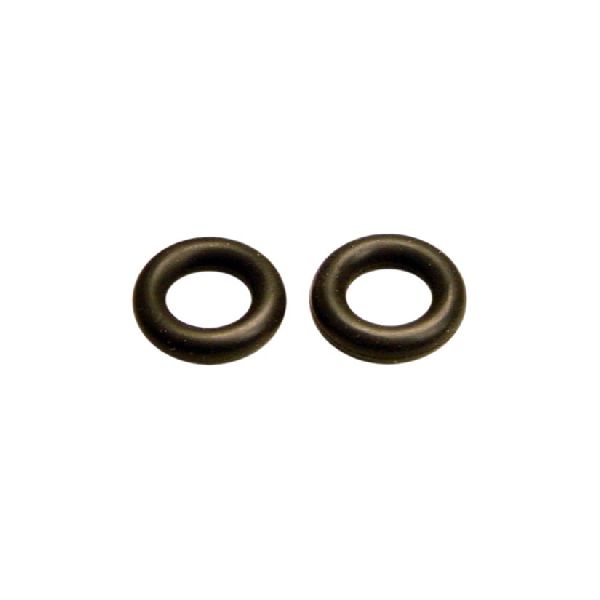
- Leaking Fuel Injector: An injector that is stuck open can cause a drop in rail pressure. This is usually accompanied by other codes, such as a cylinder misfire (P0300-P0306) and a noticeable fuel smell.
- Damaged Fuel Lines or Electrical Connector: A kinked or damaged fuel line can restrict flow. Also, corrosion or damage to the fuel pump's electrical connector, located under the rear seat, can cause intermittent power loss to the pump.
Diagnosis Steps
- Connect an OBD-II scanner and confirm the presence of the P0087 code. Note any other codes.
- Use a scan tool with live data to monitor 'Fuel Rail Pressure'. Observe the reading at idle and while attempting to rev the engine.
- Test the fuel system pressure. Connect a fuel pressure gauge to the low-pressure line. The pressure should be stable and within manufacturer specifications (typically 45-65 PSI for MPI systems).
- If pressure is low or unstable, the in-tank fuel pump/filter assembly is the primary suspect. Inspect the electrical connector for the fuel pump for any signs of corrosion or damage.
- If fuel pressure is good and stable, the issue could be the fuel pressure regulator or the fuel rail pressure sensor.
- Compare the reading from your mechanical gauge to the live data from the fuel pressure sensor on your scan tool. A significant discrepancy points to a faulty sensor.
- If the sensor and pump are confirmed to be good, investigate the fuel pressure regulator as the likely cause.
- Inspect for any visible fuel leaks along the fuel rail, injector seals, and fuel lines.
Parts You'll Likely Need

- In-Tank Fuel Pump and Filter Assembly
(OEM #311104D000)— This is the most common mechanical failure leading to code P0087 on this MPI engine. The integrated filter gets clogged or the pump motor wears out.
Trusted brands: Denso, Spectra Premium, Delphi
OEM price range: $250-$400
Aftermarket price range: $150-$250 - Fuel Pressure Regulator
(OEM #353012P000)— A faulty regulator can fail to maintain proper pressure in the fuel rail, causing it to drop below specification.
Trusted brands: Standard Motor Products, Bosch
OEM price range: $100-$150
Aftermarket price range: $70-$110 - Fuel Rail Pressure Sensor
(OEM #353422E500)— Though less common, a faulty sensor can send incorrect low-pressure readings to the ECM, triggering the code when actual pressure is fine.
Trusted brands: Bosch, NTK
OEM price range: $100-$180
Aftermarket price range: $50-$100
Related Codes That Often Appear With This One
- P0300-P0306 — Misfire codes can occur because the low fuel pressure leads to a lean air/fuel mixture, causing incomplete combustion in one or more cylinders.
- P0171 — System Too Lean (Bank 1) can be triggered when low fuel pressure prevents the injectors from supplying the amount of fuel commanded by the ECM.
Technical Service Bulletins (TSBs) & Recalls
- SC114DEALERP: Notes that GDI engines may experience Malfunction Indicator Lamp (MIL) illumination due to Diagnostic Trouble Code (DTC) P0087.
Platform-Specific Known Issues
- Kia issued Technical Service Bulletin #SC114DEALERP which mentions that GDI engines may illuminate the check engine light with code P0087. This bulletin often involved an ECM software update to improve the logic for monitoring the fuel system. It's worth checking with a dealer if this update has been performed on your vehicle.
Mechanic-Grade Diagnostic Values
- Fuel Level Sender Resistance — expected: Float at 'F' (full): 7-9 Ω. Float at '1/2': 98.6-100.6 Ω. Float at 'E' (empty): 198-202 Ω.. Failure: Resistance is infinite (open circuit), zero, or does not change smoothly as the float is moved.
- In-Tank Fuel Pump Motor Voltage Test — expected: Battery voltage (~12V) should be present across terminals 4 (+) and 5 (-) of the fuel pump connector for a few seconds when the ignition is first turned on.. Failure: No voltage indicates a problem with the fuel pump relay, fuse, or wiring. If voltage is present but the pump does not run, the pump motor has failed.
Scan Tool Commands That Help
- Kia GDS (Global Diagnostic System): Actuation Test / Guided Troubleshooting — To command the in-tank fuel pump to turn on, allowing a technician to verify its operation and check for voltage at the pump without needing to crank the engine. This helps isolate a failed pump from a wiring or relay issue.
Wiring & Ground Locations
- Fuel Pump Connector — Under the second-row left-hand (LH) seat. The floor mat and a service cover must be removed to access it.. This is the primary test point for checking power and ground to the fuel pump motor. Corrosion or damage here can cause intermittent power loss and trigger P0087.
- Fuel Pump Connector Pinout — On the main connector at the fuel pump assembly.. Pin 4 is Fuel Pump Motor (+), Pin 5 is Fuel Pump Motor Ground. Testing across these pins confirms if the pump is receiving power. Pins 1 and 3 are for the fuel sender.
- Fuel Pump Fuse — Located in the engine compartment fuse box.. This is the first and easiest electrical check. A blown fuse will cut all power to the fuel pump, causing a no-start and P0087.
Real Owner Repair Stories
- YouTube channel 'LM Auto Repairs' (Kia Sedona 2.9 CRDI (Diesel engine, but same P0087 principle)) — Vehicle would go into limp mode under load, with codes P0087 (Fuel Rail Pressure Too Low) and P0088 (Too High).
❌ Tried (didn't work) The mechanic initially considered a faulty sensor or pump.
✅ What actually fixed it The mechanic drained the fuel filter and found the fuel was extremely black and contaminated. Replacing the clogged fuel filter resolved the issue.
OEM Part Supersession History
35301-1G000→35301-2P000— Unknown, likely a design revision or consolidation.
Heads up: Part 35301-2P000 appears to be a valid replacement for 35301-1G000 on various Hyundai/Kia models, suggesting backward compatibility.
Model Year Variations Within This Range
- 2012-2014: There are no significant mechanical or electrical changes to the 3.5L V6 fuel system within this specific year range that would alter the diagnosis of P0087. The engine and transmission were new for the 2011 model year and carried over unchanged through 2014.
Helpful Videos



We Have This Part in Stock


The information in this article is provided for general reference and educational purposes only. Vehicle specifications, procedures, and part compatibility can vary by production date, trim level, and region. Always consult your vehicle's factory service manual and verify part numbers before purchasing or performing repairs. Safety-critical components such as airbags, seat belts, and braking systems should be installed by a qualified professional.
- Kia SEDONA:
- 🎬 Helpful Videos
- 🛍️ Shop This Part
- What's Unique About the 2012-2014 Kia SEDONA
- Diagnostic Flowchart
- Symptoms You May Notice
- Most Likely Causes
- Rare But Worth Checking
- Diagnosis Steps
- Parts You'll Likely Need
- Related Codes That Often Appear With This One
- Technical Service Bulletins (TSBs) & Recalls
- Platform-Specific Known Issues
- Mechanic-Grade Diagnostic Values
- Scan Tool Commands That Help
- Wiring & Ground Locations
- Real Owner Repair Stories
- OEM Part Supersession History
- Model Year Variations Within This Range
- 🎟️ Get 5% Off