

P0087 on 2020 Jeep Wrangler: Fuel Rail Pressure Too Low Causes & Fixes
On a 2020 Jeep Wrangler, P0087 often indicates a software issue that requires a dealer update, as noted in several Technical Service Bulletins. If not software, the next most likely cause is a failing in-tank (low-pressure) fuel pump, a repair journey well-documented by owners online. Diagnosis by a professional is recommended before replacing expensive parts like the high-pressure pump, which is often misdiagnosed.
- Always check with a Jeep dealer for a PCM software update first; TSBs indicate this can be a simple software fix.
- If the code persists, the most likely hardware failure on a 2020 Wrangler is the in-tank (low-pressure) fuel pump, not necessarily the more commonly blamed high-pressure pump or sensor.
- Symptoms include serious drivability issues like stalling and power loss, so addressing the code promptly is important for safety.
- This is not a simple DIY fix. Diagnosis and repair should be handled by a professional due to the complexity and safety risks of high-pressure fuel systems.
What's Unique About the 2020-2020 Jeep WRANGLER

What's unique about the 2020 Wrangler and this code is the existence of multiple manufacturer Technical Service Bulletins (TSBs). These bulletins suggest that P0087, along with other codes, can be triggered due to software sensitivity. This makes checking for a powertrain software update at a dealership a crucial and cost-effective first step, potentially avoiding unnecessary parts replacement. 🎬 Watch: How to diagnose and fix a P0087 code Owner experiences confirm that the diagnostic path can be tricky, with one owner on JLWranglerForums.com detailing how the dealer first replaced a fuel pressure sensor, then the high-pressure fuel pump, before finally fixing the issue by replacing the in-tank low-pressure pump.
Diagnostic Flowchart

Tap your situation to follow the diagnostic path that matches what you're seeing on this vehicle.
Symptoms You May Notice

- Check Engine Light is on
- Engine hesitation or sputtering, especially under acceleration
- Significant loss of engine power
- Vehicle enters 'limp mode,' limiting RPMs and acceleration
- Engine stalling, sometimes intermittently, and may not restart
- Longer than usual engine cranking time to start
- Rough idling
- Engine will not accelerate over a certain RPM (e.g., 3000 RPMs)
- Replacing the High-Pressure Fuel Pump (HPFP) when the in-tank Low-Pressure Fuel Pump (LPFP) is the actual cause of the fuel starvation. This is a common and expensive mistake documented by owners.
- Replacing the fuel rail pressure sensor when the issue is mechanical (a pump or filter) or software-related.
Most Likely Causes

- Powertrain Control Module (PCM) Software Issue 🔴 High Probability Multiple TSBs (#18-003-23, #1804921, #18-109-20) list this code as being potentially resolved by a software reflash, especially when it occurs during specific driving conditions (rapid pedal movement). This is the most cost-effective first step.
How to confirm: A Jeep dealership or a qualified shop with access to OEM software can check for and apply available PCM updates by referencing your vehicle's VIN.
Typical fix: Flashing the PCM with the latest manufacturer software.
Est. part cost: $0-$200 - Failing In-Tank Low-Pressure Fuel Pump (LPFP) 🔴 High Probability Forum discussions for the JL Wrangler show a clear pattern where this part fails, causing a P0087 code after other components were mistakenly replaced. The LPFP provides the initial fuel supply to the high-pressure pump, so its failure starves the entire system.
How to confirm: A technician can test the fuel pressure from the in-tank pump to see if it meets specifications (typically around 50-70 PSI at idle for the low-pressure side). This is done before testing the high-pressure side. 🎬 See how to test Jeep fuel pressure yourself
Typical fix: Replacement of the in-tank fuel pump module assembly.
Est. part cost: $900-$1100 - Failing High-Pressure Fuel Pump (HPFP) 🟡 Medium Probability The HPFP is a common failure point for P0087 on many direct-injected engines. It is a mechanical pump driven by the engine that can wear out over time. However, on the JL Wrangler, it is frequently misdiagnosed when the LPFP is the real issue.
How to confirm: Requires monitoring commanded vs. actual fuel rail pressure with a scan tool. If the low-pressure side tests good but high-pressure readings are low, the HPFP is suspect. A technician may also inspect the cam lobe that drives the pump for wear.
Typical fix: Replacement of the high-pressure fuel pump.
Est. part cost: $400-$700 - Clogged Fuel Filter 🟡 Medium Probability On gas-powered JL Wranglers, the fuel filter is integrated into the in-tank fuel pump module and is considered non-serviceable separately. For the 3.0L EcoDiesel model, the filter is a serviceable part and a common cause for P0087 if neglected.
How to confirm: For gas engines, this is confirmed by replacing the entire fuel pump module. For EcoDiesel models, the filter can be visually inspected and replaced as a diagnostic step.
Typical fix: Replacement of the fuel filter. On gas Wranglers, this means replacing the entire fuel pump module. On EcoDiesel models, the filter cartridge can be replaced.
Est. part cost: $50-$100 (Diesel filter only), $900+ (Gas pump module) - Faulty Fuel Rail Pressure Sensor ⚪ Low Probability While a sensor failure can cause this code by sending incorrect readings, on the JL Wrangler it appears to be a less common cause than the pumps or software. It is often replaced incorrectly as part of a misdiagnosis.
How to confirm: Compare the sensor's readings on a scan tool to a manual pressure gauge reading. If they differ significantly, the sensor is likely faulty. The sensor should typically read around 0.5V at low pressure and 4.5V at high pressure.
Typical fix: Replacement of the fuel rail pressure sensor.
Est. part cost: $50-$150
Rare But Worth Checking
- Restricted or Kinked Fuel Line: Physical damage to a fuel line from road debris or improper service can restrict flow and trigger this code.
- Worn Camshaft Lobe: On engines where the HPFP is driven by a dedicated camshaft lobe, wear on that lobe can reduce the pump's stroke and effectiveness, leading to low pressure. This is a more invasive repair.
- Faulty Fuel Pump Control Module: The module that controls the fuel pump's speed and voltage can fail, leading to low pressure. This is an electrical diagnosis that involves checking signals to the pump.
Diagnosis Steps
- Connect an OBD-II scanner and check for any other accompanying trouble codes, which can help pinpoint the root cause.
- Crucially, contact a Jeep dealership to check if the vehicle's PCM has the latest software version. Reference TSBs #18-003-23, #1804921, and #18-109-20. This is the most important first step.
- If software is up to date, use the scanner to monitor live data for 'Commanded Fuel Rail Pressure' and 'Actual Fuel Rail Pressure'. Note any discrepancies, especially during acceleration or when the engine is under load.
- Visually inspect all accessible fuel lines for kinks, damage, or leaks between the tank and the engine.
- Perform a fuel pressure test on the low-pressure side of the system to verify the health of the in-tank fuel pump. Pressure should be stable and within manufacturer specifications (often 50-70 PSI).
- If low-side pressure is adequate, proceed to test the high-pressure side. This step is best left to a professional due to extreme pressures.
- If a pump is suspected, inspect its drive mechanism (cam follower/lobe for HPFP) for wear or damage during replacement.
- If all pump tests pass, test the fuel rail pressure sensor for accuracy by comparing its voltage output on the scan tool to a manual pressure gauge reading.
Parts You'll Likely Need
- Fuel Pump Module Assembly (In-Tank)
(OEM #68403980AD (superseded by 68723023AA for 3.6L))— This is a frequently reported point of failure for the JL Wrangler that causes P0087, often after other parts are mistakenly replaced. The part number has been superseded multiple times, indicating revisions to the part. 🎬 Watch: Quick walkthrough for replacing the in-tank fuel pump
Trusted brands: Mopar
OEM price range: $900-$1100
Aftermarket price range: $400-$700 - High-Pressure Fuel Pump
(OEM #1BP00988AA (for 2.0L Turbo))— A common cause for P0087 on direct-injection engines, though it may be misdiagnosed on the Wrangler.
Trusted brands: Bosch, Mopar
OEM price range: $500-$700
Aftermarket price range: $300-$500 - Fuel Rail Pressure Sensor
(OEM #68212572AB (for 2.0L Turbo))— This sensor reports the pressure to the ECU. While it can fail, it's a less likely cause on this vehicle compared to the pumps.
Trusted brands: Mopar, Bosch
OEM price range: $100-$150
Aftermarket price range: $40-$90
Related Codes That Often Appear With This One
- P0191 — This code for 'Fuel Rail Pressure Sensor Range/Performance' often accompanies P0087 as the sensor's readings become erratic or implausible due to the unstable pressure.
- P0300-P0308 — Misfire codes (e.g., P0300 for random misfire, P0306 for cylinder 6) can be triggered because low fuel pressure leads to a lean air/fuel mixture, causing incomplete combustion. [1, Bulletin #18-003-23]
- P01C6 — This code for 'Fuel Pressure Sensor G Circuit High' can appear alongside P0087 on some models, indicating a complex fault within the fuel pressure sensing system.
Technical Service Bulletins (TSBs) & Recalls
- 18-003-23
- 1804921
- 18-109-20
Platform-Specific Known Issues
- A series of TSBs (#18-003-23, #1804921, #18-109-20) indicate that a PCM software update may resolve this code, which is triggered by rapid accelerator pedal movements. This should be the first diagnostic check.
- Real Owner Repair Story on JLWranglerForums.com: A user named 'RkyMtnJLU' documented their experience with P0087 symptoms. The dealer first replaced the high-pressure fuel pump's pressure sensor, which did not fix the issue. They then replaced the high-pressure fuel pump itself, which also failed to solve the problem. The final, successful repair was the replacement of the in-tank (low-pressure) fuel pump. This story highlights a common misdiagnosis path.
Mechanic-Grade Diagnostic Values
- Low-Pressure Fuel Pump (Gasoline Engines) — expected: 50-70 PSI at idle. Failure: Pressure is below specification at idle, or drops significantly under load.
- Low-Pressure Fuel Pump (3.0L EcoDiesel) — expected: 54-64 PSI (measured with a mechanical gauge). Failure: Pressure drops below 53 PSI during cranking or is consistently low.
- High-Pressure Fuel Rail (3.0L EcoDiesel, Cranking) — expected: Must exceed 3,500 - 4,000 PSI for the engine to start.. Failure: Scan tool shows actual pressure is significantly below desired pressure (e.g., only 800-1500 PSI) while cranking.
- Fuel Rail Pressure Sensor Signal Voltage (Key On, Engine Off) — expected: Approx. 1.5V - 1.8V. Failure: Voltage is abnormally high (e.g., near 5.0V) or low (near 0V), indicating a sensor or wiring fault.
- Fuel Rail Pressure Sensor Signal Voltage (Engine Idling) — expected: Approx. 2.2V. Failure: Voltage does not respond correctly to changes in engine load.
- Fuel Rail Pressure Sensor Reference Voltage — expected: 4.8V - 5.2V. Failure: 0V indicates an open or short to ground in the supply circuit.
Scan Tool Commands That Help
- wiTECH (Jeep Dealer Tool): Fuel System Test — To perform guided diagnostics and activate individual components like the low-pressure fuel pump to verify its operation independently.
- wiTECH or advanced aftermarket scanner: Fuel Pump Prime / Air Purge Routine — This must be run after replacing fuel filters or opening the fuel system to purge all air from the lines, which can prevent a P0087 code and no-start conditions post-repair.
Wiring & Ground Locations
- Fuel Pump Control Module (FPCM) — Often located under the rear passenger seat or near the fuel tank, potentially bolted to the frame rail.. The FPCM regulates voltage to the in-tank fuel pump. A corroded or faulty module can fail to provide adequate power, leading to low pressure from the primary pump and triggering P0087.
- Chassis Grounds — Key ground points for the JL Wrangler are located near the brake booster, inside the driver and passenger footwell kick panels, and in the rear driver-side quarter panel.. A poor ground connection for the fuel pump, FPCM, or PCM can cause erratic voltage and lead to intermittent low-pressure conditions and false codes.
- Fuel Pump Module Connector — On top of the fuel tank, accessible after the tank is lowered.. Corrosion or damage to this connector can interrupt power to the in-tank pump. On the older JK model, the black wire is the ground, which is a likely carryover.
Real Owner Repair Stories
- EcoDieselRam.com user 'Jpop0077' (2015 Ram 1500 EcoDiesel (same 3.0L powertrain)) — Complete power loss when accelerating on the highway, intermittent P0087 code.
❌ Tried (didn't work) Regularly changing fuel filters (twice a year) did not prevent the issue.
✅ What actually fixed it The user diagnosed and replaced a weak in-tank low-pressure lift pump, which resolved the power loss and the code. - YouTube channel 'HOW TO ESCAPE' (2013 Ford Escape 1.6L EcoBoost) — Engine stalling at idle when warm, hesitation, bucking, weak acceleration, and P0087.
❌ Tried (didn't work) Replacing the high-pressure fuel sensor did not fix the problem.
✅ What actually fixed it The problem was solved by replacing the low-pressure fuel sensor located on the fuel line.
When the Usual Fixes Don't Work
- The additional repair stories found in Pass 3 strongly support the Pass 2 conclusion that a common misdiagnosis is to blame the high-pressure fuel pump (HPFP) first. One owner of a similar powertrain fixed P0087 by replacing the in-tank low-pressure pump, while another owner fixed it by replacing the low-pressure sensor, both after incorrectly suspecting high-pressure side components. This reinforces the diagnostic advice to start with software checks and then thoroughly test the low-pressure fuel system before replacing the expensive HPFP.
OEM Part Supersession History
68403980AD→68723023AA— Part revision by the manufacturer to address potential quality or design issues.
Heads up: The original part number is often listed as unavailable, indicating it has been fully replaced by the newer part number.
Model Year Variations Within This Range
- 2020: The cause and diagnosis of P0087 are highly dependent on the engine. For the 3.0L EcoDiesel, the code is very frequently linked to a failing high-pressure fuel pump (HPFP), specifically the Bosch CP4.2 which has a history of failure on other platforms, or a required software update per TSBs. For gasoline engines (2.0L Turbo, 3.6L V6), the code more commonly points to a failing in-tank low-pressure fuel pump or a software glitch.
Helpful Videos
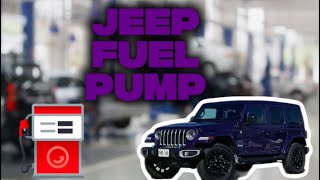
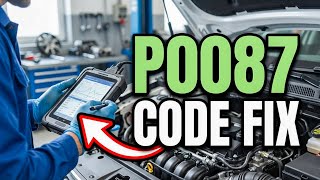
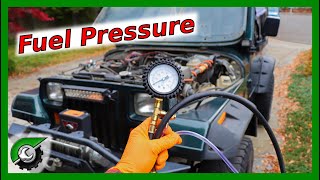

Used OEM Parts in Stock


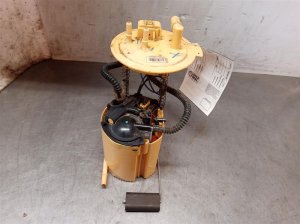
New Aftermarket Parts Available


The information in this article is provided for general reference and educational purposes only. Vehicle specifications, procedures, and part compatibility can vary by production date, trim level, and region. Always consult your vehicle's factory service manual and verify part numbers before purchasing or performing repairs. Safety-critical components such as airbags, seat belts, and braking systems should be installed by a qualified professional.
- Jeep WRANGLER:
- 🎬 Helpful Videos
- 🛍️ Shop This Part
- What's Unique About the 2020-2020 Jeep WRANGLER
- Diagnostic Flowchart
- Symptoms You May Notice
- Most Likely Causes
- Rare But Worth Checking
- Diagnosis Steps
- Parts You'll Likely Need
- Related Codes That Often Appear With This One
- Technical Service Bulletins (TSBs) & Recalls
- Platform-Specific Known Issues
- Mechanic-Grade Diagnostic Values
- Scan Tool Commands That Help
- Wiring & Ground Locations
- Real Owner Repair Stories
- When the Usual Fixes Don't Work
- OEM Part Supersession History
- Model Year Variations Within This Range
- 🎟️ Get 5% Off