

P0087 on 2019-2022 Honda Pilot: Fuel Rail Pressure Too Low Causes & Fixes
On a 2019-2022 Honda Pilot, code P0087 is most often caused by a failing in-tank low-pressure fuel pump, which was subject to a major recall. If the recall has been performed, the next most likely cause is a failing high-pressure fuel pump (HPFP).
- P0087 on a 2019-2022 Pilot is a critical code that should be addressed immediately due to the risk of the engine stalling while driving.
- The most probable cause, especially on 2019-2020 models, is a failed in-tank low-pressure fuel pump, which was part of a major safety recall.
- Before paying for any repairs, check if your vehicle's VIN is covered by the Honda fuel pump recall (NHTSA campaign 20V-314).
- Proper diagnosis requires checking both the low-pressure and high-pressure sides of the fuel system to avoid misdiagnosing a bad high-pressure pump when the in-tank pump is the real issue.
- Due to the safety risks and complexity, this is a repair best left to a professional technician.
What's Unique About the 2019-2022 Honda PILOT

The Pilot's 3.5L J35Y6 direct-injected engine has two fuel pumps: a low-pressure pump in the fuel tank and a high-pressure pump (HPFP) on the engine. This makes diagnosis more complex than on older port-injected systems. Significantly, Honda issued widespread recalls for the low-pressure fuel pump on 2019-2022 models due to a defective impeller that causes this exact code and can lead to engine stalling. Honda explicitly states in service bulletins that if a vehicle presents with P0087, the recall repair must be performed before any other troubleshooting, such as for the HPFP.
Diagnostic Flowchart

Tap your situation to follow the diagnostic path that matches what you're seeing on this vehicle.
Symptoms You May Notice
- Check Engine Light is on
- Engine stalls, potentially while driving at highway speeds
- Engine is hard to start, will not start, or starts and then stumbles
- Reduced engine power and sluggish acceleration
- Engine misfires or runs rough
- Loud growling or vibrating noise from the engine bay, potentially indicating a failing HPFP 🎬 Watch: Common symptoms of a failing fuel pump
- Replacing the high-pressure fuel pump (HPFP) when the recalled in-tank low-pressure pump is the actual cause. Service bulletins explicitly state to perform the recall first if the vehicle has P0087.
- Replacing fuel injectors when the root cause is a failing fuel pump starving them of pressure.
Most Likely Causes

- Failing In-Tank Low-Pressure Fuel Pump 🔴 High Probability A massive recall was issued for 2019-2022 Honda Pilots for defective low-pressure fuel pump impellers that swell and cause the pump to fail. This is a known manufacturing defect from the supplier, Denso.
How to confirm: First, check if your vehicle's VIN is part of Honda's fuel pump recalls (NHTSA Campaigns 20V314, 21V215, 23V858). A technician can test the low-side fuel pressure; if it's below specification (approx. 45-58 PSI), the pump is faulty. TSBs prioritize vehicles with active symptoms like P0087 for immediate repair.
Typical fix: Replace the in-tank fuel pump motor or the entire fuel pump assembly. This repair should be performed by a dealer for free if your vehicle is part of the recall.
Est. part cost: $0 (if under recall), $250-$600 (if not) - Failing High-Pressure Fuel Pump (HPFP) 🟡 Medium Probability The HPFP is a mechanically driven pump that is a common failure point on many direct injection engines. Debris from a failing HPFP can also cause issues with fuel injectors, a problem so common Honda extended the injector warranty. Failures have been reported by owners even after the low-pressure pump recall was performed.
How to confirm: If low-pressure fuel supply is confirmed to be good, a technician will use a scan tool to monitor the high-pressure fuel rail data. If the actual pressure cannot meet the desired pressure commanded by the ECM (e.g., actual is 500 PSI when desired is 2,000+ PSI under load), the HPFP is likely at fault. A loud ticking or grinding noise from the pump is also a common symptom.
Typical fix: Replace the high-pressure fuel pump located on the engine. The fuel feed pipe is typically a one-time use part and should also be replaced.
Est. part cost: $500-$750 - Faulty Fuel Rail Pressure Sensor ⚪ Low Probability
How to confirm: A technician can compare the sensor's readings on a scan tool with a manual pressure gauge. If the readings don't match, and the wiring is intact, the sensor has failed. A faulty sensor may also give erratic readings that jump up and down. A diagnostic procedure with the Honda HDS involves checking for a pressure reading of less than 1,000 kPa after relieving fuel pressure; if it doesn't drop, the sensor may be faulty. 🎬 See how to diagnose and fix a P0087 code
Typical fix: Replace the fuel rail pressure sensor.
Est. part cost: $50-$150
Rare But Worth Checking
- Clogged Fuel Filter: The fuel filter is integrated into the in-tank fuel pump module. It's usually replaced along with the pump, but a severely clogged filter from contaminated fuel could cause low pressure on its own.
- Kinked or Leaking Fuel Line: A physical restriction or leak in the fuel lines between the tank and the engine can cause a pressure drop. This is uncommon but should be checked with a visual inspection.
- Worn HPFP Camshaft Lobe/Follower: The HPFP is driven by a lobe on the camshaft. While not widely reported on this specific engine, on other GDI engines, wear on this lobe or the pump's follower can reduce pump stroke and cause low pressure. A TSB for other Honda models mentions checking the exhaust camshaft for damage if the HPFP is presumed to be failing.
Diagnosis Steps
- Check your VIN with a Honda dealer or on the NHTSA website to see if it's affected by the fuel pump recall (e.g., TSB A21-034, 24-010). If it is, and the recall hasn't been performed, this is the most likely cause and the repair is free.
- Connect an OBD-II scanner and check for any other stored trouble codes, paying close attention to misfire (P030x) or air-fuel balance (P219A/B) codes.
- Use a scan tool with live data capability to monitor 'Desired Fuel Rail Pressure' and 'Actual Fuel Rail Pressure'. Note the discrepancy under various engine loads.
- Perform a low-pressure fuel system test. Connect a fuel pressure gauge to the low-pressure line to verify the in-tank pump is delivering adequate pressure (typically 45-58 PSI) to the HPFP. Note that this requires a special adapter (07AAJ-S6MA150) on Honda V6 engines as there is no standard Schrader valve.
- If low-side pressure is below specification, the in-tank fuel pump, its filter, or the supply line is the problem.
- If low-side pressure is good, the problem lies with the high-pressure system. Listen for the HPFP spill valve operating at idle; a lack of noise may indicate a non-functioning HPFP.
- Visually inspect all fuel lines for leaks, kinks, or damage.
- If the HPFP is suspected, it should be removed and inspected. On J-series V6 engines, it is recommended to set cylinder #1 to Top Dead Center (TDC) before removal to ensure the pump's cam lobe is in the correct position, making removal and installation easier. 🎬 Watch: Step-by-step 2019 Pilot high pressure fuel pump replacement
Parts You'll Likely Need
- In-Tank Fuel Pump Motor Kit
(OEM #06170-TZ5-305)— This is the part replaced under the widespread recall for 2019+ models due to a defective impeller causing P0087 and engine stalling.
Trusted brands: Honda (Genuine)
OEM price range: $70-$150 (Kit only)
Aftermarket price range: N/A - High Pressure Fuel Pump
(OEM #16790-5J6-A01 (may be superseded by 16790-5J6-305))— This is the second most common cause after the low-pressure pump. It is responsible for generating the high pressure required for direct injection.
Trusted brands: Honda (Genuine), Bosch
OEM price range: $550-$750
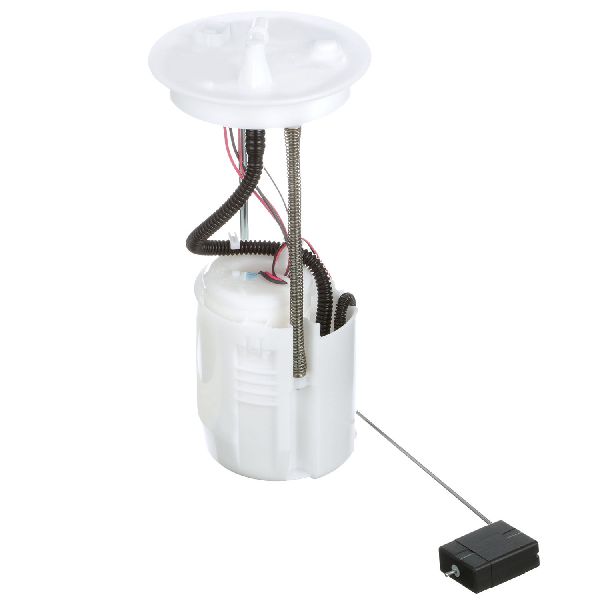
Aftermarket price range: $150-$450 - In-Tank Fuel Pump Assembly — If the vehicle is not under recall, or if other components of the module like the sending unit fail, the entire assembly is often replaced.
Trusted brands: Delphi, Denso
OEM price range: $450-$600
Aftermarket price range: $100-$250
Related Codes That Often Appear With This One
- P0300-P0306 — Misfire codes can occur when low fuel pressure prevents proper fuel atomization, leading to incomplete combustion in one or more cylinders. This is also a symptom of the related fuel injector issue covered under warranty extension TSB 21-010.
- P219A / P219B — These codes indicate an air-fuel ratio imbalance between cylinders, which can be caused by inconsistent fuel delivery from a failing pump or clogged injectors. TSB 21-010 directly links these codes to the fuel injector problem stemming from HPFP debris.
Technical Service Bulletins (TSBs) & Recalls

- A21-034 / 24-010: Safety Recall: 2019-2021 Pilot Fuel Pump Motor - Details the primary cause of P0087 on these vehicles, which is a swelling fuel pump impeller leading to pump seizure, stalling, and a no-start condition. It explicitly states to perform this repair before other troubleshooting if P0087 is present.
- 21-010: Warranty Extension: MIL Comes On With DTC P0420/P0430, P030x, And/or P219A/B - Discusses how debris from the high-pressure pump can clog fuel injectors, a related issue in the same fuel system. Extends warranty coverage for injectors to 10 years/150,000 miles.
Platform-Specific Known Issues
- Safety Recall for Low-Pressure Fuel Pump: American Honda recalled a massive number of vehicles, including the 2019-2022 Pilot, for a low-pressure fuel pump that could fail due to a defective, swelling impeller. This failure directly causes code P0087 and can result in an engine stall while driving. The recall has been expanded multiple times (e.g., NHTSA 23V858000).
- Warranty Extension for Fuel Injectors: Honda extended the warranty on fuel injectors for 2017-2019 Pilot models to 10 years/150,000 miles under TSB 21-010. This was because debris from the high-pressure pump's manufacturing process could clog the injectors, leading to misfires (P030x) and air-fuel ratio codes (P219A/B) that can appear alongside P0087.
Mechanic-Grade Diagnostic Values
- Low-Pressure Fuel System Pressure (In-tank pump) — expected: 45-58 psi (3.1-4.0 bar) at KOEO and idle.. Failure: Pressure below this range indicates a failing low-pressure pump or clogged filter.
- High-Pressure Fuel System Pressure (HPFP) — expected: 500-600 PSI at idle, increasing to 2,000-3,000+ PSI under load.. Failure: Actual pressure on a scan tool fails to meet the desired pressure commanded by the ECM, especially under acceleration.
- High-Pressure System (Depressurized) — expected: Less than 1,000 kPa (145 PSI) after using HDS to relieve pressure.. Failure: If pressure does not drop to this level after a stall or after using the HDS service function, it may indicate a faulty fuel rail pressure sensor.
- Fuel Rail Pressure Sensor Reference Voltage — expected: Approximately 5.0 volts between pins 2 and 3 of the sensor connector (with connector disconnected, ignition ON).. Failure: If voltage is incorrect, it suggests an issue with the wiring or the PCM.
Hidden / Shadow Codes Worth Checking
- On-Board Snapshot / Freeze Frame Data: While not a hidden code, Honda's TSBs emphasize using the Honda Diagnostic System (HDS) to record all onboard snapshots and freeze frame data when P0087 occurs. This data provides critical context about engine parameters at the moment the fault was detected and is essential for diagnosis. (see via Honda Diagnostic System (HDS) or equivalent professional scan tool.)
Scan Tool Commands That Help
- Honda Diagnostic System (i-HDS): FUEL PUMP OFF — This command in the PGM-FI Inspection Menu is used to safely relieve fuel pressure before servicing fuel system components. The technician runs the engine until it stalls, ensuring the lines are depressurized.
- Honda Diagnostic System (i-HDS): Live Data Monitoring (Actual vs. Desired Fuel Pressure) — This is the primary method for diagnosing a faulty High-Pressure Fuel Pump (HPFP). By commanding high pressure (e.g., holding RPM at 3,000 and putting the transmission in D with brakes applied), a technician can see if the actual pressure can keep up with the desired pressure. A significant lag or inability to meet the target points to a weak HPFP.
Wiring & Ground Locations
- Low-Pressure Fuel Pump Power Wire — It is a purple wire that runs to terminal #36 in a connector that plugs into the back of the under-hood Auxiliary Fuse Box.. This is the main power feed for the in-tank low-pressure fuel pump. A technician can test for voltage at this wire to confirm the pump is receiving power from the PGM-FI relay, helping to isolate a wiring issue from a failed pump motor.
- Fuel Rail Pressure Sensor Connector — On the fuel rail. The 3-pin connector has specific wire functions for power, ground, and signal.. Incorrect voltage or lack of continuity on these pins can cause a false P0087 code. For example, a bad ground (Signal Return) can cause a high voltage reading, which is a different code (P0193), but wiring damage could also cause a low reading. Pin 1 is the signal wire, Pin 2 is ground, and Pin 3 is 5V reference.
- G502 — A common ground point for the fuel system.. Service procedures for older models mention checking for continuity between the fuel pump ground wire and G502. A poor ground connection can cause the fuel pump to operate inefficiently or not at all, leading to low fuel pressure.
Real Owner Repair Stories
- Reddit user on r/hondapilot (2020 Honda Pilot) — Check engine light with code P0087 (low fuel rail pressure), along with a cascade of other warning lights for emissions, ABS, TCS, power steering, and hill start assist.
❌ Tried (didn't work) User was considering replacing the fuel filter first.
✅ What actually fixed it A responding user, identifying as a technician, stated the issue was most likely the high-pressure fuel pump or injectors and would require dealer diagnosis. The cascade of warning lights is normal, as the car disables driver support systems when a critical powertrain fault like P0087 is detected. The repair would be covered under the powertrain warranty. - Reddit user on r/hondapilot (2019 Honda Pilot) — Car suddenly failed/stalled.
✅ What actually fixed it The dealer confirmed the failure was due to the recalled low-pressure fuel pump. The recall service was performed, which resolved the issue. This story highlights the real-world failure pattern described in the recall.
OEM Part Supersession History
16790-5J6-A01→16790-5J6-305 or 06161-5J6-305— Part revision or change in packaging/kit contents.
Heads up: 16790-5J6-A01 is listed as being replaced by 16790-5J6-305. Multiple aftermarket and OEM parts sites confirm this supersession. Technicians should always use the latest part number specified by the dealer's catalog using the vehicle's VIN.
Model Year Variations Within This Range
- 2019-2022: There are no significant documented changes to the J35Y6 engine's direct injection fuel system, including the low and high-pressure pumps and sensors, within this model year range. The primary cause (recalled LPFP) and secondary cause (HPFP failure) apply across all years in this range.
Helpful Videos
Used OEM Parts in Stock


New Aftermarket Parts Available


The information in this article is provided for general reference and educational purposes only. Vehicle specifications, procedures, and part compatibility can vary by production date, trim level, and region. Always consult your vehicle's factory service manual and verify part numbers before purchasing or performing repairs. Safety-critical components such as airbags, seat belts, and braking systems should be installed by a qualified professional.
- Honda PILOT:
- 🎬 Helpful Videos
- 🛍️ Shop This Part
- What's Unique About the 2019-2022 Honda PILOT
- Diagnostic Flowchart
- Symptoms You May Notice
- Most Likely Causes
- Rare But Worth Checking
- Diagnosis Steps
- Parts You'll Likely Need
- Related Codes That Often Appear With This One
- Technical Service Bulletins (TSBs) & Recalls
- Platform-Specific Known Issues
- Mechanic-Grade Diagnostic Values
- Hidden / Shadow Codes Worth Checking
- Scan Tool Commands That Help
- Wiring & Ground Locations
- Real Owner Repair Stories
- OEM Part Supersession History
- Model Year Variations Within This Range
- 🎟️ Get 5% Off