

P0087 on 2018-2022 Honda CR-V 1.5T: Fuel Rail Pressure Too Low Causes and Fixes
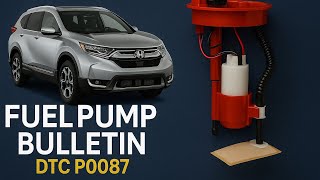
Code P0087 on a 2018-2022 Honda CR-V with the 1.5L Turbo engine is most often caused by a failing in-tank low-pressure fuel pump, a known issue covered by Honda recalls (NHTSA #21V-215, #23V-858) and TSBs. The pump's impeller can swell and seize, cutting fuel flow. It can also be caused by a subsequent failure of the high-pressure fuel pump (HPFP). Due to the recalls, the in-tank pump is the most likely culprit and should be checked and replaced by a dealer first.
- P0087 on a 2018-2022 CR-V is a serious code that can cause stalling and should be addressed immediately.
- The most probable cause is a faulty in-tank fuel pump, which is subject to a safety recall. Check your VIN with Honda or on the NHTSA website.
- If the in-tank pump is not the cause, the next most likely component to fail is the engine-mounted high-pressure fuel pump.
- Do not drive the vehicle, as the risk of the engine stalling in traffic is high.
What's Unique About the 2018-2022 Honda CR-V

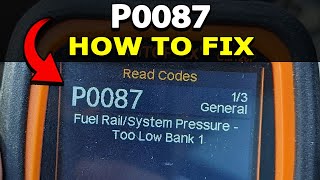
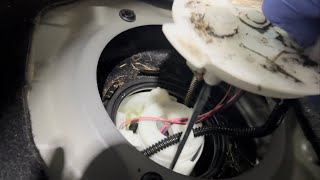
The 1.5L Turbo engine in this generation of CR-V is part of a massive, multi-year recall campaign involving millions of Honda and Acura vehicles. The issue stems from low-pressure fuel pumps, manufactured by Denso, which contain a low-density impeller. Over time, this impeller can absorb excess fuel, causing it to swell, deform, and interfere with the pump housing. This leads to the pump seizing and becoming inoperative, which directly triggers a P0087 code. This widespread, documented defect makes the in-tank fuel pump the primary suspect for P0087 🎬 Watch: Why the fuel pump recall causes stalling and P0087 codes., far more so than on other vehicles where a high-pressure pump or sensor might be the first guess.
Diagnostic Flowchart

Tap your situation to follow the diagnostic path that matches what you're seeing on this vehicle.
Symptoms You May Notice

- Check Engine Light is on
- Engine is hard to start or cranks but won't start.
- Engine stalls, sometimes while driving at highway speeds.
- Reduced engine power and poor, sluggish acceleration.
- Engine sputtering or hesitating, especially under load.
- Rough idling.
- Dashboard lights up with multiple warnings ('Christmas tree') and car enters 'limp mode'.
- Whining or humming noise from the fuel tank area.
- Replacing the high-pressure fuel pump when the actual fault is the recalled in-tank low-pressure pump. TSBs specifically instruct dealers to perform the recall first before attempting other repairs for P0087.
- Assuming the recall fix for the low-pressure pump will solve the problem, when the high-pressure pump has also failed. Several owners report needing both pumps replaced.
- Replacing fuel injectors when the issue is insufficient pressure supplying them.
Most Likely Causes

- Failing In-Tank (Low-Pressure) Fuel Pump 🔴 High Probability Honda issued multiple recalls (NHTSA #21V-215, #23V-858) for 2018-2020 CR-V models because the Denso fuel pump impeller was improperly molded, allowing it to swell and cause the pump to seize. This is a well-documented, widespread problem affecting over 2.5 million Honda vehicles.
How to confirm: Check your VIN for open recalls on the NHTSA website or with a Honda dealer. A technician will also perform a fuel pressure test on the low-pressure side. If the pressure is below specification, the pump is faulty. The recall repair is the definitive confirmation and fix.
Typical fix: Replace the in-tank fuel pump module. If the vehicle is under recall, this repair must be performed by a Honda dealer free of charge. Owners who previously paid for this repair may be eligible for reimbursement.
Est. part cost: $99-$250 - Failing High-Pressure Fuel Pump (HPFP) 🟡 Medium Probability The HPFP is a mechanical pump driven by the camshaft. Several owner reports indicate that even after the low-pressure pump is replaced under recall, the P0087 code persists and is traced to a failed HPFP. It's possible that running with low supply pressure from a failing in-tank pump puts extra strain on the HPFP, leading to its eventual failure.
How to confirm: Diagnosis requires a scan tool capable of reading high-pressure fuel rail data. A technician will compare the desired fuel pressure with the actual pressure. If the low-pressure side tests fine but the high-pressure side cannot meet demand, the HPFP is the likely culprit.
Typical fix: Replace the high-pressure fuel pump located on the engine. This is a more expensive repair and is not covered by the low-pressure pump recalls. Owners have reported dealer quotes ranging from $1700 to $3400 for this job.
Est. part cost: $460-$600 - Clogged Fuel Filter ⚪ Low Probability The fuel filter is integrated into the in-tank fuel pump module. While it can become clogged, it's far less common than outright pump failure on this platform. If the pump is being replaced under recall, the filter/strainer is replaced along with it as part of the assembly.
How to confirm: This is typically diagnosed by confirming low fuel pressure from the tank when the pump itself is known to be functional. It's almost always replaced as part of the fuel pump module service.
Typical fix: Replace the fuel pump module assembly, which includes the filter.
Est. part cost: $99-$250 - Faulty Fuel Rail Pressure Sensor ⚪ Low Probability While electronic sensors can fail, it's not a common failure point for P0087 on this platform compared to the fuel pumps. The sensor can send incorrect low-pressure readings to the computer, tricking it into setting the code.
How to confirm: A technician can compare the sensor's live data readings on a scan tool to a reading from a mechanical pressure gauge. If the readings don't match, the sensor is likely faulty.
Typical fix: Replace the fuel rail pressure sensor.
Est. part cost: $50-$100
Rare But Worth Checking
- Worn Camshaft Lobe: The high-pressure fuel pump is driven by a lobe on the camshaft. In rare cases, excessive wear on this lobe can prevent the pump from generating sufficient pressure. This is a more involved mechanical issue and would likely be investigated only after both pumps have been ruled out.
- Fuel Leak: A physical leak in either the low-pressure or high-pressure fuel lines can cause a drop in system pressure. This should be accompanied by a strong fuel smell and is a serious fire hazard that requires immediate attention.
Diagnosis Steps
- Check the vehicle's VIN for open recalls related to the fuel pump on the NHTSA website or by calling a Honda dealership. If a recall is active (e.g., 21V-215, 23V-858), have the dealer perform the repair free of charge. This should be the first step.
- Use a scan tool to confirm P0087 is the primary code and check for any other related codes like misfires or lean conditions.
- If no recall is active or the recall has been performed, connect a fuel pressure gauge to the low-pressure fuel line to test the in-tank pump's output pressure. Compare this to the manufacturer's specifications.
- If low-pressure is adequate, use an advanced scan tool to monitor the high-pressure fuel rail sensor data. Compare the 'Desired Fuel Pressure' to the 'Actual Fuel Pressure' while idling and under load. A significant lag or inability for the actual pressure to meet the desired pressure points to a failing HPFP.
- Inspect for any visible fuel leaks in the engine bay and under the vehicle. A fuel smell is a strong indicator.
- If the high-pressure pump is suspected, inspect the camshaft lobe that drives it for wear (requires some disassembly).
- Test the fuel rail pressure sensor by comparing its electronic reading to a mechanical gauge if sensor failure is suspected.
Parts You'll Likely Need
- In-Tank Fuel Pump Module Assembly
(OEM #17045-TLA-A02)— This is the most common failure point due to a widespread recall for defective impellers that cause the pump to seize.
Trusted brands: Honda (OEM)
OEM price range: $200-$300
Aftermarket price range: $99-$200 - Fuel Pump Motor Kit (Recall Part)
(OEM #06170-TLA-306)— This is the specific kit used by dealers to perform the recall repair, which replaces the motor within the fuel pump assembly.
Trusted brands: Honda (OEM)
OEM price range: N/A (Recall Item)
Aftermarket price range: N/A - High-Pressure Fuel Pump
(OEM #16790-5LA-A01)— This is the second most likely cause, often failing after or in conjunction with the low-pressure pump. It is a mechanical pump that can wear out over time.
Trusted brands: Honda (OEM), Bosch
OEM price range: $500-$730
Aftermarket price range: $350-$500
Related Codes That Often Appear With This One
- P0300-P0304 — Random or specific cylinder misfire codes can occur because low fuel pressure leads to a lean air/fuel mixture and incomplete combustion.
- P0171 — System Too Lean (Bank 1) can be triggered when the engine computer detects there is not enough fuel in the exhaust stream, a direct result of low fuel pressure.
- U0401-68 — Invalid Data Received From ECM/PCM. This code has been reported by owners in conjunction with P0087 when the fuel pressure issue causes erratic engine behavior and limp mode.
Technical Service Bulletins (TSBs) & Recalls

- A21-031: Safety Recall for the 2018-19 CR-V Fuel Pump Motor, which can seize due to a swelling impeller and cause a P0087 code. The TSB explicitly states to perform this repair before attempting other fixes like replacing the high-pressure pump.
- A21-036: A similar safety recall TSB for the 2019-20 Accord 1.5T, confirming the issue is shared across platforms with the same engine and fuel system.
- ATI&12132022903: Honda investigation into P0087 on 2020-2021 CR-Vs, noting symptoms like a hard start.
- ATI&01032023907: Honda investigation into P0087 on various models including 2020-2021 CR-Vs for loss of fuel pressure.
Platform-Specific Known Issues
- Safety Recall 21-031 (NHTSA #21V-215): Affects 2018-2019 CR-V models for a fuel pump motor that may seize due to a swelling impeller, causing the engine to stall and triggering DTC P0087.
- Safety Recall KGC/KGD (NHTSA #23V-858): A broader recall covering 2.5 million 2018-2020 Honda models for the same low-pressure fuel pump defect.
Mechanic-Grade Diagnostic Values
- Low-Pressure Fuel Pump (at fuel line) — expected: 48-55 psi (based on similar Honda systems, not specific to 1.5T). Failure: Pressure below this range indicates a failing in-tank pump or clogged filter.
- High-Pressure Fuel Pump (Live Data) — expected: ~500-600 PSI at idle; 2,000-3,000+ PSI under load/acceleration.. Failure: Actual pressure fails to meet desired pressure on scan tool, especially under load.
- Fuel Rail Pressure Sensor Voltage (KOEO) — expected: ~0.5V to 1.7V (Key On, Engine Off). Failure: Voltage significantly outside this range may indicate a faulty sensor or wiring issue.
- Fuel Rail Pressure Sensor Voltage (Engine Idling) — expected: ~1.3V - 1.8V. Failure: Readings that are erratic or do not correspond to engine state.
Hidden / Shadow Codes Worth Checking
- No specific shadow codes known: Honda does not typically use alphanumeric sub-codes like some other manufacturers. However, the Honda Diagnostic System (HDS) provides extensive freeze frame data and on-board snapshot information when a DTC like P0087 is set. This data shows the exact engine conditions (RPM, load, temp, etc.) at the moment of the fault, which is more valuable for diagnosis than a sub-code. (see via Honda Diagnostic System (HDS) or equivalent professional-grade scan tool with Honda-specific software.)
Scan Tool Commands That Help
- Honda HDS (or equivalent): Fuel Pump Active Test (Bi-directional Control) — To manually command the in-tank low-pressure fuel pump on and off to verify its electrical operation without starting the engine. This helps isolate a dead pump from a circuit problem.
- Honda HDS (or equivalent): Live Data Monitoring (Desired vs. Actual Fuel Pressure) — This is the primary method for diagnosing the high-pressure fuel pump. By graphing the PCM's requested pressure against the actual sensor reading, a technician can see if the HPFP is keeping up with demand under load.
- Honda i-HDS: VSA Sensor Neutral Position Memorization — This procedure is required after certain repairs, including those involving disconnecting the battery or PCM, to ensure the Vehicle Stability Assist system functions correctly.
- Honda HDS: Clear All DTCs — Required after the fuel pump replacement to clear the fault from the PCM's memory.
Wiring & Ground Locations
- Fuel Pump Connector — Atop the in-tank fuel pump module, typically accessed under the rear seats via an access panel.. This connector and its wiring are a potential point of failure. Check for corrosion, backed-out pins, or harness damage, which could mimic a failed pump.
- High-Pressure Fuel Pump Connector — On the high-pressure fuel pump, which is mounted to the engine and driven by the camshaft.. The wiring to the HPFP's control solenoid can be checked for continuity and proper voltage. Damage here could prevent the pump from building pressure correctly.
- Fuel Rail Pressure Sensor Connector — On the end of the high-pressure fuel rail in the engine bay.. A poor connection here can cause incorrect pressure readings, leading to a false P0087 code. Check for continuity on the power, ground, and signal wires back to the PCM.
Real Owner Repair Stories
- Reddit user, r/10thgenaccords (2020 Honda Accord (1.5T Engine, same fuel system as CR-V)) — P0087 code, car stopped running in the middle of the road.
❌ Tried (didn't work) The user had the low-pressure fuel pump recall performed one week prior to the failure.
✅ What actually fixed it The dealer towed the car back and replaced the low-pressure fuel pump *seal*. The user reported the car was 'okay for now' after this fix, indicating the initial recall service may have been performed incorrectly or the seal was faulty. - Reddit user, r/accord (2020 Honda Accord (1.5T Engine)) — P0087 code.
❌ Tried (didn't work) The user had the fuel pump recall performed in 2021.
✅ What actually fixed it The user states that for them, the problem was ultimately the fuel injectors, which the dealer identified and replaced. This highlights that low pressure can be a symptom of other downstream issues.
When the Usual Fixes Don't Work
- While the recalled low-pressure fuel pump is the most common cause, it is not the only one. Honda's own service bulletins explicitly state that if symptoms persist after the recall repair, further diagnosis is required. There are multiple owner accounts of the P0087 code returning after the recall was performed. In one documented case, the fix was a faulty fuel pump seal that was likely installed incorrectly during the recall service. In another case involving the same 1.5T engine, the final fix was replacing the fuel injectors, not either of the pumps. This indicates that either the initial low-pressure event damaged other components, or that other faults can independently cause the P0087 code. Technicians and owners should not assume the recall is a guaranteed fix for all instances of this code.
OEM Part Supersession History
17045-TLA-A00, 17045-TLA-A01→17045-TLA-A02— Revisions to the in-tank low-pressure fuel pump module assembly, likely related to addressing the swelling impeller defect.
Heads up: Older part numbers should not be used; 17045-TLA-A02 is the current replacement part.16790-5A2-A01→16790-5LA-305 (for some applications)— Revision to the high-pressure fuel pump.
Heads up: The most commonly cited HPFP for the 2018-2022 CR-V 1.5T is 16790-5LA-A01. Part number must be verified by VIN, as several similar pumps exist for different Honda models.
Model Year Variations Within This Range
- 2018-2019: On 2018-2019 CR-V models, the 1.5L Turbo engine was standard on EX, EX-L, and Touring trims. The base LX trim used a 2.4L non-turbo, direct-injection-free engine which is not subject to these specific P0087 fuel pump issues.
- 2020-2022: Beginning with the 2020 model year, the 1.5L Turbo engine became standard on all non-hybrid CR-V trims (LX, EX, EX-L, Touring), making this P0087 issue relevant to a wider range of vehicles in this year span.
Helpful Videos

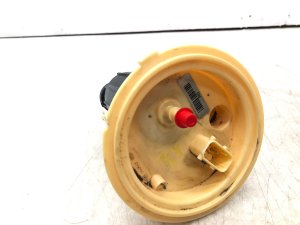
Used OEM Parts in Stock

New Aftermarket Parts Available


The information in this article is provided for general reference and educational purposes only. Vehicle specifications, procedures, and part compatibility can vary by production date, trim level, and region. Always consult your vehicle's factory service manual and verify part numbers before purchasing or performing repairs. Safety-critical components such as airbags, seat belts, and braking systems should be installed by a qualified professional.
- Honda CR-V:
- 🎬 Helpful Videos
- 🛍️ Shop This Part
- What's Unique About the 2018-2022 Honda CR-V
- Diagnostic Flowchart
- Symptoms You May Notice
- Most Likely Causes
- Rare But Worth Checking
- Diagnosis Steps
- Parts You'll Likely Need
- Related Codes That Often Appear With This One
- Technical Service Bulletins (TSBs) & Recalls
- Platform-Specific Known Issues
- Mechanic-Grade Diagnostic Values
- Hidden / Shadow Codes Worth Checking
- Scan Tool Commands That Help
- Wiring & Ground Locations
- Real Owner Repair Stories
- When the Usual Fixes Don't Work
- OEM Part Supersession History
- Model Year Variations Within This Range
- 🎟️ Get 5% Off