

P0087 on 2018-2021 Ford Mustang: Causes for Low Fuel Rail Pressure
For a 2018-2021 Ford Mustang, code P0087 often points to a failing high-pressure fuel pump (HPFP) or an issue with the low-pressure fuel pump in the tank. If the car was recently repaired, an incorrectly installed fuel jumper line is a very common cause per a Ford TSB. On EcoBoost models, a failing fuel rail pressure sensor is also a frequent culprit.
- P0087 on a 2018-2021 Mustang is a critical code indicating dangerously low fuel pressure that can cause stalling.
- If the vehicle was recently repaired, the first thing to check is the orientation of the fuel jumper line on 5.0L models, as per TSB SSM 50089.
- Diagnosis involves testing both the low-pressure (in-tank) and high-pressure (engine-mounted) fuel pumps to pinpoint the failure.
- Do not drive the vehicle until this issue is resolved due to the high risk of the engine shutting off while driving.
- Commonly replaced parts include the high-pressure fuel pump (HPFP) and the low-pressure in-tank pump assembly.
What's Unique About the 2018-2021 Ford MUSTANG

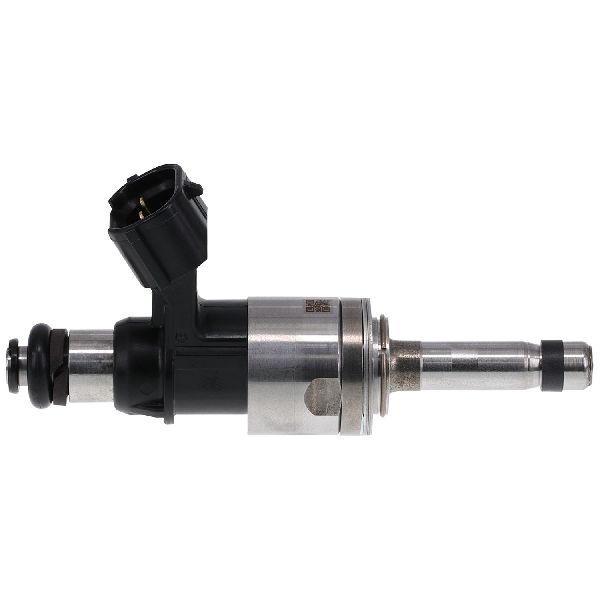
The 2018-2021 Mustang, particularly the 5.0L V8, uses a sophisticated Port and Direct Fuel Injection (PFDI) system. This means it has both a low-pressure fuel system feeding port injectors and a high-pressure system, driven by a mechanical pump, feeding direct injectors. This complexity adds more potential failure points compared to a port-injection-only system. A crucial issue, highlighted by Ford's Technical Service Bulletin (TSB) SSM 50089, is that a specific fuel jumper line, if installed backward after a repair, will cause this code. This TSB applies to the 5.0L V8 and other Ford engines, making it a critical first check after any engine service.
🎬 Watch: How to check for the common fuel jumper line error.Diagnostic Flowchart
Tap your situation to follow the diagnostic path that matches what you're seeing on this vehicle.
Symptoms You May Notice
- Sudden loss of engine power, especially under acceleration
- Engine stalling, sometimes without warning
- Vehicle enters 'limp mode' with reduced power
- Engine cranks but will not start, or has a long crank time
- Rough idle or engine hesitation and stumbling
- Check Engine Light is on
- Poor acceleration, car feels like it "falls on its face"
- Engine sputtering at high speeds
- Bucking or jerking when pressing the gas
- Replacing the high-pressure fuel pump (HPFP) when the actual cause is the in-tank low-pressure pump failing to supply it.
- Replacing fuel pumps when the issue is an incorrectly installed fuel line after a previous repair, as noted in TSB SSM 50089.
- On EcoBoost models, replacing the HPFP when the much cheaper and easier to replace fuel rail pressure sensor is the actual culprit.
Most Likely Causes

- Incorrectly Installed Fuel Jumper Line 🔴 High Probability This is a known issue documented by Ford in TSB SSM 50089 for 5.0L engines after repairs that required removing the fuel line between the HPFP and port injection rail (e.g., intake manifold removal, injector work). The line has a one-way check valve and is easily installed backward.
How to confirm: Visually inspect the fuel jumper line. The Oetiker clamp (a stainless steel band) on the line should be positioned closest to the port injection rail. If it's closest to the HPFP, the line is backward.
Typical fix: Correctly orient and reinstall the fuel jumper line.
Est. part cost: $0 (if the original line is reused) - Failing High-Pressure Fuel Pump (HPFP) 🟡 Medium Probability The HPFP is a mechanical pump driven by a lobe on the camshaft. It is a known wear item on direct injection engines. Internal wear or failure of the plunger can lead to insufficient pressure.
How to confirm: Use a diagnostic scan tool to monitor desired versus actual fuel rail pressure under load. If actual pressure cannot keep up with desired pressure, 🎬 Watch: Expert advice on diagnosing a P0087 low pressure code. and the low-pressure system is confirmed to be working, the HPFP is a likely culprit. In some cases, the camshaft lobe or the pump's follower can wear down, which requires visual inspection.
Typical fix: Replace the high-pressure fuel pump. It is critical to also inspect the camshaft follower and lobe for wear, as a damaged lobe will destroy a new pump.
Est. part cost: $300-$600 - Failing Low-Pressure Fuel Pump or Fuel Pump Driver Module (FPDM) 🟡 Medium Probability The in-tank low-pressure pump supplies the HPFP. If it weakens, fails, or the FPDM malfunctions, it cannot provide enough volume for the HPFP to build high pressure, especially under demand. This can also be triggered by fuel starvation during high-G cornering on a track with less than a half tank of fuel.
How to confirm: Test the low-pressure fuel system pressure. This can be done with a scan tool monitoring the low-pressure sensor PID or with a mechanical gauge. Pressure should meet specifications (typically 50-70 PSI). If pressure drops under load, the low-pressure pump is suspect. Also check for related TSBs like SSM 50661, which points to FPDM connector issues.
Typical fix: Replace the in-tank fuel pump assembly and/or the fuel pump driver module.
Est. part cost: $250-$500 - Faulty Fuel Rail Pressure Sensor 🟡 Medium Probability Sensors can fail and send inaccurate low-pressure readings to the PCM, triggering the code even if the pressure is normal. This is a particularly common issue on EcoBoost models. There are separate sensors for the low-pressure and high-pressure systems.
How to confirm: Compare the sensor's reading on a scan tool to a reading from a mechanical pressure gauge connected to the fuel rail. A significant discrepancy points to a bad sensor. For the low-pressure sensor on EcoBoost models, a known diagnostic step is to unplug it; if the car runs better, the sensor is likely faulty.
Typical fix: Replace the faulty fuel rail pressure sensor (either high-pressure or low-pressure).
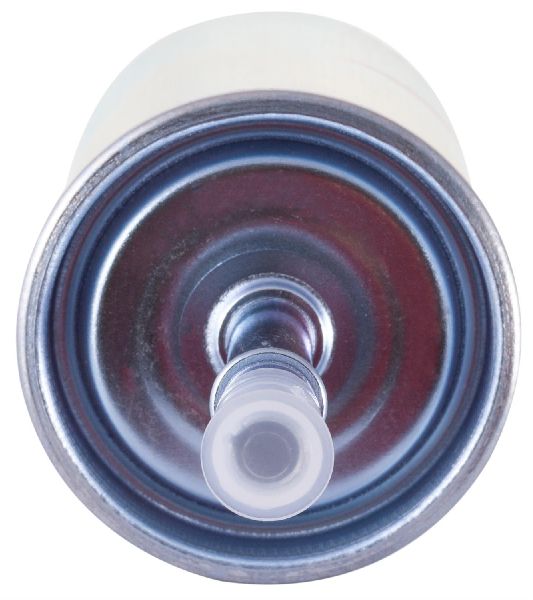
Est. part cost: $50-$150 - Clogged Fuel Filter ⚪ Low Probability On the S550 Mustang, the primary fuel filter is integrated into the in-tank fuel pump assembly and is considered non-serviceable for its lifetime. While contamination can clog it, it's less common than the pump itself failing.
How to confirm: A low-pressure fuel test that shows pressure dropping significantly under load can indicate a restriction like a clogged filter. Often diagnosed after ruling out the pump and FPDM.
Typical fix: Replace the entire fuel pump and filter assembly.
Est. part cost: $250-$500
Rare But Worth Checking
- Worn Camshaft Lobe or HPFP Follower: In high-mileage vehicles or those with poor maintenance, the camshaft lobe that drives the high-pressure fuel pump can wear down, preventing the pump from actuating fully. This was observed in a Ford Escape with a similar EcoBoost engine. This is a major engine repair requiring camshaft replacement.
- Fuel Contamination / Debris: If a high-pressure fuel pump fails internally, it can send metal shavings ('swarf') throughout the entire fuel system, including the tank, lines, and injectors. This can cause a repeat failure of a new pump if the system is not thoroughly flushed. In a forum post, a user found significant dirt and grass in the fuel pump housing of a used Mustang.
Diagnosis Steps
- Check for any recent engine or fuel system repairs. If so, immediately inspect the fuel jumper line orientation per TSB SSM 50089 (5.0L V8). The Oetiker clamp must be on the port injection rail side.
- Connect an OBD-II scanner and check for other fuel-related codes like P008A, P00C6, or P0190 to help isolate the issue to the low-pressure or high-pressure side.
- Use the scanner's live data function to monitor 'Desired Fuel Rail Pressure' and 'Actual Fuel Rail Pressure'. Also monitor 'Low-Side Fuel Pressure'.
- Perform a key-on, engine-off test to check the low-pressure fuel system. You should hear the in-tank pump prime. Watch the low-side pressure PID; it should rise to spec (typically 50-70 PSI) and hold.
- Start the engine (if possible). At idle and under light load (snap throttle), observe the live data. If actual high pressure consistently lags far behind desired pressure, proceed.
- If low-side pressure is weak or drops significantly under load, the problem is likely the in-tank fuel pump, its driver module (FPDM), or a clogged filter. Check FPDM wiring and grounds per TSB SSM 50661.
- If low-side pressure is strong and stable, the issue is likely on the high-pressure side. Suspect the high-pressure fuel pump (HPFP) or its drive mechanism (cam follower/lobe).
- If scan tool pressure readings are erratic, zero, or don't match a mechanical gauge, test the fuel rail pressure sensor and its wiring. On EcoBoosts, replacing the low-pressure fuel sensor is a common fix.
Parts You'll Likely Need

- High-Pressure Fuel Pump
(OEM #JR3Z-9350-C)— This is a common failure point for P0087 when the low-pressure system is confirmed to be healthy. It is responsible for generating the high pressure needed for direct injection.
Trusted brands: Motorcraft, Bosch
OEM price range: $400-$600
Aftermarket price range: $250-$450 - Low-Pressure Fuel Pump Assembly (In-tank)
(OEM #FR3Z-9275-A)— This pump feeds the HPFP. If it fails, the entire system is starved of fuel, causing P0087 and often P008A. Failure can be caused by wear or fuel starvation on track.
Trusted brands: Motorcraft, Delphi, DeatschWerks
OEM price range: $350-$500
Aftermarket price range: $200-$350 - Fuel Rail Pressure Sensor (Low Pressure, EcoBoost)
(OEM #BU5Z-9F972-B)— A very common failure point on EcoBoost models that can cause P0087 and various drivability issues like hesitation and stalling. It's an inexpensive and easy part to replace.
Trusted brands: Motorcraft, Bosch
OEM price range: $50-$80
Aftermarket price range: $30-$60 - Fuel Rail Pressure Sensor (High Pressure)
(OEM #FR3Z-9F972-A)— Though less common than the low-pressure sensor on the EcoBoost, a faulty high-pressure sensor can send incorrect low-pressure signals to the computer, causing a misdiagnosis.
Trusted brands: Motorcraft, Bosch
OEM price range: $60-$100
Aftermarket price range: $40-$70
Related Codes That Often Appear With This One
- P008A — This code means 'Low Pressure Fuel System Pressure - Too Low.' It often appears with P0087 because a problem with the in-tank pump (low-pressure side) is preventing the high-pressure pump from getting enough fuel.
- P00C6 — This code means 'Fuel Rail Pressure Too Low - Engine Cranking.' It indicates the system can't even build enough pressure to start the engine, a severe version of the condition that causes P0087. This is often seen with a failed low-pressure pump or FPDM.
- P0190 — This code indicates a 'Fuel Rail Pressure Sensor Circuit Malfunction.' It can appear alongside P0087 if the sensor is failing or providing erratic readings that the PCM detects as a circuit fault.
- P0627 — This code means 'Fuel Pump "A" Control Circuit/Open'. It points to an electrical issue with the low-pressure fuel pump circuit and is sometimes seen with P0087 when the FPDM or its wiring is the cause, as noted by a GT350 owner.
Technical Service Bulletins (TSBs) & Recalls
- SSM 50089: Addresses stalling/low power and codes P0087/P008A after a repair on 3.3L, 3.5L, and 5.0L engines due to a backward fuel jumper line.
- SSM 48807: An earlier TSB related to the same backward fuel jumper line issue on 2017-2020 F-150s and other models with similar engines.
- SSM 50661: Pertains to various fuel codes including P008A and P00C6 caused by intermittent connection issues at the Fuel Pump Control Module (FPCM).
Platform-Specific Known Issues
- The backward fuel jumper line (TSB SSM 50089) is a very prominent issue for this engine due to the dual-injection system's complexity. Any repair that involves removing the intake manifold should be followed by a careful check of this line's orientation.
- On the EcoBoost platform, the low-pressure fuel sensor (Part No. BU5Z-9F972-B) is a frequent failure point that can cause P0087 along with hesitation and stalling. It's often recommended as a preventative replacement.
- Track use with less than a full tank of fuel can cause fuel starvation in high-G corners, leading to overheating and failure of the in-tank low-pressure fuel pump.
Mechanic-Grade Diagnostic Values

- Low-Pressure Fuel System (at idle) — expected: Approx. 70-80 PSI. Failure: Pressure is significantly below spec or drops under load. A reading of 79 PSI actual vs. 80 PSI desired on a scan tool is a healthy sign.
- High-Pressure Fuel System (at idle) — expected: Varies, but should closely track desired pressure. OEM systems can reach 2900 PSI (200 bar) under load.. Failure: Actual pressure is far below desired pressure. One example showed a failing system with 81 PSI actual vs. 416 PSI desired at idle.
- Fuel Pump Driver Module (FPDM) Duty Cycle — expected: The output duty cycle sent to the pump should be double the input command from the PCM (e.g., 30% command = 60% output).. Failure: Output does not follow the doubled input command, indicating a faulty FPDM.
Hidden / Shadow Codes Worth Checking
- P0087:00-64: The suffix :00-64 is a Failure Type Code (FTC). The '-64' indicates a 'Signal Plausibility Failure,' meaning the PCM has determined the fuel pressure reading is theoretically possible but not logical when compared to other sensor data like engine speed and load. This points towards a sensor or component providing incorrect data, rather than a complete circuit failure. (see via A professional-grade OBD-II scanner, such as the Ford IDS, is required to view these detailed sub-codes.)
Scan Tool Commands That Help
- Ford IDS (or equivalent professional scanner): Fuel Pump Driver Circuit Bidirectional Test — This command actively tests the FPDM and its circuit. If the low-pressure side is suspected but the pump and wiring seem okay, running this test can confirm if the FPDM itself is failing to respond to PCM commands. A 'failed' response strongly suggests a faulty module.
Wiring & Ground Locations
- Fuel Pump Driver Module (FPDM) — Located in the trunk on the driver's side, mounted behind the carpet liner above the wheel well.. The FPDM controls the voltage and speed of the in-tank low-pressure fuel pump. A failure of the module or its wiring/connector directly causes low fuel supply to the high-pressure pump, triggering P0087.
- FPDM Trigger Wire (for aftermarket controllers) — The Yellow wire with a Gray stripe (YE-GY) located at the fuel pump's own connector harness, not the FPDM connector.. When installing aftermarket fuel systems or controllers, tapping this specific wire is critical for the correct key-on priming function. Tapping the wrong wire can lead to a no-prime condition or cause the pumps to run constantly, which can be misdiagnosed as a pump failure.
Real Owner Repair Stories
- Mustang6G.com Forum User (2018 Mustang GT) — After installing an aftermarket Fore fuel system, the fuel pumps would not prime with key-on, preventing the car from starting.
❌ Tried (didn't work) Tapping the Yellow/Gray wire at the FPDM plug., Tapping the Purple/Green wire at the FPDM plug (this caused pumps to run constantly).
✅ What actually fixed it The correct trigger wire was the Yellow/Gray wire, but it had to be tapped into at the OEM fuel pump connector side of the harness, not the FPDM plug side. This provided the correct priming signal. - YouTube video by 'HOW TO ESCAPE' (2013 Ford Escape 1.6L EcoBoost (engine family relevant to Mustang EcoBoost)) — P0087, engine stalling when warm at idle, hesitation, bucking, and weak acceleration.
❌ Tried (didn't work) Replacing the high-pressure fuel sensor.
✅ What actually fixed it Replacing the low-pressure fuel sensor located on the fuel line at the back of the engine. The part number used was Motorcraft BU5Z-9F972-B.
"I Checked Everything" — The Actual Cause
- The most common scenario for this code where standard tests fail is the backward installation of the fuel jumper line on 5.0L engines, as detailed in TSB SSM 50089. A pressure test would simply show low pressure and a smoke test would show no leaks, but the root cause is a mechanical blockage from a one-way check valve facing the wrong direction, not a leak or a failed electronic component.
OEM Part Supersession History
OEM Denso HPFP→XDI HPFP-45 (XDI-B015-50)— Performance Upgrade
Heads up: This is an aftermarket upgrade, not an OEM supersession. It is for modified vehicles requiring more fuel flow (up to 45% more) and supports higher pressure (up to 3625 PSI vs 2900 PSI stock). Requires ECU tuning.Unknown→Motorcraft BU5Z-9F972-B— Replacement Part
Heads up: This is the part number for the low-pressure fuel sensor that is a common fix for P0087 on Ford EcoBoost engines.
Model Year Variations Within This Range
- 2018-2021: The 2018 model year introduced the Gen 3 Coyote 5.0L V8, which features a Port and Direct Fuel Injection (PFDI) system. This dual system is not present on 2015-2017 models. The presence of the high-pressure direct injection system and its specific plumbing is what makes TSB SSM 50089 (backward fuel jumper line) relevant to this vehicle range.
Helpful Videos

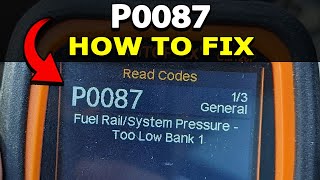

Used OEM Parts in Stock


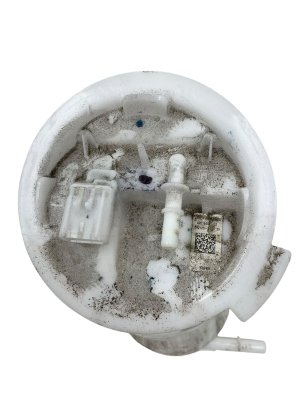
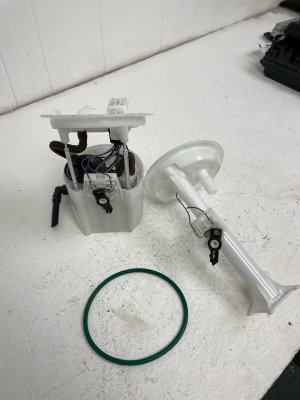
New Aftermarket Parts Available

The information in this article is provided for general reference and educational purposes only. Vehicle specifications, procedures, and part compatibility can vary by production date, trim level, and region. Always consult your vehicle's factory service manual and verify part numbers before purchasing or performing repairs. Safety-critical components such as airbags, seat belts, and braking systems should be installed by a qualified professional.
- Ford MUSTANG:
- 🎬 Helpful Videos
- 🛍️ Shop This Part
- What's Unique About the 2018-2021 Ford MUSTANG
- Diagnostic Flowchart
- Symptoms You May Notice
- Most Likely Causes
- Rare But Worth Checking
- Diagnosis Steps
- Parts You'll Likely Need
- Related Codes That Often Appear With This One
- Technical Service Bulletins (TSBs) & Recalls
- Platform-Specific Known Issues
- Mechanic-Grade Diagnostic Values
- Hidden / Shadow Codes Worth Checking
- Scan Tool Commands That Help
- Wiring & Ground Locations
- Real Owner Repair Stories
- "I Checked Everything" — The Actual Cause
- OEM Part Supersession History
- Model Year Variations Within This Range
- 🎟️ Get 5% Off