

P0087 on 2016-2018 Ford Focus RS: Low Fuel Rail Pressure Causes and Fixes
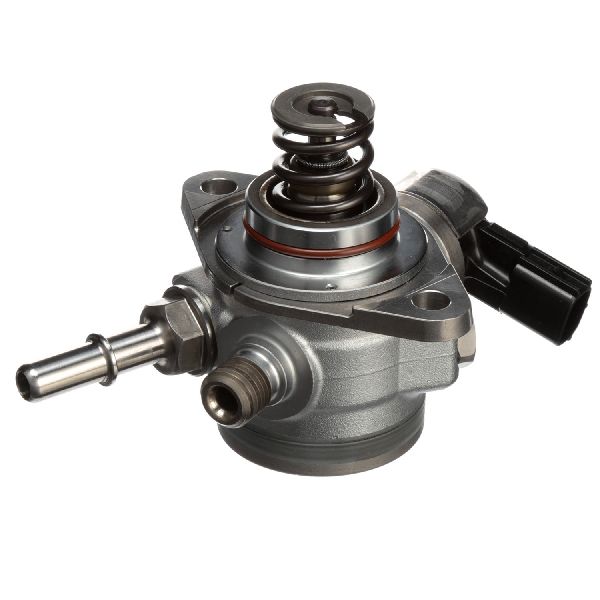
On a 2016-2018 Focus RS, code P0087 is most often caused by a failing High-Pressure Fuel Pump (HPFP). Symptoms include sudden power loss under acceleration. The most common fix is replacing the HPFP, but starting with the cheaper Fuel Rail Pressure Sensor is a wise diagnostic step. In some cases, this issue has been traced back to a worn camshaft lobe that drives the HPFP.
- P0087 on a Focus RS almost always points to a problem with the high-pressure fuel system.
- The most likely symptom is a sudden, severe loss of power under acceleration.
- Diagnosing with a scan tool to compare 'Desired' vs 'Actual' fuel pressure is the most effective confirmation method.
- The High-Pressure Fuel Pump (HPFP) is the most common failure part, but the Fuel Rail Pressure (FRP) sensor is a cheaper part to try replacing first.
- Always inspect and consider replacing the HPFP's cam follower (tappet) during the repair.
What's Unique About the 2016-2018 Ford Focus RS
The Focus RS's high-performance 2.3L EcoBoost engine places extreme demands on its direct injection fuel system. This system uses both a low-pressure pump in the tank and a high-pressure fuel pump (HPFP) driven by the camshaft. Code P0087 on this platform almost always points to a problem on the high-pressure side. The HPFP is a known failure point, often struggling to meet the fuel demand required during aggressive acceleration, leading to the characteristic symptoms of this code. In some documented cases on similar EcoBoost engines, the camshaft lobe that drives the pump can wear down, leading to insufficient pump actuation and low pressure. For instance, an owner report in NHTSA ODI #11360172 noted that the high-pressure pump can grind into the top of the camshaft, causing fuel rail failure and P0087.
Symptoms You May Notice
- Sudden loss of power during acceleration, often described as the car 'falling on its face' or going into 'limp mode'
- Engine hesitation or sputtering, especially under load
- Inability to rev past a certain RPM, such as 3,000 RPM
- Rough or unstable idle
- Long crank time before the engine starts (NHTSA ODI #11165783 describes the car taking about 5 seconds to start half the time)
- Check Engine Light is on
- Reduced fuel economy
- Disabling of the turbocharger (as reported in NHTSA ODI #11165783)
- Replacing only the HPFP without checking the cam follower, which can lead to premature failure of the new pump.
- Replacing fuel injectors, which are rarely the cause of a system-wide low-pressure code like P0087. Injector issues usually cause misfire codes for a specific cylinder.
- Assuming the issue is with the ignition system (spark plugs, coils) when the symptoms are actually fuel starvation.
- Mistaking the severe lack of power for a transmission problem, as the symptoms can feel like clutch slip or a failing automatic transmission.
Most Likely Causes
- Failing High-Pressure Fuel Pump (HPFP) 🔴 High Probability The HPFP is a mechanical pump driven by the camshaft and is a common failure point on high-output EcoBoost engines due to the high stress it endures. Both mechanical failure of the pump and failure of its integrated fuel volume regulator are common.
How to confirm: Use an OBD-II scan tool with live data capability. Monitor 'Desired Fuel Rail Pressure' and 'Actual Fuel Rail Pressure' while driving. During acceleration, if the 'Actual' pressure drops significantly (e.g., falls to a few hundred PSI) while the 'Desired' pressure climbs to 2000+ PSI, the HPFP is very likely failing.
Typical fix: Replace the High-Pressure Fuel Pump. It is also highly recommended to replace the cam follower (tappet) that the pump rides on and to perform an oil change to remove any potential fuel or metal contamination. When installing the new pump, tighten the mounting bolts evenly in a crisscross pattern 🎬 See this walkthrough for replacing the high-pressure fuel pump to avoid damaging it.
Est. part cost: $300-$600 - Faulty Fuel Rail Pressure (FRP) Sensor 🟡 Medium Probability This sensor is exposed to high pressure and heat cycles, and electronic failure is common across many EcoBoost platforms. NHTSA ODI #11160628 describes a case where a Ford vehicle required a fuel pressure sensor replacement after throwing code P0087. The Focus RS uses a specific sensor connector with an oval, almost triangular shape, making it crucial to source the correct part, as many parts stores list the incorrect one.
How to confirm: If scan tool readings for fuel pressure are erratic at idle, do not change with engine RPM, or don't match a mechanical gauge reading, the sensor is suspect. Due to its lower cost compared to the HPFP ($50-$120), it's often replaced as a first diagnostic step if the HPFP isn't definitively bad.
Typical fix: Replace the Fuel Rail Pressure sensor located on the high-pressure fuel rail. This requires a special deep socket for removal. Per Ford's service procedure for common rail systems, the sensor is a one-time use part; if it is removed, it must be replaced with a new one 🎬 Watch: Step-by-step guide to replacing the sensor and pump as its soft iron seat will only seal once.
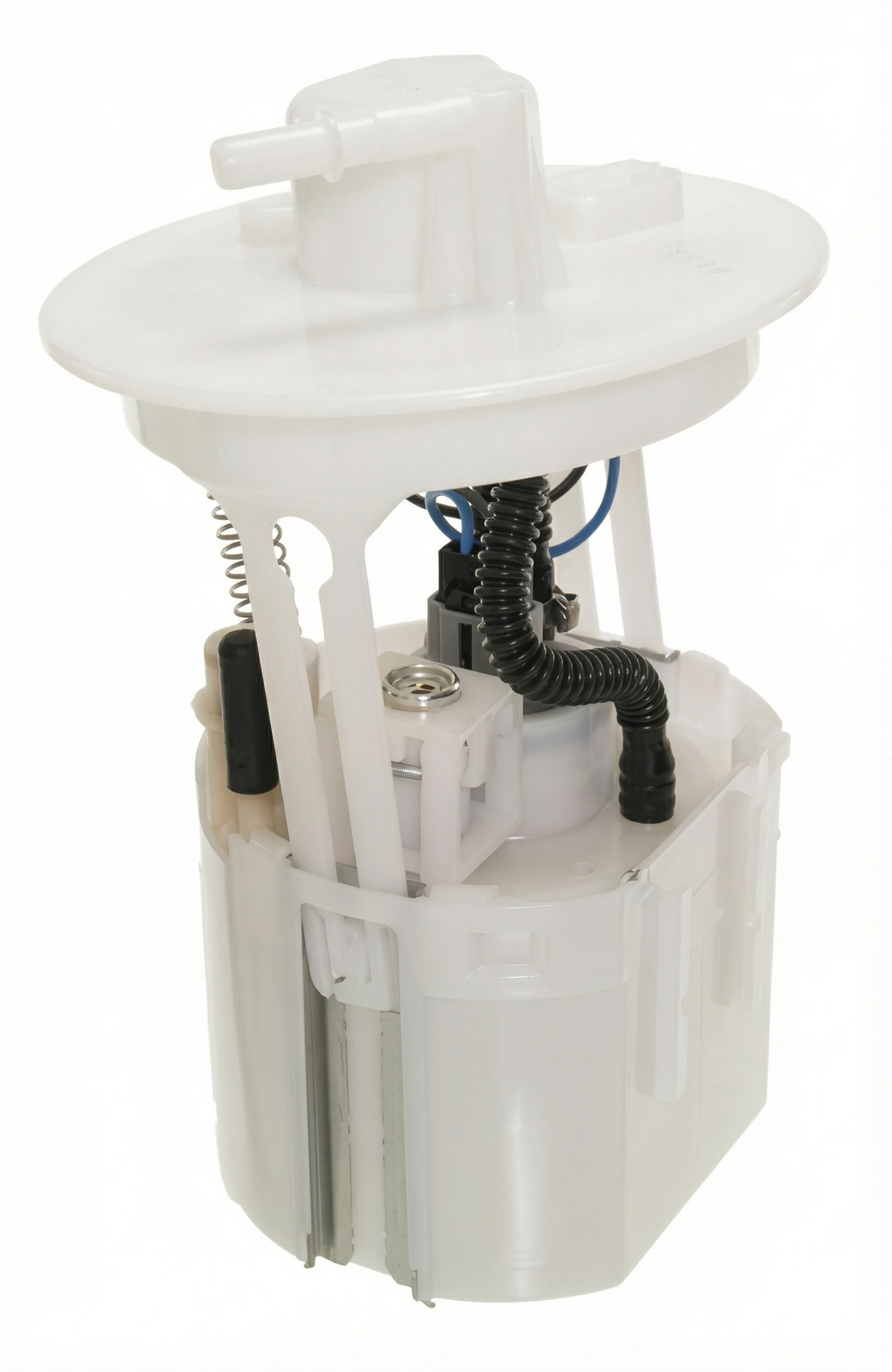
Est. part cost: $50-$120 - Failing Low-Pressure Fuel Pump (LPFP) or Driver Module ⚪ Low Probability While less common than HPFP failure, the in-tank pump can weaken over time, failing to supply adequate volume to the HPFP, especially on tuned vehicles demanding more fuel. The Focus RS uses two electric low-pressure pumps to meet demand.
How to confirm: A scan tool may show an accompanying code like P008A, which points more directly to the low-pressure side. A fuel pressure test on the low-pressure line feeding the HPFP would be required to confirm its output is within specification (typically around 70-85 PSI under load).
Typical fix: Replace the in-tank low-pressure fuel pump assembly or the Fuel Pump Driver Module (FPDM).
Est. part cost: $200-$400
Rare But Worth Checking
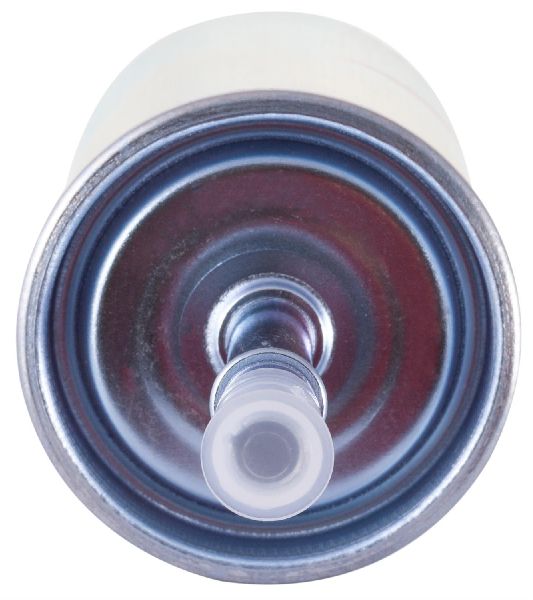
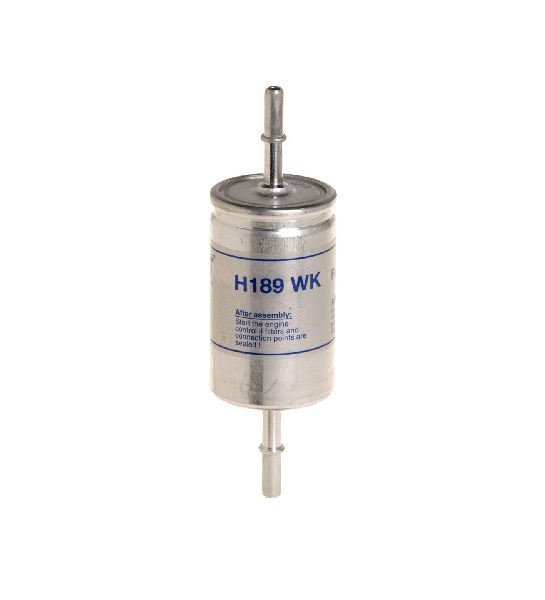
- Clogged Fuel Filter: The Focus RS has a 'lifetime' fuel filter integrated with the in-tank pump assembly. While not a separate serviceable part, a blockage here could starve the system, though it's an uncommon cause of P0087 on its own.
- Wiring Issue to FRP Sensor or HPFP: A damaged wire or loose connector pin can cause an intermittent signal, leading to the P0087 code. NHTSA ODI #11568117 describes a diagnostic finding where a melted pin in a connector caused a poor connection for the fuel pump control module, resulting in codes P0087 and P008A.
- Worn Camshaft Lobe/Tappet: The HPFP is driven by a lobe on the camshaft via a small tappet (follower). On other EcoBoost platforms, this lobe and tappet have been known to wear down significantly, resulting in the pump not being fully actuated, causing low pressure. This would require inspection of the camshaft upon removal of the HPFP.
- Environmental Factors: Manufacturer Bulletin #SSM 50448 notes that P0087 and P008A can sometimes be caused by low fuel levels or fuel gelling in cold ambient temperatures.
Diagnosis Steps
- Connect an OBD-II scanner and confirm P0087 is the primary code. Note any other codes, especially P008A or P00C6.
- Access live data on the scanner. Monitor 'Desired Fuel Rail Pressure' and 'Actual Fuel Rail Pressure'.
- With the engine idling, the values should be relatively close (e.g., 250-500 PSI). Note the actual pressure reading.
- Safely perform a test drive with the scanner recording data. Under moderate to heavy acceleration, watch the 'Actual Fuel Rail Pressure'.
- If 'Actual' pressure drops significantly while 'Desired' pressure climbs (e.g., to 2000+ PSI), the High-Pressure Fuel Pump (HPFP) is the primary suspect.
- If the pressure readings are erratic, stuck at a specific value, or seem incorrect even at idle, consider replacing the Fuel Rail Pressure (FRP) sensor as a more affordable next step.
- If replacing the HPFP, inspect the camshaft lobe and the pump's tappet for any signs of unusual wear, scoring, or damage.
- If the issue persists, inspect the wiring and connectors for the HPFP, FRP sensor, and PCM for any damage, corrosion, or pushed-out pins.
- As a final step, testing the pressure of the low-pressure fuel system would be necessary to rule out the in-tank pump. The pressure should be stable around 70-85 PSI.
Parts You'll Likely Need
- High-Pressure Fuel Pump (HPFP)
(OEM #EJ7E-9D376-AE)— This is the most common component to fail and directly cause the P0087 code on the Focus RS under load.
Trusted brands: Motorcraft, Bosch
OEM price range: $450-$600
Aftermarket price range: $250-$400 - Fuel Rail Pressure Sensor (FRP)
(OEM #CM5233)— This sensor can fail and send incorrect low-pressure readings to the PCM. It's a common point of failure and a cost-effective part to replace for diagnosis.
Trusted brands: Motorcraft, Standard Motor Products (FPS70), Bosch
OEM price range: $80-$120
Aftermarket price range: $50-$80 - HPFP Cam Follower / Tappet — This small mechanical piece sits between the camshaft and the HPFP. It is a wear item and should be replaced along with the HPFP to prevent premature failure of the new pump.
Trusted brands: Ford, INA
OEM price range: $20-$40
Aftermarket price range: $15-$30
Related Codes That Often Appear With This One
- P008A — This code specifically indicates an issue with the low-pressure fuel system. If seen with P0087, it strongly suggests the problem is with the in-tank pump or its control module, not the HPFP.
- P0171 — System Too Lean (Bank 1). This code indicates the engine is receiving too much air relative to fuel, which is a direct consequence of the low fuel pressure from P0087.
- P00C6 — Fuel Rail Pressure Too Low - Engine Cranking. This code is very similar to P0087 but is specific to the low pressure condition being detected while trying to start the engine, aligning with the 'long crank' symptom.
- P219A / P2196 — Air-Fuel Ratio Imbalance or O2 Sensor Signal Stuck Rich. These codes can appear alongside P0087 when the fuel system is unable to maintain proper pressure (NHTSA ODI #11360172, #11160628).
Technical Service Bulletins (TSBs) & Recalls
- While no TSB directly addresses P0087 on the Focus RS, TSB 20-2172 was issued for other 2.3L EcoBoost vehicles (2020 Escape/Corsair) for fuel system issues requiring tank replacement, showing Ford's attention to the fuel systems on this engine family.
- TSB 19-2171 addresses other fuel-related DTCs (P04F0, P144C) on 2.3L EcoBoost engines due to loose EVAP lines, but is not directly related to the high-pressure side.
- Manufacturer Bulletin #SSM 50448 highlights that P0087 and P008A may be caused by low fuel levels or fuel gelling in cold temperatures on Ford vehicles.
Platform-Specific Known Issues
- Some owners on forums note that this P0087 code appeared more frequently after applying an aftermarket engine tune that demanded higher fuel flow than the stock system could reliably provide, accelerating the wear on the HPFP.
Mechanic-Grade Diagnostic Values
- Low-Pressure Fuel System Pressure (via Scan Tool) — expected: ~70-85 PSI under load.. Failure: Pressure drops significantly below 70 PSI under load or is stuck at a static value regardless of engine state.
- High-Pressure Fuel System Pressure (via Scan Tool, at idle) — expected: ~240-500 PSI.. Failure: Pressure is erratic or does not stabilize.
- High-Pressure Fuel System Pressure (via Scan Tool, under load) — expected: Rises to over 2,200 PSI, with some systems reaching 2,900 PSI at WOT.. Failure: Actual pressure fails to rise with desired pressure, remaining near low-side pressure (e.g., ~100 PSI).
- Fuel Rail Pressure (FRP) Sensor Voltage (Key On, Engine Off) — expected: ~0.5V - 0.7V when back-probed at the signal wire.. Failure: Voltage is 0V, stuck at 5V, or does not correspond to pressure changes.
Scan Tool Commands That Help
- FORScan / Ford IDS: KOER (Key On, Engine Running) Self-Test — This commands the fuel system through a series of checks to test pressure response. It can help trigger intermittent faults that don't appear during normal driving, helping to isolate the failing component.
- FORScan / Ford IDS: PCM Reset / KAM Reset — After replacing a major fuel system component like the HPFP or FRP sensor, resetting the Keep Alive Memory (KAM) is crucial. This forces the PCM to discard old adaptive learning and relearn fuel trims and sensor baselines with the new hardware.
Wiring & Ground Locations
- c1926E Plug — This is a main connector at the Powertrain Control Module (PCM).. A wiring diagram for an auxiliary fuel system identifies pin 33 on this connector as relevant for fuel system signals, indicating it's a key area to check for pin-fitment issues or corrosion when diagnosing persistent electrical faults related to fuel pressure.
- Main Engine Bay Ground — On the Focus platform, a main ground point is located on the chassis frame rail, underneath the airbox and in front of the battery.. A poor ground at this location can cause erratic behavior from various engine sensors and modules, including the Fuel Pump Driver Module and PCM, potentially leading to false P0087 codes. This ground should be disassembled, cleaned, and re-secured during diagnosis.
Real Owner Repair Stories
- Reddit user on r/FocusRS (Ford Focus RS (year not specified)) — Rough idle, surging, sluggish response, pending P0087 code. Symptoms were worse in Track mode or with an active tune.
❌ Tried (didn't work) The user was debating between replacing the high-pressure rail sensor (CM5233) and the low-pressure line sensor (CM5250).
✅ What actually fixed it Another user in the thread confirmed that replacing the low-pressure fuel sensor (on the fuel line side) resolved their similar running issues, after having already replaced the high-pressure sensor with no change. - NHTSA ODI #11165783 — An owner reported that their car populated code P0087 after ignition while stationary. The car suffered from long start times and the turbocharger was disabled.
OEM Part Supersession History
EJ7Z-9F972-A→CM5233— Standard part number update and consolidation by Ford/Motorcraft.
Heads up: While the sensor itself is common across many Ford vehicles, the Focus RS uses a unique oval/triangular electrical connector. Many aftermarket suppliers and even some OEM catalogs incorrectly list sensors with a different plug. CM5233 is the correct part number for the RS-specific connector.
Model Year Variations Within This Range
- Late 2017-2018: Late 2017 and all 2018 models received an improved head gasket design from the factory to address early issues. While not directly related to the fuel system, it's a key mechanical change within the generation.
- 2018 Only: The 2018 model year came standard with a Quaife mechanical limited-slip differential (LSD) for the front axle, which was not available on 2016-2017 models. This does not affect the P0087 code but is the most significant mechanical difference in the model run.
Diagnostic Flowchart
Other Known Issues on This Vehicle
Issues unrelated to this code that are worth knowing about as an owner of this generation:
- Cylinder Head Gasket Failure 🔴 High — Common on 2016-2017 models built before July 2017. Symptoms include white exhaust smoke on startup and coolant consumption. (Ref: Ford Customer Satisfaction Program 17B32 was issued to inspect and replace the head gasket and/or cylinder head free of charge.)
- Sticking Exhaust Flap 🟡 Low — Relatively common. The valve in the exhaust that opens/closes with drive modes can get stuck open, causing a louder exhaust note at all times.
- Power Transfer Unit (PTU) / Rear Drive Unit (RDU) Overheating 🟠 Medium — Can occur during prolonged aggressive driving or track use, leading to 'AWD OFF' warnings. Less common in normal street driving.
- Peeling/Flaking Steering Wheel Material 🟡 Low — A cosmetic issue reported by some owners where the material on the steering wheel begins to flake off with use.
Used vs. New Parts: Buying Guide for This Vehicle
When a used part is the smart pick: For this specific P0087 issue, buying used parts is generally not recommended for the core components. However, if a wiring harness or connector is confirmed to be the cause, a used pigtail or harness from a reputable salvage yard is a viable and cost-effective repair.
Donor-vehicle mileage cap: roughly under 50000 miles for the part to have meaningful remaining life.
What to inspect on the donor part:
- For an HPFP: Inspect the cam follower surface for any scoring or wear; ensure the electrical connector pins are straight and corrosion-free.
- For any part: Ask the seller about the donor vehicle's history (e.g., accident, reason for salvage). Avoid parts from flood-damaged cars.
- For a wiring harness: Inspect for any cuts, melted sections, or brittle insulation. Ensure all connector locking tabs are intact.
OEM-only on this vehicle (don't cheap out):
- High-Pressure Fuel Pump (HPFP)
- Fuel Rail Pressure (FRP) Sensor
Aftermarket brands forum-validated for this vehicle:
- Bosch (often the OEM supplier for fuel components)
- Standard Motor Products (for sensors)
Brands owners have reported issues with on this vehicle:
- Unnamed, no-brand 'white box' parts from online marketplaces are highly discouraged due to inconsistent quality and high failure rates for critical fuel system components.
Real Owner Stories
Aggregated from forums and TSBs cited above. Mileages and costs reflect what owners reported in those sources.
2016-2018 Ford Focus RS 2.3L EcoBoost
Symptoms: The car experienced a sudden loss of power during acceleration, described as 'falling on its face' or entering limp mode. The owner also noted the engine would not rev past 3,000 RPM.
What fixed it: Replacement of the high-pressure fuel pump (HPFP).
Source hint: Ford Owners Club - 'Focus 1.6 Ecoboost petrol P0087 - Help.'
2016-2018 Ford Focus RS 2.3L EcoBoost
Symptoms: The vehicle threw a P0087 code. The diagnostic process involved checking the cheaper electronic components before moving to mechanical pumps.
What fixed it: The owner replaced both the High-Pressure Fuel Pump (HPFP) and the Fuel Rail Pressure (FRP) sensor.
Source hint: Fat Guy Builds on YouTube - 'P0087 Engine code !!FIX!! Ford Focus ST & RS'
2016-2018 Ford Focus RS 2.3L EcoBoost
Symptoms: The P0087 code persisted even after multiple fuel system parts were replaced.
What fixed it: The issue was finally resolved by identifying and repairing loose or pushed-out pins in the PCM connector.
Source hint: ScannerDanner.com Forum - 'FORD DTC CODE P0087'
2016-2018 Ford Focus RS 2.3L EcoBoost
Symptoms: Low fuel rail pressure and a total loss of power.
What fixed it: The repair required replacing the HPFP, the pump tappet, and addressing a worn-out camshaft lobe.
Source hint: Busted to Built on YouTube - 'Ecoboost low fuel rail pressure and no power: P0087 Diagnosis and repair'
Related OBD-II Codes
Frequently Asked Questions
Does TSB 20-2172 apply to my 2016-2018 Ford Focus RS?
I'm seeing P0087 after installing an aftermarket tune on my Focus RS; is this common?
Can I reuse the Fuel Rail Pressure (FRP) sensor if I remove it to inspect the rail?
Why is it so hard to find the right Fuel Rail Pressure sensor for the RS at local parts stores?
Should I replace the cam follower when I replace the High-Pressure Fuel Pump?
What tool do I need to remove the Fuel Rail Pressure sensor on my Focus RS?
Helpful Videos
Used OEM Parts in Stock



New Aftermarket Parts Available


The information in this article is provided for general reference and educational purposes only. Vehicle specifications, procedures, and part compatibility can vary by production date, trim level, and region. Always consult your vehicle's factory service manual and verify part numbers before purchasing or performing repairs. Safety-critical components such as airbags, seat belts, and braking systems should be installed by a qualified professional.
- Ford Focus RS:
- 🎬 Helpful Videos
- 🛍️ Shop This Part
- What's Unique About the 2016-2018 Ford Focus RS
- Symptoms You May Notice
- Most Likely Causes
- Rare But Worth Checking
- Diagnosis Steps
- Parts You'll Likely Need
- Related Codes That Often Appear With This One
- Technical Service Bulletins (TSBs) & Recalls
- Platform-Specific Known Issues
- Mechanic-Grade Diagnostic Values
- Scan Tool Commands That Help
- Wiring & Ground Locations
- Real Owner Repair Stories
- OEM Part Supersession History
- Model Year Variations Within This Range
- Diagnostic Flowchart
- Other Known Issues on This Vehicle
- Used vs. New Parts: Buying Guide for This Vehicle
- Real Owner Stories
- 2016-2018 Ford Focus RS 2.3L EcoBoost
- 2016-2018 Ford Focus RS 2.3L EcoBoost
- 2016-2018 Ford Focus RS 2.3L EcoBoost
- 2016-2018 Ford Focus RS 2.3L EcoBoost
- Related OBD-II Codes
- Frequently Asked Questions
- 🎟️ Get 5% Off