

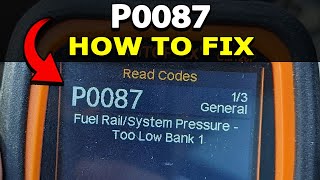
P0087 on 2017-2021 Ford F-350 SD 6.7L: Causes and Fixes for Low Fuel Rail Pressure
P0087 on a 6.7L Power Stroke most often means you have clogged fuel filters. Always replace both fuel filters with high-quality Motorcraft parts before suspecting more expensive components like the fuel pumps. This is a simple, inexpensive first step that resolves the issue in many cases. An improperly seated primary fuel filter cap is also a common cause after a filter change.
- Always replace both fuel filters with OEM Motorcraft parts as the first step when you see a P0087 code.
- Be aware of fuel gelling in cold climates; use an anti-gel additive to prevent this issue.
- A noisy or whining low-pressure fuel pump is a strong indicator of restricted fuel flow, likely from clogged filters.
- Do not ignore this code. It can be an early warning of a catastrophic and extremely expensive high-pressure fuel pump (CP4) failure.
- Due to the extreme pressures involved, diagnosis and repair of the high-pressure fuel system are best left to a qualified professional.
What's Unique About the 2017-2021 Ford F-350 SD

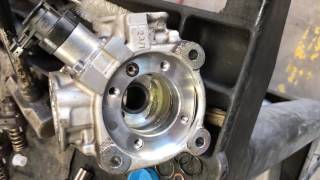
The 6.7L Power Stroke uses a sophisticated high-pressure common rail (HPCR) fuel system, which is extremely sensitive to fuel quality and filtration. The Bosch CP4 high-pressure fuel pump (HPFP) used in these model years is a known weak point; it can fail internally, sending metal debris throughout the entire fuel system. This failure is the subject of multiple class-action lawsuits, which allege the pump is not robust enough for US-spec diesel fuel. Because of this, a P0087 code must be taken seriously, as it can be an early warning of a catastrophic and expensive pump failure. Ford has also issued technical service bulletins noting that low fuel levels or fuel gelling in cold weather can trigger this code. [SSM 49064, SSM 50448]
Diagnostic Flowchart

Tap your situation to follow the diagnostic path that matches what you're seeing on this vehicle.
Symptoms You May Notice

- Check Engine Light is on
- "Low Fuel Pressure" message on the dashboard
- Reduced engine power (limp mode)
- Difficulty starting or long crank times
- Engine runs rough or misfires, especially under load
- Sudden stalling
- Noticeable lack of acceleration or hesitation
- Bucking and jerking under hard acceleration
- Replacing the high-pressure fuel pump (HPFP) without first replacing fuel filters and testing the low-pressure lift pump. Filters are the most common and cheapest fix.
- Replacing the Fuel Rail Pressure (FRP) sensor without verifying its reading against a mechanical gauge or observing its behavior on a scan tool under load.
- Assuming a tune is the problem on a modified truck without first checking the basic fuel supply components like filters and the lift pump.
Most Likely Causes

- Clogged or Restricted Fuel Filters 🔴 High Probability The 6.7L Power Stroke has two fuel filters (a primary water separator on the frame rail and a secondary filter on the engine) that must be changed regularly (every 15,000-20,000 miles). Neglecting this service is a primary cause of fuel pressure issues. Using non-OEM filters is also a reported cause of problems.
How to confirm: Check service records. If the filters haven't been changed recently, or if aftermarket filters were used, replace them with OEM Motorcraft filters. A noisy low-pressure pump is often a sign of a clogged filter. Also, confirm the primary filter housing cap is fully tightened, as an air leak from improper installation can cause P0087.
Typical fix: Replace both the primary and secondary fuel filters with Motorcraft parts. Ensure the water separator housing is fully seated and tightened correctly to prevent air leaks, then properly prime the system.
Est. part cost: $60-$100 - Failing Low-Pressure Fuel Pump (Lift Pump) 🟡 Medium Probability The low-pressure pump, part of the Diesel Fuel Conditioning Module (DFCM), is responsible for lifting fuel from the tank to the high-pressure pump. If it weakens, it cannot supply enough volume to the HPFP, causing P0087 under load.
How to confirm: Use a scan tool like FORScan to monitor low-pressure fuel system readings; pressure should be stable around 55-65 PSI at idle and not drop significantly under load. A significant drop right before the P0087 code triggers points to a weak lift pump. A flow test can also be performed; one technician suggests a healthy pump should fill a quart container in 20 seconds.
Typical fix: Replace the low-pressure fuel pump assembly (DFCM) located on the frame rail.
Est. part cost: $450-$600 - Fuel Gelling or Low Fuel Level 🟡 Medium Probability Ford TSBs specifically mention that running the truck with a low fuel level or experiencing fuel gelling in cold temperatures can cause a temporary drop in fuel pressure, triggering P0087 and/or P008A. [SSM 50448, SSM 49062]
How to confirm: Check the fuel level. Note the ambient temperature. If it's below freezing and an anti-gel additive was not used, this is a likely cause.
Typical fix: Add fuel to the tank. If fuel has gelled, move the vehicle to a warm garage to thaw and use a quality diesel anti-gel additive like Ford's PM-22.
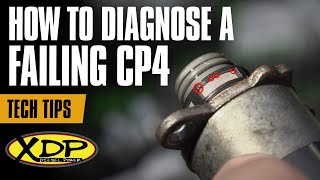
Est. part cost: $10-$20 for additive - Failing High-Pressure Fuel Pump (HPFP / CP4) ⚪ Low Probability The Bosch CP4 pump is known for a design weakness where internal components (rollers/cam) can wear and disintegrate, sending metallic debris through the entire fuel system. Low pressure is an initial symptom as the pump loses efficiency. This issue is the basis for several class-action lawsuits against Ford.
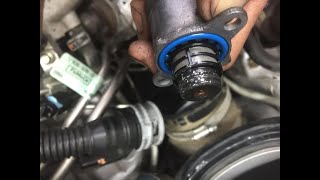
How to confirm: This is a difficult diagnosis. A key step is to inspect the Fuel Volume Control Valve (VCV) on the HPFP for metallic debris. Finding 'glitter' in the fuel filter housings (especially the upper, secondary filter) is a definitive sign of failure. A magnet can be used to determine if the shavings are steel from the pump's internals.
Typical fix: If the CP4 has failed, the entire high-pressure fuel system must be replaced, including the pump, fuel rails, all fuel lines, and all eight injectors. This is a massive and very expensive repair, often costing over $10,000. Many owners proactively install a 'Disaster Prevention Kit' (e.g., S&S Diesel CP4-6.7F-BP-G2.1) which reroutes the CP4's case fuel back to the tank through a filter, preventing debris from contaminating the rest of the system in the event of a failure.
Est. part cost: $5000-$8000 for a full contamination kit (e.g., HC3Z-9B246-A), or $300-$500 for a disaster prevention kit.
Rare But Worth Checking
- Leaking Fuel Injector(s): A fuel injector stuck open or with a high return rate can cause a drop in rail pressure as the HPFP cannot keep up with the leak. This is less common than other causes but can happen, especially on high-mileage trucks. Diagnosis often requires a special tool to measure injector return flow.
- Faulty Fuel Rail Pressure (FRP) Sensor: The sensor itself can fail and send an incorrect low-pressure reading to the PCM, even if the actual pressure is fine. This can be diagnosed by comparing the sensor's reading on a scan tool to a mechanical gauge. If the scan tool shows 40 PSI while a mechanical gauge shows 60 PSI, the sensor is suspect.
- Rusted Fuel Tank (Cab & Chassis Models): On cab and chassis models with steel fuel tanks, internal rust can form and clog the fuel pickup and filters, starving the pumps for fuel. This is less common on standard pickups with plastic tanks. One technician found the tank lining flaking off and clogging the fuel pump module inlet.
- Incorrectly Torqued Fuel Pressure Control Valve (PCV): A technician on the Diesel Technician Society forum reported repeat P0087 codes on two F-550s that were resolved by re-torquing the fuel pressure control valve on the fuel rail to the correct, often overlooked, specification. This can happen after the valve is replaced during diagnosis.
Diagnosis Steps
- Verify the fuel level is not critically low and check fuel quality for gelling, water, or contamination.
- Scan the PCM for all stored trouble codes. Note if P008A is present with P0087.
- Replace both the primary (frame rail) and secondary (engine-mounted) fuel filters with new Motorcraft filters. This is the most critical and common first step. Ensure the primary filter cap is fully tightened.
- After replacing filters, properly prime the fuel system by cycling the key-on/engine-off 6 times for 30 seconds each until the lift pump runs quietly.
- Using a capable scan tool (like FORScan), monitor 'Low Pressure Fuel System Pressure', 'Desired Fuel Rail Pressure', and 'Actual Fuel Rail Pressure' while driving under load.
- If low-side pressure drops below ~50 PSI under load, the lift pump (DFCM) is suspect. Normal idle pressure should be around 55-65 PSI.
- If low-side pressure is stable but high-side 'Actual' pressure cannot keep up with 'Desired' pressure under load, the issue is on the high-pressure side (HPFP, injectors, or pressure control valve).
- Carefully inspect the old fuel filter housings for any metallic 'glitter'. Drain the lower DFCM housing into a clean container to check for debris.
- If metal shavings are found, the HPFP has most likely failed and the entire system is contaminated. Do not continue to run the engine.
- If no metal is found, further diagnosis of the HPFP, fuel rail pressure control valve, or injectors may be required.
Parts You'll Likely Need

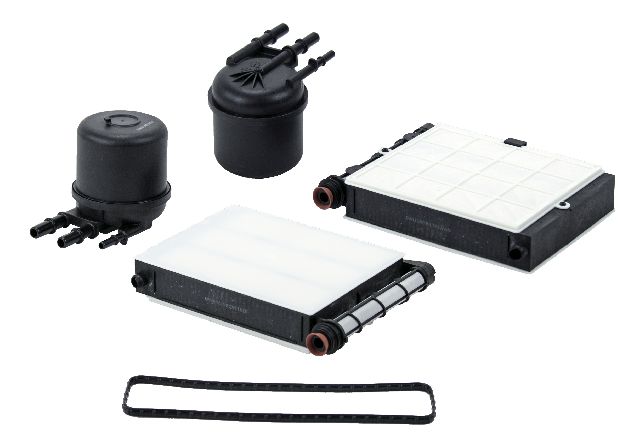
- Fuel Filter Kit
(OEM #FD-4624 (or HC3Z-9N184-B))— This is the most common cause of P0087. The 6.7L Power Stroke requires clean fuel and regular filter changes to maintain proper fuel pressure. Using only OEM Motorcraft filters is highly recommended.
Trusted brands: Motorcraft
OEM price range: $60-$100
Aftermarket price range: $40-$80 - Low-Pressure Fuel Pump (DFCM)
(OEM #HC3Z-9G282-A (2017+))— The lift pump is the second most likely component to fail, causing insufficient fuel volume to be delivered to the high-pressure system.
Trusted brands: Motorcraft
OEM price range: $450-$600
Aftermarket price range: $250-$450 - High-Pressure Fuel Pump (HPFP)
(OEM #FC3Z-9A543-A (2017-2019), LC3Z-9A543-A (2020-2021))— This is the catastrophic failure point. If metal is found in the system, the pump must be replaced as part of a full system cleaning/replacement.
Trusted brands: Bosch (OEM), Motorcraft
OEM price range: $1200-$1800
Aftermarket price range: $800-$1300 - Fuel System Contamination Kit
(OEM #HC3Z-9B246-A (2017-2019))— If the HPFP fails and sends debris through the system, this kit includes the HPFP, both fuel rails, all injectors, and necessary lines to completely replace the contaminated high-pressure components.
Trusted brands: Ford/Bosch
OEM price range: $4500-$6000
Aftermarket price range: N/A
Related Codes That Often Appear With This One
- P008A — This code means 'Low Pressure Fuel System Pressure - Too Low'. It often appears with P0087 because a problem in the low-pressure side (like a weak lift pump or clogged filters) directly causes the high-pressure side to be starved of fuel. [SSM 49064, 26]
- P0093 — This code indicates a 'Fuel System Leak Detected - Large Leak'. It can sometimes appear with P0087 under heavy load, pointing towards a significant drop in pressure that the PCM interprets as a large leak, which could be an injector issue or a failing HPFP.
Technical Service Bulletins (TSBs) & Recalls
- SSM 49064: Notes P0087 and P008A can be caused by low fuel level or low fuel pressure.
- SSM 50448: Mentions P0087 and P008A can be caused by low fuel level or fuel gelling in cold temperatures, resulting in hard start, lack of power, or rough running.
- SSM 49062: Similar to SSM 50448, linking P0087/P008A to low fuel or fuel gelling in cold weather.
Platform-Specific Known Issues
- TSB SSM 49064 & SSM 50448: Ford notes that a hard start, lack of power, and rough running with DTCs P0087 and/or P008A may be due to a low fuel level or fuel gelling in cold weather. [SSM 49064, SSM 50448]
- Bosch CP4 HPFP Failure: The high-pressure fuel pump on these models is known for catastrophic failure, which sends metal debris throughout the fuel system. P0087 is a common code associated with the beginning of this failure.
- Secondary Fuel Filter Housing Leaks: NHTSA has investigated leaks from the secondary fuel filter housing, which can pose a fire risk. While not a direct cause of P0087, it highlights the importance of proper installation and inspection of fuel system components.
Mechanic-Grade Diagnostic Values
- Low-Pressure Fuel System Pressure (via Scan Tool) — expected: 58 PSI at idle, 68 PSI at cruise/WOT. Normal range is 53-73 PSI.. Failure: Pressure drops below 52 PSI, which will engage the fuel delivery switch to 'low'. A user with P0087 reported seeing these exact normal values, indicating the issue might be intermittent or on the high-pressure side.
- High-Pressure Fuel Rail Pressure (FRP) (via Scan Tool) — expected: Approx. 4,400 PSI at idle, 18,000 PSI at cruise, and 28,000-30,000 PSI at WOT (for 2017-2019 models).. Failure: Actual pressure cannot keep up with desired pressure under load. The system requires a minimum of 5,000 PSI to start the engine.
- Low-Pressure Fuel Pump Flow Rate Test — expected: 500mL in 10 seconds (approximately 1 quart in 20 seconds).. Failure: Significantly less flow when testing from the supply line to the engine-mounted filter.
- Fuel Suction Restriction (at DFCM) — expected: 3"-6" Hg of vacuum.. Failure: Excessively high vacuum (e.g., 19" Hg) indicates a severe restriction between the DFCM and the tank, such as a clogged pickup or delaminated tank lining.
Scan Tool Commands That Help
- Ford IDS / FORScan: FPL_CMD# (Low Pressure Fuel Pump Command) — This PID allows a technician to command the low-pressure fuel pump on and off for diagnostic purposes, such as performing a flow test or checking for pump noise without running the engine.
Wiring & Ground Locations
- Fuel Pump Relay (in Battery Junction Box) — Inside the main underhood fuse box (Battery Junction Box). This is a non-serviceable relay soldered to the circuit board.. A faulty internal relay can cause a crank-no-start or intermittent low fuel pressure symptoms similar to a failing pump. The trigger wire for the relay is often a purple and green wire. Technicians may bypass a failed internal relay with an external one to restore power to the fuel pump.
- Fuel Pump Driver Module Ground — The Fuel Pump Driver Module (FPDM) is typically located on the frame rail near the tank. The ground for the module is critical for its operation.. Both the power and ground for the low-pressure fuel pump pass through the FPDM. A poor ground at the module can cause intermittent pump operation and lead to low pressure codes.
Real Owner Repair Stories
- YouTube channel 'Fixing cars and stuff' (2017 Ford F-250 6.7L) — "Fuel Pressure Low" message on the dash, with codes P008A and P0087.
❌ Tried (didn't work) The owner had already replaced the fuel filters, but the problem persisted.
✅ What actually fixed it The technician dropped the fuel tank and found it was heavily contaminated with dirt. The fuel pickup screen was completely clogged. The final fix was to clean the entire fuel tank and replace the in-tank fuel pump assembly. - Diesel Technician Society Forum (2012 F-550 6.7L (Cab & Chassis)) — Repeat P0087 code after replacing the low-pressure pump.
❌ Tried (didn't work) Replacing the low-pressure fuel pump., Replacing the Pressure Control Valve (PCV) on the fuel rail.
✅ What actually fixed it After replacing the driver's side fuel rail (which comes with a new PCV), the technician was advised by the tech hotline to re-torque the new PCV. The problem was resolved by correctly torquing the valve, suggesting it was not sealed correctly from the factory or after the initial replacement. - Diesel Technician Society Forum user (Ford 6.7L (year not specified, but cab & chassis model)) — P0087 code, reduced engine power.
❌ Tried (didn't work) Changing fuel filters did not quiet the noisy low-pressure pump.
✅ What actually fixed it The technician found the steel aft-axle fuel tank had rusted internally, and the tank lining was flaking off. These flakes clogged the inlet nipple of the fuel pump module, causing a severe suction restriction. The fix was to replace the rusted steel tank with a plastic one.
Model Year Variations Within This Range
- 2020-2021: For the 2020 model year, Ford introduced the 3rd generation 6.7L Power Stroke, which included significant fuel system upgrades. The high-pressure fuel system operates at a higher pressure of 36,000 PSI (up from 30,000 PSI). It uses a new high-pressure pump, new fuel injectors capable of more injection events, and stronger fuel rails and lines to accommodate the increased pressure. While the core P0087 diagnosis remains similar, technicians should be aware of the different pressure specifications and components on these later models.
Helpful Videos

We Have This Part in Stock


The information in this article is provided for general reference and educational purposes only. Vehicle specifications, procedures, and part compatibility can vary by production date, trim level, and region. Always consult your vehicle's factory service manual and verify part numbers before purchasing or performing repairs. Safety-critical components such as airbags, seat belts, and braking systems should be installed by a qualified professional.
- Ford F-350 SD:
- 🎬 Helpful Videos
- 🛍️ Shop This Part
- What's Unique About the 2017-2021 Ford F-350 SD
- Diagnostic Flowchart
- Symptoms You May Notice
- Most Likely Causes
- Rare But Worth Checking
- Diagnosis Steps
- Parts You'll Likely Need
- Related Codes That Often Appear With This One
- Technical Service Bulletins (TSBs) & Recalls
- Platform-Specific Known Issues
- Mechanic-Grade Diagnostic Values
- Scan Tool Commands That Help
- Wiring & Ground Locations
- Real Owner Repair Stories
- Model Year Variations Within This Range
- 🎟️ Get 5% Off