

P0087 on 2013-2019 Cadillac ATS: Fuel Rail Pressure Too Low Causes and Fixes
On the Cadillac ATS with either the 2.0T or 2.5L engine, code P0087 is most often caused by a failing high-pressure fuel pump (HPFP). A key sign is the smell of fuel in the engine oil. When replacing the pump (OEM P/N: 12694362 or 12677329), it is critical to also replace the cam follower (P/N: 12649010). Expect to pay $200-$450 for an OEM-quality pump, with DIY difficulty at 4/5 due to the need to remove the intake manifold.
- P0087 on a Cadillac ATS indicates dangerously low pressure in the high-pressure fuel rail, and the vehicle should not be driven.
- The most likely cause is a failed high-pressure fuel pump (HPFP), and a key sign of this specific failure is the smell of gasoline in the engine oil.
- Always diagnose the low-pressure fuel system first. A simple pressure test can determine if the cheaper in-tank pump is the problem before suspecting the more expensive and difficult-to-replace HPFP.
- Due to the extreme pressures and fire risk, this repair is recommended for professional mechanics or highly experienced DIYers with the correct tools and safety procedures.
What's Unique About the 2013-2019 Cadillac ATS

The Cadillac ATS, with its 2.0T LTG and 2.5L LCV direct-injection engines, uses a sophisticated dual-pump fuel system. It has a low-pressure pump in the fuel tank and a high-pressure fuel pump (HPFP) driven by the camshaft. This complexity is central to diagnosing P0087. While many components can cause low pressure, the HPFP is a known failure point on these GM engines. A GM recall for the 2018 ATS specifically addressed an issue where the HPFP could detach, and other GM service bulletins (like 19-NA-218) for similar engines point to the HPFP as a primary cause for this code when fuel is found in the oil.
Symptoms You May Notice

- Reduced engine power or entering "limp mode"
- Engine hesitation or stumbling, especially during acceleration
- Rough or uneven idle
- Hard starting or long crank times
- Engine stalling
- Check Engine Light illuminated
- Strong smell of gasoline on the oil dipstick
- Replacing the high-pressure fuel pump (HPFP) without first testing the low-pressure fuel pump in the tank. A weak in-tank pump or faulty FPCM is a possible and sometimes simpler root cause.
- Replacing fuel pumps without checking the fuel rail pressure sensor's reading on a scan tool to ensure it is reporting pressure correctly.
- Replacing the HPFP without also replacing the inexpensive roller follower, leading to a repeat failure if the follower was worn.
Most Likely Causes

- Failing High-Pressure Fuel Pump (HPFP) 🔴 High Probability The HPFP is a known failure point on GM's direct injection engines, including the 2.0T LTG. A recall (GM #18188) was issued for 2018 models for a faulty HPFP. Internal seals can fail, causing a loss of pressure and fuel leaking into the crankcase. GM has released updated part numbers for the pump over the years, suggesting design revisions.
How to confirm: The most definitive sign is a strong smell of gasoline on the engine oil dipstick. A professional technician will use a scan tool to monitor desired versus actual fuel rail pressure; a large discrepancy under load points to a failing HPFP. Owners on forums describe the oil smelling 'like a gas station' when the pump fails.
Typical fix: Replace the high-pressure fuel pump, the HPFP cam follower, and the associated high-pressure fuel line, which is a one-time-use part. An oil and filter change is mandatory if fuel has contaminated the oil, as noted in GM TSB 19-NA-218.
Est. part cost: $200-$450 - Failing In-Tank (Low-Pressure) Fuel Pump 🟡 Medium Probability The HPFP cannot generate high pressure if it is starved of fuel from the tank. A weak in-tank pump is a common cause of low-flow conditions that can trigger a P0087 code.
How to confirm: Test the low-pressure fuel system. According to diagnostics related to TSB PIP5197G, pressure should be between 58-87 PSI at idle. If pressure is below this range, the in-tank pump or its control module is likely weak.
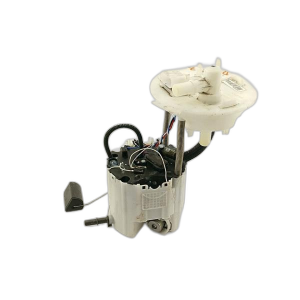
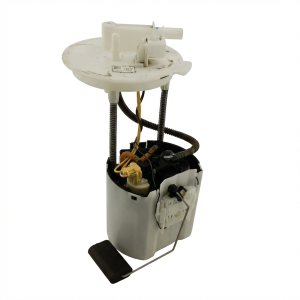
Typical fix: Replace the in-tank fuel pump module. 🎬 See a walkthrough of an upgraded low-pressure fuel pump install This typically requires dropping the fuel tank.
Est. part cost: $100-$300 - Faulty Fuel Rail Pressure Sensor ⚪ Low Probability
How to confirm: With a scan tool, compare the sensor's reading to a mechanical gauge (if a port is available). If the sensor reads an abnormally low pressure that doesn't match the mechanical gauge, or if the reading is stuck, the sensor is likely faulty.
Typical fix: Replace the fuel rail pressure sensor. 🎬 Watch: How to replace the fuel rail pressure sensor On the 2.5L engine, this requires removing the intake manifold.
Est. part cost: $90-$190
Rare But Worth Checking
- Worn Camshaft Lobe or HPFP Follower: The HPFP is driven by a dedicated lobe on the camshaft via a small roller follower. Significant wear on this follower or the cam lobe itself can reduce the pump's stroke, leading to low pressure. TSB 19-NA-218 advises inspecting the follower. It is considered best practice to replace the follower (a low-cost part) whenever the HPFP is replaced.
- Faulty Fuel Pump Control Module (FPCM): The FPCM, often located on the driver's side frame rail near the rear wheel, controls the in-tank fuel pump. These modules are exposed to the elements and are known to fail due to corrosion on the connector or internal failure, causing the low-pressure pump to perform poorly and starving the HPFP.
- Stretched Timing Chain: Because the HPFP is driven by the intake camshaft, a severely stretched timing chain can alter cam timing enough to affect the pump's operation, potentially contributing to low fuel pressure codes. This would typically be accompanied by timing-related codes like P0016.
Diagnosis Steps

- Connect an OBD-II scanner and verify P0087 is present. Check for other codes, especially P0172, P069E, or P0191.
- Using the scanner's live data function, monitor "Desired Fuel Rail Pressure" vs. "Actual Fuel Rail Pressure." Note any significant lag or inability for the actual pressure to meet the desired pressure, especially under acceleration.
- Check the engine oil on the dipstick for a strong gasoline smell. If fuel is present in the oil, the high-pressure fuel pump has failed internally and must be replaced.
- If no fuel is in the oil, test the low-pressure fuel system. Connect a fuel pressure gauge to the low-pressure line and verify pressure is within the 58-87 PSI range at idle. If pressure is low, inspect the Fuel Pump Control Module (FPCM) on the frame rail for corrosion before condemning the in-tank pump.
- If low-pressure is good, the issue is in the high-pressure system. Re-evaluate the live data. If the pressure sensor reading seems stuck or irrational, test the sensor's circuit.
- If the sensor is functioning and low-pressure is good, the high-pressure fuel pump (HPFP) is the most probable cause of failure.
- Before replacing the HPFP, visually inspect the camshaft follower for scoring, wear, or damage, as this can also cause low pressure and should be replaced with the pump.
Parts You'll Likely Need
- High-Pressure Fuel Pump
(OEM #12694362 (supersedes 12677329, 12658486, 12651175))— This is the most common failure point for code P0087 on the ATS. The part has been updated multiple times by GM.
Trusted brands: ACDelco, Bosch
OEM price range: $250-$450
Aftermarket price range: $150-$300 - High-Pressure Fuel Pump Follower
(OEM #12649010)— This is a critical wear item that rides on the camshaft to drive the HPFP. It is highly recommended to replace this part whenever the HPFP is replaced to prevent premature failure of the new pump.
Trusted brands: ACDelco, Dorman, Standard Motor Products
OEM price range: $30-$50
Aftermarket price range: $20-$40 - In-Tank Fuel Pump Assembly
(OEM #13544255)— A weak low-pressure pump will starve the HPFP, causing it to underperform and trigger P0087. This is the second most likely component to fail.
Trusted brands: ACDelco, Delphi
OEM price range: $200-$350
Aftermarket price range: $100-$220 - Fuel Rail Pressure Sensor
(OEM #12627092)— Can fail and send incorrect low-pressure signals to the ECM, falsely triggering the code. This part number is applicable to both the 2.0L and 2.5L engines for most of the year range.
Trusted brands: ACDelco, Standard Motor Products
OEM price range: $100-$190
Aftermarket price range: $50-$110
Related Codes That Often Appear With This One
- P0172 — This code for "System Too Rich" can appear if the HPFP is leaking fuel internally into the engine oil. The fuel vapors are then ingested through the PCV system, causing a rich condition.
- P069E — This code means the Fuel Pump Control Module (FPCM) has detected a fault and requested the check engine light. It often points to a problem with the low-pressure fuel pump or the module itself.
- P0191 — This code for "Fuel Rail Pressure Sensor Circuit Range/Performance" can be set alongside P0087 if the sensor itself is failing or if the pressure is genuinely erratic.
Technical Service Bulletins (TSBs) & Recalls
- PIP5151F - Diagnostic aid for fuel system contamination causing P0087 on similar GM engines.
Platform-Specific Known Issues
- GM Recall #18188: Affects some 2018 Cadillac ATS models. The high-pressure fuel pump could detach from its mounting flange, leading to a damaged fuel line and potential stall or fire risk.
- GM TSB 19-NA-218: Addresses multiple engine codes including P0087. It instructs technicians that if fuel is found in the crankcase, the HPFP must be replaced and the oil/filter changed. It also advises inspecting the HPFP roller follower for wear.
- GM TSB PIP5197G: While primarily for other codes, this TSB provides a low-side fuel pressure spec of 400-600 kPa (58-87 PSI) at idle, which is a key diagnostic value for P0087.
Mechanic-Grade Diagnostic Values
- High-Pressure Fuel System Pressure (2.0T LTG) — expected: 2,250 - 2,900 PSI (15,513 - 19,995 kPa) under load.. Failure: Actual pressure on scan tool is significantly lower than desired pressure under load.
- Low-Pressure Fuel System Pressure (at idle) — expected: 58-87 PSI (400-600 kPa) per TSB PIP5197G.. Failure: Pressure is below 58 PSI, indicating a weak in-tank pump, clogged filter, or FPCM issue.
- Fuel Rail Pressure Sensor Signal Voltage (Key On, Engine Off) — expected: Approximately 1.5V to 1.8V.. Failure: Voltage is stuck near 0V or, more commonly, near 5V. A 5V reading indicates an open in the circuit or an internal sensor failure.
- Fuel Rail Pressure Sensor Reference Voltage (at connector, unplugged) — expected: 5V on the power wire (Red).. Failure: Voltage is significantly lower than 5V, indicating a wiring or ECM issue.
- High-Pressure Fuel Pump Bolt Torque — expected: 11 lb ft (15 N.m). Failure: N/A - This is an installation specification.
- Fuel Rail Pressure Sensor Torque — expected: 24 lb ft (33 N.m). Failure: N/A - This is an installation specification.
Scan Tool Commands That Help
- GDS2 / Tech2: Monitor Desired vs. Actual Fuel Rail Pressure — This is the primary live data parameter to watch. A significant and consistent lag or difference between the desired and actual pressure under load points directly to a fuel delivery problem.
- GDS2 / Tech2: Fuel Pump On/Off Command — Used to test the low-pressure fuel pump and Fuel Pump Control Module (FPCM) independently. If the pump doesn't activate with this command, it isolates the fault to the low-pressure side (pump, FPCM, or wiring).
- GDS2 / Tech2: FSCM Replacement Programming — This is a mandatory service function that must be performed after replacing the Fuel System Control Module (FSCM/FPCM) to program the new module to the vehicle.
Wiring & Ground Locations
- Fuel Rail Pressure Sensor Connector — On the high-pressure fuel rail, under the intake manifold.. Provides pinout for testing. Wire colors are typically: Red (5V Power), Orange (Signal), and Green (Ground). Testing for correct voltages here is critical before replacing the sensor.
- Fuel Pump Control Module (FPCM) — On the driver's side frame rail, typically below the driver's door area.. This module controls the in-tank pump. Its location makes it vulnerable to corrosion. A visual inspection of the module and its connector is a key diagnostic step if low-pressure is suspect.
- Engine Block Grounds — Key grounds are located on the back of the cylinder head and on the engine block behind the passenger-side engine mount bracket.. A poor engine ground can cause erratic behavior from multiple sensors, including the fuel pressure sensor, leading to false codes. Ensuring these are clean and tight is a fundamental step.
- G305 — Under the vehicle, to the rear of the left B-pillar at the third body mount on the frame.. This is a major chassis ground in the vicinity of the FPCM. A loose or corroded G305 could potentially affect the FPCM's operation, impacting low-side fuel pressure.
Real Owner Repair Stories
- YouTube channel 'G Automotive' (2015 Cadillac ATS V (similar system)) — Check Engine Light with a fuel pressure sensor circuit code (P018C, related to P0087).
❌ Tried (didn't work) Initial diagnosis pointed towards the sensor or ECM.
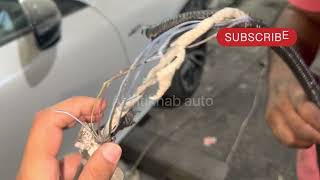
✅ What actually fixed it The problem was a damaged wire in the harness leading to the fuel pressure sensor. The repair involved fixing the damaged wiring and also replacing the fuel rail pressure sensor itself to be safe.
Model Year Variations Within This Range
- 2016-2019: For the 2016 model year, an 8-speed automatic transmission became available, replacing the previous 6-speed automatic on most models. Stop/Start technology was also introduced.
- 2017-2019: The base 2.5L LCV engine was discontinued for the 2017 model year, making the 2.0T LTG the standard engine.
- 2019: For its final model year, the ATS was only available as a coupe; the sedan model was discontinued.
Diagnostic Flowchart
Real Owner Stories
Aggregated from forums and TSBs cited above. Mileages and costs reflect what owners reported in those sources.
2013 Cadillac ATS 2.0L turbo
Symptoms: Intermittent fuel delivery issues, persistent check engine light (P0087), rough idling, hesitation during acceleration, and reduced fuel efficiency.
What fixed it: Replaced the fuel injection pump control module with GM part number 84082495. After clearing the codes, the P0087 code did not return and fuel pressure readings stabilized.
Source hint: AliExpress Review/Guide: GM 84082495 Fuel Injection Pump Control Unit Module: A Comprehensive Performance Review for Cadillac ATS
2014 Cadillac ATS-L 2.0L turbo
Symptoms: Rough idle, stuttering at stoplights, erratic fuel gauge fluctuation, check engine light with code P0087.
What fixed it: Replaced the Fuel Injection Pump.
Source hint: AliExpress Review/Guide
2014 Cadillac ATS 2.0T
Symptoms: Catastrophic HPFP failure where the mounting flange broke.
What fixed it: Replaced the high-pressure fuel pump (HPFP).
Source hint: CadillacForums.com thread: '2014-cadillac-ats-2-0-high-pressure-fuel-pump-failure.1112283'
2013 Cadillac ATS 2.0T
Symptoms: P0087 and P0172 codes present, accompanied by fuel found in the engine oil.
What fixed it: Installed a new high-pressure fuel pump (HPFP).
Source hint: CadillacForums.com thread: 'p0087-and-p0172-on-2013-ats-2-0t.1085387'
Related OBD-II Codes
Frequently Asked Questions
Is there a recall for the high-pressure fuel pump on my Cadillac ATS?
Why does my engine oil smell strongly of gasoline with code P0087?
What should the low-pressure fuel system read on my ATS 2.0T or 2.5L?
Do I need to replace any other parts when replacing the HPFP on my 2.0T LTG?
Can a bad Fuel Pump Control Module (FPCM) cause P0087 on my ATS?
Helpful Videos
Used OEM Parts in Stock




New Aftermarket Parts Available


The information in this article is provided for general reference and educational purposes only. Vehicle specifications, procedures, and part compatibility can vary by production date, trim level, and region. Always consult your vehicle's factory service manual and verify part numbers before purchasing or performing repairs. Safety-critical components such as airbags, seat belts, and braking systems should be installed by a qualified professional.
- Cadillac ATS:
- 🎬 Helpful Videos
- 🛍️ Shop This Part
- What's Unique About the 2013-2019 Cadillac ATS
- Symptoms You May Notice
- Most Likely Causes
- Rare But Worth Checking
- Diagnosis Steps
- Parts You'll Likely Need
- Related Codes That Often Appear With This One
- Technical Service Bulletins (TSBs) & Recalls
- Platform-Specific Known Issues
- Mechanic-Grade Diagnostic Values
- Scan Tool Commands That Help
- Wiring & Ground Locations
- Real Owner Repair Stories
- Model Year Variations Within This Range
- Diagnostic Flowchart
- Real Owner Stories
- 2013 Cadillac ATS 2.0L turbo
- 2014 Cadillac ATS-L 2.0L turbo
- 2014 Cadillac ATS 2.0T
- 2013 Cadillac ATS 2.0T
- Related OBD-II Codes
- Frequently Asked Questions
- 🎟️ Get 5% Off