

P0087 on 2011-2017 BMW M5: Low Fuel Rail Pressure Causes and Fixes
For the 2011-2017 BMW M5, code P0087 almost always points to a failing high-pressure fuel pump (HPFP). The S63 engine has two of them, and they are a known failure point. In some cases, a failing low-pressure pump or a stuck-open fuel injector can also be the cause. Expect to replace one or both HPFPs for a complete fix.
- P0087 on an F10 M5 is a serious code indicating a critical drop in fuel pressure.
- The most likely cause is one or both of the engine's two high-pressure fuel pumps (HPFPs).
- Diagnosis should begin by checking the low-pressure fuel system to ensure it's supplying the HPFPs correctly.
- Due to the complexity and safety risks of the high-pressure fuel system, professional diagnosis and repair are strongly recommended.
- Check with a BMW dealer to see if your vehicle is covered by the extended warranty for the high-pressure fuel pumps.
What's Unique About the 2011-2017 BMW M5
The S63 V8 engine in the F10 M5 is a high-performance, twin-turbocharged unit with a sophisticated direct injection fuel system. Unlike many engines, it uses two high-pressure fuel pumps (HPFPs), one for each cylinder bank. These pumps are a known weak point and were subject to a limited warranty extension by BMW (SI B01 06 17) for some model years, highlighting their tendency to fail. Therefore, when a P0087 code appears, suspicion immediately falls on one or both of these pumps. The issue is so common that many owners recommend replacing both pumps simultaneously, even if only one has failed.
Symptoms You May Notice
- Reduced engine power and acceleration ('Drivetrain Malfunction' message, limp mode)
- Engine hesitation or sputtering, especially under load or hard acceleration
- Rough or unstable idle, sometimes cutting out
- Difficulty starting the engine or long crank times
- Engine stalling
- Check Engine Light illuminated
- Strong smell of gasoline from the exhaust, sometimes with white smoke, indicating a leaking injector
- Decreased fuel economy
- Replacing only one high-pressure fuel pump when the other is also near the end of its service life.
- Replacing the high-pressure fuel pump(s) when the actual fault is a weak low-pressure fuel pump starving the system of fuel.
- Mistaking a leaking fuel injector for a faulty fuel pump. The symptom of smelling gas is a key differentiator.
Most Likely Causes
- Failing High-Pressure Fuel Pump (HPFP) 🔴 High Probability The S63 engine's two HPFPs are a well-documented failure point. BMW extended the warranty on these parts for certain production years due to high failure rates. They are a mechanical component driven by the camshaft and are subject to wear.
How to confirm: Use a diagnostic scan tool (like BMW's ISTA) to monitor the requested vs. actual fuel rail pressure for each bank (Bank 1 and Bank 2). A significant deviation or inability to meet target pressure on one bank under load points to a failing pump on that side. The engine has two pumps, one for each bank.
Typical fix: Replace the faulty high-pressure fuel pump. Many technicians and owners recommend replacing both pumps at the same time as a preventative measure, as they tend to fail around the same time. For cars produced before 12/2013, a wiring adapter (Part # 12518638006) may be required when installing the updated pump.
Est. part cost: $400 - $1200 per pump - Failing Low-Pressure Fuel Pump (LPFP) 🟡 Medium Probability The LPFP is an electric pump in the fuel tank that can weaken with age and mileage (typically over 80,000 miles), failing to supply adequate volume to the two HPFPs.
How to confirm: Test the low-side fuel pressure using a mechanical gauge connected to the low-pressure system. The pressure should be stable and within BMW's specified range (typically around 5 bar or ~72 PSI) at idle and under load. If the low-pressure reading is low or unstable, the HPFPs are being starved of fuel. A BMW diagnostic tool can also run a test plan that checks the LPFP function.
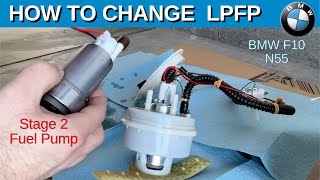
Typical fix: Replace the in-tank low-pressure fuel pump assembly. This is often done by accessing the pump under the rear seat. 🎬 Watch: How to install a new low pressure fuel pump
Est. part cost: $250 - $500 - Leaking Fuel Injector 🟡 Medium Probability Fuel injectors on the S63 engine are also a known failure point, with BMW issuing extended warranties for them on some models. An injector can get stuck open, dumping fuel into the cylinder and causing a significant drop in rail pressure.
How to confirm: A stuck injector often presents with a strong smell of fuel from the exhaust, sometimes with white smoke from one tailpipe. It will also likely cause misfire codes (P030x) for a specific cylinder. A diagnostic tool like ISTA can run tests to isolate the faulty injector. An immediate oil change is required as fuel will contaminate the engine oil.
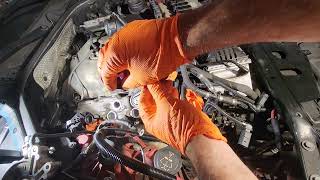
Typical fix: Replace the faulty fuel injector and perform an engine oil and filter change. It is often recommended to replace all injectors on the same bank. 🎬 See this step-by-step guide for S63 injector replacement
Est. part cost: $150 - $400 per injector - Faulty Fuel Pressure Sensor ⚪ Low Probability
How to confirm: Compare the fuel pressure reading from the scan tool with a reading from a mechanical gauge. If the mechanical gauge shows correct pressure but the scan tool shows low pressure, the sensor is likely faulty. The S63 has both low-pressure and high-pressure sensors. Testing involves checking for correct voltage (typically a 5V reference) and signal output.
Typical fix: Replace the corresponding fuel pressure sensor. The high-pressure sensor is located on the fuel rail.
Est. part cost: $80 - $200 - Clogged Fuel Filter ⚪ Low Probability The fuel filter is integrated with the low-pressure fuel pump assembly in the tank and is considered a 'lifetime' part, but can become restricted over time, especially if poor quality fuel is used.
How to confirm: This is often diagnosed by exclusion. If both low and high-pressure pumps are confirmed to be working correctly, a restriction in the fuel supply is likely. Low pressure readings from the LPFP test can also indicate a clogged filter.
Typical fix: Replace the in-tank fuel filter, which is part of the entire low-pressure fuel pump assembly.
Est. part cost: $250 - $500
Rare But Worth Checking
- Damaged Fuel Lines: A kinked or physically damaged fuel line can restrict flow. This is unlikely but worth a visual inspection, especially if the vehicle has been recently worked on or sustained underbody damage.
- Worn Camshaft Lobe: Since the HPFPs are driven by the camshafts, a worn cam lobe could result in the pump not being actuated sufficiently to build pressure. This is a very rare and severe mechanical failure, typically accompanied by other symptoms and noises.
Diagnosis Steps
- Connect an OBD-II scanner and confirm P0087 is present. Check for any other accompanying codes, especially misfire (P030x) or lean condition (P0171/P0174) codes.
- Using a BMW-capable scanner's live data function, monitor 'Fuel Rail Pressure Requested' vs. 'Fuel Rail Pressure Actual' for both banks. Note any significant discrepancies, especially under light acceleration or at wide-open throttle.
- Perform a low-pressure fuel system test. Connect a fuel pressure gauge to the low-pressure line to verify the in-tank pump is delivering adequate and stable pressure (check service manual for exact PSI specification, but typically ~72 PSI).
- If low-pressure is good, the issue is in the high-pressure system. Based on the live data from step 2, identify which bank's pressure is low. The corresponding HPFP is the likely culprit.
- If symptoms include a strong fuel smell and white smoke from the exhaust, suspect a leaking fuel injector. Use the scanner to identify which cylinder is misfiring and check for fuel contamination in the oil.
- If low-pressure is weak or fluctuating, the problem is likely the in-tank low-pressure pump or a clogged fuel filter.
- Visually inspect all accessible fuel lines for kinks, damage, or leaks.
- If pressure readings seem illogical (e.g., extremely low or zero with the engine running), test the fuel pressure sensor and its wiring harness to rule out a false reading.
Parts You'll Likely Need
- High-Pressure Fuel Pump (HPFP)
(OEM #13517848151, superseded by 13518604232)— This is the most common failure point on the S63 engine leading to code P0087. The engine has two of these pumps.
Trusted brands: Bosch, Genuine BMW
OEM price range: $800-$1200
Aftermarket price range: $400-$800
Related Codes That Often Appear With This One
- P0300-P0308 — Misfire codes (P030x) are common because low fuel pressure leads to a lean air/fuel mixture, causing incomplete combustion.
- P0171 — 'System Too Lean (Bank 1)' indicates that the engine is running with too much air and not enough fuel, a direct consequence of low fuel pressure.
- P0174 — 'System Too Lean (Bank 2)' indicates a lean condition on the second cylinder bank, for the same reason as P0171.
- P142E — This is a BMW-specific code that can accompany P0087, often pointing towards a fuel pump issue under high load (WOT).
Technical Service Bulletins (TSBs) & Recalls
- SI B01 06 17: S63 HIGH-PRESSURE FUEL PUMPS (HDP): LIMITED WARRANTY EXTENSION TO 10 YEARS/120,000 MILES. This document confirms the high failure rate of the HPFPs on this engine.
- SI B01 17 24: Fuel Injector Condition-Specific Repair Coverage Program - 15 years/150,000 miles.
Platform-Specific Known Issues
- BMW issued a limited warranty extension for the high-pressure fuel pumps on some S63-equipped vehicles to 10 years or 120,000 miles due to a high rate of failure (SI B01 06 17). Owners should check with a BMW dealer to see if their specific VIN is covered.
- A separate condition-specific repair program (SI B01 17 24) was issued for fuel injectors on some S63 models, extending coverage to 15 years / 150,000 miles for failures due to corrosion.
Mechanic-Grade Diagnostic Values
- Low-Pressure Fuel System Pressure (LPFP output) — expected: ~5.0 bar (~72.5 PSI), stable at idle and under load.. Failure: Pressure is unstable, drops under load, or is significantly below 5 bar.
- High-Pressure Fuel Rail Pressure (HPFP output) — expected: Specification is ~124 BAR (1798 PSI) under load. At idle, it can be lower, around 110-120 BAR.. Failure: Actual pressure fails to meet requested pressure, or a reading significantly below spec (e.g., 83 BAR) on one bank under load.
Hidden / Shadow Codes Worth Checking
- 11A002: High-pressure fuel, plausibility, pressure too low. This is a very common BMW-specific code that directly accompanies the generic P0087. (see via BMW-specific diagnostic software like ISTA or a high-end scanner capable of reading manufacturer codes.)
- P142E: A BMW-specific code often triggered with P0087, indicating a fuel pump issue specifically under high load or Wide-Open Throttle (WOT). (see via Most OBD-II scanners.)
- P15DF / P10D9: These codes also relate to high-side fuel pressure being too low and frequently appear with P0087. (see via Most OBD-II scanners.)
- 118401 / 118001: Mixture control codes (System Too Lean) that are often triggered as a direct result of the low fuel pressure condition indicated by P0087. (see via BMW-specific diagnostic software like ISTA.)
Scan Tool Commands That Help
- ISTA/D: Call up ECU functions -> Diagnosis scan -> Fuel pressure (low pressure) / Fuel pressure (high pressure) — To view live requested vs. actual pressure values for both the low-pressure system and each of the two high-pressure rails to isolate the fault.
- ISTA/D: Service Functions -> Powertrain -> Engine Electronics -> Fuel Supply -> Fuel pump test plan — To run a guided diagnostic test that checks the functionality of the low-pressure fuel pump (LPFP) and its control module (EKPS).
- INPA / ISTA: Component Triggering / Actuator Activation -> Electrical fuel pump (EKP) — To manually activate the low-pressure fuel pump with the engine off. This helps verify the pump's operation audibly and allows for pressure testing without the engine running.
- ISTA/D: Service Functions -> Engine Electronics -> Injector Coding — This is a required step after replacing any fuel injectors to input the new injector's calibration values into the DME for proper fuel trimming and idle quality.
Wiring & Ground Locations
- EKPS (Fuel Pump Control Module) — In the trunk, on the right (passenger) side, next to the battery. You must lift the trunk floor liner to access it.. The EKPS controls the low-pressure fuel pump. A failure in this module or its wiring can starve the HPFPs of fuel, causing P0087. Its location near the battery makes it susceptible to damage if there are battery leaks.
- Engine Ground Strap — There are multiple ground points. One critical but often overlooked ground is integrated into the metal bushing of the ignition coil harness duct, bolting it to the cylinder head cover. Another primary strap runs from the engine block (often near the driver-side engine mount) to the chassis.. An improperly secured or corroded ground, especially the one on the cylinder head cover, can cause BSD (Bit Serial Data) communication faults, leading to erratic behavior of various sensors and modules, potentially including those that report fuel pressure, or even damage them.
- Fuel Rail Pressure Sensor Fuse — Located in the glove box fuse panel on the passenger side.. A blown fuse for the fuel rail pressure sensor or its control valve will cause an immediate fault code, as the DME will not receive a valid pressure signal.
Real Owner Repair Stories
- Bimmerpost user 'fstm5' (F10 M5) — P0087 and P142E codes, sputtering into limp mode at WOT, especially when hot. Would have to wait 30 mins for the car to restart.
❌ Tried (didn't work) Replaced spark plugs and coil packs, Replaced both high-pressure fuel pumps (HPFP), Replaced Bank 1 high-pressure sensor
✅ What actually fixed it The owner had been told the low-pressure fuel pump (LPFP) was recently replaced. However, after all other parts failed to fix it, a BMW dealer ran a diagnostic test plan which revealed the LPFP failed its test. The final fix was replacing the LPFP. - Reddit user 'No-Fix-417' (2014 F10 M5, 74k miles) — P0087, rough idle, engine cuts out. Later observed strong gasoline smell with white smoke from the far right exhaust pipe on startup.
❌ Tried (didn't work) Initial diagnosis focused on fuel pumps.
✅ What actually fixed it The symptoms (strong fuel smell, white smoke from one side) pointed directly to a stuck-open fuel injector on Bank 2, which was causing the rail pressure to drop. The fix was to replace the faulty injector and change the engine oil due to fuel contamination.
"I Checked Everything" — The Actual Cause
- A case on a similar BMW platform (1 Series with N55) with code 11A002 (low pressure plausibility) involved the owner replacing the LPFP, HPFP, and rail sensor without success. The actual cause was found to be the 12v feed relay for the fuel pump. The relay would fail only when it became hot after 20-30 minutes of driving, cutting power to the pump and causing the stall. It tested fine when cold, making it extremely difficult to diagnose.
When the Usual Fixes Don't Work
- While the high-pressure fuel pumps are the most common cause, there are numerous documented cases on forums where owners replaced both HPFPs only to find the P0087 code remained. In one such case, the root cause was a faulty low-pressure fuel pump that was not supplying enough volume to the new HPFPs. In another instance, the tell-tale sign of a strong fuel smell and white smoke from one exhaust pipe correctly identified a stuck-open fuel injector as the culprit, which also causes a drop in rail pressure but has different primary symptoms than a failing pump.
Documented NHTSA Reports
- A manufacturer service bulletin notes that the HPFP can fail and go into bypass, causing the car to revert to limp mode, often accompanied by codes P0087 and P142E (NHTSA ODI #10978697).
- An owner reported that while driving, the vehicle began shaking and the engine light illuminated with code P0087 (NHTSA ODI #11310759).
- NHTSA ODI #11725764 describes a situation where the vehicle displays a drivetrain error on the infotainment screen and a check engine light for "Fuel/rail system Pressure - too low bank 1."
- One report indicates that a drivetrain malfunction and check engine light translated to low fuel rail pressure, with the recommended remedy being the replacement of the high-pressure fuel pump (NHTSA ODI #11011930, NHTSA ODI #11375976).
OEM Part Supersession History
13517599865→13518604232— Updated design to improve reliability.
Heads up: When replacing the original pump (ending in 865) with the updated pump (ending in 232) on vehicles built before approximately March 2014, a wiring harness adapter (PN 12518638006) is required.S63 EU5 Injectors→S63TU Injectors (for later models)— Engine technical update (S63TU).
Heads up: While injectors may be physically similar, using the wrong index or type (e.g., EU5 vs EU6 from other engines) without proper coding and tuning can cause performance issues. Always replace with the correct index for the specific engine and DME software.
Model Year Variations Within This Range
- 2011-2014 (approx. pre-March): These earlier models are equipped with an older version of the High-Pressure Fuel Pump. When replacing it with the current, updated part (13518604232), a separate wiring adapter harness is mandatory for the new pump's electrical connector.
- 2013+ (LCI models): Later models feature the S63TU (Technical Update) engine. While architecturally similar, some parts, including potentially the HPFPs and injectors, may have different part numbers (e.g., 13518604232 is listed for S63TU). Always verify part numbers with the vehicle's VIN.
Diagnostic Flowchart
Used vs. New Parts: Buying Guide for This Vehicle
When a used part is the smart pick: For this specific fault, using used parts is generally not recommended for the primary failure components. However, a used Fuel Pump Control Module (EKPS) can be a viable option if it is sourced from the exact same model, engine, and model year, as it may not require coding.
Donor-vehicle mileage cap: roughly under 60000 miles for the part to have meaningful remaining life.
What to inspect on the donor part:
- For an EKPS module, ensure no signs of water damage or corrosion on the pins.
- For any used part, verify the donor vehicle's VIN to confirm compatibility and check its history for accidents or floods.
- If considering a used LPFP, ask for the mileage of the donor car; anything over 80,000 miles is a significant gamble.
OEM-only on this vehicle (don't cheap out):
- High-Pressure Fuel Pump (HPFP)
- Fuel Injectors
Aftermarket brands forum-validated for this vehicle:
- Bosch (OEM supplier for HPFPs and injectors)
Brands owners have reported issues with on this vehicle:
- Unnamed, no-brand 'OEM-quality' HPFPs and injectors from online marketplaces. The precision and durability required for this high-pressure system mean cheap alternatives are highly likely to fail prematurely, leading to repeat repairs.
Real Owner Stories
Aggregated from forums and TSBs cited above. Mileages and costs reflect what owners reported in those sources.
2011-2017 BMW M5 (F10)
Symptoms: The car had a rough idle, was stalling, and showed code P0087. There was also white, gas-smelling smoke coming from the exhaust.
What fixed it: The issue was diagnosed as a leaking fuel injector, which is a known cause for these specific symptoms on the S63 engine.
Source hint: Reddit (r/BmwTech) - P0087 Fuel Rail/System Presure too low F10 M5
2013 BMW M5
Symptoms: The car went into limp mode and displayed a 'Drivetrain Malfunction' message along with code P0087.
What fixed it: The owner initiated a forum thread to troubleshoot the issue; common suggestions pointed to failing high-pressure fuel pumps or injectors as the primary culprits to investigate.
Source hint: M5POST - M5 F10 P0087 Fuel rail low pressure
BMW M5 (F10)
Symptoms: The vehicle triggered codes P0087 and P142E specifically under wide-open throttle, even after preventative maintenance.
What fixed it: This owner had already replaced both HPFPs and the LPFP, but the issue persisted, highlighting the need to investigate all components in the system, including fuel pressure sensors and their connections, for a complete diagnosis.
Source hint: M5POST - F10 m5 fueling issue ?
Related OBD-II Codes
Frequently Asked Questions
My M5 has a P0087 code. Is it true BMW extended the warranty for the high-pressure fuel pumps?
Could my fuel injectors be covered under a special program for the P0087 issue?
I smell gas and see white smoke from the exhaust with the P0087 code. What's the most likely cause?
If one of my high-pressure fuel pumps has failed, should I replace both?
How do I know if the problem is the low-pressure pump in the tank or one of the high-pressure pumps on the engine?
I have a 2013 M5. Is there anything special I need to know when replacing the HPFP?
Helpful Videos
Used OEM Parts in Stock

New Aftermarket Parts Available


The information in this article is provided for general reference and educational purposes only. Vehicle specifications, procedures, and part compatibility can vary by production date, trim level, and region. Always consult your vehicle's factory service manual and verify part numbers before purchasing or performing repairs. Safety-critical components such as airbags, seat belts, and braking systems should be installed by a qualified professional.
- BMW M5:
- 🎬 Helpful Videos
- 🛍️ Shop This Part
- What's Unique About the 2011-2017 BMW M5
- Symptoms You May Notice
- Most Likely Causes
- Rare But Worth Checking
- Diagnosis Steps
- Parts You'll Likely Need
- Related Codes That Often Appear With This One
- Technical Service Bulletins (TSBs) & Recalls
- Platform-Specific Known Issues
- Mechanic-Grade Diagnostic Values
- Hidden / Shadow Codes Worth Checking
- Scan Tool Commands That Help
- Wiring & Ground Locations
- Real Owner Repair Stories
- "I Checked Everything" — The Actual Cause
- When the Usual Fixes Don't Work
- Documented NHTSA Reports
- OEM Part Supersession History
- Model Year Variations Within This Range
- Diagnostic Flowchart
- Used vs. New Parts: Buying Guide for This Vehicle
- Real Owner Stories
- 2011-2017 BMW M5 (F10)
- 2013 BMW M5
- BMW M5 (F10)
- Related OBD-II Codes
- Frequently Asked Questions
- 🎟️ Get 5% Off