

P0087 on 2010-2013 BMW 335i (N55): Low Fuel Rail Pressure Causes and Fixes
On the N55-powered BMW 335i, code P0087 almost always points to a failing High-Pressure Fuel Pump (HPFP). Symptoms include long cranks, stalling, and reduced power. Before replacing the expensive pump, it's wise to check the more affordable fuel rail pressure sensor first, as it can cause identical symptoms.
- P0087 on a 2010-2013 BMW 335i means the high-pressure fuel system is failing to provide enough pressure.
- The most likely cause is a failing High-Pressure Fuel Pump (HPFP), a known weak point on this engine.
- Before replacing the expensive HPFP, always diagnose the cheaper fuel rail pressure sensor, as it can cause the same code.
- Symptoms are severe and affect drivability, including long cranks, stalling, and a 'limp mode' with reduced power.
- Diagnosis requires a BMW-specific scan tool to read live fuel pressure data accurately.
What's Unique About the 2010-2013 BMW 335i

The early N55 engines used in this generation of 335i are known for issues with the High-Pressure Fuel Pump (HPFP). Some of these engines were fitted with an HPFP design similar to the one used in the notoriously problematic N54 engine, which was later updated. Because of this history, the HPFP is a very common failure point and the most likely cause of a P0087 code on this specific vehicle. BMW even issued recalls and extended warranties for the HPFP on earlier models, highlighting the widespread nature of the problem.
Generation note: The 2010-2013 year range covers the end of the E9x generation (E90 sedan, E92 coupe, E93 convertible) and the beginning of the F30 generation (starting in 2012). Both generations used the N55 engine during this period. The underlying causes for P0087 are largely the same, as the core fuel system design was carried over. The HPFP was a known weak point on N55 engines produced until a design update around mid-2012.
Symptoms You May Notice

- "Engine Malfunction, Reduced Power" warning on the dashboard.
- Long crank times, especially during a cold start.
- Engine stalling, sometimes while idling or driving.
- Hesitation or stumbling during acceleration.
- Noticeable loss of engine power, often referred to as 'limp mode'.
- Rough or unstable idle.
- Decreased fuel efficiency reported by the trip computer.
- Engine revs up on its own after starting.
- Replacing the HPFP when the actual fault is the much cheaper fuel rail pressure sensor.
- Replacing spark plugs and ignition coils to fix misfires that are actually caused by the fuel pressure issue.
- Replacing the Low-Pressure Fuel Pump (LPFP) when the issue is on the high-pressure side.
Most Likely Causes

- Failing High-Pressure Fuel Pump (HPFP) 🔴 High Probability Early N55 engines used a Bosch HPFP design with a high failure rate, a known issue carried over from the previous N54 engine. Wear and tear over time is the primary reason for failure. According to NHTSA ODI #11375976, an owner reported receiving a P0087 code for low pressure fuel which caused the car to go into a drivetrain malfunction, noting the fix was replacing the high pressure fuel pump.
How to confirm: Use a BMW-specific scan tool to monitor fuel rail pressure. If the low-pressure system is healthy (around 72 PSI / 5 Bar) but the high-pressure reading drops significantly under load or during cranking, the HPFP is likely failing. The DME target pressure will deviate significantly from the actual pressure reading.
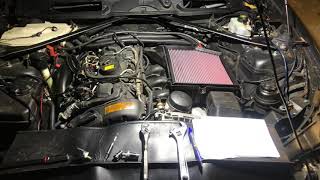
Typical fix: Replace the High-Pressure Fuel Pump. This is an involved job as it requires removing the intake manifold for access. 🎬 Watch: Step-by-step N55 high pressure fuel pump replacement guide. On some earlier models, replacing the pump with the updated version may also require a wiring adapter harness (P/N 12518638006).
Est. part cost: $500-$1000 - Faulty Fuel Rail Pressure Sensor 🟡 Medium Probability The sensor is located on the high-pressure fuel rail and can fail due to heat and vibration, sending incorrect data to the DME. It's a common point of failure that can mimic a bad HPFP.
How to confirm: With a scan tool, observe the fuel pressure reading. If the reading is stuck, erratic, or clearly implausible (e.g., zero or maxed out) even when the engine is off, the sensor is the prime suspect. This is often diagnosed after replacing the HPFP doesn't solve the issue, making it a common misdiagnosis.
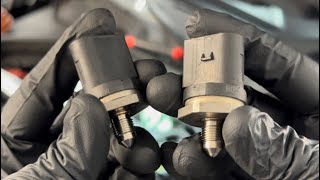
Typical fix: Replace the fuel rail pressure sensor. This is more accessible and much cheaper than the HPFP. It's located on the back of the fuel rail and can be replaced in under 30 minutes. 🎬 See this walkthrough for replacing the fuel rail pressure sensor.
Est. part cost: $50-$150 - Failing Low-Pressure Fuel Pump (LPFP) ⚪ Low Probability While less common for this specific code, the in-tank LPFP can weaken over time and fail to supply enough fuel to the HPFP, causing it to starve and triggering the P0087 code. This is more likely on higher mileage vehicles (over 100k miles).
How to confirm: The N55 engine in this chassis does not have a dedicated low-pressure fuel sensor from the factory. Diagnosis requires tapping into the fuel line with a mechanical gauge or observing the behavior of the high-pressure system. If the high pressure drops under sustained load but is fine at idle, it could indicate the LPFP can't keep up.
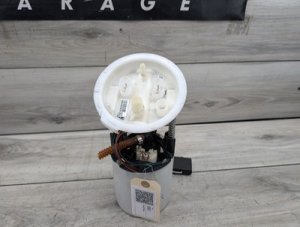
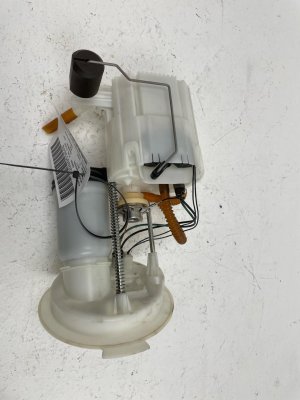
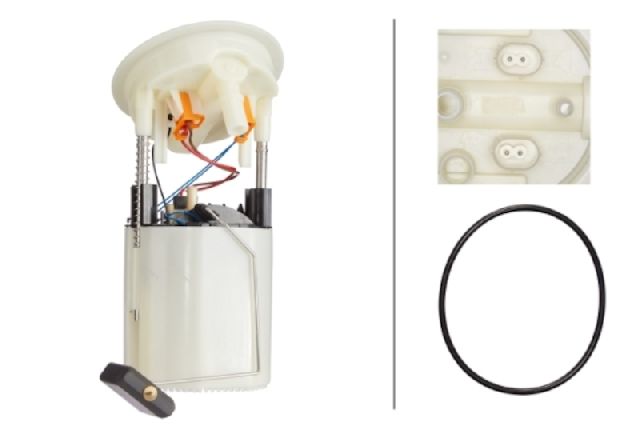
Typical fix: Replace the low-pressure fuel pump assembly located in the fuel tank. This is accessed from under the rear seat.
Est. part cost: $200-$400
Rare But Worth Checking
- Clogged Fuel Filter: The fuel filter is integrated into the low-pressure fuel pump assembly on these models. While not a separate part to replace, a severely clogged filter can restrict flow and contribute to low-pressure symptoms, usually pointing to a needed LPFP replacement.
- Leaking Fuel Injector: A fuel injector that is stuck open can cause a drop in rail pressure. This would typically be accompanied by a specific cylinder misfire code (e.g., P0301), signs of a rich condition in that cylinder, and possibly fuel smell in the oil.
- Low-Pressure Fuel Sensor (on models equipped): While most E9x/F30 N55 models do not have a low-pressure sensor, some related platforms do. If one is present and fails, it could cause the DME to misinterpret fuel delivery and contribute to this code. It is located on the fuel supply line.
Diagnosis Steps
- Read all fault codes using a BMW-specific scan tool (e.g., ISTA) to check for related codes that can help pinpoint the issue, such as sensor-specific faults like P10D9.
- Monitor live data for both low-pressure and high-pressure fuel systems. Check requested vs. actual fuel rail pressure at idle, during a cold start, and under heavy acceleration (WOT). A large deviation points to a problem.
- Verify low-pressure fuel pump (LPFP) operation. The pressure should be stable at approximately 72 PSI (5 Bar). Since there is no sensor, this must be checked with a mechanical gauge if the LPFP is suspected.
- If high pressure is low but LPFP pressure is good, inspect the fuel rail pressure sensor. Check its wiring and connector. If live data seems implausible (e.g., stuck at one value, or throwing a P10D9 code), the sensor is a strong suspect.
- If the LPFP and rail sensor are confirmed to be working correctly, the High-Pressure Fuel Pump (HPFP) is the most likely culprit.
- Before replacing any parts, check for any applicable recalls or extended warranties with a BMW dealer, as the HPFP was covered for many vehicles.
Parts You'll Likely Need
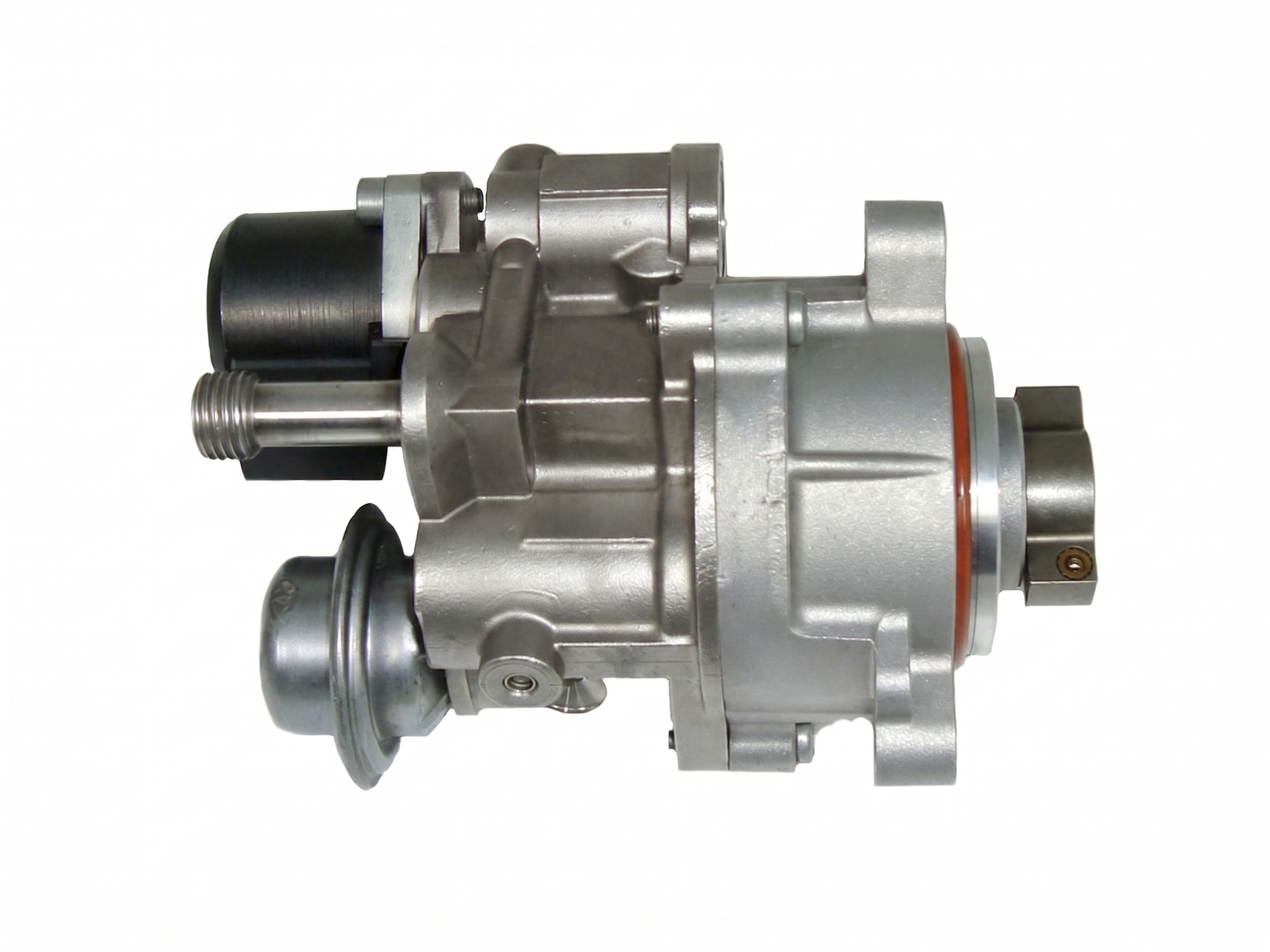
- High-Pressure Fuel Pump (HPFP)
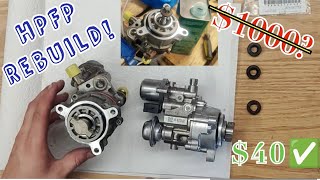
(OEM #13518604231)— This is the most common failure point on the N55 engine that causes code P0087. This is the updated Bosch part number that supersedes older, less reliable versions. 🎬 Watch: Detailed walkthrough on how to rebuild your HPFP.
Trusted brands: Bosch (OEM)
OEM price range: $700-$1000
Aftermarket price range: $300-$800 - Fuel Rail Pressure Sensor
(OEM #13537620946)— A common secondary cause. It can fail and send incorrect readings, mimicking a pump failure. It's a logical part to test or replace before the more expensive HPFP. This part number supersedes the older 13537584404.
Trusted brands: Bosch (OEM)
OEM price range: $100-$160
Aftermarket price range: $50-$90 - HPFP Wiring Adapter
(OEM #12518638006)— May be required when replacing an original, early-style HPFP with the newer, more reliable design on cars produced before late 2013.
Trusted brands: Genuine BMW
OEM price range: $25-$40
Related Codes That Often Appear With This One
- P15DF — A BMW-specific code for 'High Pressure Fuel, plausibility, cold start: Pressure too low', which directly supports the P0087 fault, often appearing after a cold start.
- P10D9 — A BMW-specific code for 'Fuel Rail Pressure Sensor Signal Stuck', pointing towards a potential issue with the sensor itself rather than the pump.
- P0171 — 'System Too Lean (Bank 1)' often appears because the low fuel pressure prevents the engine from getting the fuel it needs, resulting in a lean air/fuel mixture.
- P0300-P0306 — Misfire codes for random or specific cylinders are common because insufficient fuel pressure leads to incomplete combustion.
Technical Service Bulletins (TSBs) & Recalls
- While not a TSB, BMW Campaign No. 23V-707 was a safety recall for VANOS bolts on 2010-2012 models, which could cause stalling and is a critical related issue for owners to be aware of.
Platform-Specific Known Issues
- BMW extended the warranty on the HPFP for many models to 10 years or 120,000 miles due to the high failure rate. While this may have expired for most 2010-2013 models, it's worth checking with a dealer.
- Some owners on forums report successfully fixing P0087 by replacing the fuel rail pressure sensor first, avoiding the costly HPFP replacement.
Mechanic-Grade Diagnostic Values
- High-Pressure Fuel Rail Pressure (Live Data) — expected: At idle: ~700-800 PSI. Normal driving: ~1300-1800 PSI. Heavy load (WOT): 2000+ PSI.. Failure: Pressure drops below 700 PSI at idle, or fails to rise above 1500 PSI under load. A reading of only 75 PSI after a cold start is a definitive sign of failure.
- Low-Pressure Fuel System Pressure — expected: Stable at ~72 PSI (5 Bar) once the engine is running.. Failure: Pressure is significantly below 72 PSI. This must be checked with a mechanical gauge as most N55s lack a factory sensor.
Hidden / Shadow Codes Worth Checking
- 2BDE: Fuel high pressure on enabling of injection: pressure too low. This is a very common shadow code associated with long cranks and a failing HPFP or fuel pressure regulator. (see via BMW-specific scan tools like ISTA, or advanced OBD2 apps like MHD or ProTool.)
- 2BEE: High Pressure Fuel, plausibility, cold start: Pressure too low. This code specifically points to a pressure drop during a cold start, directly supporting P0087 and P15DF. (see via BMW-specific scan tools like ISTA.)
- 11A002: High pressure fuel, plausibility: Pressure too low. This is a primary fault code stored in the DME that corresponds to the generic P0087. (see via BMW-specific scan tools like ISTA.)
- 11A401 / 11B401: Fuel high pressure during/after fuel injection release: Pressure too low. These codes indicate the pressure drop is happening at the moment of injection. (see via BMW-specific scan tools like ISTA.)
- 2BF8: Rail pressure sensor, permanently stuck. This code, often appearing with other pressure codes, strongly suggests the sensor itself is faulty, not the pump. (see via BMW-specific scan tools like ISTA.)
Scan Tool Commands That Help

- ISTA (BMW Dealer Software): Fuel System Test Plan — To systematically check the electric low-pressure pump, rail pressure sensor, and the HPFP. The software runs guided tests, but may not identify load-dependent faults.
- MHD Flashing App: Reset Adaptations -> Fuel High Pressure System — As a temporary measure. Some owners report that resetting fuel adaptations can make the car run properly for a short time if the HPFP is starting to fail, confirming the system is struggling to adapt to a weak component.
Wiring & Ground Locations

- Fuel Rail Pressure Sensor Connector — On the back of the high-pressure fuel rail, towards the firewall, underneath the engine cover and intake manifold runners.. This connector can become brittle from heat. A poor connection here can mimic a failed sensor or pump, causing erratic pressure readings. Checking for a secure connection and undamaged wiring is a key diagnostic step.
Real Owner Repair Stories
- Pelican Parts Forum user (2011 BMW 535i (N55)) — Low power, long start, CEL with codes P0171 (lean) and P0087.
❌ Tried (didn't work) Extensive online research with unclear answers.
✅ What actually fixed it The High-Pressure Fuel Pump (HPFP) was replaced, which resolved all symptoms and codes. - Reddit user r/BmwTech (2011 BMW N55) — Long cranks and shadow codes 2BDE and 2BF0.
❌ Tried (didn't work) Replacing the HPFP (twice), Replacing the high-pressure fuel sensor
✅ What actually fixed it Replacing the fuel pressure regulator (located in the low-pressure fuel pump assembly) finally resolved the long cranks and shadow codes. - Bimmerpost Forum user (2011 BMW 335i (N55)) — Long crank (3-5 seconds), occasional stalling at idle, and shadow code 2BDE.
❌ Tried (didn't work) Priming the pump before starting.
✅ What actually fixed it The user replaced both the HPFP and the fuel rail pressure sensor at the same time, which fixed the long crank and cleared the shadow codes.
When the Usual Fixes Don't Work
- While the HPFP is the most common culprit for P0087, it is not the only cause. Multiple owners have replaced the expensive HPFP only to find the issue persisted. In one documented case, the final fix for identical long-crank symptoms and shadow codes (2BDE) was the much cheaper fuel pressure regulator, which is part of the low-pressure pump assembly in the fuel tank. Another owner found that the code P10D9 ('Fuel Rail Pressure Sensor Signal Stuck') was the key, and replacing the sensor alone fixed the problem, suggesting that sensor-specific codes should be prioritized during diagnosis.
OEM Part Supersession History
13537584404→13537620946— The original fuel rail pressure sensor design was updated for improved reliability and resistance to damage from engine vibrations.N54-style HPFP (e.g., 13517616170)→Updated N55 HPFP (e.g., 13518604231)— The HPFP design was changed around 2012-2013 to a more reliable unit. The early N55 engines used a pump design shared with the N54 engine, which had a high failure rate.
Heads up: The early and late style pumps are not directly interchangeable. A forum post notes that the DME also changed, preventing a simple swap even with a wiring adapter. When replacing an early pump with a newer revised version, an adapter harness (12518638006) is often required.
Model Year Variations Within This Range
- 2010-early 2012: These models typically use the older, N54-style High-Pressure Fuel Pump which is notoriously failure-prone. Some of these very early N55s may also be equipped with a low-pressure fuel sensor, which was deleted on later models.
- Late 2012-2013: These models use an updated HPFP design that is generally more reliable than the early version. They are not cross-compatible with the early pumps without significant changes.
Diagnostic Flowchart
Other Known Issues on This Vehicle
Issues unrelated to this code that are worth knowing about as an owner of this generation:
- Electric Water Pump Failure 🔴 High — Very common failure, typically between 60,000 and 90,000 miles. Often fails suddenly with little warning, leading to overheating.
- Oil Filter Housing Gasket (OFHG) Leak 🔴 High — Extremely common. The gasket hardens and leaks oil onto the serpentine belt, which can cause the belt to slip off, get ingested by the front crank seal, and lead to catastrophic engine damage.
- Valve Cover & Gasket Leak 🟠 Medium — Common oil leak point due to the plastic valve cover warping from heat cycles. The integrated PCV valve can also fail, causing high oil consumption and rough idle.
- VANOS Solenoid Failure 🟠 Medium — Common as the engine ages. Solenoids get clogged or fail, causing rough idle, poor performance, and VANOS-related fault codes.
- VANOS Camshaft Gear Bolt Failure 🔴 High — Affects 2010-2012 models. The aluminum bolts can loosen or break, potentially causing the engine to stall or suffer severe internal damage. (Ref: BMW Recall Campaign No. 23V-707)
- Cracked Plastic Charge Pipe 🟠 Medium — The original plastic charge pipe is known to become brittle and crack, especially on tuned vehicles, causing a sudden loss of boost and power.
Used vs. New Parts: Buying Guide for This Vehicle
When a used part is the smart pick: For this specific repair, buying a used electronic sensor or a used OEM HPFP is highly discouraged due to the high failure rates of these components. A used part is likely to have a short lifespan or be faulty from the start. However, a professionally rebuilt HPFP can be a viable option.
Donor-vehicle mileage cap: roughly under 50000 miles for the part to have meaningful remaining life.
What to inspect on the donor part:
- For a rebuilt HPFP, verify the rebuilder offers a warranty.
- Ask if the rebuilder uses upgraded components, such as E85-compatible seals, which may offer longer life than the original.
- Avoid any used pump that shows external corrosion or physical damage.
OEM-only on this vehicle (don't cheap out):
- High-Pressure Fuel Pump (HPFP): While high-performance aftermarket options exist for tuned cars, for a stock replacement, a new Bosch (OEM) or professionally rebuilt unit is the safest choice. Avoid no-name aftermarket pumps.
- Fuel Rail Pressure Sensor: Stick with the Bosch OEM sensor. It is a critical sensor and aftermarket versions can have poor accuracy and longevity.
Aftermarket brands forum-validated for this vehicle:
- For stock power: Bosch (OEM for pump and sensor).
- For rebuilt early-style HPFPs: Performance Engineering Solutions (mentioned in a detailed repair video).
- For high-power upgrades (for tuned cars): Dorch Engineering, Spool Performance, Xtreme-DI.
Brands owners have reported issues with on this vehicle:
- Unbranded, low-cost HPFPs and sensors from online marketplaces are a significant risk and often fail quickly.
Real Owner Stories
Aggregated from forums and TSBs cited above. Mileages and costs reflect what owners reported in those sources.
2011 335i xDrive N55
Symptoms: Check engine light with code P0087, and fuel economy dropped significantly to 10mpg from a normal 20mpg.
What fixed it: The owner was advised that P0087 indicates low fuel rail pressure, typically requiring HPFP or sensor inspection.
Source hint: reddit r/BmwTech
2011-2013 BMW 335i N55
Symptoms: Limp mode and P0087 code thrown specifically under hard acceleration.
What fixed it: Diagnosis of the high-pressure fuel system; often points to the HPFP failing to maintain pressure under load.
Source hint: f30.bimmerpost.com: Thread 'p0087 code thrown...options?'
2011-2013 BMW 535i (F10) N55
Symptoms: P0087 code and symptoms mimicking a bad HPFP.
What fixed it: Replacing the fuel rail pressure sensor instead of the HPFP.
Source hint: vehicle_specific_issues citing forum and video reports
Documented NHTSA Reports
NHTSA ODI #11011930
Symptoms: A drivetrain malfunction and check engine light occurred. A scan revealed code P0087, which translates to "low fuel rail pressure."
NHTSA ODI #11310759
Symptoms: While driving at approximately 30 MPH on a city street, the vehicle started shaking and the engine light illuminated. A scanner confirmed code P0087.
NHTSA ODI #10978697
Symptoms: An owner reported that the HPFP failed and went into bypass, causing the car to revert to limp mode with OBDII fault codes P0087 and P142E.
NHTSA ODI #11725764
Symptoms: The vehicle displayed a check engine light on the cluster and a drivetrain error on the infotainment screen, with error code P0087 indicating fuel/rail system pressure too low.
Related OBD-II Codes
Frequently Asked Questions
Is there a recall for the High-Pressure Fuel Pump (HPFP) on my 2010-2013 BMW 335i?
My 2011 335i is stalling; could this be related to the VANOS system instead of the fuel pump?
Do I need any special parts if I replace the HPFP on an early N55 engine?
Can I check the low-pressure fuel pump (LPFP) using my BMW scan tool?
Is it possible to fix P0087 without replacing the expensive High-Pressure Fuel Pump?
Why did my 335i go into 'Limp Mode' with a P0087 code?
Helpful Videos
Used OEM Parts in Stock


New Aftermarket Parts Available

The information in this article is provided for general reference and educational purposes only. Vehicle specifications, procedures, and part compatibility can vary by production date, trim level, and region. Always consult your vehicle's factory service manual and verify part numbers before purchasing or performing repairs. Safety-critical components such as airbags, seat belts, and braking systems should be installed by a qualified professional.
- BMW 335i:
- 🎬 Helpful Videos
- 🛍️ Shop This Part
- What's Unique About the 2010-2013 BMW 335i
- Symptoms You May Notice
- Most Likely Causes
- Rare But Worth Checking
- Diagnosis Steps
- Parts You'll Likely Need
- Related Codes That Often Appear With This One
- Technical Service Bulletins (TSBs) & Recalls
- Platform-Specific Known Issues
- Mechanic-Grade Diagnostic Values
- Hidden / Shadow Codes Worth Checking
- Scan Tool Commands That Help
- Wiring & Ground Locations
- Real Owner Repair Stories
- When the Usual Fixes Don't Work
- OEM Part Supersession History
- Model Year Variations Within This Range
- Diagnostic Flowchart
- Other Known Issues on This Vehicle
- Used vs. New Parts: Buying Guide for This Vehicle
- Real Owner Stories
- 2011 335i xDrive N55
- 2011-2013 BMW 335i N55
- 2011-2013 BMW 535i (F10) N55
- Documented NHTSA Reports
- NHTSA ODI #11011930
- NHTSA ODI #11310759
- NHTSA ODI #10978697
- NHTSA ODI #11725764
- Related OBD-II Codes
- Frequently Asked Questions
- 🎟️ Get 5% Off