

P0087 on 2013-2017 Audi S5 3.0T: Causes for Low Fuel Rail Pressure and Fixes
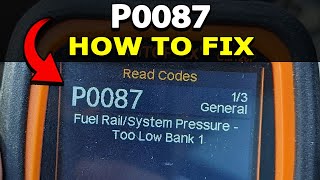
On the 2013-2017 Audi S5 3.0T, P0087 almost always points to a failing High-Pressure Fuel Pump (HPFP). Expect symptoms like power loss under acceleration, especially above 3,000 RPM. Before replacing the expensive HPFP, it's wise to rule out less common but possible failures of the in-tank low-pressure fuel pump (LPFP), its control module, or a fuel pressure sensor. A real-world owner on Reddit confirmed their P0087 was resolved by replacing the HPFP.
- P0087 on your S5 means the high-pressure fuel system is not delivering enough fuel, most often due to a failing High-Pressure Fuel Pump (HPFP).
- Symptoms are most noticeable under load, such as a severe loss of power when accelerating.
- Do not drive the vehicle. A sudden engine stall is a serious safety risk.
- Proper diagnosis is key. Use a scan tool to log specified vs. actual fuel rail pressure to confirm the failure before buying expensive parts.
- While the HPFP is the most likely cause, always rule out the low-pressure fuel pump and fuel filter first to avoid a costly misdiagnosis.
What's Unique About the 2013-2017 Audi S5
The B8.5 S5's 3.0T supercharged V6 is known for its performance, which relies heavily on its precise direct injection fuel system. While generally robust, the High-Pressure Fuel Pump (HPFP) is a known weak point that can fail, leading directly to the P0087 code. Forum discussions among S4 and S5 owners (which share the same engine) frequently center on the HPFP as the primary culprit for these symptoms. Unlike some earlier VAG engines with flat tappet followers, the 3.0T uses a more durable roller-style cam follower for the HPFP. However, the pump itself remains the most probable cause of failure, not the follower.
Symptoms You May Notice
- Significant loss of power, especially during acceleration or at higher RPMs (above 3,000 RPM)
- Check Engine Light is on (may be flashing)
- EPC (Electronic Power Control) light is on
- Engine hesitation or sputtering under load
- Rough idle
- Hard starting, requiring longer than usual cranking
- Engine stalling, sometimes intermittently and without warning
- Replacing the high-pressure sensor (G247) without proper diagnosis. This is a very labor-intensive job as it sits under the supercharger, and the HPFP or LPFP are much more common culprits for P0087.
- Replacing only the HPFP without checking the low-pressure fuel pump first. A weak in-tank pump or its control module can mimic the symptoms of a failed HPFP.
Most Likely Causes
- High-Pressure Fuel Pump (HPFP) Failure 🔴 High Probability The HPFP is a mechanical component driven by the camshaft that is under constant stress. It is the most frequently reported failure part for P0087 on this platform, as confirmed in numerous owner forums.
How to confirm: Use a diagnostic tool (like VCDS) to log 'Fuel Rail Pressure (actual)' vs. 'Fuel Rail Pressure (specified)'. Under load (e.g., a wide-open throttle pull in 3rd gear), if the actual pressure cannot keep up with the specified pressure and drops significantly, the HPFP is failing. The deviation can be as much as 50-70 bar under load during a failure event.
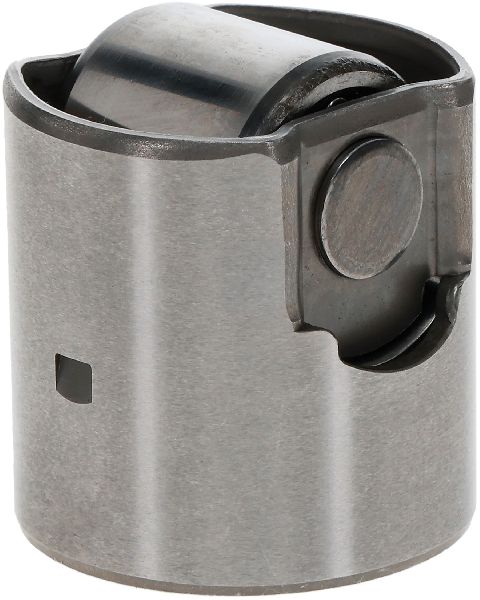
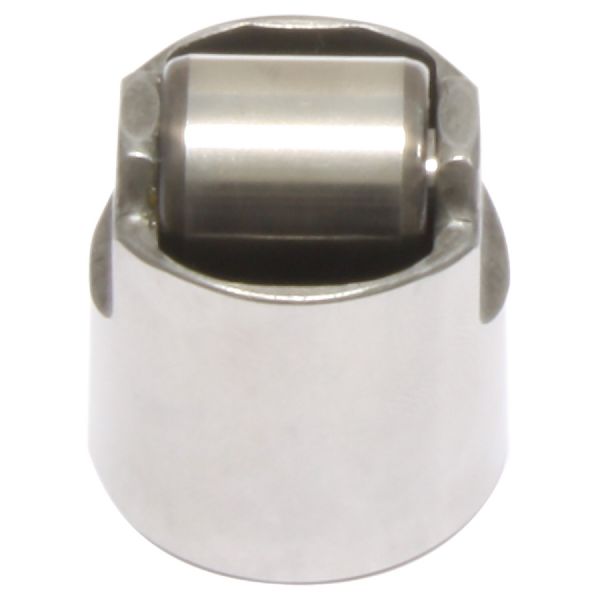
Typical fix: Replace the High-Pressure Fuel Pump. It is also recommended to replace the roller-style cam follower as a preventative measure, though it is less prone to failure than the pump itself.
Est. part cost: $400-$700 - Low-Pressure Fuel Pump (LPFP) Failure 🟡 Medium Probability The in-tank low-pressure pump feeds the HPFP. If it becomes weak or its control module fails, it can starve the HPFP, causing it to under-deliver pressure and trigger P0087. This is a common misdiagnosis for a bad HPFP.
How to confirm: Before testing the high-pressure side, check the low-pressure fuel system. A diagnostic scan tool can monitor the low-pressure fuel values to see if they are within specification (typically 4-6 bar or ~58-87 PSI, depending on demand). A drop in this pressure points to the LPFP, its control module, or a clogged filter.
Typical fix: Replace the in-tank low-pressure fuel pump assembly and/or its control module.
Est. part cost: $300-$500 - Faulty Fuel Pressure Sensor ⚪ Low Probability There are two pressure sensors. The low-pressure sensor (G410) has a known history of failure and has an updated part number. The high-pressure sensor (G247) on the fuel rail is less common to fail but is a possibility. A faulty sensor can send incorrect low-pressure readings to the ECM, triggering the code even if the pressure is fine.
How to confirm: Compare the pressure reading from the scan tool with a reading from a mechanical fuel pressure gauge. If the readings differ significantly, the sensor is likely faulty. The G410 low-pressure sensor is a more common failure point and has an updated part number (06E906051K). A failure of the G247 sensor is often accompanied by codes P0088 (Too High) or P0191/P119A (Sensor Performance).
Typical fix: Replace the faulty fuel pressure sensor. The G247 (high-pressure) is located under the supercharger and is very labor-intensive to replace, while the G410 (low-pressure) is more accessible on a fuel line in the engine bay.
Est. part cost: $50-$150 - Clogged Fuel Filter ⚪ Low Probability The fuel filter has a recommended replacement interval of 55,000 miles. If not replaced, it can become restricted, impeding fuel flow to the HPFP and starving it of fuel.
How to confirm: This is often diagnosed by first confirming low fuel pressure and then replacing the filter as a relatively inexpensive and routine maintenance item before moving to more expensive components. It's often replaced alongside the LPFP.
Typical fix: Replace the fuel filter.
Est. part cost: $30-$80
Rare But Worth Checking
- Leaking Fuel Injector: A fuel injector stuck open can cause a drop in rail pressure. This would likely be accompanied by other symptoms like a strong fuel smell, black smoke, specific cylinder misfire codes (P030X), and poor fuel economy. A diesel leak-off test is a similar diagnostic principle.
- Worn Cam Lobe/Follower: While the 3.0T's roller follower is more robust than older flat tappet designs, extreme wear on the camshaft lobe that drives the HPFP can reduce the pump's stroke and effectiveness. This is very rare but possible on high-mileage engines and would likely present with metal shavings in the oil.
Diagnosis Steps
- Connect a diagnostic scanner (VCDS is preferred for Audis) and confirm the P0087 code is present. Check for other related codes like P310B, P0171, or misfires.
- Check for any Technical Service Bulletins (TSBs) related to the fuel system for your vehicle's VIN. TSB 2048604/2 notes a potential software update for some 2017-2018 models that could resolve a false P0087 code.
- Using the scanner's live data function, monitor both low-pressure and high-pressure fuel readings at idle and under load.
- Log 'Fuel Rail Pressure (actual)' and 'Fuel Rail Pressure (specified)' while performing a controlled, full-throttle acceleration run in a safe location (3rd gear is ideal). If the actual pressure drops significantly below the specified value (e.g., by more than 20 bar, and especially if it falls off a cliff), the issue is with the high-pressure system.
- If the high-pressure reading is low, first verify the low-pressure system is supplying adequate fuel (should be around 4-6 bar or ~58-87 PSI) to the HPFP. If low-pressure is weak, diagnose the in-tank pump, its controller (J538), and the fuel filter.
- If the low-pressure side is healthy but high-pressure is low, the HPFP is the primary suspect.
- Inspect the HPFP for any visible leaks. Also, check the engine oil for a strong gasoline smell, which could indicate the HPFP is leaking fuel into the crankcase via a failed internal seal.
- If the HPFP and LPFP test well, investigate the fuel pressure sensors. The G410 (low pressure) is a known failure item and relatively easy to replace. The G247 (high pressure) is much harder to access and less likely to be the sole cause of P0087 without other sensor-specific codes.
Parts You'll Likely Need
- High-Pressure Fuel Pump (HPFP)
(OEM #06E127025S, 06E127025T, 06E127025AB)— This is the most common component to fail and directly cause the P0087 code on the 3.0T engine.
Trusted brands: Hitachi (OEM), Bosch, Genuine Audi
OEM price range: $600-$800
Aftermarket price range: $400-$600 - Low-Pressure Fuel Sensor (G410)
(OEM #06E906051K)— This sensor is a known failure point and has an updated part number. It can send false signals that lead to a P0087 code, often with P310B.
Trusted brands: Bosch (OEM), VEMO, Genuine Audi
OEM price range: $100-$150
Aftermarket price range: $50-$90 - In-Tank Low-Pressure Fuel Pump (LPFP)
(OEM #8K0919051G)— If the in-tank pump weakens, it cannot supply the HPFP with enough fuel, causing it to starve and triggering a high-side pressure code.
Trusted brands: VDO (OEM), Pierburg, Genuine Audi
OEM price range: $300-$450
Aftermarket price range: $150-$250
Related Codes That Often Appear With This One
- P0300-P0306 — Random or specific cylinder misfire codes can occur because the low fuel pressure leads to a lean air/fuel mixture that fails to ignite properly.
- P0171 — This code for "System Too Lean (Bank 1)" can be triggered when low fuel pressure prevents the injectors from supplying the correct amount of fuel.
- P310B — This code for "Low Pressure Fuel regulation: Fuel Pressure Outside Specification" often appears alongside P0087, pointing towards an issue with the low-pressure side (LPFP, G410 sensor, or filter) feeding the high-pressure pump.
Technical Service Bulletins (TSBs) & Recalls
- TSB 2048604/2 - Notes a potential software update for some 2017-2018 models that could resolve a false P0087 code, though this is at the very end of the B8.5 chassis life.
Platform-Specific Known Issues
- There is a Technical Service Bulletin (TSB 2048604 / 01 18 60) for some 2017-2018 S4/S5/SQ5 models where an ECM software update is available to fix an issue that could falsely trigger a P0087 code. It's worth checking if this applies before replacing hardware.
Mechanic-Grade Diagnostic Values
- Low-Pressure Fuel System (LPFP output) — expected: 4.0 to 6.0 bar (~58 to 87 PSI) depending on demand.. Failure: Pressure consistently below 4.0 bar indicates a weak LPFP, clogged filter, or failing control module.
- High-Pressure Fuel Rail (at idle) — expected: ~30 to 40 bar.. Failure: Actual pressure significantly and consistently lower than specified pressure (e.g., actual at 29 bar when specified is 38 bar) points to a high-pressure side issue.
- High-Pressure Fuel Rail (Wide-Open Throttle) — expected: Actual pressure should closely track specified pressure, which can exceed 130 bar. Stock systems are rated up to 200 bar.. Failure: A sharp drop where actual pressure cannot meet specified demand (e.g., specified is 120 bar but actual drops to 60 bar) is a classic sign of a failing HPFP.
- Engine Ground Strap Voltage Drop — expected: Less than 0.15 Volts at idle.. Failure: A reading higher than 0.15V indicates a degraded ground connection, which can cause issues for the fuel pump control module and sensors.
Hidden / Shadow Codes Worth Checking
- P12A300: Fuel Pressure Regulator Valve mechanical malfunction. (see via Often appears alongside P008700 in the ECM fault memory when read with a dealer-level tool like ODIS or an advanced tool like VCDS. It points more specifically to a problem with the HPFP's internal regulation.)
Scan Tool Commands That Help
- VCDS / ODIS: Live Data - Measuring Blocks 103, 106, 140 — Use to simultaneously monitor low-pressure fuel values (MVB 103), LPFP duty cycle (MVB 106), and specified vs. actual high rail pressure (MVB 140). This allows a technician to determine if the fault originates on the low-pressure or high-pressure side.
- ODIS: Software Version Management (SVM) Update — For 2017-2018 models, if TSB 2048604/2 applies, running the SVM update function can re-flash the ECM with improved diagnostic software that may resolve a false P0087 code without replacing any hardware.
Wiring & Ground Locations
- J538 — Fuel Pump Control Module, located on top of the fuel tank, under the rear seat. Access requires removing the fuel pump access cover and partially dropping the fuel tank.. This module controls the in-tank low-pressure pump. Its failure or a bad connection to it can starve the HPFP of fuel, directly causing P0087.
- Engine/Chassis Grounds — Primary ground points for the B8.5 platform are located on the transmission bellhousing, the firewall, and on the left/right side of the engine bay.. A corroded or loose engine ground strap is a common issue that can cause fluctuating voltage to sensors and modules, including the fuel pump controller (J538), leading to intermittent fuel pressure problems.
- Battery Ground — In the trunk, under the spare tire in the wheel well.. While less likely to be the direct cause, a poor main ground connection can cause a myriad of electrical issues throughout the vehicle.
Real Owner Repair Stories
- Reddit user on r/Audi (2015 Audi S4 (B8.5 3.0T engine)) — Shaky feeling, Check Engine Light, loss of power above 3,000 RPM, P0087 code.
❌ Tried (didn't work) Initially confused by parts recommended by general auto parts stores.
✅ What actually fixed it Replacing the High-Pressure Fuel Pump (HPFP) and the cam follower. The owner specifically mentioned sourcing the correct part from FCP Euro. - Reddit user on r/Audi (2014 Audi SQ5 (3.0T engine)) — Check Engine Light with code P0087.
❌ Tried (didn't work) Replaced the HPFP., Replaced the high-pressure sensor on the fuel rail., Replaced the low-pressure fuel pump in the gas tank.
✅ What actually fixed it The code persisted after replacing all major components. A different dealer diagnosed that the *newly installed* HPFP was defective from the factory. Replacing the HPFP a second time, along with the cam follower which showed minor wear, finally resolved the code. - Carly community comments (2012 Audi S5) — Engine stalling, rough running, increased fuel consumption, Check Engine Light with codes P0087 and P0171.
❌ Tried (didn't work) Initial suspicion was a failed fuel pump.
✅ What actually fixed it The problem was a faulty wiring connection to the fuel pump. The plug contacts were corroded, causing intermittent operation. The fix was to clean the connections and replace the damaged section of the wiring harness, which resolved all symptoms without replacing the pump.
"I Checked Everything" — The Actual Cause
- A case was reported where all fuel system components seemed okay, but the root cause of P0087 was a corroded electrical connector and wiring harness for the fuel pump. This created an intermittent electrical connection, mimicking a mechanical pump failure. A smoke test for leaks would not have found this electrical fault.
When the Usual Fixes Don't Work
- While the HPFP is the most common cause, there are multiple documented cases where replacing it did not solve the problem. In one instance, a brand new HPFP was defective and required a second replacement to fix the issue. In another case, the true culprit was a simple corroded wiring harness to the fuel pump, a much cheaper fix that was overlooked. These instances strongly advise against replacing the HPFP without first thoroughly diagnosing the low-pressure system and the electrical supply to the pumps.
OEM Part Supersession History
06E906051E, 06E906051F, etc.→06E906051K— Improvements to the sensor to prevent internal fuel intrusion which caused false signals.
Heads up: Older revisions are prone to failure and should be replaced with the latest available part number.06E127025S, 06E127025T→06E127025AB— Internal revisions and improvements by the manufacturer (Hitachi) to increase reliability.
Heads up: While older revisions may fit, it is always best practice to install the latest available part number to benefit from reliability improvements.
Model Year Variations Within This Range
- 2017-2018: These later model years may have an ECM software version that is overly sensitive and can falsely trigger a P0087 code. TSB 2048604/2 addresses this with a software update, which may not be applicable to earlier 2013-2016 models.
Diagnostic Flowchart
Other Known Issues on This Vehicle
Issues unrelated to this code that are worth knowing about as an owner of this generation:
- Thermostat and Water Pump Failure 🔴 High — Very common, often occurs between 60k-100k miles. The plastic components become brittle and crack, causing coolant leaks. (Ref: null)
- PCV Valve Failure 🔴 High — Common failure around 60k-80k miles. The diaphragm tears, causing a large vacuum leak, rough idle, whistling noise, and potential for oil leaks. (Ref: null)
- S-Tronic (DL501) Mechatronic Unit Failure 🔴 High — More common on earlier B8 models but can affect B8.5. Onset can be from 50k miles onward. Symptoms include jerky shifting, getting stuck in gear, and PRNDS light flashing. Repair is very expensive. (Ref: There have been recalls and service campaigns in some regions, but it varies.)
- Intake Valve Carbon Buildup 🟠 Medium — A consequence of direct injection. Noticeable performance degradation (misfires, hesitation) typically occurs every 60k-80k miles. Requires manual cleaning (walnut blasting). (Ref: null)
- Engine Mount Failure 🟠 Medium — The fluid-filled engine mounts tend to fail, causing excessive engine vibration at idle and during acceleration. Common on cars over 80k miles. (Ref: null)
Used vs. New Parts: Buying Guide for This Vehicle
When a used part is the smart pick: For this specific repair, using used parts is generally not recommended due to the high-stress nature of the components. A used fuel rail or hard lines could be considered if they are thoroughly cleaned and inspected. A used sensor from a very low-mileage vehicle could be a cheap diagnostic tool, but not a permanent solution.
Donor-vehicle mileage cap: roughly under 50000 miles for the part to have meaningful remaining life.
What to inspect on the donor part:
- For any used fuel pump assembly, inspect the electrical connector pins for any signs of melting, browning, or corrosion, which indicates overheating and imminent failure.
- Verify the part number is the latest possible revision.
- Avoid parts from vehicles with signs of major impact or flood damage.
OEM-only on this vehicle (don't cheap out):
- High-Pressure Fuel Pump (HPFP)
- Fuel Pump Control Module (J538)
- Fuel Pressure Sensors (G247 and G410)
Aftermarket brands forum-validated for this vehicle:
- Hitachi (OEM for HPFP)
- Bosch (OEM for sensors)
- VDO (OEM for LPFP)
- For performance upgrades (requires ECU tuning): Integrated Engineering, 034Motorsport, APR
Brands owners have reported issues with on this vehicle:
- Unbranded, low-cost fuel pumps from marketplaces like eBay or Amazon have a high failure rate and should be avoided.
- Some owners have reported issues with certain aftermarket HPFP upgrade kits when not paired with the correct supporting tune, leading to persistent codes.
Real Owner Stories
Aggregated from forums and TSBs cited above. Mileages and costs reflect what owners reported in those sources.
2015 Audi S4 (B8.5) 3.0L TFSI
Symptoms: Showing P0087 Fuel Rail System Pressure Too Low.
What fixed it: Diagnosis focused on the High-Pressure Fuel Pump (HPFP) as it is the most frequently reported failure part for this platform.
Source hint: Reddit r/Audi thread titled 'audi_s4_2015_b85_showing_p0087_fuel_rail_system/'
2013-2017 Audi S5 3.0L TFSI
Symptoms: Limp mode upon throttle and low fuel pressure readings.
What fixed it: Replacing the High-Pressure Fuel Pump (HPFP) and monitoring actual vs specified fuel rail pressure.
Source hint: AudiWorld forum thread titled 'p0087-low-fuel-pressure-limp-mode-upon-throttle-2965317/'
Related OBD-II Codes
Frequently Asked Questions
Is there a software update for my 2017 Audi S5 to fix a false P0087 code?
I'm seeing P0087 on my B8.5 S5; should I replace the high-pressure sensor G247 first?
Which fuel pressure sensor is the 'common' failure point on the 3.0T engine?
How can I tell if my High-Pressure Fuel Pump (HPFP) is failing using VCDS?
Could a gasoline smell in my oil be related to the P0087 code?
Does the 3.0T engine have a recommended fuel filter interval that could prevent P0087?
Helpful Videos
Used OEM Parts in Stock


New Aftermarket Parts Available


The information in this article is provided for general reference and educational purposes only. Vehicle specifications, procedures, and part compatibility can vary by production date, trim level, and region. Always consult your vehicle's factory service manual and verify part numbers before purchasing or performing repairs. Safety-critical components such as airbags, seat belts, and braking systems should be installed by a qualified professional.
- Audi S5:
- 🎬 Helpful Videos
- 🛍️ Shop This Part
- What's Unique About the 2013-2017 Audi S5
- Symptoms You May Notice
- Most Likely Causes
- Rare But Worth Checking
- Diagnosis Steps
- Parts You'll Likely Need
- Related Codes That Often Appear With This One
- Technical Service Bulletins (TSBs) & Recalls
- Platform-Specific Known Issues
- Mechanic-Grade Diagnostic Values
- Hidden / Shadow Codes Worth Checking
- Scan Tool Commands That Help
- Wiring & Ground Locations
- Real Owner Repair Stories
- "I Checked Everything" — The Actual Cause
- When the Usual Fixes Don't Work
- OEM Part Supersession History
- Model Year Variations Within This Range
- Diagnostic Flowchart
- Other Known Issues on This Vehicle
- Used vs. New Parts: Buying Guide for This Vehicle
- Real Owner Stories
- 2015 Audi S4 (B8.5) 3.0L TFSI
- 2013-2017 Audi S5 3.0L TFSI
- Related OBD-II Codes
- Frequently Asked Questions
- 🎟️ Get 5% Off