

P0087 on 2012-2018 Audi A6 3.0T: Fuel Rail Pressure Too Low Causes & Fixes
For the 2012-2018 Audi A6 3.0T (C7), code P0087 almost always points to a failing High-Pressure Fuel Pump (HPFP), a weak in-tank Low-Pressure Fuel Pump (LPFP), or a clogged fuel filter. Diagnosis must differentiate between the low and high-pressure circuits. Expect to pay $300-$600 for a quality replacement HPFP, with DIY replacement being moderately difficult due to component location.
- P0087 on the Audi A6 3.0T means the fuel pressure in the engine's high-pressure rail is too low.
- The most likely causes are a failed High-Pressure Fuel Pump (HPFP) or a failed Low-Pressure Fuel Pump (LPFP) in the tank.
- Do not immediately replace the HPFP. You must first test the low-pressure system (LPFP and fuel filter) to avoid misdiagnosis.
- Due to stalling risk, it is unsafe to drive the vehicle with this code active.
- Repair is complex and involves a hazardous high-pressure fuel system, making professional service highly recommended.
What's Unique About the 2012-2018 Audi A6

The 3.0L TFSI V6 engine (EA837) uses a sophisticated direct injection system with two fuel pumps: a low-pressure pump (LPFP) in the fuel tank and a high-pressure fuel pump (HPFP) mounted on the engine and driven by a camshaft lobe. P0087 can be triggered by a failure on either side of the system. A weak LPFP can starve the HPFP, or the HPFP itself can fail internally. Audi has issued a Technical Service Bulletin (TSB 2031368/1, also referenced as 2043758 for similar platforms) warning technicians that P0087 does not automatically condemn the HPFP and that the entire fuel system, including the low-pressure side, must be diagnosed first. The low-pressure system should deliver fuel to the HPFP at approximately 4 to 6 bar (58 to 87 PSI).
Symptoms You May Notice
- Check Engine Light is on, often accompanied by an EPC (Electronic Power Control) light
- Significant loss of engine power, especially under acceleration or uphill.
- Engine hesitation, stuttering, or stumbling.
- Rough or uneven idle.
- Engine takes longer than usual to start (long crank).
- Unexpected engine stalling, which can happen while idling or driving.
- Vehicle may enter a reduced-power "limp mode".
- A noticeable smell of fuel in the cabin, which could indicate a leak.
- Replacing the High-Pressure Fuel Pump (HPFP) without first testing the low-pressure system. A weak in-tank pump or clogged filter can mimic the symptoms of a bad HPFP and is a less expensive repair.
- Assuming the P0087 code is the only problem. In some cases, a failing HPFP can start to degrade, sending small metal particles downstream and damaging the expensive fuel injectors.
Most Likely Causes

- High-Pressure Fuel Pump (HPFP) Failure 🔴 High Probability The HPFP is a mechanical pump driven by the camshaft that operates under extreme stress. Over time, internal components can wear out, leading to an inability to generate the required pressure. Hitachi is a known OEM supplier for this part.
How to confirm: Use a capable OBD-II scanner (VCDS, OBDeleven) to monitor live data for 'Requested Fuel Rail Pressure' and 'Actual Fuel Rail Pressure'. If the actual pressure consistently fails to meet the requested pressure under load (a deviation of over 500 bar can trigger the code), and the low-pressure system is confirmed to be working correctly, the HPFP is the likely culprit.
Typical fix: Replace the High-Pressure Fuel Pump. It is also highly recommended to replace the small cam follower (tappet) that the pump rides on at the same time to prevent premature wear on the new pump.
Est. part cost: $300-$600 - Low-Pressure Fuel Pump (LPFP) Failure 🟡 Medium Probability The in-tank LPFP is responsible for supplying fuel to the HPFP. If it becomes weak, it cannot provide enough volume, starving the HPFP and preventing it from reaching target pressure. The fuel pump control module (J538), located under the rear seat, can also fail.
How to confirm: Test the low-pressure fuel system pressure at the inlet to the HPFP. A dedicated fuel pressure gauge is needed. The pressure should meet the manufacturer's specification (typically 58-87 PSI / 4-6 bar at idle). If pressure is low, the LPFP or its control module is suspect.
Typical fix: Replace the in-tank Low-Pressure Fuel Pump assembly. In some cases, the Fuel Pump Control Module may be the cause and require replacement.
Est. part cost: $150-$350 - Clogged Fuel Filter 🟡 Medium Probability The fuel filter is a maintenance item. If it has not been replaced per the service schedule (or sooner), it can become clogged with debris and restrict fuel flow from the tank to the engine, causing low pressure.
How to confirm: If the vehicle has high mileage or an unknown service history, replacing the fuel filter is a cost-effective diagnostic step. The filter is located underneath the car, on the passenger side, under a protective cover. If a new filter resolves the issue, the old one was clogged.
Typical fix: Replace the fuel filter. It is critical to install the new filter with the arrow pointing in the correct direction of fuel flow.
Est. part cost: $40-$80 - Faulty Fuel Rail Pressure Sensor (G247) ⚪ Low Probability While less common than pump failure for this code, the sensor that reads the high pressure can fail and report an incorrect low pressure, triggering the code even if the pressure is adequate. This can sometimes manifest as the pressure reading randomly dropping to 0 bar in live data.
How to confirm: Compare the sensor's reading on a scan tool with a mechanical pressure gauge connected to the high-pressure rail (a task for a professional). If the readings differ significantly, or if the sensor reading is erratic or drops to zero intermittently, the sensor is likely bad. On the 3.0T engine, this sensor is located under the supercharger, making it very difficult to access.
Typical fix: Replace the fuel rail pressure sensor. This is a labor-intensive job due to its location, requiring removal of the supercharger.
Est. part cost: $100-$200
Rare But Worth Checking
- Leaking Fuel Injector: An injector stuck open can cause a drop in rail pressure. This would typically be accompanied by other codes (like P0203 for a specific injector fault), a rich running condition, misfires, and possibly fuel smell in the oil. A leak-off test can help identify a faulty injector.
- Worn Camshaft Lobe: The lobe on the camshaft that drives the HPFP can wear down, reducing the pump's stroke and its ability to build pressure. This is a more significant mechanical failure and is often diagnosed after replacing the HPFP and follower with no improvement.
Diagnosis Steps

- Check for any Technical Service Bulletins (TSBs) or recalls related to the fuel system for your specific VIN. TSB 2031368/1 is key for this issue.
- Connect an OBD-II scanner (VCDS is preferred) and check for any other accompanying fault codes.
- Use the scanner's live data function to monitor 'Requested Fuel Rail Pressure' and 'Actual Fuel Rail Pressure'.
- At idle, the values should be close. While driving under load (e.g., hard acceleration), watch for a significant and sustained difference where the actual pressure cannot keep up with the requested pressure. A difference of more than 10 bar is a concern; a large deviation can trigger the fault.
- If a pressure drop is confirmed, the next step is to isolate the low-pressure and high-pressure systems.
- Test the low-pressure fuel pump's output. This requires a fuel pressure gauge connected before the HPFP. Pressure should be stable between 4-6 bar (58-87 PSI). If low, investigate the in-tank pump (LPFP), its control module (J538), and the fuel filter.
- If the low-pressure system tests okay, the suspicion shifts to the high-pressure side.
- Inspect the High-Pressure Fuel Pump (HPFP) and its cam follower for wear. A worn, concave follower is a strong indicator of a failing pump or potential camshaft lobe damage.
- If all pumps and filters check out, the fuel rail pressure sensor (G247) itself could be faulty, though this is less common for a P0087 code.
Parts You'll Likely Need
- High-Pressure Fuel Pump (HPFP)
(OEM #06E127025AB, 07L127026AL)— This is the most frequent cause of P0087 on the 3.0T engine when low-side pressure is confirmed to be good.
Trusted brands: Hitachi (OEM), Bosch
OEM price range: $500-$700
Aftermarket price range: $300-$550 - Low-Pressure Fuel Pump (LPFP)
(OEM #4G0919051K)— A weak in-tank pump can starve the HPFP, causing the same code. This is a common failure point that must be ruled out.
Trusted brands: VDO, Bosch
OEM price range: $300-$450
Aftermarket price range: $150-$300 - Fuel Filter
(OEM #8K0201511A)— A clogged filter restricts fuel flow from the tank and is a common, inexpensive first step in diagnosis.
Trusted brands: Mahle, Mann-Filter, Bosch
OEM price range: $60-$90
Aftermarket price range: $30-$50 - HPFP Cam Follower (Tappet)
(OEM #06L109311)— This is a critical wear item that rides on the camshaft lobe to drive the HPFP. It should always be replaced when replacing the HPFP to prevent premature failure of the new pump.
Trusted brands: INA (OEM), VW/Audi Genuine
OEM price range: $30-$50
Aftermarket price range: $20-$40
Related Codes That Often Appear With This One
- P0300-P0306 — Random or specific cylinder misfire codes can occur because the low fuel pressure leads to a lean condition and incomplete combustion.
- P025A / P025C — These codes relate to the fuel pump module control circuit and can appear if the in-tank pump or its controller is failing.
- P310B — This code specifically indicates 'Low Pressure Fuel System Not Holding Pressure' and often points directly to a failing low-pressure sensor (G410) or the LPFP itself.
- P119A — This code points directly to a malfunction with the G247 high-pressure fuel sensor itself, and may appear alongside P0087 if the sensor is the root cause.
Technical Service Bulletins (TSBs) & Recalls
- TSB 2031368/1 (also cited as 2043758): Instructs technicians to diagnose the entire fuel system (low and high pressure sides) before condemning the HPFP for a P0087 code.
Platform-Specific Known Issues
- There was a safety recall (NHTSA 17V-781, Audi #20AR) for 2012-2014 A6 models concerning a fuel line that could leak. While not directly causing P0087, it highlights the complexities of the fuel system.
- Owner Experience: A user on AudiWorld forums with an '08 A6 (different engine but similar system) experienced P0087 and misfires. The dealer quoted replacement of both HPFPs. The owner was skeptical of two mechanical pumps failing simultaneously and ultimately found success replacing them with Hitachi OEM parts for a fraction of the dealer cost.
- Owner Experience: On the MHH Auto forums, a user with a 3.0 BiTDI (diesel, but illustrates diagnostic complexity) with P0087 replaced the HPFP, injectors, sensors, and filter with no success. The issue only occurred during kickdown, showing a 500-bar pressure deficit, demonstrating how intermittent and load-dependent this fault can be.
Mechanic-Grade Diagnostic Values

- Low-Pressure Fuel System Pressure (at HPFP inlet) — expected: 4.0 to 6.0 bar (58 to 87 PSI) at idle.. Failure: Pressure drops significantly below 4.0 bar, especially under load.
- Low-Pressure Fuel Pump (LPFP) Flow Rate — expected: Approximately 1000ml in 15 seconds.. Failure: Significantly less volume collected in the specified time indicates a weak pump or restriction.
- High-Pressure Fuel Rail (Actual vs. Specified) under load — expected: Actual pressure should closely track specified pressure.. Failure: A deviation where actual pressure is more than 500 bar below specified pressure can trigger the P0087 fault.
- G247 High-Pressure Sensor Voltage (KOEO) — expected: Approximately 5.0 V between terminals 1 and 3 of the sensor connector.. Failure: No voltage or significantly lower voltage suggests a wiring or ECM issue.
- G247 Sensor Harness Resistance — expected: Less than 1.5 Ω on each wire between the sensor connector and the ECM connector.. Failure: Higher resistance indicates a wiring problem (open, corrosion).
- VCDS LPFP Duty Cycle (Measuring Block 103) — expected: Should be stable and not excessively high at idle.. Failure: A duty cycle consistently above 60-70% suggests the pump controller is working overtime to compensate for a weak pump or restriction.
Scan Tool Commands That Help
- VCDS (Ross-Tech): Advanced Measuring Values (Groups 103, 106, 140) — Use to log 'Fuel pressure', 'Fuel Rail Pressure: specified', 'Fuel Rail Pressure: actual', and 'Fuel pump: activation' during a drive. This is the primary method to confirm if the actual high pressure is failing to meet the requested pressure under load.
- VCDS (Ross-Tech): Output Tests — Can be used to activate the low-pressure fuel pump to check for basic operation and to prime the system after replacing the pump or filter.
Wiring & Ground Locations
- J538 Fuel Pump Control Module — Under the rear seat bench, typically on the passenger side.. This module directly controls the in-tank low-pressure fuel pump. A failure of the module or its wiring/ground will cut power to the pump, starving the HPFP and causing P0087.
- G247 High-Pressure Fuel Sensor Connector — On the high-pressure fuel rail, located underneath the supercharger.. Corrosion or damage to this connector can cause incorrect pressure readings, leading to a false P0087 or related sensor fault codes like P119A.
- Engine Block Ground Point — On the right (passenger) side of the engine compartment, near the alternator.. A poor engine ground can cause a variety of electrical issues, including erratic sensor readings and improper module function, which could contribute to fuel pressure problems.
- Earth Connection 306 — Located in the engine pre-wiring harness, provides ground for the ignition coils.. While not directly for the fuel pump, a bad ground in the main engine harness can cause unpredictable electrical behavior in the ECU, potentially affecting its ability to correctly interpret sensor data or command actuators.
Real Owner Repair Stories
- AudiWorld Forums user '190marco' (Audi A8 (D3 Platform) with similar FSI V8 engine) — Sudden loss of power, hard starting (long crank), rough idle that smooths out. Clearing codes shuts off the engine.
❌ Tried (didn't work) Replaced both in-tank fuel pumps with OEM parts.
✅ What actually fixed it The user's final diagnosis pointed towards a failed High-Pressure Fuel Pump (HPFP) after confirming the low-pressure side was delivering 6.5 Bar correctly. The VCDS logs showed actual rail pressure at 6.64 bar while specified was 25.39 bar at idle, a clear indication the HPFP was not building pressure. - AudiWorld Forums user 'S4avant' (2010 Audi S4 3.0T (B8 Platform, same engine family)) — P0087, severe stutter and misfire under load, EPC light.
❌ Tried (didn't work) Replaced HPFP with an aftermarket upgraded unit (Autotech)., Reverted to stock HPFP., Replaced high-pressure sensor (G247)., Replaced low-pressure sensor., Replaced fuel filter., Replaced cam follower.
✅ What actually fixed it The issue was finally resolved by replacing the in-tank Low-Pressure Fuel Pump (LPFP). Before replacement, idle pressure was ~18,000 hPa (18 bar) when specified was ~35,000 hPa (35 bar), indicating the LPFP was failing to supply the HPFP adequately. After LPFP replacement, idle pressure returned to normal, but a new code P119A for the G247 sensor appeared, suggesting the prolonged issue may have caused stress or damage to other components.
OEM Part Supersession History
4G0919051C→4G0919051K— Revision and improvement of the in-tank low-pressure fuel pump assembly.
Heads up: When replacing, it is always best to use the latest revision (4G0919051K) for better reliability.
Model Year Variations Within This Range
- 2016-2018 (C7.5 Facelift): The facelift models use the 'CREC' version of the 3.0T engine. While many fuel system components are similar, some aftermarket performance parts, like HPFP piston upgrade kits, are not compatible between the earlier engine and the CREC engine. Always verify fitment for your specific engine code.
- 2012-2014: These earlier models were subject to NHTSA Recall 17V-781 (Audi #20AR) for a fuel line that could weaken and leak. While not a direct cause of P0087, it's a critical safety check for any fuel-related issue on these years.
Diagnostic Flowchart
Other Known Issues on This Vehicle
Issues unrelated to this code that are worth knowing about as an owner of this generation:
- Water Pump & Thermostat Failure 🔴 High — Common failure item, often between 60k-100k miles. The plastic housings can crack, leading to coolant leaks.
- PCV / Oil Separator Failure 🟠 Medium — Common around 60k-80k miles. Failure can cause high oil consumption, rough idle, vacuum leaks, and a whistling noise. Requires supercharger removal to replace.
- Timing Chain Tensioner Rattle 🔴 High — Primarily affects earlier models. A brief rattle on cold starts is the first sign. If ignored, can lead to tensioner failure and catastrophic engine damage. Less common than on 2.0T engines but still a concern over 100k miles.
- Carbon Buildup on Intake Valves 🟠 Medium — Inherent to direct-injection engines. Symptoms (misfires, hesitation) typically appear after 60k-80k miles. C7.5 'CREC' engines added port injection to mitigate this.
- Motor Mount Failure 🟡 Low — The fluid-filled engine mounts can leak and collapse over time, leading to increased vibration in the cabin.
Used vs. New Parts: Buying Guide for This Vehicle
When a used part is the smart pick: A used Fuel Pump Control Module (J538) can be a cost-effective option, as they are not a typical wear-and-tear item and failure is electronic. A complete used LPFP assembly from a low-mileage donor vehicle can also be considered if on a tight budget, but the pump itself is a wear item.
Donor-vehicle mileage cap: roughly under 60000 miles for the part to have meaningful remaining life.
What to inspect on the donor part:
- For a used LPFP assembly, inspect the electrical connector for any signs of melting, browning, or heat damage, which indicates a failing pump motor.
- Verify the part number on the used component is the latest revision (e.g., 4G0919051K for the LPFP).
- Check the donor vehicle's history if possible to ensure it wasn't involved in a rear-end collision that could have damaged the fuel tank or pump assembly.
OEM-only on this vehicle (don't cheap out):
- High-Pressure Fuel Pump (HPFP)
- HPFP Cam Follower
- Fuel Filter
Aftermarket brands forum-validated for this vehicle:
- LPFP: VDO (often the OEM supplier), Bosch.
- Fuel Filter: Mahle, Mann-Filter, Bosch.
- HPFP Piston Upgrades (for performance applications): Integrated Engineering (IE), 034Motorsport.
Brands owners have reported issues with on this vehicle:
- Unbranded, no-name electronic parts (sensors, modules) and fuel pumps from online marketplaces should be avoided due to high failure rates and lack of quality control.
Real Owner Stories
Aggregated from forums and TSBs cited above. Mileages and costs reflect what owners reported in those sources.
2008 Audi A6
Symptoms: P0087 code and engine misfires. Dealer recommended replacing both High-Pressure Fuel Pumps.
What fixed it: Replaced the High-Pressure Fuel Pumps with Hitachi OEM parts instead of dealer-sourced parts.
Source hint: AudiWorld forum thread titled '08 A6 P0087 Low Rail Pressure Thoughts'
Audi A6 C7 3.0 BiTDI
Symptoms: Low fuel rail pressure specifically during kickdown/heavy loads, showing a 500-bar pressure deficit.
What fixed it: The owner attempted replacing the HPFP, injectors, sensors, and filter, but the issue persisted, demonstrating the extreme diagnostic complexity of intermittent load-dependent faults.
Source hint: MHH Auto forum thread titled 'Audi A6 C7 3.0 BiTDI P0087 Low Fuel Rail Pressure Under Heavy Loads'
Related OBD-II Codes
Frequently Asked Questions
Is there a specific Technical Service Bulletin for the P0087 code on my Audi A6 3.0T?
I heard there was a fuel-related recall for the 2012-2014 Audi A6; could this be causing my P0087 code?
Where is the fuel rail pressure sensor (G247) located on the 3.0L TFSI V6 engine?
Should I replace the cam follower when I replace the High-Pressure Fuel Pump?
Can a faulty fuel pump control module cause a P0087 code on this vehicle?
What is the acceptable fuel pressure range for the low-pressure system at idle?
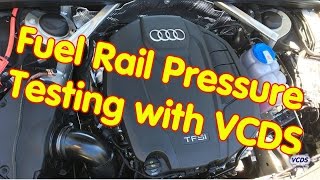
Helpful Videos
We Have This Part in Stock


The information in this article is provided for general reference and educational purposes only. Vehicle specifications, procedures, and part compatibility can vary by production date, trim level, and region. Always consult your vehicle's factory service manual and verify part numbers before purchasing or performing repairs. Safety-critical components such as airbags, seat belts, and braking systems should be installed by a qualified professional.
- Audi A6:
- 🎬 Helpful Videos
- 🛍️ Shop This Part
- What's Unique About the 2012-2018 Audi A6
- Symptoms You May Notice
- Most Likely Causes
- Rare But Worth Checking
- Diagnosis Steps
- Parts You'll Likely Need
- Related Codes That Often Appear With This One
- Technical Service Bulletins (TSBs) & Recalls
- Platform-Specific Known Issues
- Mechanic-Grade Diagnostic Values
- Scan Tool Commands That Help
- Wiring & Ground Locations
- Real Owner Repair Stories
- OEM Part Supersession History
- Model Year Variations Within This Range
- Diagnostic Flowchart
- Other Known Issues on This Vehicle
- Used vs. New Parts: Buying Guide for This Vehicle
- Real Owner Stories
- 2008 Audi A6
- Audi A6 C7 3.0 BiTDI
- Related OBD-II Codes
- Frequently Asked Questions
- 🎟️ Get 5% Off