

P0087 on 2017-2018 Alfa Romeo Giulia: Low Fuel Rail Pressure Causes and Fixes
P0087 on a 2017-2018 Alfa Romeo Giulia indicates dangerously low fuel pressure, most often caused by a failing in-tank low-pressure fuel pump. This is a well-documented defect that causes sudden engine stalling and is the subject of a major safety recall (Stellantis Recall #93C). The issue also affects the 2018-2019 Stelvio. Expect a dealer repair to be covered under the recall; out-of-pocket replacement can cost $800-$1200.
- P0087 on a 2017-2018 Giulia is a critical code that should be addressed immediately due to the high risk of the engine stalling while driving.
- The most likely cause is a faulty in-tank low-pressure fuel pump, a known defect covered by safety recall 93C.
- Check for the presence of code P008A, as it strongly indicates the failure is in the low-pressure fuel system.
- Do not drive the vehicle. Have it towed to a qualified repair shop for diagnosis.
- Before purchasing parts, contact an Alfa Romeo dealer with your VIN to see if your vehicle is covered under the recall for a free repair.
What's Unique About the 2017-2018 Alfa Romeo GIULIA

The 2017-2018 Giulia and 2018-2019 Stelvio, across both 2.0L and 2.9L engines, are notorious for premature low-pressure fuel pump failures. The issue is so widespread it prompted NHTSA investigation PE24003 and a subsequent safety recall (Stellantis #93C) covering nearly 54,000 vehicles in the U.S. due to the risk of sudden engine stalling at speed. The failure is often linked to internal pump components warping from heat. Unlike many vehicles where P0087 has varied causes, on this platform, the in-tank low-pressure fuel pump is the primary and most documented suspect, frequently failing with little to no warning.
Diagnostic Flowchart

Tap your situation to follow the diagnostic path that matches what you're seeing on this vehicle.
Symptoms You May Notice
- Sudden engine stall while driving, often above 25 mph with no ability to restart.
- Loss of power and severe engine hesitation, especially under acceleration.
- Check Engine Light is on, often accompanied by P008A.
- Multiple dashboard warnings appearing at once, such as "Service Engine," "Service Electronic Throttle Control," and "Start/Stop Unavailable".
- Engine cranks but fails to start, or starts and dies immediately.
- Rough or uneven idle.
- Long crank time, especially when the engine is warm.
- Replacing the high-pressure fuel pump (HPFP) when it is actually being starved by the failing in-tank low-pressure fuel pump (LPFP).
- Replacing the fuel pressure sensor when the pressure is genuinely low due to the LPFP failure.
- Attributing the stall to a bad battery, when the battery issue is a secondary symptom of repeated failed start attempts after the pump has died.
Most Likely Causes

- Failing Low-Pressure Fuel Pump (In-tank) 🔴 High Probability This is a confirmed, widespread defect for 2017-2019 Giulia/Stelvio models, leading to NHTSA recall #93C. The pumps, supplied by Vitesco Technologies, contain components that can warp under normal engine heat, interrupting fuel flow. The issue is so common that TSB 18-001-18 was issued specifically for the related P008A code, instructing dealers to replace the pump.
How to confirm: A technician will use a scan tool to monitor low-pressure fuel system data ('actual' vs 'desired' pressure). A significant drop in 'actual' pressure, especially when P008A is also present, confirms a failing LPFP. 🎬 Watch: How one owner successfully fixed the P0087 fault code. The failure is often abrupt and total.
Typical fix: Replace the in-tank low-pressure fuel pump module. This should be performed by an Alfa Romeo dealer under recall #93C. If paying out-of-pocket, ensure the correct, updated part for your specific engine (2.0L vs 2.9L) is used.
Est. part cost: $450-$600 - Failing High-Pressure Fuel Pump (HPFP) ⚪ Low Probability While much less common than the LPFP failure, the HPFP is a mechanical pump driven by the camshaft that can wear out. Its failure can also be induced by being starved of fuel from a weak or failing LPFP.
How to confirm: Using a scan tool, monitor high-pressure fuel rail 'actual' vs. 'desired' pressure. If the low-pressure system readings are stable and within spec, but the high-pressure side cannot build or maintain pressure under load, the HPFP is the primary suspect.
Typical fix: Replace the engine-mounted high-pressure fuel pump.
Est. part cost: $300-$500 - Clogged Fuel Filter ⚪ Low Probability The fuel filter is an integrated, non-serviceable part of the low-pressure fuel pump module assembly. A severe clog would exhibit the same symptoms as a failing pump, but it is not considered a separate point of failure. The entire module must be replaced.
How to confirm: Diagnosed indirectly. If low-pressure fuel tests show a major restriction but the pump motor itself seems to run, a clog is presumed. However, diagnosis almost always concludes with replacing the entire pump assembly.
Typical fix: Replace the entire in-tank low-pressure fuel pump module.
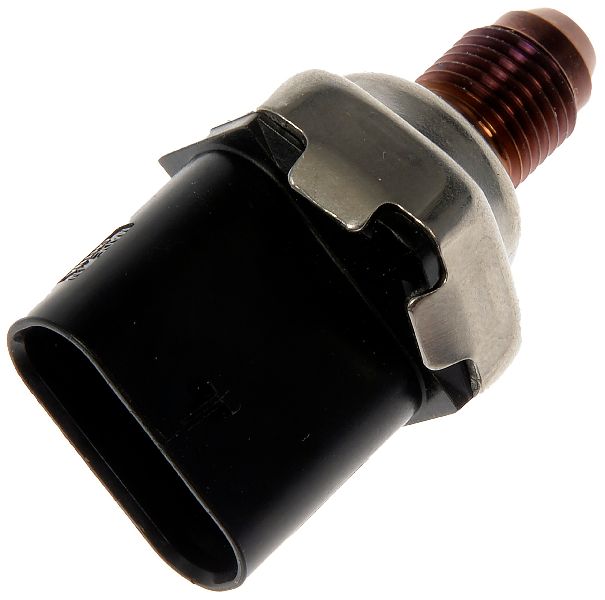
Est. part cost: $450-$600 - Faulty Fuel Rail Pressure Sensor ⚪ Low Probability Sensors can fail on any vehicle, sending erroneous low-pressure signals. However, on this platform, it is far more likely the pressure is actually low due to the pump defect. Misdiagnosing this is common.
How to confirm: Compare the sensor's reading on a scan tool to a reading from a manual pressure gauge connected to the fuel rail. If the readings differ significantly, the sensor is faulty. This is rarely the root cause for P0087 on this car.
Typical fix: Replace the fuel rail pressure sensor.
Est. part cost: $75-$150
Rare But Worth Checking
- Fuel Pump Control Module Failure: The electronic module controlling the fuel pump can fail. A Reddit user identifying as a technician in Phoenix noted they often fail in high-heat environments and sometimes require replacement along with the pump itself.
- Damaged Wiring or Connectors: Corrosion or physical damage to the wiring for the fuel pumps or pressure sensor can cause intermittent signals and trigger the code. This is a generic possibility for any vehicle.
Diagnosis Steps
- Check for Recalls: First, verify if your vehicle's VIN is covered under Stellantis Recall #93C. If so, contact an authorized dealer for a free diagnosis and repair.
- Scan for Codes: Scan for all DTCs. Note if P008A is present with P0087, as this strongly points to the low-pressure fuel system.
- Monitor Low-Pressure System: Use a capable scan tool to view live data for the low-pressure fuel pump. Compare 'actual pressure' to 'desired pressure'. On these cars, the 'actual' pressure will often drop to zero suddenly, indicating total pump failure.
- Monitor High-Pressure System: If the low-pressure side appears healthy (maintaining pressure near the desired value), put the engine under load. If the high-pressure 'actual' reading cannot keep up with the 'desired' reading, the HPFP may be at fault.
- Inspect Wiring: If pressure readings are erratic or nonsensical, inspect the wiring and connectors for the fuel pump module (under the rear seat) and pressure sensors for any visible damage or corrosion.
- Sensor Validation: As a final, less likely step, validate the fuel pressure sensor's reading against a mechanical gauge if you suspect the sensor itself is providing false information.
Parts You'll Likely Need
- Low-Pressure Fuel Pump Module (2.0L)
(OEM #00505474790)— This is the primary failure part for the 2.0L engine, as documented by a safety recall. It is a complete module including the pump, sender, and integrated filter.
Trusted brands: Mopar
OEM price range: $550
Aftermarket price range: $400 - Low-Pressure Fuel Pump Module (2.9L Quadrifoglio)
(OEM #50547819 / 50553343 (superseded))— The 2.9L engine uses a different pump, which is also covered by the recall and known to fail. It is critical to use the correct part for the Quadrifoglio model.
Trusted brands: Mopar
OEM price range: $600
Aftermarket price range: $450 - High-Pressure Fuel Pump (HPFP)
(OEM #0261520333 (Bosch, for 2.0L))— A secondary cause if the low-pressure system is confirmed healthy. The Bosch unit is the original equipment manufacturer.
Trusted brands: Bosch, Mopar
OEM price range: $450
Aftermarket price range: $300 - Fuel Pump Control Module
(OEM #00505441350)— In some cases, the electronic module fails, especially in high-heat climates, preventing the pump from operating correctly.
Trusted brands: Mopar
OEM price range: $120
Aftermarket price range: $80
Related Codes That Often Appear With This One
- P008A — This code specifically means "Low Pressure Fuel System Pressure - Too Low." Its presence is a very strong confirmation that the problem lies with the in-tank low-pressure fuel pump or its integrated filter. TSB #18-001-18 was issued to address this specific code by replacing the pump.
Technical Service Bulletins (TSBs) & Recalls

- 18-001-18: The most relevant TSB. Specifically addresses code P008A-00 (Low Pressure Fuel System Pressure - Too Low) and instructs dealers to replace the fuel pump module on 2017-2018 models built before August 30, 2017. This was a precursor to the full recall.
- 18-027-20: A general software update TSB that lists P0087 as one of many codes that *could* be addressed by the flash. It is not a specific diagnostic bulletin for this mechanical failure.
- 18-030-17: Similar to the above, this is another software update bulletin that happens to list P0087 among dozens of other potential codes. It is not a primary fix for the fuel pump issue.
Platform-Specific Known Issues
- Safety Recall 93C / NHTSA Campaign: Stellantis recalled ~54,000 2017-2019 Giulia and 2018-2019 Stelvio models for low-pressure fuel pumps that can fail without warning, causing a stall. The recall was initiated after a NHTSA investigation (PE24003) found hundreds of complaints and warranty claims. Owners should have this repaired for free at a dealer.
- Heat Sensitivity Failure Mode: The root cause of the pump failure is cited as internal components that are susceptible to warping under heat exposure from the engine
Mechanic-Grade Diagnostic Values
- Voltage at Low-Pressure Fuel Pump Connector — expected: Battery voltage (~12V) for a few seconds after turning the ignition on.. Failure: No voltage suggests an issue upstream, such as the Fuel Pump Control Module (FPCM) or a relay, rather than the pump motor itself.
- Low-Side and High-Side Fuel Pressure (Live Data) — expected: Specific target pressure values (in PSI or Bar) are not consistently published. The primary diagnostic method is to use a scan tool (like AlfaOBD) to compare the 'Desired Fuel Pressure' value from the ECU against the 'Actual Fuel Pressure' reading from the sensor.. Failure: A significant and sustained deviation where 'Actual' pressure is far below 'Desired' pressure under load or during cranking indicates a problem.
Scan Tool Commands That Help
- AlfaOBD / MultiECUScan: Proxy Alignment Procedure — This is a critical procedure required after replacing certain electronic modules on the vehicle's CAN bus, such as a body control module or potentially the FPCM, to ensure the new module is recognized by the vehicle network. Failure to perform this can result in persistent errors.
- AlfaOBD / MultiECUScan: Active Diagnostic Test - Fuel Pump — Allows a technician to command the fuel pump to turn on, verifying the electrical circuit, relay, and FPCM are functioning correctly. This helps isolate a non-responsive pump from the components that control it.
- AlfaOBD / MultiECUScan: Fuel cut off reset — This function is used to re-enable the fuel system after it has been disabled by the vehicle's inertia switch, typically following an accident or severe impact. It is not a direct fix for P0087 but may be necessary if the code appears after such an event.
Wiring & Ground Locations
- Fuel Pump Control Module (FPCM) — Located behind a cover in the driver's side rear wheel well area, near the fuel tank.. This module controls the voltage to the in-tank fuel pump. A failure of this module or its wiring/ground can mimic a failed fuel pump, causing low pressure and a P0087 code.
- In-Tank Fuel Pump Connector — On top of the fuel pump assembly, accessed under the rear seat.. This is the primary connection point for testing power and ground to the pump motor. The two thickest wires are typically for power and ground; checking for voltage here during key-on is a key diagnostic step to differentiate a bad pump from a control-side issue.
Real Owner Repair Stories
- ClubAlfa.it forum user AlbyAv (2017 Alfa Romeo Giulia 2.0L 200cv, 70,000 km) — Intermittent (once a month) long crank on first start (5-6 seconds), triggering P0087 and disabling Start/Stop. The car did not enter limp mode and the error would clear on its own after a few hours.
❌ Tried (didn't work) The owner replaced spark plugs and tested ignition coils, which did not resolve the issue. They were considering replacing the fuel pressure sensor next.
✅ What actually fixed it The final fix was not posted, but other forum members immediately advised against replacing the sensor, stating that the low-pressure fuel pump is a well-known, 'tragic' point of failure on the 2.0L engine and was the almost certain cause of the symptoms, strongly corroborating the widespread nature of the defect.
Helpful Videos
We Have This Part in Stock




The information in this article is provided for general reference and educational purposes only. Vehicle specifications, procedures, and part compatibility can vary by production date, trim level, and region. Always consult your vehicle's factory service manual and verify part numbers before purchasing or performing repairs. Safety-critical components such as airbags, seat belts, and braking systems should be installed by a qualified professional.
- Alfa Romeo GIULIA:
- 🎬 Helpful Videos
- 🛍️ Shop This Part
- What's Unique About the 2017-2018 Alfa Romeo GIULIA
- Diagnostic Flowchart
- Symptoms You May Notice
- Most Likely Causes
- Rare But Worth Checking
- Diagnosis Steps
- Parts You'll Likely Need
- Related Codes That Often Appear With This One
- Technical Service Bulletins (TSBs) & Recalls
- Platform-Specific Known Issues
- Mechanic-Grade Diagnostic Values
- Scan Tool Commands That Help
- Wiring & Ground Locations
- Real Owner Repair Stories
- 🎟️ Get 5% Off