

OBD-II Code P0079: Exhaust Valve Timing Control Solenoid Circuit Low
What P0079 means, why it triggers, and how to fix it
- P0079 indicates a low voltage signal—typically a short to ground—in the Bank 1 exhaust variable valve timing (VVT) solenoid circuit.
- A faulty VVT solenoid causes 70% of P0079 codes, while damaged wiring or oil-contaminated connectors account for the remaining 30%.
- Driving with P0079 reduces fuel economy by up to 10% and risks a $1,500 catalytic converter replacement if ignored for over 6 months.
- Check your engine oil level and condition before buying parts; dirty oil clogs VVT solenoids and causes them to overheat and short out.
- Test the solenoid's resistance with a multimeter (typically 8-13 Ohms) before replacing it to rule out a wiring harness short.
What Does P0079 Mean?

P0079 means your car's Powertrain Control Module (PCM) detects a low voltage problem in the electrical circuit of the exhaust valve control solenoid for engine Bank 1. This solenoid adjusts engine valve timing to improve performance and fuel economy. The code triggers when the PCM commands the solenoid to actuate but reads a voltage below the specified range, almost always indicating a short to ground in the wiring or the solenoid itself.
Technical definition: Exhaust Valve Control Solenoid Circuit Low Bank 1. The PCM perceives that the voltage signal from the exhaust valve control solenoid circuit in Bank 1 is below the manufacturer-specified range (near 0V). This is caused by a short to ground in the control circuit, an internally shorted solenoid coil, or a faulty PCM driver.
Can I Drive With P0079?
Yes, But With Caution. Yes, but only for a few days. The PCM disables the VVT system, causing poor acceleration, rough idling, and a 5-10% drop in fuel economy. Ignoring P0079 for months dumps unburnt fuel into the exhaust, risking a $1,500 to $2,500 catalytic converter replacement.
Common Causes

- Faulty Exhaust Valve Control (VVT) Solenoid (Very Common) — The solenoid has an internal electrical fault, such as a shorted coil, causing a low resistance reading and triggering the code.
- Damaged Wiring or Connectors (Common) — The electrical wiring to the solenoid is frayed, melted, or has a loose connection, causing a direct short to ground. This includes damage from rodents, engine heat, or oil leaking into the connector.
- Low or Dirty Engine Oil (Common) — While dirty oil usually causes mechanical timing codes, severe sludge clogs the solenoid, causing it to overheat and short out its internal electrical coil, triggering P0079.
- Faulty Powertrain Control Module (PCM) (Rare) — The computer controlling the solenoid has an internal fault in its driver circuit. This is the last component to suspect after ruling out the solenoid and wiring.
Symptoms

- Check Engine Light On — The Malfunction Indicator Lamp (MIL) illuminates on the dashboard. This is often the first and only sign.
- Poor Engine Performance — The car feels sluggish, hesitates, and lacks power during acceleration because the exhaust valve timing is stuck in a failsafe position.
- Rough or Unstable Idle — The engine runs rough, shakes, or stalls when stopped or at low speeds.
- Reduced Fuel Economy — Gas mileage drops by 1-2 MPG as the engine runs less efficiently.
- Elevated Emissions (scan-tool only — no driver-felt sign) — Compromised valve timing produces higher emissions, leading to a failed smog check.
Diagnostic Flowchart

Tap your situation to follow the diagnostic path that matches what you're seeing on this code.
Common Fixes & Costs
- Replacing the Exhaust Valve Control Solenoid — Parts: $50-$200, Labor: $75-$150, ~1 hr book time (DIY)
- Repairing Damaged Wiring or Connectors — Parts: $10-$50, Labor: $100-$300, ~2.5 hr book time (Intermediate)
- Engine Oil and Filter Change — Parts: $30-$80, Labor: $40-$100, ~0.5 hr book time (DIY)
- Replacing the Powertrain Control Module (PCM) — Parts: $800-$1200, Labor: $200-$300, ~1.5 hr book time (Professional)
Used vs. New Parts: Buying Guide
When a used part is worth it: Given the low cost of a new aftermarket VVT solenoid ($50-$200), buying used never makes sense. The labor to install it exceeds the part cost, making the risk of a used part failing unacceptable.
Donor-vehicle mileage cap: roughly under 40000 miles for the part to have meaningful remaining life.
Donor quality checklist:
- Only source from a very low-mileage wrecked vehicle.
- Avoid parts from engines known for oil sludge issues.
- Ensure the part number is an exact match.
Decision logic:
- If The cost of a new OEM or quality aftermarket solenoid is under $200. → Always buy new. The warranty and peace of mind are worth the cost.
- If The part is an electro-hydraulic component with internal moving parts and seals (like a VVT solenoid). → Favor new, as internal wear and sludge contamination are invisible.
Warranty tradeoff: Used parts typically have a 30-90 day warranty that excludes labor. New aftermarket parts offer 1-year to limited lifetime warranties. OEM parts carry a 1-year/12,000-mile warranty.
Worst-case if a used part fails: 150-350. If a used solenoid fails, you pay for the part again plus another 1-1.5 hours of labor.
What Happens If You Wait — Timeline
- 0-1 month: Check Engine Light illuminates. The PCM disables the VVT system and enters a failsafe mode with fixed cam timing. The driver notices a slight drop in fuel economy and minor hesitation during acceleration. (MPG impact: 3-5%% · Added cost: $10-30 in wasted fuel)
- 1-3 months: Symptoms become consistent. The driver experiences a definite loss of power, a rough idle, and a measurable decrease in fuel economy. The inefficient engine places extra thermal load on the catalytic converter. (MPG impact: 5-10%% · Added cost: $50-100 in wasted fuel)
- 3-6 months: Prolonged inefficient combustion damages the catalytic converter. Unburnt fuel enters the exhaust, overheating the catalyst substrate and causing it to melt or clog. The vehicle struggles to accelerate and stalls at low speeds. (MPG impact: 10-15%% · Added cost: $200-500 in wasted fuel and early catalytic converter damage)
- 6+ months: Severe risk of complete catalytic converter failure. The exhaust becomes restricted, causing significant power loss and internal engine damage from excessive backpressure. A sub-$300 solenoid repair escalates into a major exhaust replacement. (MPG impact: 15-25%% · Added cost: $1000-3000 for catalytic converter replacement)
Cost of Not Fixing It
- 0-1 month: Reduced fuel economy by 5-10% (1-2 MPG), poor acceleration, and rough idle. Annoying but not immediately damaging. (Added cost: 20-50)
- 1-6 months: Increased strain on the catalytic converter due to unburnt fuel from incorrect valve timing. Risk of overheating and clogging the converter. (Added cost: 0)
- 6+ months: Complete catalytic converter failure, leading to a major exhaust restriction, severe power loss, and a costly replacement. (Added cost: 1000-3000)
Diagnosis Steps

- Check Engine Oil Level and Condition
Verify the engine oil is full, clean, and the correct viscosity. Low or sludgy oil clogs VVT solenoids, causing them to overheat and short out.
Tools: None (Dipstick) (Beginner) - Scan for Codes & Review Freeze Frame Data
Use an OBD-II scanner to confirm P0079 is active. Check for related codes (like P0010) and review freeze frame data to see engine conditions when the fault occurred.
Tools: OBD-II Scanner (Beginner) - Visual Inspection of Wiring and Connector
Locate the Bank 1 exhaust VVT solenoid. Inspect the electrical connector and wiring harness for melted insulation, oil contamination, rodent damage, or loose connections.
Tools: Flashlight (Beginner) - Test the Solenoid Coil Resistance
With the solenoid unplugged, set a multimeter to Ohms (Ω). Measure resistance between the two terminals on the solenoid. Compare to factory specs (typically 5-15 Ohms). If it reads near 0 Ohms or OL, the solenoid is internally shorted or open and must be replaced.
Tools: Multimeter, Factory Service Manual (Intermediate) - Test Solenoid Power Supply
Disconnect the solenoid connector. Turn ignition to 'ON' (engine off). Set multimeter to DC Volts. Ground the black lead and probe the harness connector terminals with the red lead. One terminal must show battery voltage (~12.6V). If 0V, check for a blown fuse or broken power wire.
Tools: Multimeter (Intermediate) - Test the Circuit for a Short to Ground
Disconnect the solenoid and PCM connectors. Set multimeter to Ohms (Ω). Connect one lead to the control wire terminal on the harness connector and the other to chassis ground. The reading must be infinite (OL). A low reading confirms a short to ground in the wiring harness.
Tools: Multimeter, Vehicle-Specific Wiring Diagram (Intermediate) - Test the Solenoid for an Internal Short to Housing
With the solenoid unplugged, set multimeter to Ohms (Ω). Place one lead on battery negative and touch the other to each solenoid pin. Any reading other than infinite (OL) means the solenoid is shorted to its metal housing and requires replacement.
Tools: Multimeter (Intermediate) - [PRO TIP] Active Test with a Bi-Directional Scanner
Command the solenoid ON while the engine idles using a bi-directional scan tool. The engine should stumble or stall. If there is no change, it confirms a hard fault in the circuit or the solenoid itself.
Tools: Bi-Directional Scan Tool (Advanced) - [PRO TIP] Analyze the Solenoid Waveform
Use an oscilloscope to observe the duty cycle signal from the PCM to the solenoid. A flat line near zero volts confirms the 'Circuit Low' condition, pointing to a short or a faulty PCM driver.
Tools: Oscilloscope, Vehicle-Specific Schematics (Advanced) - Test the PCM
If the solenoid and wiring test good, back-probe the PCM connector to verify the driver sends the correct signal. Perform this only if certain the circuit is intact, as mistakes damage the PCM.
Tools: Advanced Scan Tool, Multimeter, Back-Probe Kit (Professional)
When This Code Triggers (Freeze-Frame Conditions)
- Engine Coolant Temp: 180-200°F (The engine has reached full operating temperature.)
- RPM: 1500-2500 (The code sets during steady-state cruise or light acceleration, not typically at idle.)
- Engine Load: 30-60% (Occurs under moderate load when the PCM actively commands changes to valve timing.)
- Vehicle Speed: 35-55 mph (Common during city or highway cruise conditions where the VVT system is most active.)
Related Codes
- P0078 — Indicates a general 'Circuit Range/Performance' issue. P0079 points specifically to 'low voltage,' while P0078 means the circuit voltage is erratic or out of range.
- P0080 — The direct opposite of P0079, indicating a 'Circuit High' voltage condition. Caused by a short to a power source, whereas P0079 is a short to ground.
- P0010 — Relates to the 'intake' valve control solenoid on Bank 1. Seeing P0079 and P0010 together points to a shared wiring/fuse problem affecting both solenoids.
- P0011 — A mechanical timing code ('Timing Over-Advanced'). If a P0079 electrical fault causes the solenoid to stick, it forces the camshaft into the wrong position, triggering P0011 as a secondary code.
Climate & Environmental Factors
- Cold Weather: Extreme cold thickens engine oil beyond normal viscosity, causing sluggish VVT solenoid operation and triggering fault codes on startup.
- High Humidity / Salt: Moisture and road salt accelerate corrosion on the solenoid's electrical connector pins, creating high resistance or shorts that trigger P0079.
- Extreme Heat: High engine bay temperatures degrade wiring harness insulation, making it brittle. This exposes wires, leading to a short to ground.
How to Talk to a Mechanic About This Code
Say this: "I have a check engine light with a P0079 code. Before replacing the VVT solenoid, please perform electrical tests to confirm if the fault is the solenoid itself or the wiring. Specifically, check for power at the connector and test the control wire for a short to ground."
This signals to the mechanic that you understand P0079 is an electrical code. It encourages proper diagnosis, preventing you from paying for a new solenoid when the real problem is a damaged wire.
Avoid saying:
- 'My check engine light is on, can you just fix it?'
- 'I think I need a new VVT solenoid.'
- 'Just do whatever you think is best.'
Questions to ask before authorizing the repair:
- What were the results of the electrical tests? Did the solenoid have the correct resistance?
- Did you find battery voltage at the connector with the key on?
- Did you check the control wire for a short to ground between the solenoid and the computer?
- What is the warranty on the recommended repair, including both parts and labor?
Where to Take It: Dealer vs Independent vs Chain
- Dealer:
Recommended for in-warranty vehicles or if an independent shop fails to diagnose a tricky wiring problem.
Best for: Vehicles still under powertrain or emissions warranty., Complex, intermittent electrical faults requiring manufacturer-specific diagnostic tools or TSBs.
Downsides: Highest labor rate., Often recommends replacing related components as a precaution, increasing cost. (Typical cost: +50% vs. baseline) - Independent Shop:
Best fit for most situations. A competent independent mechanic efficiently diagnoses a P0079 (solenoid vs. wiring) at a lower cost than a dealer.
Best for: Out-of-warranty vehicles where cost is a factor., Diagnosing and repairing common codes like P0079.
Downsides: Quality varies widely; vet shops based on reviews and ASE certifications. (Typical cost: +0% vs. baseline) - Chain Shop:
Use with caution. Acceptable for a straightforward solenoid replacement if you are certain that is the issue. Avoid for complex diagnostic work.
Best for: Getting the code read for free., Simple, clear-cut part replacements like an easily accessible solenoid.
Downsides: Technician skill varies dramatically., High pressure to upsell services., Lacks advanced diagnostic experience for intermittent wiring faults. (Typical cost: -10% vs. baseline)
When to Walk Away From the Repair
If the estimated repair cost exceeds 40-50% of the car's private-party value, pause and consider alternatives.
- Car worth $6000, fix is $350: Fix it. This routine repair cost is a small fraction of the car's value.
- Car worth $4000, fix is $700: Borderline, but likely worth fixing. This suggests a complex wiring issue. Get a second opinion before authorizing.
- Car worth $3000, fix is $2500: Walk away. This implies the P0079 code is a symptom of a major engine problem (like on a Ford 5.4L). The repair is not economical.
What Scan Tool You Need for This Code
Minimum: A tool that reads codes, clears codes, and shows live data streams. A simple code reader is insufficient for diagnosis.
A basic $20 reader tells you P0079 exists but cannot explain why. You need live data to see if the computer commands the solenoid, and ideally, bi-directional control to activate the circuit.
Budget: BlueDriver Pro (~$100) — Connects to your smartphone, providing live data graphing, freeze frame data, and repair reports. Gives you enough information to have an intelligent conversation with a mechanic.
Mid-range: Foxwell NT510 Elite / XTool A30M (~$150) — Offers bi-directional control, the key feature for this code. Command the VVT solenoid on and off from the tool to instantly test the solenoid, wiring, and PCM driver circuit.
Professional: Autel MaxiCOM MK808S (~$450) — Provides full bi-directional control, extensive live data graphing, and a professional interface. More than enough to diagnose P0079 and almost any other issue.
Rent vs buy: Auto parts stores read codes for free, but their scanners lack bi-directional capabilities. To DIY the diagnosis, buy a mid-range tool to perform the active test.
How to Clear the Code After You Fix It
- Use an OBD-II scan tool to clear the P0079 code.
- Reconnect the battery if it was disconnected for the repair.
- Perform a complete OBD-II drive cycle to run all readiness monitors.
Drive cycle (~30 minutes): Start the engine from a cold state. Idle for 2-3 minutes. Drive in mixed city/highway conditions for 15-20 minutes, including steady cruising between 50-60 mph. Allow the vehicle to cool down completely. This allows the PCM to verify the repair.
Readiness monitors affected: Catalyst (CAT), EGR and/or VVT System, Oxygen (O2) Sensor, Comprehensive Component
Before emissions retest: drive at least 100 miles to fully set monitors.
Watch out for:
- Clearing the code resets all readiness monitors to 'Incomplete'. You cannot pass an emissions test until they are 'Complete'.
- The code returns immediately if the root cause (e.g., a wiring short) was not fixed.
- Failing to perform a varied drive cycle leaves critical monitors incomplete.
Will This Fail Emissions / State Inspection?
Yes — this code typically fails an OBD-II emissions inspection.
- California: An illuminated Check Engine Light is an automatic failure. After repair, all OBD readiness monitors must be set to 'Ready'.
- New York: A P0079 code and illuminated MIL causes an automatic failure of the emissions portion of the NYS vehicle inspection.
- Texas: In emissions-testing counties, an active P0079 code fails the OBD inspection. The vehicle will not pass until repaired and readiness monitors are set.
Most Commonly Affected Vehicles
- Hyundai Sonata, Elantra, Tucson (2011-2018) — Very common on models with the Theta II engine. Average solenoid replacement cost is $212-$365.
- Kia Optima, Sorento, Sportage, Forte (2010-2020) — Commonly affected by faulty solenoids or oil sludge from Theta II engine issues. The exhaust solenoid is located on the rear side of the engine.
- Toyota Camry (2007-2017) — Points to a failing VVT-i solenoid. Replacement cost averages $209-$248.
- Chevrolet Cruze, Equinox, Sonic (2011-2017) — Ecotec engines have easily accessible VVT solenoids on top, making this a common DIY repair. Intake and exhaust solenoids are often replaced as a pair.
- Nissan Altima, Sentra, Rogue (2007-2015) — Often related to oil condition. Nissan solenoids are sensitive to aftermarket oil filters that fail to maintain proper pressure.
- Ford F-150, Explorer, Fusion (2004-2024) — Ford's VCT solenoids are a known failure point. On the F-150 5.4L 3V, they are under the valve covers, increasing labor costs.
- Honda Accord, Civic, CR-V (2003-2024) — Fixed by replacing the VTC (Variable Timing Control) solenoid. Oil leaks from the solenoid's gasket are common and must be addressed.
- Subaru Forester, Outback, Impreza (2011-2018) — Subaru's AVCS oil control solenoids fail or clog. Check for TSBs related to AVCS software updates.
Manufacturer-Specific Notes
- Hyundai/Kia: The service manual specifies P0079 sets when the PCM detects the exhaust solenoid circuit is shorted to ground. Vehicles with Theta II GDI engines may be covered by a lifetime warranty (Campaign 953/T3G) for engine failures.
- General Motors (GM): GM TSBs for Ecotec engines recommend replacing VVT solenoids with updated part numbers (e.g., 12655420/12655421) and ensuring the engine has clean oil of the correct grade.
- Ford: For the 5.4L 3V Triton engine, TSB 06-19-8 addresses VVT codes. A comprehensive repair involves replacing VCT solenoids, camshaft phasers, timing chains, and tensioners due to low oil pressure from worn seals.
- Subaru: Subaru TSBs (e.g., 11-103-11R) address AVCS codes by replacing the Oil Control Valve (OCV) with a redesigned part and updating ECM software.
Real Owner Stories
2013 Hyundai Elantra with P0079 - Simple Solenoid Fix
Check Engine Light came on. Used a basic scanner and found code P0079. The car had a slightly rough idle but otherwise drove fine.
What they tried:
- Ignored the code for a week, but the light stayed on.
- Checked engine oil level, which was full and clean.
- Used a multimeter to test the circuit and a bi-directional scanner to activate the solenoid.
- The scanner confirmed the solenoid was not responding to commands, even though the wiring showed correct voltage.
Outcome: Replaced the exhaust VVT solenoid (Part #24375-2G500). The repair took less than 30 minutes as the part was easily accessible. Cleared the code, and it did not return.
Lesson: A bi-directional scanner that commands the solenoid is a powerful diagnostic tool. If the wiring has power but the solenoid doesn't click or change the engine idle when activated, the solenoid itself is the culprit.
2012 Chevy Cruze 1.8L at 110K miles - Misdiagnosis and Wiring
Intermittent P0079 code that appeared and disappeared. The car hesitated when accelerating and got poor gas mileage.
What they tried:
- Replaced the exhaust VVT solenoid as a first step, but the code returned a week later.
- Performed an oil change, with no effect.
- Took it to a mechanic who inspected the wiring harness.
Outcome: The mechanic found the wiring harness insulation near the connector had become brittle from heat and was intermittently shorting to the engine block. The damaged section was repaired with a new pigtail connector. The permanent fix cost more in diagnostic time than the parts, but resolved the issue.
Lesson: If a code returns after replacing the most common part, the root cause is in the wiring or connectors. An intermittent fault strongly points to a wiring short that only occurs with engine vibration.
2008 Ford F-150 5.4L 3V - A Deeper Problem
Truck developed a rough idle, a rattling noise at low RPMs, and a P0079 code. The owner feared the notorious 'cam phaser' issue.
What they tried:
- Replaced both VCT solenoids (Ford's name for VVT solenoids) based on forum advice.
- The code and rough idle improved briefly but returned with the rattling noise.
- Performed an oil change with the specified 5W-20 oil and a Motorcraft filter.
Outcome: A professional diagnosis confirmed low oil pressure due to worn timing chain guides and tensioners. The comprehensive repair involved replacing the timing chains, guides, tensioners, and cam phasers, which resolved all codes and symptoms.
Lesson: On engines like the Ford 5.4L 3V, VVT codes act as an early warning for severe internal engine problems related to oil pressure. If replacing the solenoid fails, investigate Technical Service Bulletins (TSBs) for known underlying causes.
2012 Hyundai Elantra - Multiple 'Circuit Low' Codes from a Single Blown Fuse
Car suddenly revved high at idle, and the check engine light illuminated with multiple 'circuit low' codes: P0079 (Exhaust VVT), P0076 (Intake VVT), P0031 (O2 Sensor Heater), and P0445 (EVAP Purge Valve).
What they tried:
- Recognized that multiple unrelated components failing simultaneously is highly unlikely.
- Inspected the engine bay fuse box for a shared power supply issue.
Outcome: Found a single blown 7.5A 'sensor' fuse. Replacing the fuse moved all active fault codes to 'history' and cleared the dashboard light. The problem was solved instantly without replacing any sensors.
Lesson: If you see multiple 'circuit low' codes for different sensors simultaneously, check the fuses first. A single fuse protects several sensor circuits, and its failure mimics widespread electrical failure.
How to Prevent This Code From Triggering
- Perform regular oil changes with high-quality, manufacturer-specified oil (Every 5,000-7,500 miles, or as per owner's manual) — The VVT system uses pressurized engine oil to function. Clean oil prevents sludge buildup that clogs the tiny passages in the VVT solenoids, causing them to overheat and short out electrically.
- Use a high-quality OEM or equivalent oil filter (With every oil change) — Low-quality oil filters have poor anti-drainback valves, delaying oil pressure on startup. This starves the VVT system, causing wear, noise, and eventual component failure.
- Inspect and protect wiring harnesses in the engine bay (Annually or during other maintenance) — Engine bay heat degrades wiring insulation, making it brittle and prone to cracking. Wrapping vulnerable sections near heat sources (like exhaust manifolds) with high-temperature cloth tape prevents shorts to ground.
- Address engine oil leaks promptly (As soon as they are noticed) — Leaking valve cover gaskets allow oil to seep into the electrical connectors of VVT solenoids. This oil contamination shorts out the electrical pins, directly causing 'Circuit Low' codes like P0079.
Frequently Asked Questions
What does 'Bank 1' mean?
Bank 1 is the side of the engine containing cylinder #1. Inline 4-cylinder engines only have one bank. On V6 or V8 engines, you must identify which side is Bank 1 to locate the correct solenoid.
What is the most common mistake when diagnosing P0079?
Replacing the solenoid without testing the electrical circuit. If the code returns, the actual fault was a short to ground in the wiring harness or a blown fuse.
Why did the code come back after I replaced the solenoid?
The new part was faulty, or the root cause is a persistent wiring short, dirty oil clogging the new part, or a poor ground connection. Re-inspect the wiring harness carefully.
What does it mean if the P0079 code is intermittent?
An intermittent code points to a loose connection or a wire rubbing against metal, shorting to ground only when the engine vibrates. It can also indicate a failing solenoid coil.
Will a P0079 code fail an emissions test?
Yes. The active Check Engine Light is an automatic failure, and the fault directly impacts the vehicle's emissions control system.
Will P0079 clear itself?
No. P0079 is a hard electrical fault. You must fix the underlying short circuit or replace the faulty solenoid, then clear the code with an OBD-II scanner.
Can a bad oil filter cause P0079?
Yes. A low-quality or clogged oil filter restricts oil flow to the VVT system. This causes the solenoids to overheat and fail electrically, triggering P0079.
What's the difference between P0079 and a misfire code like P0301?
P0079 is an electrical circuit code for the valve timing system. P0301 indicates cylinder #1 is not combusting properly. While severe timing issues cause misfires, the root causes are entirely different.
Key Takeaways
- P0079 indicates a low voltage signal—typically a short to ground—in the Bank 1 exhaust variable valve timing (VVT) solenoid circuit.
- A faulty VVT solenoid causes 70% of P0079 codes, while damaged wiring or oil-contaminated connectors account for the remaining 30%.
- Driving with P0079 reduces fuel economy by up to 10% and risks a $1,500 catalytic converter replacement if ignored for over 6 months.
- Check your engine oil level and condition before buying parts; dirty oil clogs VVT solenoids and causes them to overheat and short out.
- Test the solenoid's resistance with a multimeter (typically 8-13 Ohms) before replacing it to rule out a wiring harness short.
Helpful Videos
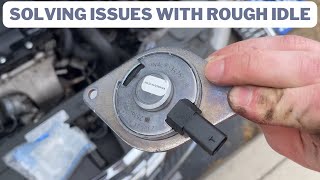

The information in this article is provided for general reference and educational purposes only. Vehicle specifications, procedures, and part compatibility can vary by production date, trim level, and region. Always consult your vehicle's factory service manual and verify part numbers before purchasing or performing repairs. Safety-critical components such as airbags, seat belts, and braking systems should be installed by a qualified professional.
- 🎬 Helpful Videos
- What Does P0079 Mean?
- Can I Drive With P0079?
- Common Causes
- Symptoms
- Diagnostic Flowchart
- Common Fixes & Costs
- Used vs. New Parts: Buying Guide
- What Happens If You Wait — Timeline
- Cost of Not Fixing It
- Diagnosis Steps
- When This Code Triggers (Freeze-Frame Conditions)
- Related Codes
- Climate & Environmental Factors
- How to Talk to a Mechanic About This Code
- Where to Take It: Dealer vs Independent vs Chain
- When to Walk Away From the Repair
- What Scan Tool You Need for This Code
- How to Clear the Code After You Fix It
- Will This Fail Emissions / State Inspection?
- Most Commonly Affected Vehicles
- Manufacturer-Specific Notes
- Real Owner Stories
- 2013 Hyundai Elantra with P0079 - Simple Solenoid Fix
- 2012 Chevy Cruze 1.8L at 110K miles - Misdiagnosis and Wiring
- 2008 Ford F-150 5.4L 3V - A Deeper Problem
- 2012 Hyundai Elantra - Multiple 'Circuit Low' Codes from a Single Blown Fuse
- How to Prevent This Code From Triggering
- Frequently Asked Questions
- What does 'Bank 1' mean?
- What is the most common mistake when diagnosing P0079?
- Why did the code come back after I replaced the solenoid?
- What does it mean if the P0079 code is intermittent?
- Will a P0079 code fail an emissions test?
- Will P0079 clear itself?
- Can a bad oil filter cause P0079?
- What's the difference between P0079 and a misfire code like P0301?
- Key Takeaways
- 🎟️ Get 5% Off