

OBD-II Code P0076: Intake Valve Control Solenoid Circuit Low (Bank 1)
The Ultimate 2026 Guide to Diagnosing and Fixing P0076
- P0076 indicates a low voltage electrical fault, with a failed intake Variable Valve Timing (VVT) solenoid causing over 70% of these codes.
- Check your engine oil dipstick immediately; oil that is more than 1 quart low or heavily sludged destroys VVT solenoids and triggers this fault.
- Expect a 10% to 20% drop in fuel economy, a rough idle, and an automatic state emissions test failure until the circuit is repaired.
- Test before replacing parts by verifying 12.0V+ at the harness connector and checking for the manufacturer-specified 5 to 15 Ohms of resistance across the solenoid pins.
What Does P0076 Mean?

Code P0076 indicates the Powertrain Control Module (PCM) detects voltage in the Bank 1 intake valve control solenoid circuit is below the specified range. This solenoid controls the Variable Valve Timing (VVT) system, dynamically adjusting intake valve timing to optimize fuel economy and performance. Low voltage prevents the PCM from commanding the solenoid, forcing the engine to run inefficiently.
Technical definition: Intake Valve Control Solenoid Circuit Low Bank 1. This diagnostic trouble code (DTC) is set when the Powertrain Control Module (PCM) perceives that the voltage feedback from the intake valve control solenoid circuit is below the specified threshold for Bank 1. The PCM uses a pulse width modulated (PWM) signal to command and monitor the solenoid; if the return voltage is too low (indicating an open circuit, short to ground, or high resistance), it triggers the code and illuminates the Check Engine Light.
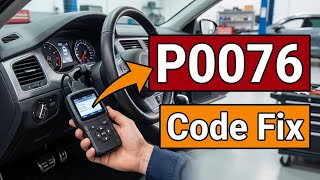
🎬 Watch: A quick explanation of the P0076 code and its causes.Can I Drive With P0076?
Yes, But With Caution. You can drive for short, essential trips under 10 miles, but avoid highways and heavy acceleration. Driving with this code for an extended period causes poor fuel economy, long-term engine wear, and stalling at low speeds. In some vehicles, the engine enters a 'limp mode,' severely restricting speed and power. Ignoring the issue eventually leads to catalytic converter damage from inefficient combustion, a repair costing between $800 and $2,500.
Common Causes

- Faulty Intake Valve Control (VVT) Solenoid (Very Common) — The solenoid itself is the most frequent point of failure. It develops an internal electrical short or open circuit, or mechanically sticks due to oil sludge, preventing it from functioning as commanded.
- Wiring or Connector Issues (Common) — Engine bay heat and vibration damage the electrical wiring to the solenoid. A short to ground in the control circuit pulls the voltage low and instantly triggers this code.
- Low, Dirty, or Incorrect Viscosity Engine Oil (Common) — The hydraulic VVT system relies entirely on oil pressure. Low, sludgy, or incorrect viscosity oil clogs the solenoid's fine mesh screens, causing it to overheat and fail electrically.
- Blown Fuse or Faulty Relay (Less Common) — A blown fuse or failing relay in the VVT power supply circuit cuts off power, leading directly to a zero-voltage condition and triggering the P0076 code.
- Failing Alternator or Weak Battery (Rare) — A failing alternator produces inconsistent voltage. If system voltage drops significantly during operation, the PCM incorrectly flags a low voltage condition in the VVT circuit.
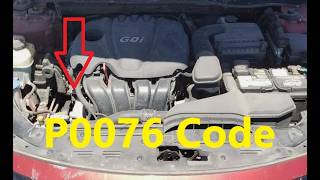
- Faulty Engine Control Module (ECM/PCM) (Rare) — The internal driver circuit for the Bank 1 intake solenoid fails, or the software misinterprets the voltage signal. Consider this only after ruling out all wiring and solenoid faults. 🎬 See how to test and fix intake oil control valve circuits.
Symptoms

- Check Engine Light is On — The Check Engine Light illuminates as soon as the PCM detects the low voltage fault.
- Decreased Fuel Economy — Because the engine's valve timing is not optimized, it runs inefficiently, leading to a noticeable decrease in average miles per gallon (MPG).
- Engine Stalling — In severe cases, the engine stalls unexpectedly at low speeds, when coming to a stop, or when shifting from Park to Drive.
- Engine Enters 'Limp Mode' — Some vehicles protect the engine by entering a failsafe 'limp' mode, dramatically reducing engine power and limiting vehicle speed.
- Rough or Unstable Idle (also visible on scanner) — The engine runs rough, shakes, or has an unstable RPM at idle, especially during a cold start before reaching operating temperature.
- Reduced Engine Power and Acceleration (also visible on scanner) — The vehicle feels sluggish, hesitates, and lacks power when pressing the gas pedal, most apparent at lower RPMs or when climbing hills.
Diagnostic Flowchart
Tap your situation to follow the diagnostic path that matches what you're seeing on this code.
Common Fixes & Costs
- Replacing the Intake Valve Control (VVT) Solenoid — Parts: $40-$150, Labor: $100-$200, ~0.8 hr book time (DIY)
- Repairing or Replacing Damaged Wiring/Connector — Parts: $10-$50, Labor: $120-$300, ~2.5 hr book time (Intermediate)
- Changing Engine Oil and Filter — Parts: $40-$80, Labor: $20-$50, ~0.5 hr book time (DIY)
- Replacing a Blown Fuse — Parts: $1-$5, Labor: $0-$50, ~0.1 hr book time (DIY)
- Replacing the Engine Control Module (ECM/PCM) — Parts: $600-$1200, Labor: $200-$300, ~1.5 hr book time (Professional)
Used vs. New Parts: Buying Guide
When a used part is worth it: Buying a used VVT solenoid is not recommended as they are wear-prone electronic parts. Consider it only for an older, high-mileage vehicle with a tight budget.
Donor-vehicle mileage cap: roughly under 60000 miles for the part to have meaningful remaining life.
Donor quality checklist:
- Verify the donor vehicle was not scrapped for engine failure or sludge issues.
- Match the part number exactly; even OEM suppliers have different revisions.
- Prefer OEM-branded used parts (e.g., Hitachi, Keihin, Denso) over generic ones.
Decision logic:
- If Part is under $100 new from an OEM supplier (e.g. Hitachi, NGK) → Buy new. The savings from a used part are not worth the risk and repeat labor.
- If Vehicle is over 150,000 miles and budget is the primary concern → A low-mileage used part is a viable risk, but expect a shorter lifespan.
- If The choice is between a cheap, no-name aftermarket part and a used OEM part → The used OEM part is often a more reliable choice than a low-quality new part.
Warranty tradeoff: Used parts from a salvage yard typically offer a 30-90 day warranty. Aftermarket new parts range from 1 year to a limited lifetime warranty. New OEM parts carry a 1-year warranty.
Worst-case if a used part fails: $200-$450. This represents the cost of buying a quality new part plus paying for the labor to replace the failed used part a second time.
What Happens If You Wait — Timeline
- 0-1 month: Check Engine Light is on. You notice a slightly rough idle on cold starts and a minor drop in fuel efficiency. No other major symptoms are perceived. (MPG impact: 3-5%% · Added cost: $10-$30 in wasted fuel)
- 1-3 months: Engine hesitation and sluggish acceleration become frequent. Fuel economy loss is significant, and the engine stalls at low speeds. Inefficient combustion raises the operating temperature of the catalytic converter. (MPG impact: 5-15%% · Added cost: $50-$150 in wasted fuel)
- 3-6 months: Performance is consistently poor. The catalytic converter operates outside its normal temperature range, causing the internal substrate to degrade and crack from thermal stress. (MPG impact: 10-20%% · Added cost: $300-$800 (early stage catalytic converter damage))
- 6+ months: High probability of complete catalytic converter failure, triggering additional codes (e.g., P0420). The vehicle runs very poorly and struggles to maintain highway speeds. (MPG impact: 15-25%% · Added cost: $1200-$2800 (full catalytic converter replacement))
Cost of Not Fixing It
- 0-1 month: Noticeable drop in fuel economy (5-10%), rough idle, and poor acceleration. Annoying, but likely no permanent damage. (Added cost: $20-$50 in wasted fuel)
- 1-6 months: Increased stress on valvetrain components. Inefficient combustion begins to overheat the catalytic converter, reducing its lifespan. (Added cost: $100+ in wasted fuel, plus accelerated engine wear.)
- 6+ months: High probability of catalytic converter failure due to prolonged exposure to an improper air/fuel mixture. Potential for internal engine damage from sludge if dirty oil is the root cause. (Added cost: $1200-$2800 for catalytic converter replacement.)
Diagnosis Steps

- Check Engine Oil Level and Condition
Before any electrical diagnosis, check the engine oil dipstick. Low, dark, or sludgy oil is a primary cause of VVT issues. If the level is low, top it off. If the oil is dirty or has the wrong viscosity, perform an oil and filter change immediately.
Tools: Rag or paper towel, Owner's manual (Beginner) - Visually Inspect Wiring and Connector
Locate the intake valve control solenoid on Bank 1. Carefully inspect the electrical connector and visible wiring harness for frayed wires, melting, corrosion on the pins, or a loose connection.
Tools: Flashlight (Beginner) - Check for Blown Fuses
Consult the owner's manual to identify fuses related to the VVT or engine control systems. Pull the relevant fuses and visually inspect if the internal wire is broken.
Tools: Fuse puller, Owner's manual (Beginner) - Test the Solenoid's Resistance
Disconnect the solenoid's electrical connector. Set a multimeter to Ohms (Ω) and touch the probes to the two pins on the solenoid. Compare the reading to repair manual specifications (typically 5 to 15 ohms). A reading of 0 ohms indicates a short, while 'OL' indicates an internal break. Either extreme confirms a faulty solenoid.
Tools: Multimeter, Vehicle-specific repair manual (Intermediate) - Test for Voltage at the Connector
Turn the ignition to the 'On' position (engine off). Set the multimeter to DC Volts. Connect the black probe to a known good ground and touch the red probe to the power supply wire pin on the harness connector. You should see battery voltage (12.0V-12.6V). A reading under 10V points to a problem upstream in the wiring, fuse, or PCM.
Tools: Multimeter, Vehicle-specific wiring diagram (Intermediate) - Check the Control Circuit for a Short to Ground
With the ignition off and both the solenoid and PCM disconnected, set a multimeter to Ohms. Check for continuity between the control wire at the solenoid connector and a good chassis ground. There should be no continuity ('OL'). If the meter shows low resistance, it confirms a short to ground in the wiring harness.
Tools: Multimeter, Vehicle-specific wiring diagram (Advanced) - Test Solenoid with Direct Power (Bench Test)
If the solenoid is removed, briefly apply 12V power and a ground directly to its terminals using jumper wires. You should hear a distinct 'click' as the internal plunger moves. A lack of a click means it is mechanically stuck or electrically failed.
Tools: 12V power source (car battery), Jumper wires (Advanced) - [PRO TIP] Command the Solenoid with a Scan Tool
A bidirectional scan tool commands the VVT solenoid to activate while the engine is running. Monitor 'Bank 1 Camshaft Angle Desired' vs. 'Bank 1 Camshaft Angle Actual' while commanding the solenoid duty cycle. If the actual cam angle changes to match the desired angle, the solenoid and wiring are working. If it doesn't change, it confirms a fault.
Tools: Bidirectional OBD-II scan tool (Professional) - [PRO TIP] Analyze the PWM Signal with an Oscilloscope
Connect an oscilloscope to the solenoid's control wire and ground. With the engine running, you should see a square wave (Pulse Width Modulated signal). A flat line indicates no signal from the PCM or an open/shorted wire. A distorted waveform points to a PCM driver circuit or wiring issue a multimeter misses.
Tools: Oscilloscope, Back-probe pins (Professional)
When This Code Triggers (Freeze-Frame Conditions)
- Engine Coolant Temp: 180-200°F (Engine is fully warmed up.)
- RPM: 1500-2500 RPM (During cruise, light acceleration, or merging.)
- Engine Load: 30-60% (Light to moderate engine load.)
- Vehicle Speed: 35-55 mph (Steady state or light acceleration driving.)
Related Codes
- P0077 — This is the direct opposite code, indicating 'Intake Valve Control Solenoid Circuit High'. P0076 means voltage is too low (short to ground or open circuit), while P0077 means voltage is too high (short to power).
- P0075 — This is a generic fault for the 'Intake Valve Control Solenoid Circuit (Bank 1)' that doesn't specify low or high. It sets when the PCM detects a general electrical malfunction. P0076 is more specific and sets alongside P0075.
- P0026 — This code, 'Intake Valve Control Solenoid Circuit Range/Performance', points to a problem with mechanical operation rather than a pure electrical fault. It appears if the solenoid is electrically good but mechanically stuck or clogged.
- P0011 — 'Camshaft Position Timing Over-Advanced'. This is a performance code. A faulty solenoid (causing P0076) leads to this condition by failing to correctly adjust the cam phaser. Fixing the P0076 issue resolves the P0011.
Climate & Environmental Factors
- Cold Weather: In very cold temperatures, engine oil becomes thicker. This slows the mechanical response of the VVT solenoid, causing a temporary mismatch between the PCM's command and the camshaft's actual position, stressing the system on startup.
- High Humidity / Salt: Regions with high humidity or road salt accelerate corrosion on electrical connectors and pins. This corrosion increases resistance in the circuit, causing a voltage drop that triggers a P0076 low circuit code.
- High Altitude: Engines perform differently at high altitudes due to lower air density. If the VVT system is already compromised, symptoms like rough idle or lack of power become more pronounced.
How to Talk to a Mechanic About This Code
Say this: "I have a P0076 code for the Intake Valve Control Solenoid Circuit Low on Bank 1. Can you please have the technician start by checking the oil condition and then test the solenoid's circuit for power, ground, and resistance before recommending a part replacement?"
This signals you've done research and directs the mechanic to perform a logical, step-by-step diagnosis instead of just replacing the most common part. It focuses them on testing the entire circuit to find the true cause of the low voltage issue.
Avoid saying:
- 'My check engine light is on, can you look at it?'
- 'My car is running rough, just fix it.'
- 'I think I need a new VVT solenoid.'
Questions to ask before authorizing the repair:
- What were the specific voltage and resistance readings from the solenoid and its connector?
- Did you find any issues with the wiring, like corrosion or damage?
- If the solenoid needs to be replaced, what is the warranty on the new part and your labor?
- Can you provide me with the old part?
Where to Take It: Dealer vs Independent vs Chain
- Dealer:
A safe but expensive choice for out-of-warranty repairs. Required for any warranty claims.
Best for: Vehicles still under a powertrain or emissions warranty, Complex manufacturer-specific VVT systems (e.g., BMW VANOS), If a known Technical Service Bulletin (TSB) applies to the issue
Downsides: Highest labor rates, often 1.5x to 2x more than independent shops., May prefer to replace larger, more expensive assemblies. (Typical cost: +50% vs. baseline) - Independent Shop:
Best fit. P0076 is a common code that any competent, ASE-certified technician diagnoses and repairs correctly, often at a significantly lower cost than a dealer.
Best for: Most out-of-warranty vehicles, Building a long-term relationship with a trusted mechanic, Cost-effective diagnosis and repair
Downsides: Quality and expertise vary greatly; check for ASE certifications and online reviews., May not have immediate access to brand-specific diagnostic software for very new or complex models. (Typical cost: +0% vs. baseline) - Chain Shop:
Acceptable only for an oil change or a free code scan. AVOID for diagnosing the root electrical cause of P0076.
Best for: An oil change if you suspect dirty oil is the cause., Getting the code read for free.
Downsides: Technicians often lack the deep electrical diagnostic skills needed for circuit faults., Business model encourages upselling unnecessary services. (Typical cost: -10% vs. baseline)
When to Walk Away From the Repair
If the estimated repair cost exceeds 40-50% of the car's current private-party value (check KBB or Edmunds), seriously consider selling or trading in the vehicle instead of repairing it.
- Car worth $4000, fix is $2000: Borderline. The repair cost is 50% of the car's value. Get a second opinion before authorizing, and consider the car's overall condition.
- Car worth $12000, fix is $450: Fix it. The repair is a small fraction of the vehicle's value and is a sound investment.
- Car worth $2500, fix is $1500: Walk away. The repair cost is 60% of the car's value. This is not a financially sound repair.
What Scan Tool You Need for This Code
Minimum: A scanner that reads and clears codes, and critically, displays Live Data streams.
A basic $20 reader only tells you the code (P0076). It cannot show live voltage signals or data needed to determine if the fault is in the wiring, the solenoid, or the PCM, leading you to guess and replace the wrong parts.
Budget: BlueDriver Pro (~$100) — Connects to your phone via Bluetooth. It reads/clears codes, views Freeze Frame data, and graphs Live Data to help you see what the circuit is doing in real-time.
Mid-range: Foxwell NT510 Elite (~$180) — A powerful handheld tool adding bidirectional control. This allows you to send commands directly to the VVT solenoid to see if it responds ('clicks'), confirming if the solenoid is mechanically functional.
Professional: Autel MaxiCOM MK808S (~$450) — A full-featured diagnostic tablet with comprehensive bidirectional controls and all-system scanning. It allows for fast, detailed diagnosis and active testing of the VVT system, isolating the fault between the component, wiring, or computer.
Rent vs buy: If this is a one-time repair, many auto parts stores have a free loaner tool program for OBD scanners. If you plan to perform your own maintenance more than once a year, buying a tool like the BlueDriver or Foxwell is a worthwhile investment.
How to Clear the Code After You Fix It
- Use an OBD-II scan tool to clear the P0076 code from the PCM's memory.
- If the battery was disconnected for the repair, reconnect it.
- Perform a complete OBD-II drive cycle to allow readiness monitors to run.
Drive cycle (~30 minutes): Start the engine from a cold start and allow it to idle for 2-3 minutes. Drive in mixed city/highway conditions for 15-20 minutes, including several steady-state cruises and accelerations. Allow the vehicle to idle for another 2-3 minutes before shutting it off. Let the vehicle cool down completely.
Readiness monitors affected: Comprehensive Component Monitor, Catalyst (CAT) Monitor, Oxygen (O2) Sensor Monitor
Before emissions retest: drive at least 100 miles to fully set monitors.
Watch out for:
- Disconnecting the battery clears the code but resets all readiness monitors, causing an immediate emissions test failure.
- If the underlying cause (e.g., a short in the wiring, dirty oil) is not fixed, the code returns quickly.
Will This Fail Emissions / State Inspection?
Yes — this code typically fails an OBD-II emissions inspection.
- California: An active P0076 code is an automatic failure. After repair, a full OBD-II drive cycle must be completed to set all readiness monitors before a retest is possible.
- New York: The NYS DMV vehicle inspection includes an OBD-II scan. The presence of a Check Engine Light and a code like P0076 causes the vehicle to fail the emissions portion.
- Texas: In the 17 Texas counties requiring emissions testing, an active P0076 code results in a failed test. Readiness monitors must also be in a 'Ready' state.
Most Commonly Affected Vehicles
- Hyundai Sonata, Elantra, Santa Fe, Tucson (2011-2020) — These models, particularly with the 2.4L GDI and 2.0L Nu engines, frequently set this code. The cause is often a failing solenoid, but wiring harness issues are also common. OEM Part #24355-2G500 is a common replacement.
- Ford F-150, Focus, Fusion, Escape (2004-2024) — Ford's Variable Cam Timing (VCT) solenoids are a high failure point, especially on 5.4L 3V and 5.0L Coyote engines. Oil pressure and quality are absolutely critical.
- Toyota Camry, Corolla, RAV4, Highlander (2007-2024) — Often caused by a failing VVT-i solenoid or significant sludge buildup from neglected oil changes. On 2007-2011 Camry models, this is an early sign of oil consumption issues.
- Honda Accord, Civic, CR-V (2003-2024) — On Accords and other models with VTEC, this code points to the VVT solenoid (often part of the VTEC spool valve assembly) or a related VTEC oil pressure switch.
- Kia Optima, Sorento, Sportage, Forte (2011-2024) — This code is very common in Kia models sharing engines with Hyundai. The root causes are identical: high rates of VVT solenoid failure, wiring problems, and sensitivity to oil condition.
- Chevrolet / GM Malibu, Equinox, Cruze, Traverse (2010-2020) — Common on GM's Ecotec engines (e.g., 2.4L, 1.4L Turbo). The solenoids fail frequently and are highly sensitive to oil viscosity.
- Subaru Outback, Forester, Impreza, Legacy (2006-2015) — On Subarus, P0076 relates to the Oil Control Valve (OCV) for their AVLS (Active Valve Lift System) and appears alongside code P0026.
- BMW 3 Series (E90), 5 Series (E60), X3 (E83), X5 (E70) (2004-2013) — P0076 on these BMW models relates to a faulty VANOS solenoid. They are prone to failure from internal electrical faults and oil sludge, and are often replaced in pairs.
- Volkswagen / Audi Passat, Golf, Jetta, Tiguan, A4 (2005-2015) — In VW and Audi vehicles with 2.0T TSI/TFSI engines, this code points to a problem with the N205 camshaft adjustment valve. Carbon buildup and oil sludge are contributing factors.
Manufacturer-Specific Notes
- Ford: Ford VCT solenoids are extremely sensitive to oil pressure and quality. TSB SSM 49821 suggests cycling the VCT solenoid 10 times with a scan tool clears debris and fixes the issue without parts replacement.
- Subaru: This code relates to the Oil Control Valve (OCV) for AVLS. Diagnosis involves checking a separate oil pressure switch used specifically for diagnostics. The recommended resistance for the solenoid is narrow, between 6 and 12 ohms.
- Hyundai / Kia: These manufacturers have a high frequency of this code due to sludge and oil circulation problems in engines like the Theta II. Some vehicles have extended warranty coverage on engine components as a result.
- General Motors (GM): On many GM engines, the intake and exhaust camshaft position actuator solenoids look identical but have different part numbers and are not interchangeable. Ensure you test and replace the correct intake solenoid.
Real Owner Stories
2015 Kia Sportage 2.4L GDI - The Post-Repair Problem
Check Engine Light with code P0076 appeared immediately after a DIY valve cover gasket replacement. The engine was running fine with no noticeable symptoms.
Outcome: The owner's boyfriend re-inspected the work and discovered the intake valve control solenoid's electrical connector was left unplugged. After reconnecting it securely, the code cleared.
Lesson: If a new code appears right after a repair, suspect an error during reassembly. Carefully check all connectors and wiring in the area where work was performed before diagnosing new parts.
2006 Subaru Impreza 2.5L - The Hidden Wiring Break
Owner experienced a Check Engine Light for P0076 and the engine hit a rev limiter at 4,000 RPM (a 'limp mode' feature).
Outcome: Upon close inspection, the owner found the connector was broken internally. After repairing the connector, the issue was resolved.
Lesson: A visual inspection must be thorough. A connector looks fine and securely plugged in, but has broken pins or internal wire breaks. Wiggle testing connectors reveals these hidden faults.
2007 Toyota RAV4 - Misleading Transmission Symptoms
The vehicle was shaking and hesitating during acceleration, making the owner suspect a transmission problem.
Outcome: The owner deduced that engine timing being off due to the faulty VVT system caused uneven power delivery, feeling like a transmission issue. Replacing the VVT solenoid fixed the problem.
Lesson: Engine performance problems often mimic transmission symptoms. A rough or hesitating engine feels like a slipping transmission. Always scan for all OBD-II codes before jumping to conclusions.
How to Prevent This Code From Triggering
- Perform regular oil changes with high-quality, manufacturer-specified oil (Every 5,000-7,500 miles or as per owner's manual) — The VVT system is highly sensitive to oil quality. Clean oil prevents sludge from clogging the fine passages and screens in the VVT solenoids, a primary cause of failure.
- Consider using an engine flush product before an oil change on high-mileage vehicles (Once every 30,000-50,000 miles (use with caution)) — On engines with a history of infrequent oil changes, an engine flush dissolves sludge deposits that otherwise break free and clog VVT solenoid screens.
- Inspect wiring harnesses in the engine bay (Every 30,000 miles or during other maintenance) — Engine heat and vibration cause wiring insulation to become brittle and crack. Inspecting the harness catches potential shorts or opens before they trigger a code.
- Clean electrical connectors during service (As needed or every 2-3 years) — Applying electrical contact cleaner to the VVT solenoid connector prevents corrosion and moisture intrusion, which cause high resistance and low voltage conditions.
- Keep the engine cooling system in good working order (Ongoing) — Overheating accelerates the breakdown of engine oil, leading to sludge. It also damages electrical components and wiring insulation, increasing the risk of electrical faults.
Frequently Asked Questions
What does 'Bank 1' mean?
Bank 1 is the side of the engine containing cylinder #1. On an inline 4-cylinder engine, there is only one bank. On a V6 or V8 engine, consult a vehicle diagram to identify which side is Bank 1.
Will a P0076 code cause my car to fail an emissions test?
Yes. Any active Check Engine Light for an engine timing code like P0076 results in an automatic emissions test failure.
I replaced the solenoid, but the P0076 code came back. What now?
If the code returns, the original problem was likely a wiring issue, not the solenoid. Re-inspect the harness for hidden breaks or a short to ground, and verify the connector pins fit tightly. In rare cases, a faulty PCM is the culprit.
What is the most common misdiagnosis for P0076?
The most common misdiagnosis is replacing the VVT solenoid without performing a full circuit diagnosis. Technicians often find the actual issue is dirty engine oil, a broken wire, or a corroded connector. Always test before replacing parts.
Can using the wrong kind of engine oil cause a P0076 code?
Yes. The VVT system requires a specific oil viscosity. Incorrect oil impairs solenoid movement, causing it to draw excessive current and trigger a circuit fault.
Where is the intake valve control solenoid located?
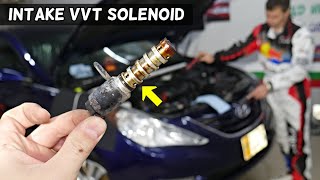
The intake valve control solenoid is located on the cylinder head, near the front of the engine, inserted into the valve cover. It sits on the side of the engine corresponding to the intake manifold.
Can a weak battery cause a P0076 code?
Yes, though less common. A weak battery or failing alternator causes low system-wide voltage, which the PCM misinterprets as a specific circuit fault, triggering a P0076 code.
How difficult is it to replace the VVT solenoid myself?
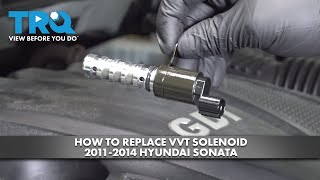
For most vehicles, this is a beginner to intermediate DIY repair. The solenoid is easily accessible on the top or side of the engine, held in by a single bolt, and takes less than an hour to replace.
What happens if I ignore the P0076 code?
Ignoring this code causes a continuous cycle of rough running, poor power, and bad fuel economy. Incorrect valve timing stresses the valvetrain and eventually destroys the catalytic converter.
Key Takeaways
- P0076 indicates a low voltage electrical fault, with a failed intake Variable Valve Timing (VVT) solenoid causing over 70% of these codes.
- Check your engine oil dipstick immediately; oil that is more than 1 quart low or heavily sludged destroys VVT solenoids and triggers this fault.
- Expect a 10% to 20% drop in fuel economy, a rough idle, and an automatic state emissions test failure until the circuit is repaired.
- Test before replacing parts by verifying 12.0V+ at the harness connector and checking for the manufacturer-specified 5 to 15 Ohms of resistance across the solenoid pins.
Helpful Videos

The information in this article is provided for general reference and educational purposes only. Vehicle specifications, procedures, and part compatibility can vary by production date, trim level, and region. Always consult your vehicle's factory service manual and verify part numbers before purchasing or performing repairs. Safety-critical components such as airbags, seat belts, and braking systems should be installed by a qualified professional.
- 🎬 Helpful Videos
- What Does P0076 Mean?
- Can I Drive With P0076?
- Common Causes
- Symptoms
- Diagnostic Flowchart
- Common Fixes & Costs
- Used vs. New Parts: Buying Guide
- What Happens If You Wait — Timeline
- Cost of Not Fixing It
- Diagnosis Steps
- When This Code Triggers (Freeze-Frame Conditions)
- Related Codes
- Climate & Environmental Factors
- How to Talk to a Mechanic About This Code
- Where to Take It: Dealer vs Independent vs Chain
- When to Walk Away From the Repair
- What Scan Tool You Need for This Code
- How to Clear the Code After You Fix It
- Will This Fail Emissions / State Inspection?
- Most Commonly Affected Vehicles
- Manufacturer-Specific Notes
- Real Owner Stories
- 2015 Kia Sportage 2.4L GDI - The Post-Repair Problem
- 2006 Subaru Impreza 2.5L - The Hidden Wiring Break
- 2007 Toyota RAV4 - Misleading Transmission Symptoms
- How to Prevent This Code From Triggering
- Frequently Asked Questions
- What does 'Bank 1' mean?
- Will a P0076 code cause my car to fail an emissions test?
- I replaced the solenoid, but the P0076 code came back. What now?
- What is the most common misdiagnosis for P0076?
- Can using the wrong kind of engine oil cause a P0076 code?
- Where is the intake valve control solenoid located?
- Can a weak battery cause a P0076 code?
- How difficult is it to replace the VVT solenoid myself?
- What happens if I ignore the P0076 code?
- Key Takeaways
- 🎟️ Get 5% Off