

P0068 on 2014-2018 Chevrolet Tahoe: MAP/MAF vs. Throttle Position Fixes
On a 2014-2018 Tahoe, code P0068 is most often caused by a dirty throttle body creating a mismatch between sensor readings. A thorough cleaning of the throttle body (~$15 in materials) and performing a throttle relearn procedure is the most common fix. If that fails, suspect a faulty MAP sensor or a vacuum leak.
- P0068 on a 2014-2018 Tahoe means the engine's computer is confused by conflicting airflow information from its sensors.
- Before buying any parts, your first step should be to thoroughly clean the throttle body of all carbon buildup.
- This code will likely put your truck into 'Reduced Engine Power' mode, making it a high-priority repair.
- If cleaning the throttle body doesn't work, the next most likely cause is a failing MAP sensor.
- Always check for vacuum leaks around the intake manifold and PCV system, as they can also trigger this code.
What's Unique About the 2014-2018 Chevrolet TAHOE
On this generation of GM trucks and SUVs (K2XX platform) with the EcoTec3 V8 engines, P0068 is a well-documented issue often linked to carbon buildup (coking) inside the throttle body. As noted in GM Technical Service Bulletin #PIP4578B, this buildup occurs as the Positive Crankcase Ventilation (PCV) system routes oil vapors and combustion byproducts back into the intake. Over time, this creates a sticky ring of carbon that can cause the throttle plate to move improperly, leading to the sensor correlation error, a rough idle, and a 'Reduced Engine Power' warning.
Diagnostic Flowchart
Tap your situation to follow the diagnostic path that matches what you're seeing on this vehicle.
Generation note: This range covers the last year of the 3rd generation (2014, GMT900) and the first years of the 4th generation (2015-2018, K2XX). While the fundamental causes of P0068 are the same, specific part numbers for the throttle body and sensors may differ. The K2XX platform vehicles (2015+) with direct-injected EcoTec3 engines (5.3L L83, 6.2L L86) are particularly prone to the carbon buildup issue described in TSBs.
Symptoms You May Notice
- Check Engine Light is on
- "Reduced Engine Power" message on the dash
- Rough, surging, or unstable idle.
- Poor, hesitant, or sluggish acceleration.
- Engine may stall, especially when coming to a stop or during light throttle.
- Engine knocking or pinging sounds.
- Replacing the Mass Airflow (MAF) sensor. While technically involved in the correlation check, the MAF is less commonly the root cause for this specific code on these trucks compared to the throttle body or MAP sensor.
- Replacing the accelerator pedal position (APP) sensor. The P0068 code relates to the correlation of sensors at the engine's intake, not the driver's pedal input inside the cabin. While a bad pedal can cause similar symptoms, it typically sets different codes.
Most Likely Causes
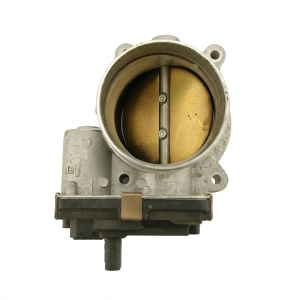
- Dirty or Carbon-Clogged Throttle Body 🔴 High Probability As identified in GM TSB #PIP4578B, these direct-injection engines are known for carbon buildup around the throttle plate, which restricts its movement and causes a discrepancy between the commanded throttle position and the actual airflow. This is a very common first step for this code.
How to confirm: Remove the air intake hose from the throttle body and visually inspect for a thick, black, greasy ring of carbon buildup around the throttle plate and bore.
Typical fix: Thoroughly clean the throttle body with a dedicated throttle body cleaner and a soft cloth or brush, ensuring both sides of the plate are clean. 🎬 See this walkthrough on fixing P0068 and rough idle issues. A throttle relearn procedure is critical after cleaning to reset the ECM's learned idle values.
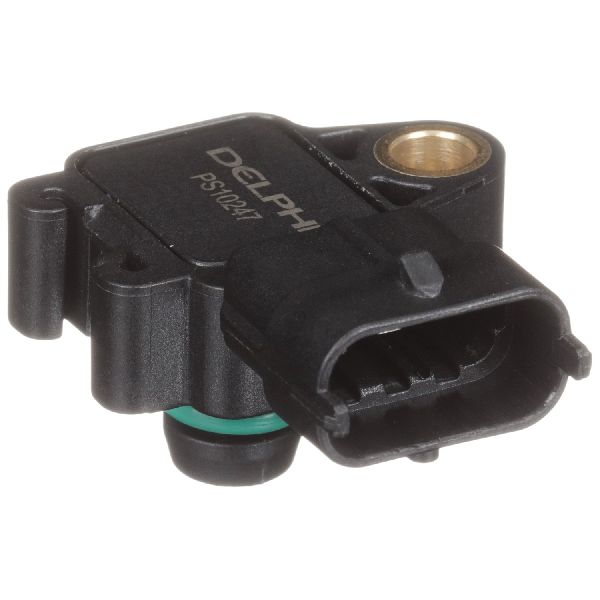
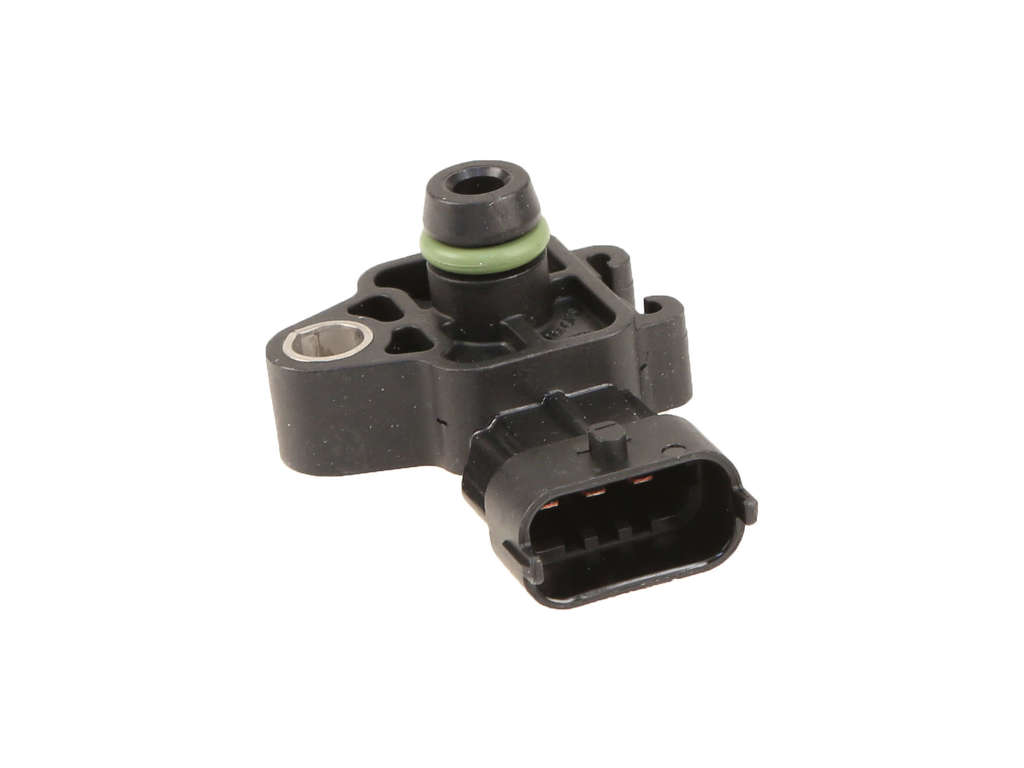
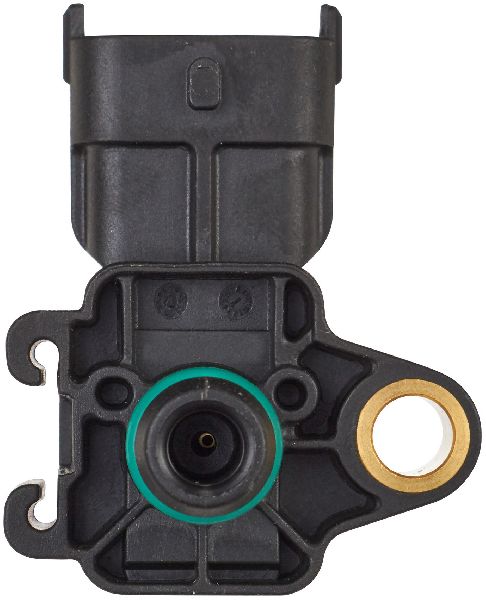
Est. part cost: $10-$20 - Faulty Manifold Absolute Pressure (MAP) Sensor 🟡 Medium Probability The MAP sensor can become contaminated with oil or carbon from the PCV system, or fail electronically, sending incorrect pressure readings to the ECM. This is a frequent secondary cause if cleaning the throttle body does not resolve the issue.
How to confirm: With a scan tool, monitor the MAP sensor voltage. With the key on and engine off, it should read around 4.5-5.0 volts. At idle, it should drop to around 1.0-2.0 volts. Readings that are stuck or don't change logically with throttle input indicate a bad sensor.
Typical fix: Replace the MAP sensor. It is mounted on the top of the intake manifold for easy access.
Est. part cost: $40-$100 - Vacuum Leak ⚪ Low Probability Cracked PCV hoses, a leaking brake booster hose, or failed intake manifold gaskets can allow unmetered air into the engine. This causes the MAP sensor to read a pressure that doesn't correlate with the MAF and TPS data. A user on TahoeYukonForum noted a hole worn in the plastic air intake body by a misrouted serpentine belt caused this code.
How to confirm: Perform a smoke test on the intake system to visually identify the source of any leaks. Alternatively, you can carefully spray carburetor cleaner around potential leak points (like gasket edges and vacuum line connections) with the engine running and listen for a change in idle speed.
Typical fix: Replace the leaking hose or gasket.
Est. part cost: $20-$150 - Faulty Throttle Position Sensor (TPS) ⚪ Low Probability The TPS reports the throttle plate angle to the ECM. If it fails, it can send an incorrect signal. On these models, the TPS is integrated into the throttle body assembly and is not sold as a separate, serviceable part.
How to confirm: Use a scan tool to graph the TPS voltage as you slowly press the accelerator pedal (engine off, key on). The voltage should increase smoothly from about 0.5V to 4.5V with no dropouts or spikes.
Typical fix: Replace the entire throttle body assembly.
Est. part cost: $150-$400
Rare But Worth Checking
- Damaged Wiring or Connectors: Check the wiring harnesses for the MAP sensor and throttle body for any signs of chafing, corrosion, or loose pins, as this can cause intermittent signal loss. Water intrusion into the Throttle Actuator Control (TAC) module connectors is also a possibility.
- Faulty Powertrain Control Module (ECM): This is extremely rare. All other possibilities, including sensors, wiring, and mechanical faults, should be exhaustively ruled out before considering an ECM failure.
Diagnosis Steps
- Check for other DTCs. Codes like P0106 or P2176 can help pinpoint the problem faster.
- Visually inspect the entire air intake system from the air filter to the throttle body for any loose clamps, cracked hoses, or disconnected lines.
- Remove the intake duct from the throttle body and inspect for heavy, black carbon buildup. This is the most likely cause.
- If carbon is present, clean the throttle body thoroughly using a dedicated cleaner and a soft, lint-free rag. Manually move the plate to clean all surfaces.
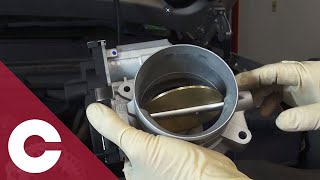
- After cleaning, perform a throttle body relearn procedure. A common method for these GM trucks is to start the engine and let it idle in Park for 3 minutes, turn the engine off for 60 seconds, then restart and idle again for 3 minutes. The idle should normalize. 🎬 Watch: How to perform the GM throttle body relearn procedure. Driving the vehicle for 10-15 minutes with varied conditions can also help the ECM relearn.
- If the code returns, use a scan tool to monitor live data. Check MAP sensor voltage: KOEO (Key On, Engine Off) should be ~4.5-5V, and at idle it should be ~1.0-2.0V.
- Check the TPS voltage for a smooth, linear response from ~0.5V to ~4.5V as the throttle is opened and closed.
- If a vacuum leak is suspected, perform a smoke test to locate the source. Pay close attention to the PCV hoses and intake manifold gaskets.
- Inspect the wiring and connectors for the MAP sensor and throttle body for any damage, corrosion, or loose pins.
Parts You'll Likely Need
- Throttle Body Cleaner
(OEM #ACDelco 19353316 (X66-P))— This is required for the most common fix: cleaning carbon buildup from the throttle body.
Trusted brands: CRC, ACDelco
OEM price range: $15-$25
Aftermarket price range: $10-$15 - Manifold Absolute Pressure (MAP) Sensor
(OEM #12644228)— If cleaning the throttle body doesn't resolve the code, a faulty MAP sensor is the next most likely culprit.
Trusted brands: ACDelco, Bosch, Delphi
OEM price range: $70-$110
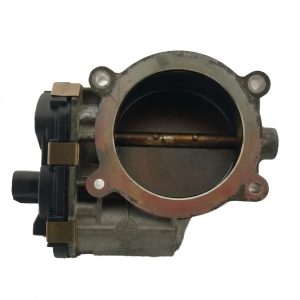
Aftermarket price range: $40-$80 - Throttle Body Assembly
(OEM #12678223 (For 5.3L/6.2L))— Replaced if cleaning fails and the integrated Throttle Position Sensor (TPS) is diagnosed as faulty, or if the throttle actuator motor has failed.
Trusted brands: ACDelco, Hitachi
OEM price range: $250-$400
Aftermarket price range: $150-$250
Related Codes That Often Appear With This One
- P0106 — This code specifically points to a MAP sensor performance issue, which is a direct cause of the P0068 correlation fault.
- P2176 — This code indicates a 'Throttle Actuator Control System - Idle Position Not Learned' fault, often appearing after a battery disconnect or throttle body cleaning without performing the required relearn procedure.
- P1516, P2101 — These codes relate to the Throttle Actuator Control (TAC) module and performance, indicating a problem with the electronic control of the throttle body itself, which can cause the P0068 correlation fault.
- P0506, P0507 — These codes for idle speed being too low (P0506) or too high (P0507) can be triggered by the same carbon buildup or throttle issues that cause P0068.
Technical Service Bulletins (TSBs) & Recalls
- PIP4578B: This bulletin explains that on high-mileage vehicles, carbon buildup in the throttle body can cause idle surges, reduced power, and set DTCs P0068, P0121, P1516, P2101, P2119, and/or P2176. The fix is to clean the throttle body and perform an 'idle learn reset' with a scan tool to prevent further issues.
Platform-Specific Known Issues
- GM TSB #PIP4578B: Throttle Body Coking: GM Technical Service Bulletin #PIP4578B directly addresses DTC P0068 on high-mileage vehicles, linking it to idle surges and reduced power mode. It confirms that as carbon builds up, the ECM's calculated airflow model no longer matches the sensor readings, triggering the correlation fault. The primary fix recommended is a thorough throttle body cleaning and subsequent idle learn procedure.
Mechanic-Grade Diagnostic Values
- MAP Sensor Signal Voltage (Key On, Engine Off) — expected: 4.5V - 5.0V. Failure: Voltage is significantly lower or 0V, indicating a sensor or wiring issue.
- MAP Sensor Signal Voltage (Engine at Idle) — expected: 1.0V - 2.0V. Failure: Voltage remains high (near KOEO reading), is stuck, or responds erratically to RPM changes.
- MAP Sensor 5V Reference Wire (at sensor connector) — expected: ~5.0V. Failure: Voltage is significantly lower than 5V or is absent, pointing to a wiring or ECM issue.
- MAP Sensor Ground Wire (at sensor connector) — expected: Should show battery voltage (~12.6V) when testing between the ground pin and the positive battery terminal.. Failure: No or low voltage indicates a bad ground connection.
- Throttle Position Sensor (TPS) Signal Voltage — expected: Smoothly increases from ~0.5V (closed throttle) to ~4.5V (wide-open throttle).. Failure: Voltage has spikes, dropouts, or does not move smoothly.
Scan Tool Commands That Help
- GDS2 / Professional Scan Tool: Idle Learn Reset / Throttle Relearn — This function is often required after cleaning or replacing the throttle body. While a manual relearn procedure exists, some vehicles are stubborn and require a scan tool to force the ECM to learn the new clean-idle throttle position.
- GDS2 / Professional Scan Tool: Live Data Graphing (MAP vs. TPS) — Graphing the MAP sensor voltage against the TPS voltage while slowly opening and closing the throttle can visually reveal a lag or divergence that confirms a correlation fault, helping to isolate whether one sensor is slower to respond than the other.
Wiring & Ground Locations
- G103 (Passenger Side) — On the front of the passenger side cylinder head.. This is a primary engine ground point. A corroded or loose connection here can introduce noise or voltage drops in sensor circuits, including those for the MAP and throttle body, leading to erratic readings.
- G102 (Driver Side) — On the driver's side of the engine block, often near the front.. Similar to G103, this is a critical engine ground. Poor contact can affect sensor performance and trigger correlation faults.
- MAP Sensor Connector Pins — On the MAP sensor, mounted to the intake manifold.. A typical 3-wire MAP sensor has a 5-volt reference wire from the ECM, a ground wire, and a signal wire that sends voltage back to the ECM. Verifying 5V reference and a good ground at the connector is a key diagnostic step before condemning the sensor.
- Frame Grounds (Behind Front Wheels) — On the frame rail behind both front wheels.. These grounds are notorious for corrosion due to their exposure to wheel splash. While not directly for the engine sensors, a poor main chassis ground can cause widespread electrical issues that manifest in unpredictable ways, including sensor faults.
Real Owner Repair Stories
- TahoeYukonForum user 'DoItYourselfer' (2011 Chevrolet Tahoe (GMT900, similar issue)) — "Reduced Engine Power" message and inability to accelerate.
❌ Tried (didn't work) Initial diagnosis pointed towards throttle body or accelerator pedal sensor.
✅ What actually fixed it The user had incorrectly routed the serpentine belt, which wore a hole in the plastic air intake tube between the air filter and the throttle body. This unmetered air leak was the root cause of the code. The fix was to replace the damaged air intake tube. - TahoeYukonForum user 'Jetav8r7' (2010 Chevrolet Tahoe with 460,000+ miles) — Rough idle and limp mode after cleaning the throttle body.
❌ Tried (didn't work) Performing the standard GM manual idle relearn procedure (idle for 3 min, off for 1 min, idle for 3 min).
✅ What actually fixed it The manual relearn procedure repeatedly failed to resolve the high idle and associated codes. The final fix was taking it to a shop to perform the idle relearn using a diagnostic scan tool, which took about 5 minutes and cost $50-$80.
"I Checked Everything" — The Actual Cause
- A common scenario is for a smoke test to show no leaks in the vacuum hoses or intake manifold gaskets, yet the P0068 code persists. In one documented case, the root cause was a hole worn into the main plastic air intake tube by a misrouted serpentine belt. This type of leak occurs *before* the throttle body but *after* the MAF sensor, introducing unmetered air that the ECM cannot reconcile with the throttle position, but it may not be easily found with a standard smoke test focused on the intake manifold itself.
OEM Part Supersession History
Unknown→12678223— Standard part evolution and design updates by the manufacturer.
Heads up: Part number 12678223 is the widely specified GM Genuine replacement for the 5.3L and 6.2L engines in this year range, indicating it has likely superseded previous numbers. Always verify fitment with a VIN.
Model Year Variations Within This Range
- 2014 (GMT900) vs. 2015-2018 (K2XX): The 2014 model is the last of the GMT900 platform, while 2015+ models are the K2XX platform with the newer EcoTec3 direct-injection engines. While the P0068 causes are similar, ground locations and harness routing differ. For example, GMT900 engine ground locations are well-documented as G102, G103, etc. on the cylinder heads, while K2XX models have critical frame grounds behind the front wheels that are highly susceptible to corrosion. The TSB regarding carbon buildup is particularly relevant to the 2015+ EcoTec3 engines.
Helpful Videos
Used OEM Parts in Stock

New Aftermarket Parts Available



The information in this article is provided for general reference and educational purposes only. Vehicle specifications, procedures, and part compatibility can vary by production date, trim level, and region. Always consult your vehicle's factory service manual and verify part numbers before purchasing or performing repairs. Safety-critical components such as airbags, seat belts, and braking systems should be installed by a qualified professional.
- Chevrolet TAHOE:
- 🎬 Helpful Videos
- 🛍️ Shop This Part
- What's Unique About the 2014-2018 Chevrolet TAHOE
- Diagnostic Flowchart
- Symptoms You May Notice
- Most Likely Causes
- Rare But Worth Checking
- Diagnosis Steps
- Parts You'll Likely Need
- Related Codes That Often Appear With This One
- Technical Service Bulletins (TSBs) & Recalls
- Platform-Specific Known Issues
- Mechanic-Grade Diagnostic Values
- Scan Tool Commands That Help
- Wiring & Ground Locations
- Real Owner Repair Stories
- "I Checked Everything" — The Actual Cause
- OEM Part Supersession History
- Model Year Variations Within This Range
- 🎟️ Get 5% Off