

P0068 on 2006-2013 Chevrolet Tahoe: MAP/MAF Throttle Correlation Causes and Fixes
Code P0068 on a 2006-2013 Tahoe is most often caused by a dirty throttle body or a vacuum leak from failed intake manifold gaskets. Cleaning the throttle body and performing an idle relearn procedure is an inexpensive first step. Replacing the intake gaskets with an updated design is a more involved but common and often permanent repair on these V8 engines.
- Always start by thoroughly cleaning the throttle body before replacing any parts; it's the most common and cheapest fix.
- If cleaning the throttle body doesn't work, suspect a vacuum leak. The intake manifold gaskets are a known weak point on these engines.
- Do not immediately replace the MAP or MAF sensors, as they are often blamed incorrectly when the real issue is unmetered air from a leak or a dirty throttle body.
- The vehicle may enter a 'Reduced Engine Power' mode, which is a safety feature. While you can still drive, acceleration will be severely limited, so address the issue promptly.
What's Unique About the 2006-2013 Chevrolet TAHOE
The Vortec V8 engines in this generation of Tahoe are well-known for two issues that directly cause the P0068 code. First, carbon and oil residue from the PCV system frequently build up inside the throttle body, restricting airflow and causing the throttle plate to stick. Second, the original intake manifold gaskets are prone to deteriorating and flattening over time, creating vacuum leaks that allow unmetered air into the engine. Both of these common failures throw off the air-fuel calculations and trigger the correlation fault. GM has acknowledged the throttle body issue in Technical Service Bulletin (TSB) PIP4578B.
Diagnostic Flowchart
Tap your situation to follow the diagnostic path that matches what you're seeing on this vehicle.
Generation note: This range covers two Tahoe generations: the end of the GMT800 platform (2006) and the GMT900 platform (2007-2013). While the engines (4.8L, 5.3L, 6.0L, 6.2L V8s) and the causes of P0068 are very similar across these years, specific part numbers for sensors or gaskets may differ slightly. The issue is widespread across the entire GM V8 truck/SUV platform of this era.
Symptoms You May Notice
- Check Engine Light is on
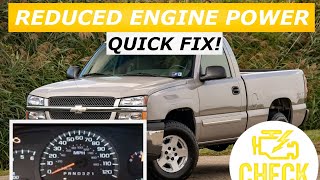
- "Reduced Engine Power" message on the dash
- "Service Stabilitrak" message appearing with the other warnings.
- Rough or unstable idle
- Hesitation or poor acceleration
- Engine may stall when coming to a stop
- A 'dead spot' or choking feeling when pressing the accelerator.
- Replacing the throttle position sensor (TPS) or the entire throttle body when only a cleaning and idle relearn procedure is needed.
- Replacing the MAP or MAF sensor when the root cause is a vacuum leak from intake gaskets or a cracked hose.
- Replacing the accelerator pedal position (APP) sensor, which is less likely to cause this specific correlation code.
Most Likely Causes
- Dirty Throttle Body 🔴 High Probability The PCV (Positive Crankcase Ventilation) system routes oil vapors into the intake, which can bake onto the throttle body bore and plate over time. As this carbon ('coke') builds up, the ECM adapts by opening the throttle slightly more at idle. If the buildup is cleaned, or the ECM is reset, this learned compensation is incorrect, triggering the code.
How to confirm: Remove the air intake tube connected to the throttle body and visually inspect for a thick, black, greasy layer of carbon buildup around the throttle plate and bore.
Typical fix: Thoroughly clean the throttle body bore and plate with a dedicated throttle body cleaner and a soft, lint-free rag. 🎬 Watch: Step-by-step guide to cleaning your Tahoe's throttle body. After cleaning, an 'Idle Learn Reset' must be performed with a scan tool (like a Tech 2 or GDS) to reset learned values, as specified in TSB PIP4578B. Failure to perform the relearn may cause the code to return.
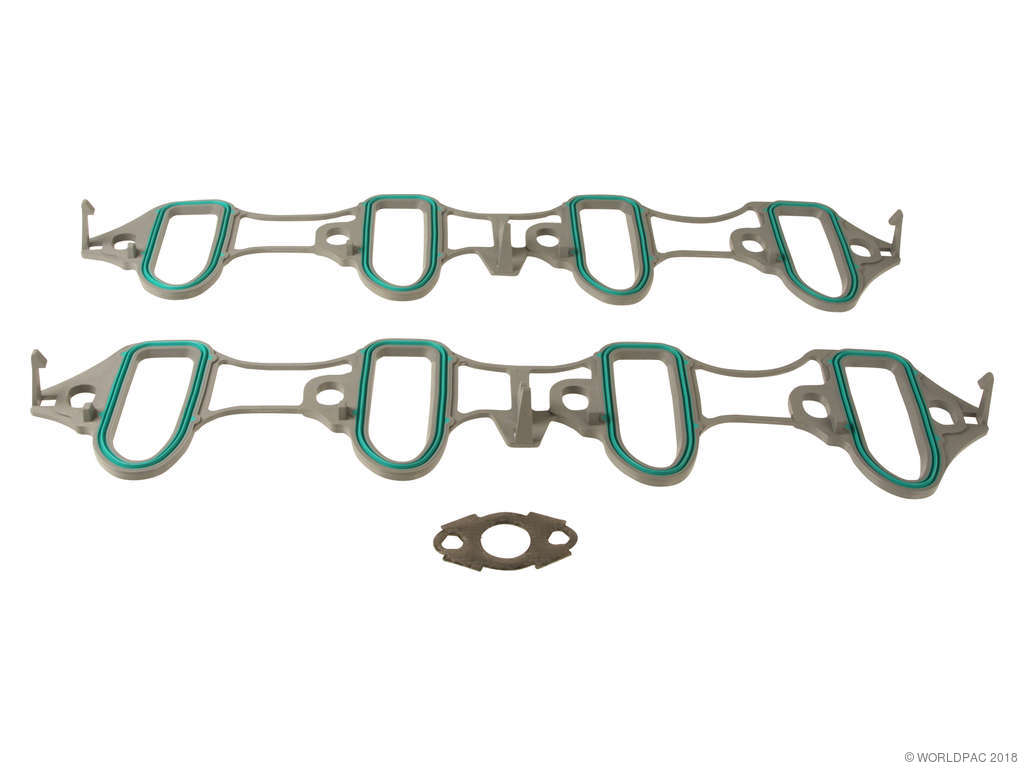
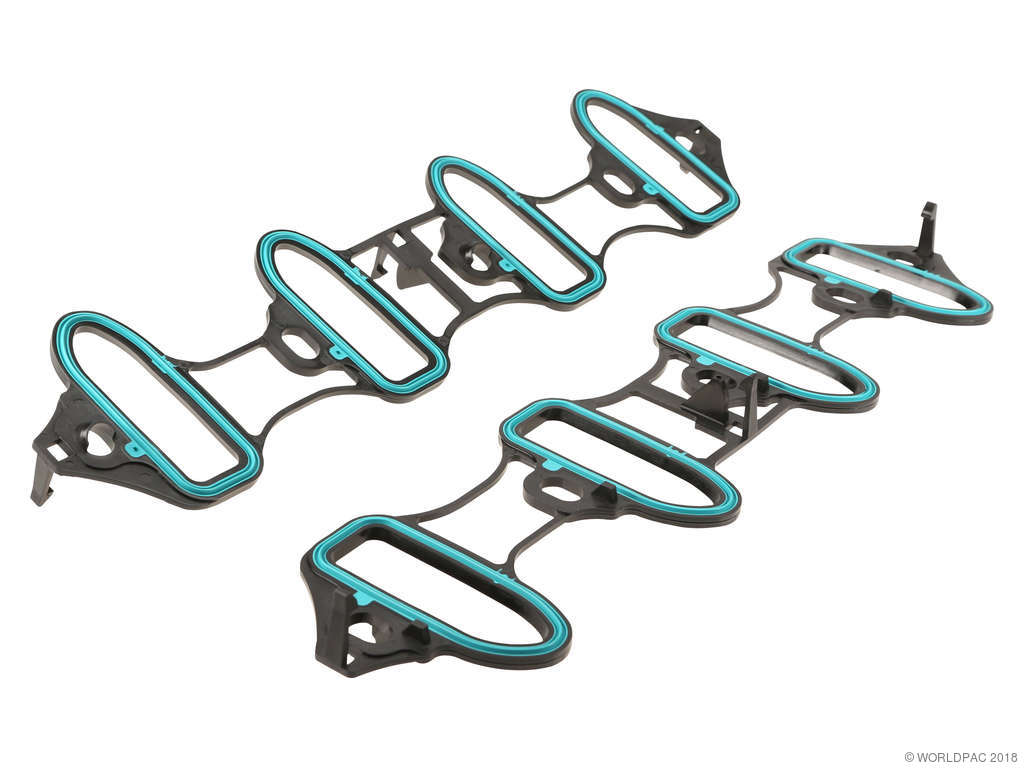
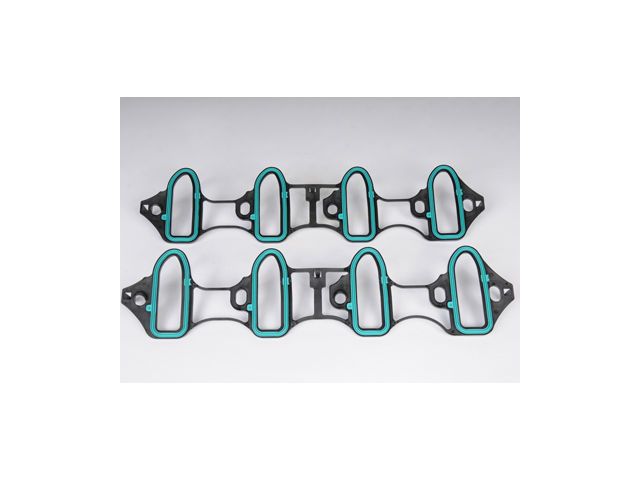
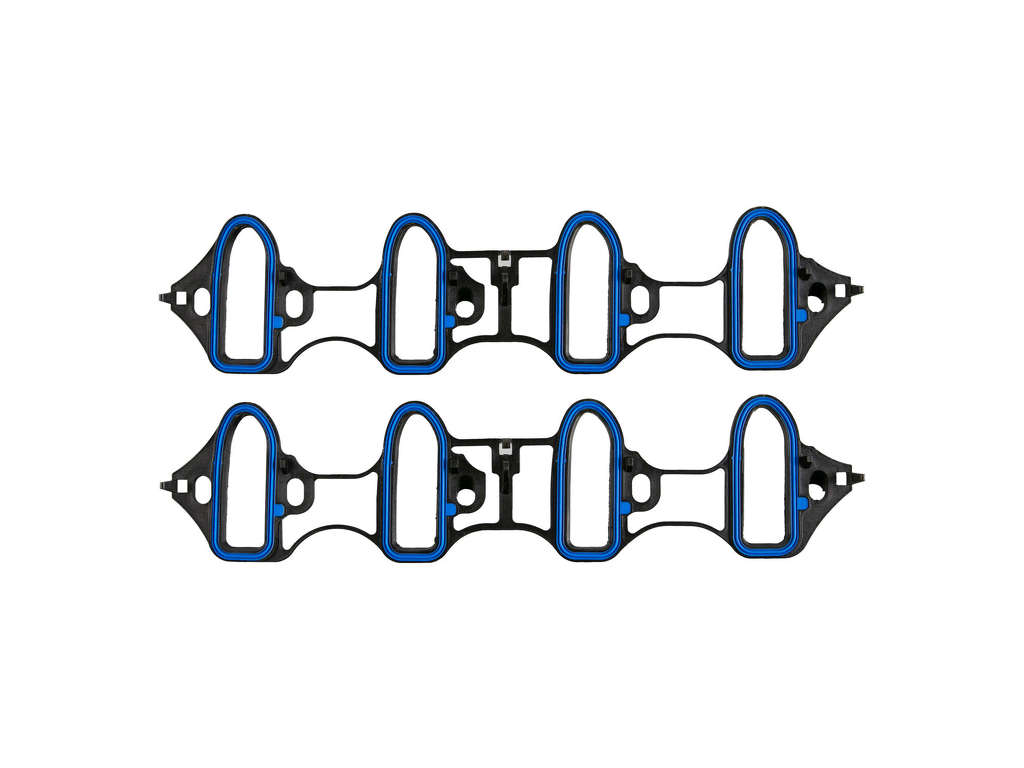
Est. part cost: $5-$15 - Vacuum Leak (Intake Manifold Gaskets) 🔴 High Probability The original intake manifold gaskets on Vortec engines are a known failure point; they are made of a plastic carrier with rubber seals that can degrade, crush, and flatten over time, allowing unmetered air to leak into the intake ports. Aftermarket replacements often feature an improved design to prevent this.
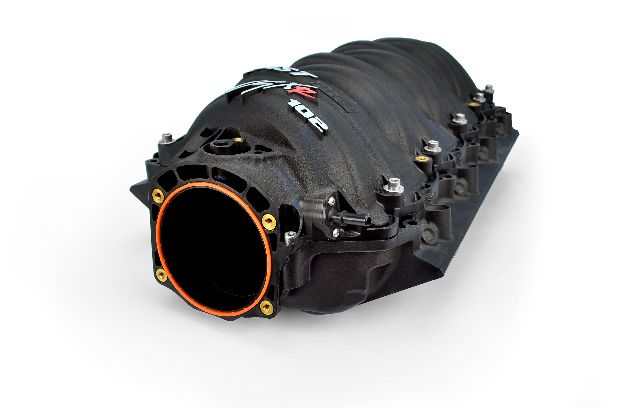
How to confirm: Perform a smoke test by introducing smoke into the intake system and watching for leaks around the intake manifold sealing surfaces. Alternatively, with the engine running, carefully spray carburetor cleaner or a flammable liquid around the gaskets; a noticeable change or spike in engine idle RPM indicates a leak has been found.
Typical fix: Replace the intake manifold gaskets. This is a moderately intensive job that involves removing the intake manifold. It is recommended to use updated gasket designs like Fel-Pro's PermaDryPlus.
Est. part cost: $40-$100 - Faulty Manifold Absolute Pressure (MAP) Sensor 🟡 Medium Probability The sensor, located on the intake manifold, can become contaminated with oil or simply fail electronically over time, sending incorrect pressure readings to the ECM.
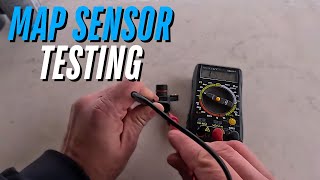
How to confirm: With a scan tool, monitor the MAP sensor voltage with the key on, engine off (KOEO). It should read near 4.5-5.0V, reflecting atmospheric pressure. 🎬 See how to test your MAP sensor with a multimeter. At idle (engine running), it should drop to around 1.0-1.5V. If readings are stuck, erratic, or do not match these expected values, the sensor is likely bad.
Typical fix: Replace the MAP sensor. It is typically located on top of the intake manifold towards the front or rear and is held in by a single bolt or clip.
Est. part cost: $30-$80 - Leaking or Disconnected PCV Hoses or Other Vacuum Lines ⚪ Low Probability Rubber hoses, especially the PCV tube connecting the valve cover to the intake manifold, become brittle and crack with age and exposure to engine heat, creating a vacuum leak.
How to confirm: Visually inspect all vacuum hoses connected to the intake manifold for cracks, breaks, or loose connections. Listen for a hissing sound with the engine running. The PCV hose is a common culprit.
Typical fix: Replace the damaged hose(s).
Est. part cost: $10-$50
Rare But Worth Checking
- Faulty Mass Airflow (MAF) Sensor: While less common than a dirty throttle body or vacuum leak for this code, a dirty or failed MAF sensor can also contribute to the correlation error. It can often be cleaned with dedicated MAF sensor cleaner before replacement is considered.
- Damaged Wiring: Frayed or corroded wiring or a poor connection at the MAP, MAF, or TPS sensor connectors can cause intermittent and incorrect signals. A visual inspection of the harnesses is a necessary step.
- Cracked Air Intake Tube: The plastic/rubber air intake tube between the MAF sensor and the throttle body can develop cracks, especially in the flexible accordion sections, allowing unmetered air to enter the system after the MAF sensor.
Diagnosis Steps
- Scan for any other stored trouble codes. Address them first if they are present. Codes like P0106 strongly point towards a MAP sensor or vacuum leak issue.
- Visually inspect the entire air intake tract from the air filter box to the throttle body for any cracks, loose clamps, or disconnected hoses.
- Remove the intake duct and carefully inspect the throttle body bore and plate for black carbon buildup.
- If dirty, clean the throttle body thoroughly using a dedicated cleaner, a rag, and a soft brush. Manually open the plate to clean the edges. Forum users suggest having a helper press the gas pedal (with key on, engine off) to open the plate safely.
- IMPORTANT: After cleaning the throttle body, perform an 'Idle Learn Reset' using a compatible scan tool. This step is called for in GM TSB PIP4578B and is critical to prevent the code from returning. 🎬 Vea cómo programar el cuerpo de aceleración después de la limpieza.
- Inspect all vacuum lines connected to the intake manifold, especially the PCV hoses and the brake booster hose, for cracks or damage.
- If the throttle body is clean and no obvious leaks are found, perform a smoke test to definitively check for vacuum leaks, paying close attention to the intake manifold gaskets.
- Using a scan tool, monitor live data for the MAP, MAF, and TPS sensors. Ensure their readings are logical. MAP should be ~4.5V KOEO and drop to 1.0-1.5V at idle.
- If a sensor's reading is erratic or does not change, test its wiring and connector for power, ground, and signal before condemning the sensor.
Parts You'll Likely Need
- Throttle Body Cleaner — This is the most common first step, as carbon buildup is a primary cause of P0068 on these engines.
Trusted brands: ACDelco, CRC
OEM price range: $10-$15
Aftermarket price range: $5-$10 - Intake Manifold Gasket Set
(OEM #GM 89060413)— Failed intake gaskets are a very common source of vacuum leaks that trigger this code on GM V8s. Aftermarket versions are often an improved design.
Trusted brands: ACDelco, Fel-Pro (e.g., MS98016T, MS96587)
OEM price range: $60-$100
Aftermarket price range: $40-$70 - Manifold Absolute Pressure (MAP) Sensor — If cleaning the throttle and fixing vacuum leaks doesn't resolve the code, a faulty MAP sensor is the next most likely component failure.
Trusted brands: ACDelco, Bosch
OEM price range: $50-$90
Aftermarket price range: $30-$80
Related Codes That Often Appear With This One
- P0106 — This code for 'MAP/Barometric Pressure Circuit Range/Performance' is very commonly seen with P0068, as both can be triggered by a vacuum leak or a faulty MAP sensor. A user with a 2006-2009 GM V8 reported both codes appearing simultaneously.
- P0121 — This code specifically relates to Throttle/Pedal Position Sensor Performance, which is often set alongside P0068 due to the throttle body issues mentioned in TSB PIP4578B.
- P1516 — This GM-specific code relates to the Throttle Actuator Control (TAC) module performance and can be triggered when the ECM forces the vehicle into Reduced Engine Power mode, a common symptom of P0068.
- P2101 — This code indicates a fault in the Throttle Actuator Control Motor Circuit, which is directly linked to the electronic throttle body's operation and can be set due to the same correlation faults as P0068.
Technical Service Bulletins (TSBs) & Recalls
- PIP4578B: Instructs technicians dealing with P0068 and idle/power issues on high-mileage V8s to inspect and clean the throttle body of carbon, then perform an 'Idle Learn Reset' with a scan tool. It lists a wide range of affected GM vehicles.
Platform-Specific Known Issues
- The provided NHTSA Technical Service Bulletin PIP4578B directly links P0068 with idle surge and reduced engine power mode on high mileage vehicles, reinforcing that this is a known issue.
- The design of the original Vortec V8 intake manifold gaskets makes them a common failure item, leading to vacuum leaks that are a primary cause of this code.
- A critical, often missed step after cleaning the throttle body is performing the 'Idle Learn Reset' with a scan tool, as called for by the TSB. Without this, the engine's learned idle compensation will be incorrect for the now-clean throttle body, and the code may reappear.
Mechanic-Grade Diagnostic Values
- MAP Sensor Signal Voltage (KOEO) — expected: ~4.5 - 5.0 Volts. Failure: Voltage significantly lower than atmospheric pressure reading indicates a faulty sensor or wiring issue.
- MAP Sensor Signal Voltage (Engine Idling) — expected: ~1.0 - 1.5 Volts. Failure: Voltage that is too high at idle suggests a vacuum leak; voltage that doesn't change from KOEO indicates a dead sensor.
- MAF Sensor Signal (Engine Idling, 5.3L V8) — expected: ~4.0 - 6.0 grams/second (g/s). Failure: Readings significantly outside this range, or readings that do not increase smoothly with RPM, suggest a dirty or faulty MAF sensor.
- Throttle Position Sensor (TPS) 1 Voltage — expected: ~0.5V (closed throttle) to ~4.5V (wide-open throttle). Failure: Voltage that is erratic, has dead spots when the throttle is opened smoothly, or does not return to the correct closed-throttle voltage.
- Long Term Fuel Trim (LTFT) at Idle — expected: -5% to +5%. Failure: A high positive fuel trim (e.g., +10% or higher) on both engine banks strongly indicates the ECM is adding fuel to compensate for unmetered air from a vacuum leak.
Scan Tool Commands That Help
- Tech 2 / GDS2: Idle Learn Reset / Reset Idle Learn — This function is critical after cleaning or replacing the throttle body. It erases the learned throttle angle values stored in the ECM, which are now incorrect due to the removed carbon buildup. Failure to perform this reset is a very common reason for the P0068 code to return after a cleaning.
- Tech 2 / GDS2: Engine Output Controls > Fuel Trim Reset — After repairing a significant vacuum leak (like intake gaskets), resetting the fuel trims forces the ECM to relearn the air-fuel mixture from a neutral baseline, which can speed up the diagnostic process and confirm the repair.
Wiring & Ground Locations
- G103 & G104 — Typically located on the back of the cylinder head(s) or on the engine block near the front of the engine. Often a stud with multiple black wires attached.. These are the primary engine-to-chassis grounds. A loose or corroded connection at these points can create voltage drops and erratic signals for all engine sensors, including the MAP, MAF, and TPS, directly causing correlation codes like P0068.
- MAP Sensor Connector — On the MAP sensor, usually located on the top front of the intake manifold.. The 3-pin connector provides the sensor with a 5V reference (Orange wire), a sensor ground (Black/White wire), and sends the signal back to the ECM (Yellow or Light Green wire). Checking for 5V and good ground at this connector is a key step in diagnosing a faulty sensor vs. a wiring problem.
- Throttle Body Connector (X109) — Plugged into the electronic throttle body.. Damage to this harness or corrosion in the connector pins can interrupt the signals from the two internal Throttle Position Sensors (TPS) and the throttle actuator control motor, leading to P0068 and other related throttle codes.
Real Owner Repair Stories
- PerformanceTrucks.net forum user (2006-2009 GM Truck/SUV with V8) — Truck started running rough, acting like it wasn't firing on all cylinders. Threw codes P0068 and P0106, and went into 'Reduced Engine Power' mode.
❌ Tried (didn't work) Replaced MAP sensor with a known good one., Replaced the entire drive-by-wire throttle body with a known good one., Checked all wiring and grounds., Replaced spark plug wires and a coil pack.
✅ What actually fixed it The user did not post a final resolution, but the thread strongly points towards a vacuum leak or incorrect cam timing as the remaining possibilities after ruling out the common sensors. - TahoeYukonForum.com user (2007 Tahoe) — P0068 code, rough idle, and stalling.
❌ Tried (didn't work) Cleaned the throttle body., Replaced the MAP sensor.
✅ What actually fixed it The problem was finally resolved by replacing the intake manifold gaskets, which had flattened and were causing a significant vacuum leak.
"I Checked Everything" — The Actual Cause
- In some cases, a smoke test may not reveal a leak if the crack is hairline or only opens under specific temperature or vibration conditions. A common example is a crack in the plastic intake manifold itself, rather than the gaskets. Another possibility is an intermittent leak from the brake booster or its check valve, which can be difficult to isolate with a standard smoke test.
OEM Part Supersession History
17113557, 89017367, 89017589→GM 89060413— The original intake manifold gasket designs were prone to premature failure. The updated part (89060413) is the current GM Genuine replacement designed for better longevity.
Heads up: While aftermarket gaskets like the Fel-Pro PermaDryPlus MS98016T are popular and often considered an upgrade, the GM 89060413 is the direct, updated OEM replacement for the original problematic parts.
Model Year Variations Within This Range
- 2006 (GMT800) vs 2007-2013 (GMT900): The 2006 model is the last year of the GMT800 platform, while 2007 marked the introduction of the GMT900 platform. While the V8 engines are fundamentally similar, there can be differences in PCV hose routing, specific sensor part numbers, and ECM software logic between these two generations. However, the primary causes of P0068 (dirty throttle body, intake gaskets) are common to both.
- 2009+: Starting around 2009, some MAF sensors used a different design. While functionally similar, the physical housing and part number may differ from earlier 2007-2008 models. Always verify the part number by VIN.
Helpful Videos

Used OEM Parts in Stock



New Aftermarket Parts Available


The information in this article is provided for general reference and educational purposes only. Vehicle specifications, procedures, and part compatibility can vary by production date, trim level, and region. Always consult your vehicle's factory service manual and verify part numbers before purchasing or performing repairs. Safety-critical components such as airbags, seat belts, and braking systems should be installed by a qualified professional.
- Chevrolet TAHOE:
- 🎬 Helpful Videos
- 🛍️ Shop This Part
- What's Unique About the 2006-2013 Chevrolet TAHOE
- Diagnostic Flowchart
- Symptoms You May Notice
- Most Likely Causes
- Rare But Worth Checking
- Diagnosis Steps
- Parts You'll Likely Need
- Related Codes That Often Appear With This One
- Technical Service Bulletins (TSBs) & Recalls
- Platform-Specific Known Issues
- Mechanic-Grade Diagnostic Values
- Scan Tool Commands That Help
- Wiring & Ground Locations
- Real Owner Repair Stories
- "I Checked Everything" — The Actual Cause
- OEM Part Supersession History
- Model Year Variations Within This Range
- 🎟️ Get 5% Off