

P0068 on 2011-2015 Chevrolet Express: MAP/Throttle Position Correlation Causes and Fixes
On a 2011-2015 Chevy Express, P0068 is most often caused by a dirty throttle body restricting airflow or a failing MAP sensor. Cleaning the throttle body of carbon buildup is a common, low-cost first step. If that doesn't work, a new MAP sensor is the next likely fix. A cracked PCV vacuum hose or a failing throttle body assembly are also common culprits, especially on high-mileage vans.
- P0068 on a Chevy Express indicates a conflict between the throttle position and the intake manifold air pressure.
- Before replacing any parts, the first step should always be to thoroughly clean the throttle body of carbon buildup.
- This code is specifically mentioned in GM TSB #PIP4578B for high-mileage vans, often appearing with other throttle-related codes, pointing towards a common failure of the throttle body assembly.
- Check for simple issues like vacuum leaks or a clogged air filter before moving to more expensive part replacements.
- If parts are replaced or cleaned, a throttle relearn procedure may be necessary to restore normal idle and performance.
What's Unique About the 2011-2015 Chevrolet EXPRESS
On high-mileage Chevrolet Express vans, this code is frequently not an isolated event. As noted in GM Technical Service Bulletin #PIP4578B, P0068 can appear alongside a cluster of other throttle-related codes, often pointing to a worn or dirty electronic throttle body assembly causing idle surges and a 'Reduced Engine Power' warning. This suggests a common wear pattern for the throttle system on these workhorse vehicles, where heavy carbon buildup (coking) requires not just cleaning but also an idle relearn procedure to restore normal function.
Diagnostic Flowchart
Tap your situation to follow the diagnostic path that matches what you're seeing on this vehicle.
Symptoms You May Notice
- Check Engine Light is on
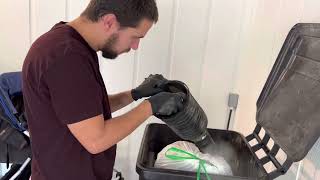
- "Reduced Engine Power" message disp 🎬 Watch: A quick fix for the Reduced Engine Power warninglayed
- Rough or surging idle
- Hesitation or poor acceleration
- Engine stalling, especially when coming to a stop
- Feeling of the engine 'choking' or a 'dead spot' on acceleration
- Increased fuel consumption
- Replacing the Mass Airflow (MAF) sensor. While some vehicles use the MAF in this calculation, the primary sensors for P0068 on this GM platform are the MAP and TPS.
- Replacing the throttle body when a simple cleaning and idle relearn procedure would have solved the problem.
- Replacing sensors without checking for vacuum leaks first, as unmetered air is a very common cause.
Most Likely Causes
- Dirty or Carbon-Clogged Throttle Body 🔴 High Probability As work vehicles, Express vans accumulate high mileage, leading to carbon and oil vapor buildup ('coking') in the intake system. This restricts the throttle plate's movement and disrupts airflow, causing a sensor mismatch. TSB #PIP4578B specifically calls out carbon buildup on high-mileage vehicles as a primary cause.
How to confirm: Remove the air intake tube from the throttle body and visually inspect for a thick, black, greasy layer of carbon around the throttle plate and bore.
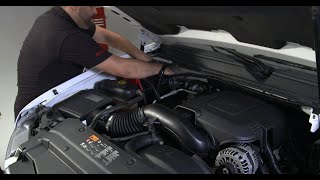
Typical fix: Clean the throttle body thoroughly with a dedicated throttle body cleaner 🎬 Watch: How to clean the throttle body and MAF sensor and a soft brush. Replace the throttle body gasket. A throttle relearn procedure is critical after cleaning to reset the ECM's learned values.
Est. part cost: $10-$20 - Vacuum Leak 🟡 Medium Probability The plastic and rubber vacuum lines, particularly the PCV hose connected to the intake manifold, can become brittle and crack with age and heat cycles, allowing unmetered air to enter the intake manifold and skewing MAP sensor readings.
How to confirm: Visually inspect all vacuum hoses connected to the intake manifold for cracks or loose connections, paying close attention to the PCV tube. You can also use a smoke machine or carefully spray carb cleaner around suspected areas with the engine running; a change in idle RPM indicates a leak.
Typical fix: Replace the cracked or broken vacuum hose(s).
Est. part cost: $15-$50 - Faulty Manifold Absolute Pressure (MAP) Sensor 🟡 Medium Probability The MAP sensor is a critical input for this calculation, and like any sensor, it can fail or provide inaccurate readings over time, causing a correlation error.
How to confirm: With a scan tool, check the MAP sensor reading with the Key On, Engine Off (KOEO). It should be close to the barometric pressure reading (approx. 4.5-5 volts). With the engine running at idle, the reading should drop significantly to around 1-1.5 volts.
Typical fix: Replace the MAP sensor. It is typically mounted directly on the intake manifold for easy access.
Est. part cost: $30-$70 - Failing Throttle Body Assembly 🟡 Medium Probability If cleaning and an idle relearn don't resolve the issue, the internal electronics of the throttle position sensor (TPS) or the drive-by-wire motor may be failing. The TSB lists several other throttle body codes (P0121, P1516, P2101) that point to this being a common failure on high-mileage units.
How to confirm: After ruling out other causes, and if other throttle-related DTCs are present, the throttle body itself is the likely culprit. A scan tool can monitor TPS voltage for smooth operation from ~0.5V at idle to ~4.5V at wide-open throttle.
Typical fix: Replace the entire throttle body assembly. The TPS is integrated and not sold separately. A relearn procedure is required after replacement.
Est. part cost: $120-$250
Rare But Worth Checking
- Damaged Wiring or Connectors: Check the wiring harnesses for the MAP sensor and throttle body for any signs of chafing, corrosion, or loose pins, as this can cause intermittent signal loss. Pay special attention to the connector at the throttle body.
- Severely Clogged Engine Air Filter: A completely clogged air filter can starve the engine of air, creating a pressure differential that might trigger this code. It's a simple and inexpensive item to check first.
- PCM Software Issue: In some cases, the ECM's software may be outdated or have a bug, causing it to misinterpret valid sensor signals. This is rare but possible, and would require a dealer or qualified shop to update the PCM calibration.
Diagnosis Steps
- Scan for Codes: Use an OBD-II scanner to confirm P0068 and check for any other related codes, such as those listed in TSB #PIP4578B. Note the freeze frame data.
- Inspect Air Intake System: Check the entire air intake path from the air filter to the throttle body for any loose clamps, cracked hoses, or obstructions.
- Inspect for Vacuum Leaks: Visually inspect all vacuum lines connected to the intake manifold, especially the PCV hose. Use a smoke machine or carb cleaner spray to check for leaks while the engine is running.
- Inspect and Clean Throttle Body: Remove the intake duct and inspect the throttle bore and plate for heavy carbon buildup ('coking'). If dirty, clean it thoroughly with throttle body cleaner and a soft cloth. Do not move the plate manually if possible.
- Perform Idle Relearn Procedure: After cleaning the throttle body, an idle relearn is crucial. A common method is to start the engine and let it idle in Park for 3 minutes, turn the ignition off for 60 seconds, then start and idle again for 3 minutes. A scan tool can also perform an 'Idle Learn Reset'.
- Test MAP Sensor: Use a scan tool to monitor live data. With Key On, Engine Off, the MAP sensor value should match the BARO value (around 4.5-5V). At idle, it should drop to a low pressure (high vacuum) reading (around 1-1.5V).
- Inspect Wiring: Check the connectors and wiring for the MAP sensor and the throttle body for any damage, corrosion, or loose connections.
- Test/Replace Parts: If the issue persists after cleaning and relearning, and the MAP sensor readings are suspect, replace the MAP sensor. If multiple throttle codes are present and other steps fail, suspect a faulty throttle body assembly.
Parts You'll Likely Need
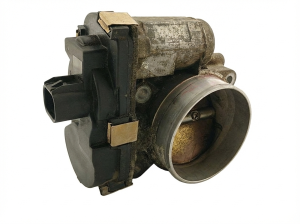
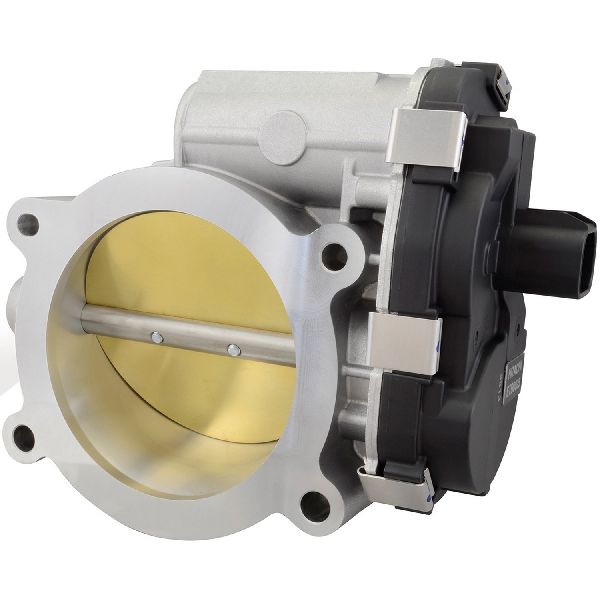
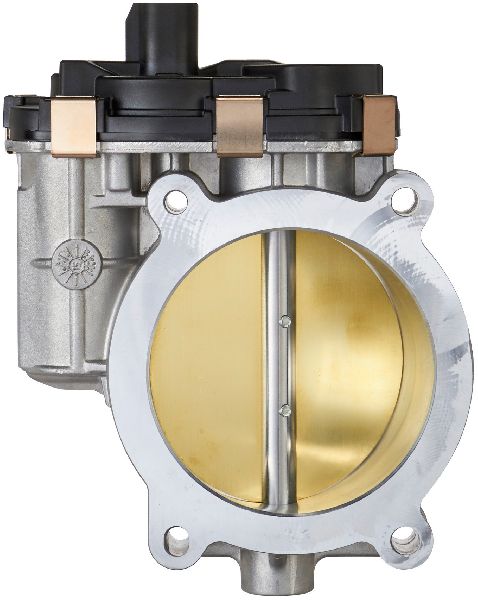
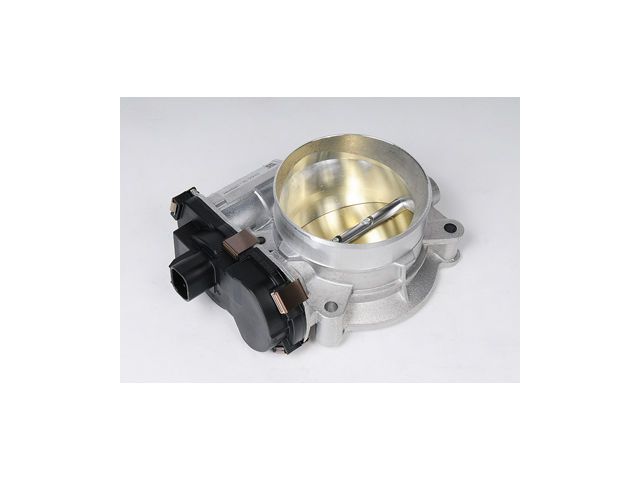
- Throttle Body Assembly
(OEM #12678223)— Often the root cause on high-mileage vehicles, especially when cleaning doesn't work or other throttle codes are present. The TPS is integrated into this part. This part number fits many GM V8 applications.
Trusted brands: ACDelco, Standard Motor Products, Dorman
OEM price range: $140-$200
Aftermarket price range: $100-$160 - Manifold Absolute Pressure (MAP) Sensor
(OEM #12644228)— This sensor provides the pressure reading that the ECM compares against the throttle position. A faulty sensor will cause a correlation error. This part is used across a wide range of GM vehicles.
Trusted brands: ACDelco, Bosch, Delphi
OEM price range: $40-$60
Aftermarket price range: $25-$45
Related Codes That Often Appear With This One
- P0121 — Throttle/Pedal Position Sensor 'A' Circuit Performance. Both P0068 and P0121 relate to incorrect throttle position readings and are mentioned together in TSB #PIP4578B.
- P1516 — Throttle Actuator Control (TAC) Module Throttle Actuator Position Performance. This is a GM-specific code indicating a problem between the throttle command and the actual result, also listed in TSB #PIP4578B.
- P2101 — Control Module Throttle Actuator Control Motor Circuit Range/Performance. This points directly to an issue with the electronic motor inside the throttle body, also listed in TSB #PIP4578B.
- P2176 — Throttle Actuator Control System - Idle Position Not Learned. This often appears after a throttle body has been cleaned or replaced without performing the relearn procedure, as noted in TSB #PIP4578B.
- P0106 — Manifold Absolute Pressure/Barometric Pressure Circuit Range/Performance. This code points more directly to a fault with the MAP sensor circuit and is often seen with P0068.
Technical Service Bulletins (TSBs) & Recalls
- TSB #PIP4578B: 'SES Light, Idle Surge, and/or Reduced Engine Power Mode with DTCs P0068, P0121, P1516, P2101, P2119, and/or P2176'. This bulletin is central to diagnosing P0068 on high-mileage GM trucks and vans. It explains that carbon buildup causes these issues and that cleaning the throttle body must be followed by an 'idle learn reset' using a scan tool to prevent the problem from returning.
Platform-Specific Known Issues
- Per Technical Service Bulletin #PIP4578B, it is common for high-mileage Express vans to set P0068 in conjunction with other throttle body codes (P0121, P1516, P2101, P2176) due to heavy carbon buildup. A simple cleaning is the first step, but it MUST be followed by an idle learn reset procedure for the fix to be effective.
Mechanic-Grade Diagnostic Values
- Manifold Absolute Pressure (MAP) Sensor Voltage — expected: Key On, Engine Off (KOEO): ~4.5-5.0 Volts (should match BARO). Engine at idle: ~1.0-1.5 Volts.. Failure: Voltage is stuck, does not change with engine RPM, or is significantly outside the expected ranges.
- Throttle Position Sensor (TPS) Voltage — expected: Closed throttle (idle): ~0.5 Volts. Wide Open Throttle (WOT): ~4.5 Volts.. Failure: Voltage does not increase smoothly as the throttle is opened, has spikes or dropouts, or does not match the expected range.
Scan Tool Commands That Help
- GDS2 (GM Dealer Software): Idle Learn Reset — This function should be used after cleaning or replacing the throttle body to command the ECM to relearn the new idle airflow values. Failure to do this is a common cause of persistent idle issues and code P2176.
- GDS2 (GM Dealer Software): Module Setup > ECM > Reset Functions — A more comprehensive reset that clears all learned values in the Engine Control Module. This can be used if the simple Idle Learn Reset does not resolve the issue after a part replacement.
Wiring & Ground Locations
- G102 — On the left rear of the engine.. This is a primary engine ground. A poor connection here can affect the reference ground for multiple sensors, including the ignition coils, causing erratic data that could contribute to correlation codes.
- G103 — On the right rear of the engine for 4.8L, 5.3L, & 6.0L V8 engines.. This is another critical engine ground. A loose or corroded G103 can cause intermittent issues with sensor readings and is specifically mentioned in a TSB regarding grounding issues on these vans.
- MAP Sensor Connector — On the intake manifold, typically near the front or top.. The connector itself or its wiring can become brittle from heat cycles. The three main wires are a 5-volt reference, a low reference (ground), and the signal wire. A fault in any of these will directly cause MAP sensor codes.
- Throttle Body Connector — On the side of the throttle body assembly.. This connector contains the wiring for the two internal Throttle Position Sensors and the throttle actuator motor. Damage or corrosion here is a common cause of throttle-related codes like P2135, which often appears with P0068.
OEM Part Supersession History
12678223→12740727— Unknown, likely an internal revision for durability or component sourcing.12644228→12711681— Unknown, likely an internal revision for accuracy or durability.
Helpful Videos

Used OEM Parts in Stock

New Aftermarket Parts Available


The information in this article is provided for general reference and educational purposes only. Vehicle specifications, procedures, and part compatibility can vary by production date, trim level, and region. Always consult your vehicle's factory service manual and verify part numbers before purchasing or performing repairs. Safety-critical components such as airbags, seat belts, and braking systems should be installed by a qualified professional.
- Chevrolet EXPRESS:
- 🎬 Helpful Videos
- 🛍️ Shop This Part
- What's Unique About the 2011-2015 Chevrolet EXPRESS
- Diagnostic Flowchart
- Symptoms You May Notice
- Most Likely Causes
- Rare But Worth Checking
- Diagnosis Steps
- Parts You'll Likely Need
- Related Codes That Often Appear With This One
- Technical Service Bulletins (TSBs) & Recalls
- Platform-Specific Known Issues
- Mechanic-Grade Diagnostic Values
- Scan Tool Commands That Help
- Wiring & Ground Locations
- OEM Part Supersession History
- 🎟️ Get 5% Off