

P0068 on 2008-2012 Chevrolet Colorado: MAP/MAF Throttle Position Correlation Fixes
On a 2008-2012 Colorado, code P0068 is most often caused by a dirty throttle body or a vacuum leak. Cleaning the throttle body is a common, low-cost first step that often resolves the issue. A faulty MAP sensor is also a frequent culprit if cleaning and leak checks don't work.
- P0068 means the engine's computer sees a disagreement between the throttle position and the airflow sensors (MAP/MAF).
- The most common and cheapest fix is to thoroughly clean the throttle body of carbon buildup.
- Always check for vacuum leaks from old, cracked hoses or gaskets before replacing any expensive sensors.
- This code can cause significant drivability problems, including stalling and reduced power, so it should be addressed promptly.
What's Unique About the 2008-2012 Chevrolet COLORADO
On the first-generation Chevrolet Colorado and its platform mates (GMC Canyon, Hummer H3), this code is frequently linked to issues that develop over time, especially on higher-mileage vehicles. General Motors has issued Technical Service Bulletins (TSBs) that group P0068 with other throttle-related codes, often pointing towards problems like carbon buildup in the throttle body or vacuum leaks that disrupt the sensitive sensor readings. Owners often find that a thorough cleaning of the throttle body is the first and most effective step. Moisture or frost getting into the intake and onto the MAP sensor has also been reported by owners as a trigger for this code, especially in colder climates.
Diagnostic Flowchart
Tap your situation to follow the diagnostic path that matches what you're seeing on this vehicle.
Symptoms You May Notice
- Check Engine Light is on
- Rough or unstable idle.
- Engine may stall when coming to a stop.
- Hesitation or sluggish acceleration.
- Reduced engine power, sometimes with a specific warning message.
- Increased fuel consumption.
- A feeling that the engine is 'choking' or has a 'dead spot' when pressing the accelerator.
- Replacing the MAP or MAF sensor without first checking for vacuum leaks or cleaning the throttle body. These are more common and less expensive fixes to attempt first.
- Replacing the throttle position sensor (TPS) alone. On this vehicle, the TPS is integrated into the throttle body assembly and is not typically sold separately.
Most Likely Causes
- Dirty or Carbon-Clogged Throttle Body 🔴 High Probability As mentioned in GM Technical Service Bulletin #PIP4578B, throttle body issues are common on high-mileage vehicles, leading to correlation codes like P0068. Carbon buildup (coke) restricts the throttle plate, altering airflow and causing a mismatch with sensor readings.
How to confirm: Visually inspect the inside of the throttle body and the throttle plate for a layer of black, greasy sludge or grime. This buildup can restrict movement and airflow.
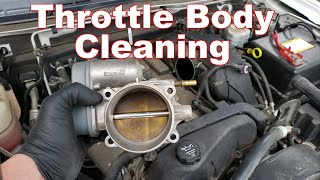
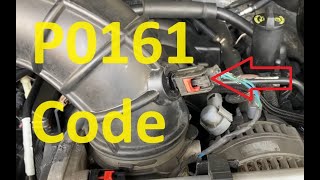
Typical fix: Remove the air intake tube and clean the throttle body thoroughly with a dedicated throttle body cleaner and a soft brush or cloth. 🎬 Watch: How to clean the intake and throttle body after a P0068 code. After cleaning, a throttle idle relearn procedure may be necessary.
Est. part cost: $5-$15 for cleaner - Vacuum Leak 🔴 High Probability Hoses and gaskets become brittle and crack over time from heat cycles, allowing unmetered air to enter the engine, which throws off the sensor correlation. Common failure points include the PCV hose, brake booster line, and intake manifold gaskets.
How to confirm: Perform a smoke test to find the source of the leak. Alternatively, carefully spray carburetor or brake cleaner around vacuum lines and intake gaskets with the engine running; a change in engine idle RPM indicates a leak has been found.
Typical fix: Replace the cracked vacuum hose (e.g., PCV hose assembly) or leaking gasket (e.g., intake manifold gasket).
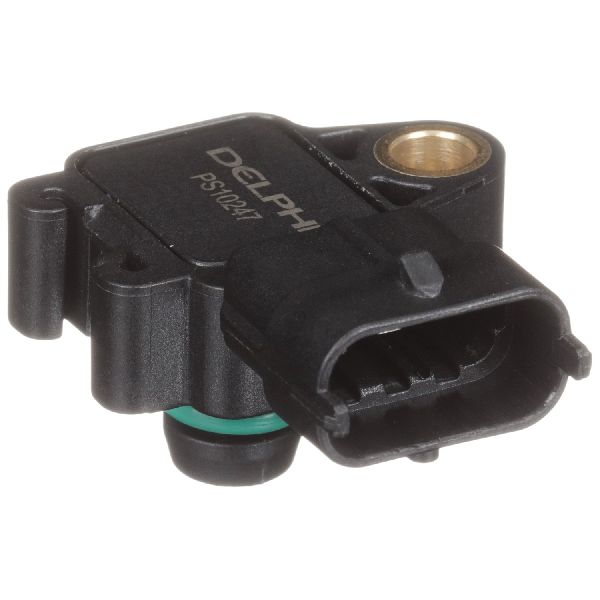
Est. part cost: $10-$60 - Faulty Manifold Absolute Pressure (MAP) Sensor 🟡 Medium Probability The MAP sensor can become contaminated with oil or moisture, or it can fail electronically, sending incorrect pressure data to the PCM. It is a very common point of failure for this code if the throttle body is clean and no vacuum leaks are present.
How to confirm: Use a scan tool to monitor the MAP sensor voltage. With the key on and engine off, it should read around 4.5-5 volts. With the engine running at idle, it should drop to around 1-1.5 volts. Readings outside this range suggest a faulty sensor.
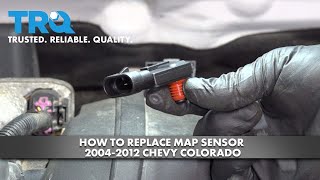
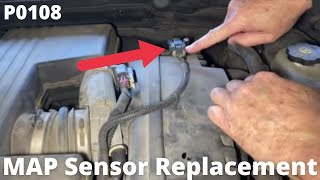
Typical fix: Replace the MAP sensor. It is located on top of the intake manifold and is typically held by a single screw, making for an easy replacement.
Est. part cost: $30-$80 - Faulty Mass Air Flow (MAF) Sensor ⚪ Low Probability The MAF sensor's delicate wires can get dirty or fail, sending incorrect airflow data to the PCM. While less common than MAP sensor issues on this platform, it's a known cause.
How to confirm: First, try cleaning the sensor with a dedicated MAF sensor cleaner. If the problem persists, monitor the sensor's output (grams/second) with a scan tool to see if it responds correctly to changes in engine RPM. A typical reading at idle is 3-5 g/s for the I4/I5 engines.
Typical fix: Clean the MAF sensor. If cleaning doesn't work, replace the sensor.
Est. part cost: $10 for cleaner, $70-$150 for a new sensor
Rare But Worth Checking
- Damaged Wiring or Connectors: Corrosion or damage to the wiring for the MAP, MAF, or throttle body can cause intermittent signals. This is mentioned in TSB #PIP5529B as a potential area for diagnosis. Check for chafed wires or loose pins at the sensor connectors.
- Faulty Powertrain Control Module (PCM): This is very rare. The PCM should only be considered after all other possibilities, including sensors, wiring, and vacuum leaks, have been definitively ruled out.
- Cracked or Loose Air Intake Tube: A crack or loose clamp on the intake tube between the MAF sensor and the throttle body can allow unmetered air to enter, causing a correlation fault.
Diagnosis Steps
- Check for other stored DTCs that could point to a specific sensor or system, such as P0106 (MAP) or P0101 (MAF).
- Visually inspect the entire air intake system from the air filter to the throttle body for loose clamps, cracked hoses, or disconnected lines.
- Inspect all vacuum lines connected to the intake manifold for cracks, brittleness, or loose connections. Pay close attention to the PCV and brake booster hoses.
- Remove the air intake tube and inspect the throttle body for carbon buildup. Clean it thoroughly if it is dirty.
- If the throttle body is clean and there are no visible leaks, perform a smoke test to find any hard-to-see vacuum leaks, especially around the intake manifold gasket.
- Use a scan tool to monitor live data. With Key On, Engine Off, check that the MAP sensor voltage is ~4.5V. With the engine idling, check that MAP voltage is ~1.0-1.5V and MAF reading is approximately the same as the engine's displacement in liters (e.g., 3.7L engine ≈ 3.7 g/s).
- Test the Throttle Position Sensor (TPS) by monitoring its voltage on the scan tool. It should increase smoothly from about 0.5V at idle to around 4.5V at wide-open throttle with no dropouts.
- Inspect the electrical connectors and wiring for the MAP, MAF, and throttle body for any signs of damage, corrosion, or loose pins.
Parts You'll Likely Need
- Throttle Body Cleaner
(OEM #ACDelco 19375578 (Top Engine and Fuel Injector Cleaner))— This is the most common first step, as carbon buildup is a frequent cause of P0068 on this truck.
Trusted brands: CRC, Berryman, ACDelco
Aftermarket price range: $5-$15 - Manifold Absolute Pressure (MAP) Sensor
(OEM #ACDelco 213-4658 (or 87NP33B))— If cleaning the throttle body and fixing vacuum leaks doesn't solve the code, a faulty MAP sensor is the next likely culprit.
Trusted brands: ACDelco, Delphi, NGK/NTK
OEM price range: $60-$100
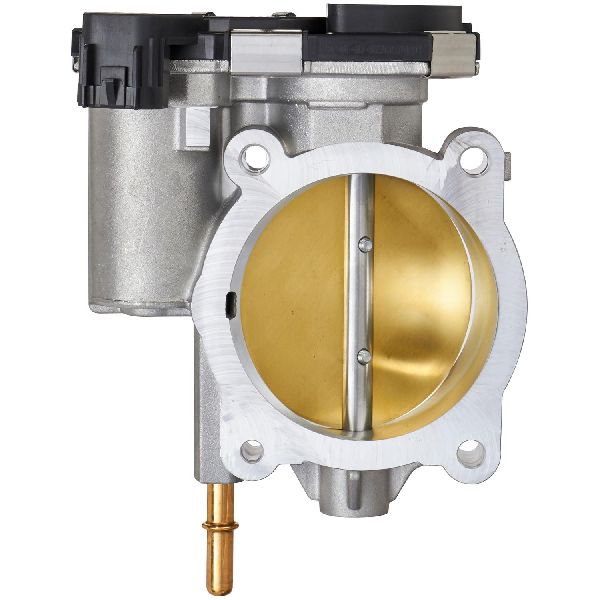
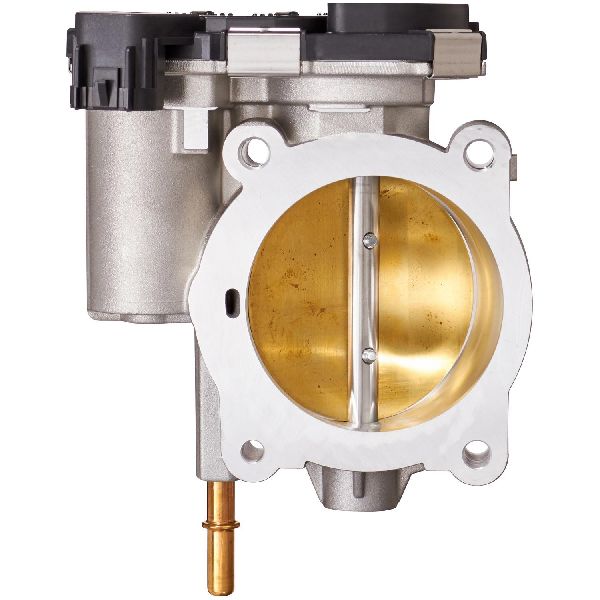
Aftermarket price range: $30-$80 - Throttle Body Assembly
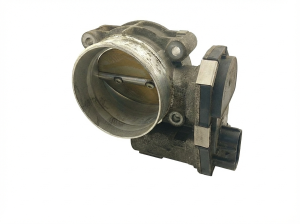
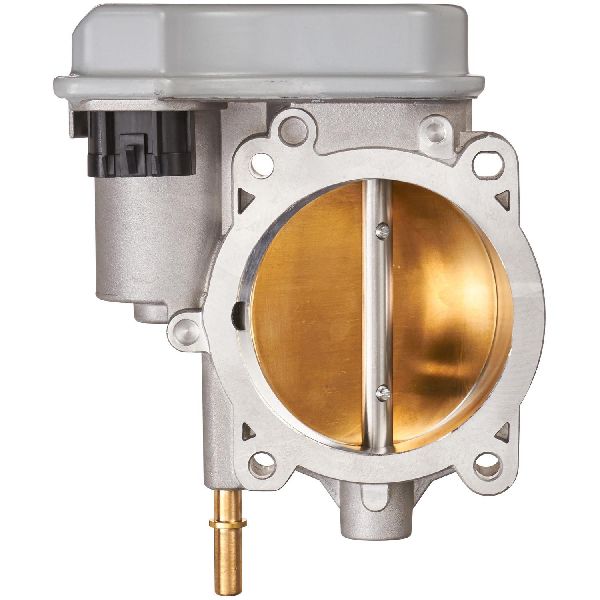
(OEM #ACDelco 12601387 (For 3.7L & 5.3L))— In rare cases where cleaning does not resolve the issue or the internal electronics (TPS) have failed, the entire assembly needs replacement.
Trusted brands: ACDelco, SKP, Dorman
OEM price range: $250-$350
Aftermarket price range: $90-$150 - Intake Manifold Gasket / Vacuum Hoses — These parts are needed if a vacuum leak is found to be the source of the problem.
Related Codes That Often Appear With This One
- P0101 — Mass Air Flow (MAF) Circuit Range/Performance. This code is often seen with P0068 as both relate to incorrect airflow readings. It is listed in TSB #PIP5529B.
- P0106 — Manifold Absolute Pressure (MAP)/Barometric Pressure Circuit Range/Performance. This points directly to an issue with the MAP sensor's readings, a key component in the P0068 correlation check. It is also listed in TSB #PIP5529B and is a strong indicator the MAP sensor itself may be faulty.
- P0171 — System Too Lean (Bank 1). A vacuum leak that causes P0068 will also introduce unmetered air, leading to a lean condition.
- P2176 — Throttle Actuator Control System - Idle Position Not Learned. This code is directly related to the throttle body and is mentioned alongside P0068 in TSB #PIP4578B. It often appears after cleaning or replacing the throttle body if an idle relearn procedure is not performed.
Technical Service Bulletins (TSBs) & Recalls
- PIP4578B: Mentions P0068 in relation to idle surge, reduced power, and other throttle body codes on high mileage vehicles.
- PIP5529B: Groups P0068 with a combination of other diagnostic trouble codes that can cause a malfunction indicator lamp.
Platform-Specific Known Issues
- TSB #PIP4578B notes that DTCs P0068, P0121, P1516, P2101, P2119, and/or P2176 may be experienced on high mileage vehicles and can be related to throttle body performance.
- TSB #PIP5529B lists P0068 in a large group of codes that may illuminate the check engine light, suggesting that a single root cause (like a vacuum leak or wiring issue) can trigger multiple faults.
- Owner reports indicate that moisture from snow or frost can get into the air intake, wet the MAP sensor, and trigger a P0068 code and limp mode.
Mechanic-Grade Diagnostic Values
- MAP Sensor Voltage (Key On, Engine Off) — expected: ~4.5 Volts at sea level. Failure: Voltage below 4.0V suggests a sensor or wiring issue.
- MAP Sensor Voltage (Engine at Idle) — expected: 1.0 - 1.5 Volts. Failure: Voltage that doesn't drop significantly from the KOEO reading, or is stuck high/low.
- Throttle Position Sensor (TPS) Voltage at Idle — expected: ~0.5 Volts (typical range 0.535V - 0.735V). Failure: Voltage significantly outside this range, or not stable.
- Throttle Position Sensor (TPS) Voltage at Wide-Open Throttle (WOT) — expected: ~4.5 Volts. Failure: Voltage does not reach near 4.5V, or has dropouts/spikes as the throttle is opened.
- Mass Air Flow (MAF) Sensor Reading at Idle — expected: Approx. the same grams/second as engine displacement in liters (e.g., 3.7L engine ≈ 3.7 g/s). General range is 2-7 g/s.. Failure: Reading is significantly higher or lower than the engine displacement rule-of-thumb.
- MAP Sensor Ground Circuit Resistance — expected: Less than 5 Ohms to a known good ground. Failure: Resistance greater than 5 Ohms indicates a poor ground connection for the sensor circuit.
Scan Tool Commands That Help
- Manual Procedure (No Tool Required): Idle Learn / Throttle Relearn Procedure — Required after cleaning or replacing the throttle body, or disconnecting the battery, to allow the ECM to relearn the base idle position. A common procedure is: 1. Start engine and idle for 3 minutes. 2. Turn engine OFF for 60 seconds. 3. Start engine and idle for another 3 minutes. The idle should now be stable.
- GDS2 / Tech2 or equivalent professional scan tool: Idle Learn Reset or Throttle/Idle Learn — This is the preferred method for performing a throttle relearn. It is a specific service function in the scan tool menu used after throttle body replacement or cleaning to reset learned values and initiate the relearn process.
Wiring & Ground Locations
- G102 / G103 — Primary engine grounds located on the lower left side of the engine block.. A poor connection at these main engine grounds can cause fluctuating voltages and reference signals for all engine sensors, including the MAP, MAF, and TPS, leading to correlation codes.
- SP105 and SP106 — Splice Packs (ground distribution blocks). SP105 is near the battery on the driver's side; SP106 is behind the airbox on the passenger's side.. These are notorious for corrosion on the 1st Gen Colorado. A bad connection at SP106 can affect the Data Link Connector (DLC) and various modules, while a bad SP105 can affect the fuel pump and run/crank relays, indirectly causing performance issues that could be misdiagnosed.
- MAP Sensor Connector — On the MAP sensor, located on the intake manifold.. The wiring harness near the connector is a known weak point. The pinout is typically: Pin A (Gray) = 5V Reference, Pin B (Light Green) = Signal, Pin C (Orange/Black) = Low Reference (Ground).
- ECM (Engine Control Module) — Located in the right rear of the engine compartment.. This is the source of the 5V reference and ground for the sensors, and where their signal wires terminate. All wiring checks ultimately lead back to the ECM connectors.
Real Owner Repair Stories
- Common owner consensus from forums like coloradofans.com and 355nation.net (2008-2012 Chevrolet Colorado, all engines) — Check Engine Light with P0068, rough idle, 'Reduced Engine Power' message, stalling when stopping.
❌ Tried (didn't work) Replacing the MAP sensor without checking other causes first., Clearing the code without performing a repair, only for it to return quickly.
✅ What actually fixed it The overwhelming majority of owners resolve code P0068 by thoroughly cleaning the carbon buildup from the throttle body and throttle plate. If that doesn't work, the next most successful fix is replacing the MAP sensor. Performing an idle relearn procedure after either service is critical to prevent a high idle or related codes like P2176.
When the Usual Fixes Don't Work
- While cleaning the throttle body is the most common fix, if the code returns and is accompanied by TPS-specific codes (like P2135), it is strong evidence that the throttle body has an internal electronic failure. In this scenario, no amount of cleaning will solve the problem, and the entire throttle body assembly must be replaced. This was a known issue on these trucks, to the point that GM had previously issued a special coverage adjustment for the component.
OEM Part Supersession History
12601387→12629992— Standard part revision by the manufacturer.
Heads up: This is the throttle body assembly for the 3.7L and 5.3L engines. Some sources indicate that replacement may require a programming/setup procedure with a dealer-level scan tool.
Model Year Variations Within This Range
- 2009-2012: The 5.3L V8 engine option was introduced in 2009. However, for the P0068 code, it shares the same throttle body assembly (PN 12601387, later 12629992) and MAP sensor as the 3.7L I5 engine, meaning diagnostic procedures and common causes are largely identical.
Helpful Videos
Used OEM Parts in Stock



New Aftermarket Parts Available



The information in this article is provided for general reference and educational purposes only. Vehicle specifications, procedures, and part compatibility can vary by production date, trim level, and region. Always consult your vehicle's factory service manual and verify part numbers before purchasing or performing repairs. Safety-critical components such as airbags, seat belts, and braking systems should be installed by a qualified professional.
- Chevrolet COLORADO:
- 🎬 Helpful Videos
- 🛍️ Shop This Part
- What's Unique About the 2008-2012 Chevrolet COLORADO
- Diagnostic Flowchart
- Symptoms You May Notice
- Most Likely Causes
- Rare But Worth Checking
- Diagnosis Steps
- Parts You'll Likely Need
- Related Codes That Often Appear With This One
- Technical Service Bulletins (TSBs) & Recalls
- Platform-Specific Known Issues
- Mechanic-Grade Diagnostic Values
- Scan Tool Commands That Help
- Wiring & Ground Locations
- Real Owner Repair Stories
- When the Usual Fixes Don't Work
- OEM Part Supersession History
- Model Year Variations Within This Range
- 🎟️ Get 5% Off