

P0068 on 2011-2018 Chevrolet Camaro: MAP/MAF - Throttle Position Correlation Fixes
On a 2011-2018 Camaro, code P0068 usually points to a vacuum leak (like a cracked PCV hose), a dirty throttle body, or a faulty MAP or MAF sensor. Cleaning the throttle body and MAF sensor is a good first step and often solves the problem for under $20. An idle relearn procedure is often required after cleaning the throttle body.
- P0068 means your Camaro's computer is confused by conflicting information from its key airflow sensors.
- Start with the cheapest and easiest fixes: check for vacuum leaks and clean the throttle body and MAF sensor.
- A scan tool that can read live data is extremely helpful for diagnosing which sensor is providing faulty information.
- If you have recently installed an aftermarket air intake or throttle body, you may need a custom engine tune to correct the code.
- Don't immediately replace expensive parts; thorough diagnosis is key, as a simple cleaning or a small vacuum leak is often the culprit.
What's Unique About the 2011-2018 Chevrolet CAMARO

For the Camaro, especially those with performance modifications like a ported throttle body or a cold air intake, P0068 can be triggered more easily. The engine's computer has specific tables for expected airflow, and these modifications can allow more air than the stock parameters account for, causing a correlation fault, particularly at high RPMs. High-mileage vehicles are also more prone due to carbon buildup in the throttle body, which restricts airflow and forces the PCM to learn a new baseline; cleaning it without performing an idle relearn can also set the code.
Diagnostic Flowchart
Tap your situation to follow the diagnostic path that matches what you're seeing on this vehicle.
Generation note: This range covers the end of the 5th generation (2011-2015) and the beginning of the 6th generation (2016-2018) Camaro. While the fundamental cause of the code is the same, the specific locations of sensors and vacuum lines may differ slightly. The provided TSBs apply to both generations, indicating a common issue across the platform. The 5th Gen V8 (LS3/L99) and V6 (LFX) have well-documented instances of this code, as do the 6th Gen models with the LT1 V8 and LGX V6.
Symptoms You May Notice
- Check Engine Light is on
- Engine running rough, especially at idle
- Reduced engine power or 'limp mode'
- Hesitation or poor throttle response during acceleration
- Increased fuel consumption
- Occasional stalling
- Stabilitrak/Traction Control service lights may illuminate
- Replacing the throttle body assembly when only a cleaning and idle relearn procedure was needed.
- Replacing sensors (MAF, MAP) without first checking for vacuum leaks, which are a very common and cheaper fix.
Most Likely Causes

- Vacuum Leak 🔴 High Probability Hoses and gaskets can become brittle and crack over time with engine heat cycles. The PCV hose assembly is a particularly common point of failure, developing cracks that introduce unmetered air.
How to confirm: Visually inspect all vacuum hoses, especially the PCV lines connected to the intake manifold, for cracks or disconnections. A smoke test is the most effective way to find small leaks. You can also carefully spray brake cleaner or starting fluid around suspected leak areas with the engine running; a change in engine idle indicates a leak.
Typical fix: Replace the cracked hose or faulty gasket.
Est. part cost: $10-$75 - Dirty or Clogged Throttle Body 🔴 High Probability Carbon and oil vapor from the PCV system can build up on the throttle plate and bore, restricting airflow at idle and low speeds. As this happens, the PCM adapts the throttle angle to maintain idle speed.
How to confirm: Remove the intake tube from the throttle body and visually inspect for a layer of black carbon buildup, especially around the edges of the throttle plate.
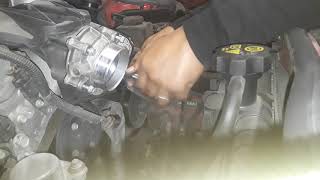
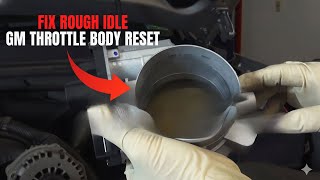
Typical fix: Clean the throttle body bore and plate with a dedicated throttle body cleaner and a soft cloth. Do not use 🎬 Watch: How to remove and clean your Camaro throttle body. harsh chemicals or abrasive materials. After cleaning, a Throttle Body Relearn procedure is crucial.
Est. part cost: $10-$20 - Dirty or Faulty Mass Airflow (MAF) Sensor 🟡 Medium Probability Oiled air filters can contaminate the MAF sensor element, and dirt can accumulate over time, leading to incorrect airflow readings.
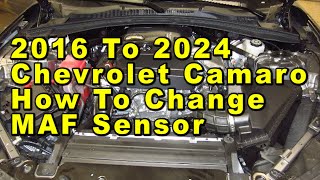
How to confirm: The MAF sensor is located in the intake tube after the air filter. 🎬 Watch: How to change the MAF sensor on 6th Gen models. Visually inspect the sensor wires for contamination. A diagnostic scan tool can be used to monitor MAF readings to see if they are erratic or out of specification.
Typical fix: First, try cleaning the sensor with a dedicated MAF sensor cleaner spray. If cleaning doesn't work, the sensor must be replaced.
Est. part cost: $15-$180 - Faulty Manifold Absolute Pressure (MAP) Sensor 🟡 Medium Probability
How to confirm: Use a scan tool to compare the MAP sensor reading to the BARO (barometric pressure) reading with the key on, engine off; they should be nearly identical. With the engine running at idle, the reading should drop to around 1 volt.
Typical fix: Replace the MAP sensor. It is typically mounted directly on the intake manifold.
Est. part cost: $30-$100
Rare But Worth Checking
- Aftermarket Air Intake or Ported Throttle Body: If the code appeared immediately after installing a non-factory air intake or a modified throttle body, the change in airflow characteristics may have exceeded the PCM's ability to adapt without a custom tune. Forum users on Camaro5.com report that a tuner can adjust the airflow correlation tables to resolve this.
- Damaged Wiring or Connectors: Inspect the wiring harnesses for the MAF, MAP, and Throttle Position sensors for any signs of fraying, corrosion, or loose connections. This is especially important if an aftermarket intake was installed that stretched or repositioned the MAF sensor wiring.
- Loose or Faulty Gas Cap: While less common, a leak in the EVAP system, sometimes caused by a bad gas cap seal, can in some instances affect manifold pressure readings enough to contribute to a correlation fault.
Diagnosis Steps

- Check for any other stored trouble codes that could provide more clues.
- Visually inspect the entire air intake system from the air filter to the intake manifold for loose clamps, cracked hoses, or disconnected lines. Pay close attention to the PCV hoses.
- Perform a smoke test to definitively identify any vacuum leaks.
- Remove the intake duct and inspect the throttle body for carbon buildup. Clean if dirty.
- Remove and inspect the MAF sensor. Clean with dedicated MAF sensor cleaner if it appears dirty.
- Using a scan tool with live data, monitor the readings from the MAP, MAF, and Throttle Position sensors to ensure they are responding correctly and are within the expected range. MAP voltage should be ~4.5-5V with key on/engine off and drop to ~1V at idle.
- Inspect the electrical connectors and wiring for the MAP, MAF, and throttle body for any signs of damage or corrosion.
- Perform a Throttle Body Relearn Procedure: After cleaning the throttle body or disconnecting the battery, this procedure is often necessary. TSB PIP4578B specifies using a scan tool (Tech 2/GDS) to perform an 'idle learn reset'. A manual procedure also exists: let the car idle for 3 minutes, turn it off for 1 minute, idle again for 3 minutes. This allows the PCM to relearn the new clean throttle plate position. 🎬 See this video for a manual throttle body relearn walkthrough.
Parts You'll Likely Need

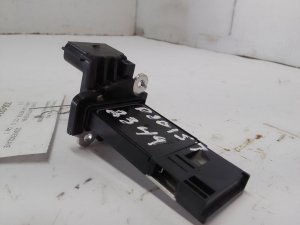
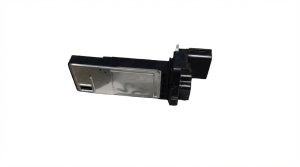
- Mass Airflow (MAF) Sensor
(OEM #ACDelco 213-4222 (GM 15865791) for V8 models (LS3/L99); ACDelco 12671616 for V6 models (LFX))— This sensor gets contaminated over time and provides incorrect airflow readings to the PCM.
Trusted brands: ACDelco, Bosch, Delphi
OEM price range: $100-$180
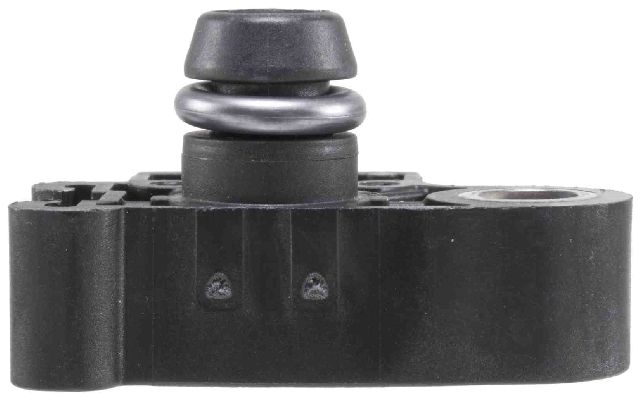
Aftermarket price range: $50-$120 - Manifold Absolute Pressure (MAP) Sensor
(OEM #ACDelco 213-4681 (GM 12644228) for V8 models; ACDelco 213-4681 (GM 12644228) also fits many V6 models.)— This sensor can fail electronically or become clogged, leading to incorrect pressure readings from the intake manifold.
Trusted brands: ACDelco, Bosch
OEM price range: $50-$90
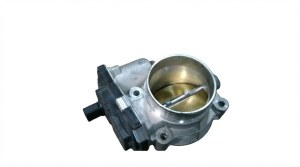
Aftermarket price range: $30-$70 - Throttle Body Assembly — While often just dirty, the integrated throttle position sensor can fail, requiring replacement of the whole assembly. This is less common than cleaning being the fix.
Trusted brands: ACDelco
OEM price range: $200-$350
Aftermarket price range: $150-$250
Related Codes That Often Appear With This One
- P0101 — Mass Air Flow (MAF) Circuit Range/Performance. This code is often set with P0068 because both relate to the PCM receiving unexpected data from the MAF sensor.
- P0106 — Manifold Absolute Pressure (MAP)/Barometric Pressure Circuit Range/Performance. This indicates a problem with the MAP sensor signal, a core component in the P0068 calculation.
- P0171 — System Too Lean (Bank 1). A vacuum leak, a primary cause of P0068, allows unmetered air into the engine, creating a lean condition.
- P2176 — Throttle Actuator Control System - Idle Position Not Learned. This often appears with throttle body issues, especially after cleaning or replacement if the relearn procedure is not performed, which is also a root cause of P0068.
Technical Service Bulletins (TSBs) & Recalls
- Bulletin #PIP5529B: Notes that P0068 can appear with a combination of other codes (P0101, P0106, P0171, etc.) requiring further diagnostics to find a potential systemic issue like a wiring problem or major vacuum leak.
- Bulletin #PIP4578B: Mentions P0068 in relation to idle surge and reduced engine power mode, especially on high-mileage vehicles. It explicitly states that carbon buildup is a likely cause and that cleaning the throttle body must be followed by an idle learn reset procedure.
Platform-Specific Known Issues
- Carbon Buildup and Idle Relearn: TSB #PIP4578B specifically addresses P0068 on high-mileage vehicles due to carbon buildup in the throttle body. It warns that if the throttle body is cleaned, an 'idle learn reset' must be performed with a scan tool. Failure to do so can cause the code to return because the PCM is still compensating for the now-removed carbon restriction.
- Aftermarket Modifications: Owners on Camaro5.com and LS1tech.com frequently report P0068 app
Mechanic-Grade Diagnostic Values
- MAP Sensor Voltage — expected: Key On, Engine Off (KOEO): ~4.5-5.0 Volts. Engine running at idle: ~1.0 Volt.. Failure: Readings that are stuck, do not change with engine load, or are significantly outside these ranges.
- Throttle Position Sensor (TPS) Voltage — expected: Closed throttle: ~0.2-0.8 Volts. Wide Open Throttle (WOT): ~4.0-4.8 Volts. Voltage should increase smoothly with no spikes or dropouts as the throttle is opened.. Failure: Voltage that jumps, drops out, or does not correspond to the throttle plate angle.
- Mass Airflow (MAF) Sensor Voltage — expected: At idle: ~0.5-0.8 Volts. Voltage should increase proportionally with airflow/RPM.. Failure: A static voltage that doesn't change with RPM, or readings that are erratic.
Scan Tool Commands That Help
- Tech 2 / GDS2: Idle Learn Reset / Throttle Position Relearn — This function is required after cleaning or replacing the throttle body. As noted in TSB PIP4578B and confirmed by technician reports, failing to perform this relearn will cause the PCM to use incorrect adaptive values, leading to a P0068 code.
Wiring & Ground Locations
- G101 (5th Gen) — Located at the front of the engine, on the lower block.. This is a primary ground point for the Engine Control Module (ECM) and the Mass Air Flow (MAF) Sensor. A poor connection here can cause erratic sensor readings and trigger correlation faults.
- Engine Block Ground (6th Gen) — A ground cable runs from near the underhood fuse block to the engine block, attaching underneath the passenger exhaust manifold by the starter.. This ground bolt was reportedly not tightened well from the factory on some 6th gen Camaros. A loose connection here can cause numerous electrical issues, including erratic sensor data that leads to P0068.
- Cylinder Head Grounds (5th & 6th Gen) — Ground wires are located on the back of each cylinder head (5th Gen) or specifically the back of the passenger cylinder head (6th Gen).. These are critical engine grounds that ensure the ECM and its network of sensors have a stable reference. Corrosion or looseness can cause intermittent signal problems.
Real Owner Repair Stories
- Camaro5.com forum members (2012 SS Camaro LS3) — P0068 code appeared immediately after installing a ported throttle body.
❌ Tried (didn't work) Initial idle relearn procedures.
✅ What actually fixed it A custom tune was required. A tuner adjusted the Air/Fuel ratio tables to account for the increased airflow from the modified throttle body, and the code did not return after the computer adapted. - iATN Network Technician (Unspecified GM vehicle) — P0068 and P0102 (MAF Low Voltage)
❌ Tried (didn't work) Initial diagnosis following standard flow charts.
✅ What actually fixed it The final fix was a bad ground wire. After locating and repairing the faulty ground connection, the codes were resolved.
When the Usual Fixes Don't Work
- While Pass 2 correctly notes that aftermarket throttle bodies can cause P0068, a real-world repair story clarifies the nuance: the issue is not a defective part, but that the stock ECU tune cannot reconcile the increased airflow with its factory correlation tables. The fix isn't necessarily to replace the part, but to get a custom tune to adjust the ECU's expected airflow parameters to match the new hardware.
OEM Part Supersession History
GM 12644228 (MAP Sensor)→GM 12711681— Standard part lifecycle update by the manufacturer.
Heads up: The new part number (12711681) is the direct replacement and should be fully compatible.
Model Year Variations Within This Range
- 2016-2018 (6th Gen): The 6th Gen LT1 V8 engine uses a different firing order (1-8-7-2-6-5-4-3) compared to the traditional small block Chevy order, which alters engine harmonics and diagnostic characteristics. Additionally, a specific factory ground bolt near the starter is known to be loose on some 6th gen models, creating a unique potential cause for this code not commonly seen on the 5th gen.
- 2011-2015 (5th Gen): The primary engine grounds for the ECM and MAF sensor are located at G101 on the lower front of the engine block, a different location than the problematic ground on the 6th gen.
Helpful Videos
Used OEM Parts in Stock



New Aftermarket Parts Available


The information in this article is provided for general reference and educational purposes only. Vehicle specifications, procedures, and part compatibility can vary by production date, trim level, and region. Always consult your vehicle's factory service manual and verify part numbers before purchasing or performing repairs. Safety-critical components such as airbags, seat belts, and braking systems should be installed by a qualified professional.
- Chevrolet CAMARO:
- 🎬 Helpful Videos
- 🛍️ Shop This Part
- What's Unique About the 2011-2018 Chevrolet CAMARO
- Diagnostic Flowchart
- Symptoms You May Notice
- Most Likely Causes
- Rare But Worth Checking
- Diagnosis Steps
- Parts You'll Likely Need
- Related Codes That Often Appear With This One
- Technical Service Bulletins (TSBs) & Recalls
- Platform-Specific Known Issues
- Mechanic-Grade Diagnostic Values
- Scan Tool Commands That Help
- Wiring & Ground Locations
- Real Owner Repair Stories
- When the Usual Fixes Don't Work
- OEM Part Supersession History
- Model Year Variations Within This Range
- 🎟️ Get 5% Off