

P0068 on 2015-2018 Cadillac CTS: MAP/MAF Throttle Position Correlation Causes and Fixes
For a 2015-2018 Cadillac CTS, code P0068 is most often caused by a dirty throttle body or a vacuum leak. A critical, documented issue for the 2.0L engine is loose intake manifold bolts (TSB #PIP5529B). Cleaning the throttle body is a common, low-cost first step. If that fails, a smoke test to find vacuum leaks or checking intake bolt torque is the next logical step before replacing any sensors.
- Start with the simplest and cheapest fixes: inspect for vacuum leaks and clean the throttle body and MAF sensor.
- This code will likely trigger 'Reduced Engine Power' mode, making the car difficult to drive. Address it promptly.
- Do not immediately replace sensors. The code indicates a *correlation* problem, which is more often caused by a physical issue (leak, blockage) than a failed sensor.
- Pay attention to accompanying codes. If you also have P0171 (System Lean), a vacuum leak is highly probable.
What's Unique About the 2015-2018 Cadillac CTS
On this generation of Cadillac CTS, the P0068 code is strongly associated with two specific issues highlighted in manufacturer bulletins. TSB #PIP4578B points directly to problems with carbon buildup in the throttle body on high-mileage vehicles, causing idle surges and reduced power. As carbon accumulates, the PCM learns to open the throttle plate more to compensate; cleaning the throttle body or reprogramming the PCM without performing an idle learn reset can trigger this code. Additionally, TSB #PIP5529B links P0068 with other codes like P0101 (MAF) and P0106 (MAP), specifically identifying loose intake manifold bolts on the 2.0L LTG engine as a common underlying cause of a vacuum leak that can trigger multiple faults simultaneously. Owners should focus on these two areas—throttle body cleanliness and intake system integrity (especially intake bolt torque on 2.0T models)—before suspecting sensor failure.
Diagnostic Flowchart
Tap your situation to follow the diagnostic path that matches what you're seeing on this vehicle.
Symptoms You May Notice
- Check Engine Light is on
- Engine running rough, especially at idle.
- Vehicle enters 'Reduced Engine Power' mode.
- Hesitation or stumbling during acceleration.
- Idle speed fluctuates or surges.
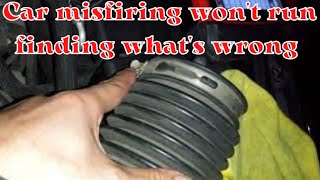
- Engine may stall when coming to a stop. 🎬 Watch this CTS stalling and running rough due to code P0068.
- Decreased fuel economy.
- Hissing sound from the engine bay, indicating a vacuum leak.
- Replacing the MAP or MAF sensor before checking for vacuum leaks or cleaning the throttle body. A sensor is often blamed when the real issue is the physical airflow it's trying to measure.
- Replacing the Throttle Position Sensor (TPS) by itself. On these models, the TPS is integrated into the throttle body and is not sold or replaced separately.
Most Likely Causes
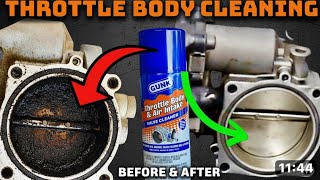
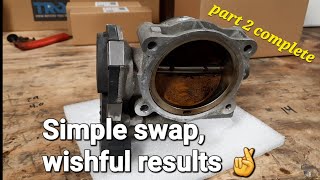
- Dirty or Carbon-Clogged Throttle Body 🔴 High Probability TSB #PIP4578B specifically mentions that high-mileage vehicles can experience this code due to throttle body issues. Carbon and oil residue from the PCV system, common on direct-injection engines, can build up behind the throttle plate, restricting its movement and causing airflow to deviate from what the position sensor reports.
How to confirm: Remove the intake air duct from the throttle body and visually inspect the throttle plate and bore for a layer of black, greasy buildup ('coke'). A YouTube video by 'Jabo The Mechanic' on a 2013 CTS with a 3.6L engine shows significant carbon buildup as a potential cause.
Typical fix: Clean the throttle body thoroughly with a dedicated throttle body cleaner and a soft cloth or brush. A throttle relearn procedure is highly recommended after cleaning to reset the learned idle values. 🎬 See how to properly clean your throttle body step-by-step.
Est. part cost: $10-$20 for cleaner - Vacuum Leak 🔴 High Probability TSB #PIP5529B groups P0068 with lean codes (P0171) and other sensor codes, pointing to unmetered air. For the 2.0L LTG engine, the primary suspect is loose intake manifold bolts. For all engines, common leak points include cracked PCV hoses (especially the line at the rear of the engine), loose intake manifold bolts, or deteriorated gaskets.
How to confirm: For the 2.0L LTG, physically check the torque of the intake manifold bolts. The most effective general method is a smoke test, which fills the intake system with visible smoke to reveal the exact location of any leaks. 🎬 Watch a smoke test to find hidden vacuum leaks easily. A visual inspection of all vacuum hoses for cracks or disconnection is a good first step. Spraying carburetor cleaner around suspected gasket areas while the engine is running can also identify a leak if the engine RPM changes.
Typical fix: If intake manifold bolts are loose on a 2.0L LTG, remove one at a time, apply medium-strength threadlocker, and torque in sequence to specification (18 ft-lbs or 25 Nm). Replace any cracked hoses or leaking gaskets. A new gasket should always be used when a throttle body is reinstalled.
Est. part cost: $15-$100 depending on the hose or gasket - Dirty or Faulty Mass Airflow (MAF) Sensor 🟡 Medium Probability The MAF sensor's hot wire can become contaminated with dirt and oil over time, causing it to under-report the amount of air entering the engine. This creates a conflict with MAP and TPS data. Aftermarket, non-OEM sensors have also been reported by owners to cause this code.
How to confirm: Visually inspect the sensor element for dirt or debris. Cleaning it is a simple diagnostic step. If cleaning doesn't help, the sensor's output can be monitored with a scan tool; it should read 0 g/s with the engine off and increase smoothly with RPM. A typical value on a warm 3.6L engine at idle is 4.2-4.8 g/s.
Typical fix: Clean the sensor with a dedicated MAF sensor cleaner. Do not touch the sensor wires. If cleaning fails, the sensor must be replaced.
Est. part cost: $10 for cleaner, $80-$150 for a new sensor - Faulty Manifold Absolute Pressure (MAP) Sensor ⚪ Low Probability While less common than leaks or a dirty throttle body, the MAP sensor can fail electronically, providing incorrect pressure readings to the PCM.
How to confirm: Use a scan tool to monitor the MAP sensor reading with the key on, engine off. It should read close to barometric pressure (e.g., 29.2 in-Hg depending on location). The voltage should be approximately 4.5V to 5.0V. The reading should drop significantly to around 1.0V to 1.5V once the engine is started at idle. A faulty sensor may be stuck at a high voltage reading even with the engine running.
Typical fix: Replace the MAP sensor. It is typically mounted directly on the intake manifold.
Est. part cost: $40-$90
Rare But Worth Checking
- Cracked Air Intake Duct: A crack or tear in the flexible intake boot between the MAF sensor and the throttle body will allow unmetered air to enter, functioning like a vacuum leak and causing the same symptoms.
- Wiring Issues: Corroded or damaged wiring or connectors for the MAP, MAF, or TPS can cause intermittent or incorrect signals, leading to a P0068 code. A loose or corroded main engine ground point (often on the cylinder head) can also cause erratic sensor readings. This should be investigated after the more common causes are ruled out.
Diagnosis Steps
- Check for other DTCs. Codes like P0101, P0106, or P0171 are strong indicators of a vacuum leak, per TSB #PIP5529B.
- Perform a thorough visual inspection of the entire air intake system. Look for obvious cracks in hoses, loose clamps, or disconnected lines, especially the PCV hose at the back of the engine. Ensure the oil cap is tight.
- (2.0L LTG Engine) If multiple codes are present, check the torque on the intake manifold bolts. This is a documented cause of vacuum leaks on this engine.
- Remove the intake duct from the throttle body. Inspect the throttle plate and bore for heavy carbon buildup.
- If dirty, clean the throttle body using a dedicated cleaner and a soft rag. Also, clean the MAF sensor with MAF sensor cleaner.
- Perform a Throttle Relearn Procedure after cleaning the throttle body to reset idle parameters.
- If the issue persists, perform a smoke test to definitively identify any hard-to-see vacuum leaks from gaskets or hoses.
- Use a scan tool to monitor live data from the MAP, MAF, and TPS sensors. Compare their readings to known good values (e.g., MAP at ~4.5-5V KOEO, dropping to ~1V at idle; TPS smoothly climbing from ~0.5V to ~4.5V).
- If a sensor provides an erratic or fixed reading, inspect its wiring and connector for damage or corrosion before condemning the sensor itself.
Parts You'll Likely Need
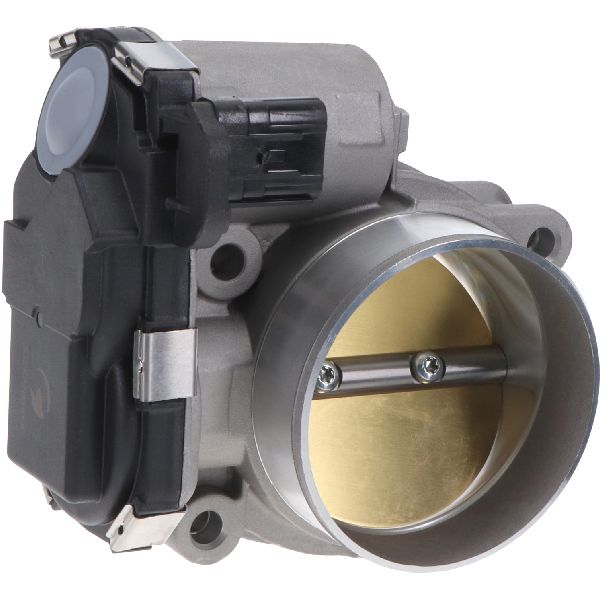
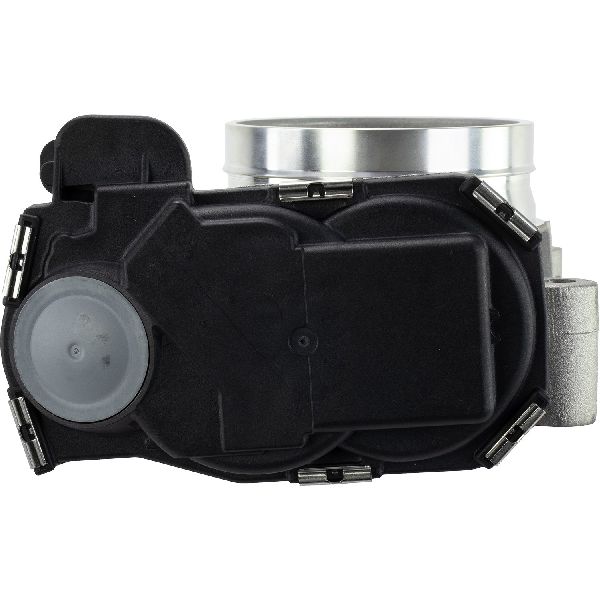
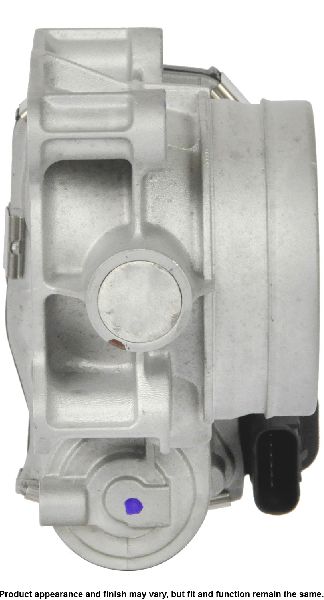
- Throttle Body
(OEM #12681472 (For 2.0L LTG Engine))— Often the cause is not failure but heavy carbon buildup. If cleaning doesn't work or the internal electronics have failed, replacement is necessary. TSB #PIP4578B points to this area as a common problem source.
Related Codes That Often Appear With This One
- P0101 — Mass Air Flow (MAF) Circuit Range/Performance. This code is often seen with P0068 because both relate to incorrect airflow readings. TSB #PIP5529B groups them together as being commonly caused by loose intake manifold bolts.
- P0106 — Manifold Absolute Pressure (MAP) Circuit Range/Performance. This indicates a problem with the MAP sensor's readings, which is a key input for the P0068 calculation. It often appears with P0068 when a major vacuum leak is present, as noted in TSB #PIP5529B.
- P0171 — System Too Lean (Bank 1). A vacuum leak, a primary cause of P0068, allows unmetered air into the engine, which creates a lean air/fuel mixture and triggers P0171. This is another code grouped in TSB #PIP5529B.
- P2176 — Throttle Actuator Control System - Idle Position Not Learned. This code is mentioned alongside P0068 in TSB #PIP4578B and points directly to an issue with the throttle body, often appearing after cleaning or replacement if a relearn procedure is not performed.
Technical Service Bulletins (TSBs) & Recalls
- PIP5529B: Mentions P0068 in a group of codes that can be set together, pointing towards a common diagnostic path.
- PIP4578B: Superseded a previous bulletin to add information about idle surge, reduced power, and DTC P0068 related to throttle body issues on high-mileage vehicles.
Platform-Specific Known Issues
- Throttle Relearn Procedure: After cleaning or replacing the throttle body, the PCM's learned idle compensation must be reset. Failure to do so can cause a high or unstable idle and may even re-trigger the P0068 or set a P2176 code. A common procedure involves starting the engine and letting it idle in Park for 3 minutes, turning the ignition off for 60 seconds, and repeating this cycle. Some variations exist, and using a scan tool to perform the 'Idle Learn Reset' is the most reliable method.
Mechanic-Grade Diagnostic Values
- MAP Sensor Voltage (Key On, Engine Off) — expected: ~4.5V to 5.0V, corresponding to barometric pressure.. Failure: A reading near 0V or one that doesn't match local barometric pressure suggests a sensor or circuit failure.
- MAP Sensor Voltage (Engine at Idle, Warm) — expected: 1.0V to 1.5V.. Failure: Voltage that remains high (close to the KOEO reading) or does not change when the throttle is snapped indicates a vacuum leak, sensor, or circuit problem.
- Mass Air Flow (MAF) Sensor Reading (Engine at Idle, Warm, 3.6L) — expected: 4.2 to 4.8 g/s.. Failure: Readings significantly outside this range, or readings that do not increase smoothly with RPM, suggest a dirty/faulty sensor or a vacuum leak.
- Throttle Position Sensor (TPS) Voltage — expected: ~0.5V at closed throttle to ~4.5V at wide-open throttle.. Failure: A reading that is high when the throttle is closed (e.g., 30% with the car off) is a dead giveaway of a throttle body issue.
- MAP Sensor Low Reference Circuit Resistance — expected: Less than 5 Ohms between the ground circuit terminal and a known good ground.. Failure: Resistance higher than 5 Ohms indicates a poor ground connection, which can cause erratic sensor readings.
Scan Tool Commands That Help
- GDS2 / Professional Scan Tool: Idle Learn Procedure / Throttle Relearn — Required after replacing or thoroughly cleaning the throttle body, or replacing the ECM. Failure to perform this can cause an unstable idle and trigger codes P2176 or P0068. A specific procedure requires the engine coolant and intake air temps to be between 5-60°C (41-140°F) and involves a sequence of ignition on/off cycles before starting the engine.
Wiring & Ground Locations
- G131 / G136 — Located on the rear of the cylinder heads (G131 on the left rear of the engine, G136 on the rear of the left cylinder head).. These are primary engine block grounds. A loose or corroded connection at these points can cause unstable or incorrect readings from engine sensors like the MAP, MAF, and TPS, which rely on a solid ground reference.
- K20 ECM Connectors (LFX V6) — The Engine Control Module (ECM) on the 3.6L LFX V6. It has three main harness connectors: X1 (Blue), X2 (Black), and X3 (Gray).. For advanced electrical diagnosis, knowing these connector identifiers is essential to test sensor signal, reference voltage, and ground wires directly at the ECM, ruling out harness issues.
- MAP Sensor Connector — Plugged directly into the MAP sensor on the intake manifold.. This 3-pin connector provides the 5V reference, ground, and signal return for the MAP sensor. Testing for correct voltages at this connector is the first step in electrical diagnosis of the MAP circuit.
Real Owner Repair Stories
- YouTube channel 'Jabo The Mechanic' (2013 Cadillac CTS 3.6L) — Start and stall, rough running, check engine light with codes P0068, P0101 (MAF), and P0106 (MAP).
❌ Tried (didn't work) Initial scan showed MAP and MAF sensors were reading within spec with the key on, engine off.
✅ What actually fixed it The technician noticed the throttle position on the scan tool read 30% with the car off and the pedal untouched. Upon inspection, the throttle body was heavily caked with carbon buildup. A thorough cleaning of the throttle body resolved all symptoms and codes.
"I Checked Everything" — The Actual Cause
- Per TSB #PIP5529B, a vehicle (especially with the 2.0L LTG engine) can pass a smoke test but still have a vacuum leak causing P0068 and other codes. The actual cause is often loose intake manifold bolts. The leak may only be apparent under specific engine vacuum and vibration conditions that a static smoke test doesn't replicate. The fix is to re-torque the bolts to specification, not necessarily replace the gasket.
OEM Part Supersession History
12627067, 12669071, 12670837→12681472— Standard part evolution for the throttle body assembly used on the 2.0L LTG engine.
Heads up: This replacement part requires programming and/or a special setup procedure (Idle Relearn) to ensure proper operation in the vehicle.
Model Year Variations Within This Range
- 2015 vs 2016-2018 (3.6L V6): The 2015 model year used the 3.6L LFX V6 engine. For the 2016 model year, Cadillac introduced the updated 3.6L LGX V6. While the P0068 code applies to both, there are differences in the Engine Control Module (ECM) hardware, software, and potentially some wiring, which is important for advanced electrical diagnosis.
Helpful Videos
Used OEM Parts in Stock



New Aftermarket Parts Available


The information in this article is provided for general reference and educational purposes only. Vehicle specifications, procedures, and part compatibility can vary by production date, trim level, and region. Always consult your vehicle's factory service manual and verify part numbers before purchasing or performing repairs. Safety-critical components such as airbags, seat belts, and braking systems should be installed by a qualified professional.
- Cadillac CTS:
- 🎬 Helpful Videos
- 🛍️ Shop This Part
- What's Unique About the 2015-2018 Cadillac CTS
- Diagnostic Flowchart
- Symptoms You May Notice
- Most Likely Causes
- Rare But Worth Checking
- Diagnosis Steps
- Parts You'll Likely Need
- Related Codes That Often Appear With This One
- Technical Service Bulletins (TSBs) & Recalls
- Platform-Specific Known Issues
- Mechanic-Grade Diagnostic Values
- Scan Tool Commands That Help
- Wiring & Ground Locations
- Real Owner Repair Stories
- "I Checked Everything" — The Actual Cause
- OEM Part Supersession History
- Model Year Variations Within This Range
- 🎟️ Get 5% Off