

P0063 on 2013-2016 Land Rover Range Rover Evoque: HO2S Heater Circuit Fault
This code almost always indicates a faulty downstream oxygen sensor (Bank 2, Sensor 3) due to a known manufacturing defect. Replacing the specific O2 sensor is the most common fix. Land Rover issued TSBs and a potential extended warranty for this issue, so check with a dealer using your VIN before purchasing parts.
- P0063 on a 2013-2016 Evoque is almost certainly a failed downstream oxygen sensor (Bank 2, Sensor 3).
- The failure is well-documented by Land Rover in TSB #SSM63157 as a supplier manufacturing defect.
- Before purchasing parts, contact a Land Rover dealer with your VIN to check for any applicable extended warranties or goodwill programs related to this known issue.
What's Unique About the 2013-2016 Land Rover RANGE ROVER EVOQUE
For this specific generation of Land Rover, the P0063 code is strongly linked to a known manufacturing defect within the oxygen sensors themselves. Land Rover issued Technical Service Bulletin (TSB) #SSM63157 that explicitly identifies the cause as a 'misalignment with in the sensor' from the supplier, which leads to premature failure. This makes it much more likely that the sensor itself has failed rather than a simple wiring problem. Another TSB, #SSM72448, corroborates this by noting that diagnosis often reveals no fault with the wiring harness, pointing back to an internal sensor issue.
Diagnostic Flowchart
Tap your situation to follow the diagnostic path that matches what you're seeing on this vehicle.
Symptoms You May Notice
- Check Engine Light is on
- Failure to pass an emissions/smog test
- Slightly reduced fuel economy
- Rough idle or hesitation during acceleration in some cases
- Replacing the wrong oxygen sensor. The Evoque's 2.0L engine has multiple sensors. P0063 is specific to Bank 2, Sensor 3, which is a generic term for the rearmost downstream sensor. It is critical to identify the correct physical sensor before replacement. 🎬 Watch: This guide explains O2 sensor locations and bank numbers.
- Assuming the sensor is bad without checking the fuse first. A blown fuse is a simple fix that is often overlooked.
Most Likely Causes
- Faulty Heated Oxygen Sensor (Bank 2, Sensor 3) 🔴 High Probability A manufacturer TSB (#SSM63157) confirms a known manufacturing defect from a supplier, causing 'misalignment within the sensor' that leads to premature failure under normal use. TSB #SSM72448 further supports this, stating that diagnosis often finds no wiring faults, pointing to the sensor itself.
How to confirm: After checking fuses and wiring, test the resistance of the heater circuit pins 🎬 See how to test oxygen sensor heater circuits with a multimeter. on the sensor itself using a multimeter. Disconnect the sensor and measure across the two heater wires (often the same color). A reading outside the typical 2-20 ohm range, or an open circuit (infinite resistance), confirms internal failure.
Typical fix: Replace the Bank 2, Sensor 3 oxygen sensor. On the 2.0L I4 engine, there is only one bank, but it has multiple sensors. 'Bank 2, Sensor 3' is a generic OBD-II term that for this vehicle points to the rearmost, post-catalyst oxygen sensor.
Est. part cost: $50-$180 - Wiring or Connector Issue ⚪ Low Probability While less common on this platform due to the known sensor defect, wiring is routed near the hot exhaust system and can become melted, chafed, or corroded over time.
How to confirm: Visually inspect the wiring harness and connector for the sensor. Look for any signs of melting, corrosion, or physical damage. Check for 12V power at the harness connector with the key on, engine off.
Typical fix: Repair the damaged section of the wiring harness or clean/replace the connector.
Est. part cost: $10-$50 - Blown Fuse for O2 Heater Circuit ⚪ Low Probability
How to confirm: Locate the fuse box and check the fuse that supplies power to the oxygen sensor heater circuits. A visual inspection or a continuity test with a multimeter will confirm if it's blown.
Typical fix: Replace the blown fuse. If it blows again, it indicates a short circuit in the wiring or the sensor itself that must be found and rectified.
Est. part cost: $1-$5
Rare But Worth Checking
- Faulty Powertrain Control Module (PCM): This is very rare. The PCM's internal driver for the heater circuit can fail. This should only be considered after the sensor, wiring, and fuses have all been confirmed to be good.
Diagnosis Steps
- Verify the code is present using an OBD-II scanner.
- Check the vehicle's fuse box for any blown fuses related to the oxygen sensor heater circuits. Replace if necessary.
- Visually inspect the wiring harness and connector for the rearmost (downstream) oxygen sensor. Look for any signs of melting, chafing, corrosion, or loose connections.
- If the visual inspection passes, disconnect the sensor and use a multimeter to test the heater circuit resistance across the two heater pins on the sensor side. A reading of infinite ohms (open) or a value outside the 2-20 ohm range indicates a failed sensor.
- With the sensor still disconnected, turn the ignition to 'ON' (engine off) and test the harness-side connector for battery voltage (around 12V) on the heater power supply wire.
- If voltage and ground are present at the harness and the sensor's resistance is out of spec, replace the oxygen sensor.
- After replacement, clear the codes with the scanner and perform a test drive 🎬 Watch this DIY walkthrough for replacing sensors on an Evoque. to ensure the issue is resolved.
- If the sensor and wiring test good, the fault may lie with the PCM, which requires professional diagnosis.
Parts You'll Likely Need
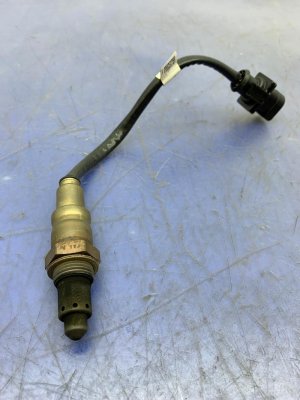
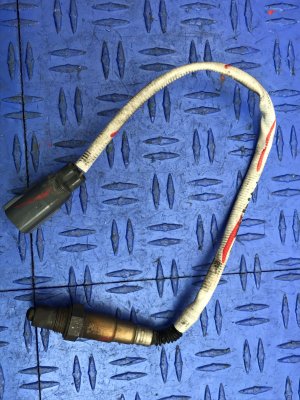
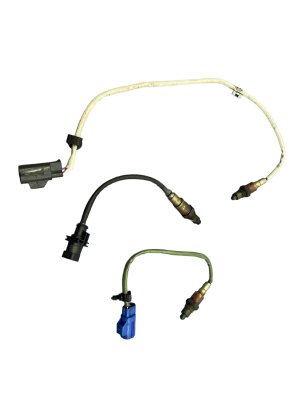
- Oxygen Sensor (Downstream/Post-catalyst)
(OEM #LR001370, LR035747)— This is the component that fails most often for this code, due to a confirmed manufacturing defect mentioned in TSB #SSM63157. Note that TSB #SSM63157 also references part number LR035747 as a 'Right Hand Mid Oxygen Sensor' affected by the defect.
Trusted brands: Bosch, Denso, NGK, Walker Products
OEM price range: $120-$200
Aftermarket price range: $50-$150
Related Codes That Often Appear With This One
- P0042, P0043, P0055, P0061, P0062, P0142, P0144, P0162 — These are all codes for other oxygen sensor heater circuits. TSB #SSM63157 groups these codes together as they can all be caused by the same manufacturing defect in the sensors.
Technical Service Bulletins (TSBs) & Recalls
- SSM63157: Notes a manufacturing fault within the oxygen sensor as the primary cause for a range of O2 sensor codes, including P0063. Advises technicians to check date codes on new parts.
- SSM72448: Mentions that for P0063 and other codes, diagnosis often reveals no fault with the wiring harness or connectors, suggesting the component itself is the issue.
Platform-Specific Known Issues
- Technical Service Bulletin SSM63157 was issued due to a high rate of failure for these sensors. The cause was identified as a manufacturing fault at the supplier, leading to 'misalignment within the sensor' and premature failure. The TSB advises checking the date code on replacement sensors to ensure they were made after June 1st, 2013.
- Technical Service Bulletin SSM72448 also lists P0063 among a wide range of O2 sensor codes, noting that sometimes after diagnosis, no fault is found with the wiring, pointing towards an internal sensor issue.
- Some owners on forums report success in getting this specific repair covered by the dealer, even out of warranty, due to the well-known nature of the defect. It is highly recommended to contact a Land Rover dealer with the vehicle's VIN to check for any extended warranty or 'goodwill' programs related to this TSB.
Mechanic-Grade Diagnostic Values
- Heated Oxygen Sensor Heater Circuit Resistance — expected: Typically between 4 and 8 ohms when the sensor is cold. General specifications can range from 2 to 15 ohms, so any reading in this range is likely good.. Failure: A reading of infinite resistance (open circuit) or zero ohms (short circuit) indicates a failed heater element. A reading significantly outside the 4-8 ohm range warrants suspicion.
Scan Tool Commands That Help
- Advanced Aftermarket (e.g., Thinktool) or OEM (SDD/Pathfinder): O2 Sensor Heater Active Test / Bidirectional Control — After verifying basic wiring, this command allows a technician to manually command the PCM to turn the O2 sensor heater on and off. By monitoring circuit voltage with the scan tool or a multimeter during the test, you can confirm if the PCM driver is working and if the wiring is intact. If the heater is commanded on and voltage on the control wire does not change or drop, it points to a problem with the PCM or the wiring harness, rather than the sensor itself.
Wiring & Ground Locations
- G1D122B — Lower left front of the engine compartment.. This is a primary engine compartment ground. A poor connection here due to corrosion or looseness can cause a variety of erratic sensor and module behaviors, including incorrect voltage readings on sensor circuits.
- G3D134 / G3D140 — Located on the right side of and at the right end of the dash, respectively.. These are major interior/dash grounds. The wiring for the PCM and its connections to the engine harness often pass through this area. A fault at these grounds could potentially affect the PCM's operation and its ability to correctly control and interpret the O2 sensor circuits.
- ECM Connector (e.g., C0635 / C1E105A) — At the Engine Control Module (ECM/PCM).. This is the main connector where the O2 sensor heater control wires terminate. Probing for voltage or continuity at the specific pins for the downstream O2 sensor heater on this connector is the definitive way to test if the signal from the PCM is correct, isolating the PCM from any wiring harness issues.
OEM Part Supersession History
LR035747→LR098291, then LR140079— Part revision or supplier change.
Heads up: CRITICAL: While TSB SSM63157 mentions P0063 and part number LR035747, parts catalogs consistently show LR035747 and its successors (LR098291, LR140079) are for the 3.0L V6 and 5.0L V8 engines, NOT the 2.0L I4 Turbo in the Evoque. Ordering this part for an Evoque will likely result in receiving the wrong component. The correct part for the 2.0L Evoque is likely LR001370.
Helpful Videos
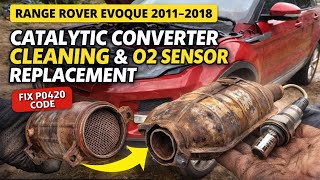
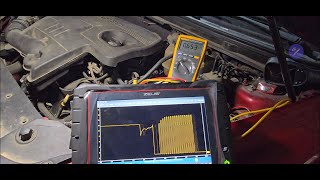

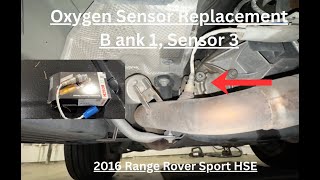
We Have This Part in Stock



The information in this article is provided for general reference and educational purposes only. Vehicle specifications, procedures, and part compatibility can vary by production date, trim level, and region. Always consult your vehicle's factory service manual and verify part numbers before purchasing or performing repairs. Safety-critical components such as airbags, seat belts, and braking systems should be installed by a qualified professional.
- Land Rover RANGE ROVER EVOQUE:
- 🎬 Helpful Videos
- 🛍️ Shop This Part
- What's Unique About the 2013-2016 Land Rover RANGE ROVER EVOQUE
- Diagnostic Flowchart
- Symptoms You May Notice
- Most Likely Causes
- Rare But Worth Checking
- Diagnosis Steps
- Parts You'll Likely Need
- Related Codes That Often Appear With This One
- Technical Service Bulletins (TSBs) & Recalls
- Platform-Specific Known Issues
- Mechanic-Grade Diagnostic Values
- Scan Tool Commands That Help
- Wiring & Ground Locations
- OEM Part Supersession History
- 🎟️ Get 5% Off