

P0063 on 2013-2016 Jaguar XF: HO2S Heater Circuit Low Causes and Fixes
On a 2013-2016 Jaguar XF with a V6 or V8 engine, code P0063 almost always indicates a failed rear oxygen sensor (Bank 2, Sensor 3) on the driver's side. This is a well-documented issue confirmed by multiple Jaguar Technical Service Bulletins. Replacing the sensor itself is the most common fix, costing between $60 and $180 for the part.
- P0063 on a 2013-2016 Jaguar XF V6/V8 points directly to a problem with the rearmost oxygen sensor on the driver's side (Bank 2, Sensor 3).
- Don't waste time on extensive wiring diagnostics unless there is visible damage. Jaguar's own service bulletins indicate the sensor itself is the failure point.
- The correct OEM part number is C2D23702, with Bosch 16032 being a common OEM-supplier alternative.
- The repair is straightforward for a DIYer with the right tool (a 22mm O2 sensor socket) and can save hundreds compared to dealer costs.
What's Unique About the 2013-2016 Jaguar XF
For this generation of Jaguar XF and its platform-mates with the AJ126 V6 and AJ133 V8 engines, the manufacturer has issued multiple Technical Service Bulletins (TSBs) acknowledging a high rate of failure for the heated oxygen sensors (HO2S). The bulletins (SSM72477, JTB-00392-NAS-3) explicitly state that even when wiring and connectors appear to be in perfect condition, the fault is typically internal to the sensor itself. TSB SSM72477 notes, "Upon diagnosis no fault is found with the wiring harness or connector and the fault is determined to be with the sensor". This is a crucial insight that can save significant time and money by pointing directly to the most likely failed component, rather than extensive and often fruitless wiring diagnostics.
Diagnostic Flowchart
Tap your situation to follow the diagnostic path that matches what you're seeing on this vehicle.
Generation note: This year range covers the end of the first generation XF (X250, 2013-2015) and the beginning of the second generation (X260, 2016). The V6 and V8 powertrains and associated emissions components are largely shared, and the cited TSBs cover vehicles across this generational change, indicating the issue is common to both. The 2016 model year marked a significant redesign with a new aluminum-intensive chassis and updated interior, but the core engine and exhaust components related to this code remained consistent.
Symptoms You May Notice
- Check Engine Light is on
- Failing a vehicle emissions test
- Slightly decreased fuel economy
- Slightly rough idle (less common)
- Replacing the wrong oxygen sensor (e.g., Sensor 1 or 2, or a sensor on Bank 1). P0063 is specifically for Bank 2, Sensor 3.
- Performing extensive and costly wiring harness repairs before testing the resistance of the sensor's internal heater, which is the most likely failure point according to Jaguar's own TSBs.
- Confusing upstream (wideband/air-fuel ratio) and downstream (narrowband/lambda-style) sensors, which are not interchangeable.
Most Likely Causes
- Failed Heated Oxygen Sensor (Bank 2, Sensor 3) 🔴 High Probability As documented in Jaguar TSBs #SSM72477 and #JTB-00392-NAS-3, the sensor itself is the most common point of failure for this group of codes. Forum discussions are filled with owners confirming that replacing this specific sensor resolved the code.
How to confirm: Disconnect the sensor and measure the resistance across the two heater circuit pins (usually the two same-colored wires). A reading that is open (OL), shows no continuity, or is well outside the typical 3-15 ohm range indicates a failed internal heater.
Typical fix: Replace the Bank 2, Sensor 3 oxygen sensor. This is the driver's side (LHD), rearmost sensor located after the catalytic converter. A 22mm (or 7/8") crow's foot or slotted O2 sensor socket is required for removal and installation.
Est. part cost: $60-$180 - Wiring or Connector Issue ⚪ Low Probability While possible, Jaguar's own TSBs de-prioritize this as a cause, stating the sensor is usually the culprit. However, the wiring harness runs close to the exhaust and can be susceptible to heat damage or corrosion over time.
How to confirm: Visually inspect the wiring harness and connector leading to the sensor for any signs of melting, chafing, corrosion, or loose pins. Check for battery voltage (approx. 12V) at the power supply pin on the harness-side connector with the key on. A swap test (moving the sensor to the other bank) where the fault code *doesn't* follow the sensor points definitively to a wiring or connector problem.
Typical fix: Repair the damaged section of the wiring harness or clean/replace the connector.
Est. part cost: $5-$50 - Blown Fuse ⚪ Low Probability
How to confirm: Locate the fuse for the O2 sensor heater circuits. On the XF, this is typically in the Engine Compartment Fuse Box. Check fuse F12 (20A, Yellow) for Bank A sensors and F13 (20A, Yellow) for Bank B sensors. Visually inspect the fuse and test for continuity with a multimeter.
Typical fix: Replace the blown fuse. If the fuse blows again immediately, it indicates a short circuit in the wiring or within a sensor.
Est. part cost: $1-$5
Rare But Worth Checking
- Faulty Powertrain Control Module (PCM): This is extremely rare. The PCM should only be considered after all other possibilities, including the sensor, wiring, and fuses, have been definitively ruled out. TSB JTB-00392-NAS-3 does mention a potential software error that can be resolved by a dealer reflash, but this is less common than outright sensor failure.
Diagnosis Steps
- Verify the code P0063 is present using an OBD-II scanner.
- Identify the correct sensor. On a V6/V8 Jaguar XF, Bank 2 is the driver's side (in LHD countries) and Sensor 3 is the rearmost sensor in the exhaust stream, located after the catalytic converter.
- Perform a visual inspection of the sensor's wiring harness and connector. Look for any obvious signs of damage, such as melting from contact with the exhaust, corrosion in the connector, or frayed wires.
- Locate and check the fuse for the oxygen sensor heater circuit. In the Engine Compartment Fuse Box, this is likely fuse F13 (20A) for Bank 2.
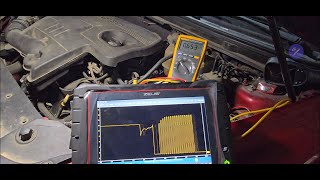
- If the fuse and wiring appear intact, disconnect the sensor. Use a multimeter set to Ohms to measure the resistance between the two heater pins on the sensor side of the connector (often same-colored wires, e.g., two black or two white). 🎬 See this guide on how to test sensor heater circuits. A healthy sensor will typically read between 3 and 15 ohms. An open circuit (OL) or a reading of zero indicates a failed sensor.
- If the sensor's resistance is within spec, check for battery voltage (approx. 12V) and a good ground signal at the vehicle-side harness connector (with the ignition on). Absence of power or ground points to a wiring issue upstream of the sensor.
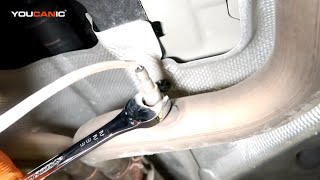
- Based on Jaguar's TSBs, if the visual inspection reveals no damage, the most probable cause is a failed sensor. Replace the Bank 2, Sensor 3 HO2S using a 22mm O2 sensor socket. 🎬 Watch: This video shows how to replace the oxygen sensor.
- Clear the trouble code with the scanner and perform a drive cycle to ensure the code does not return.
Parts You'll Likely Need
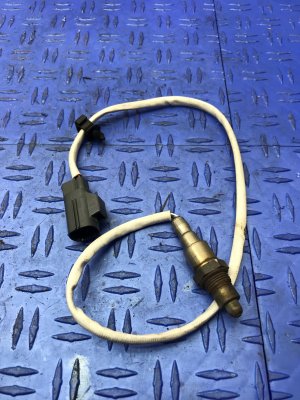
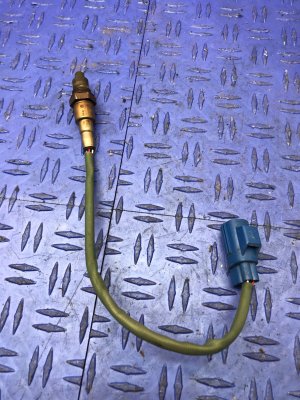
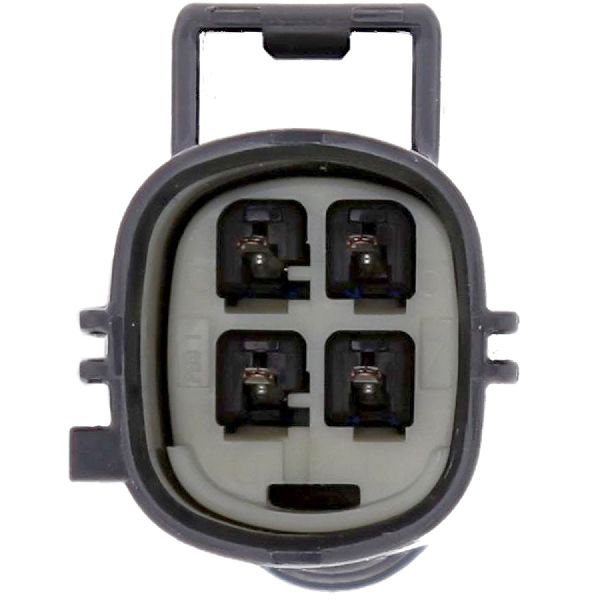
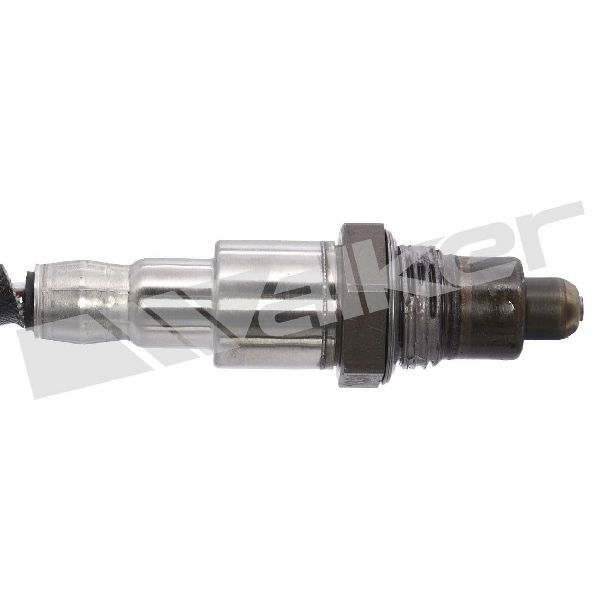
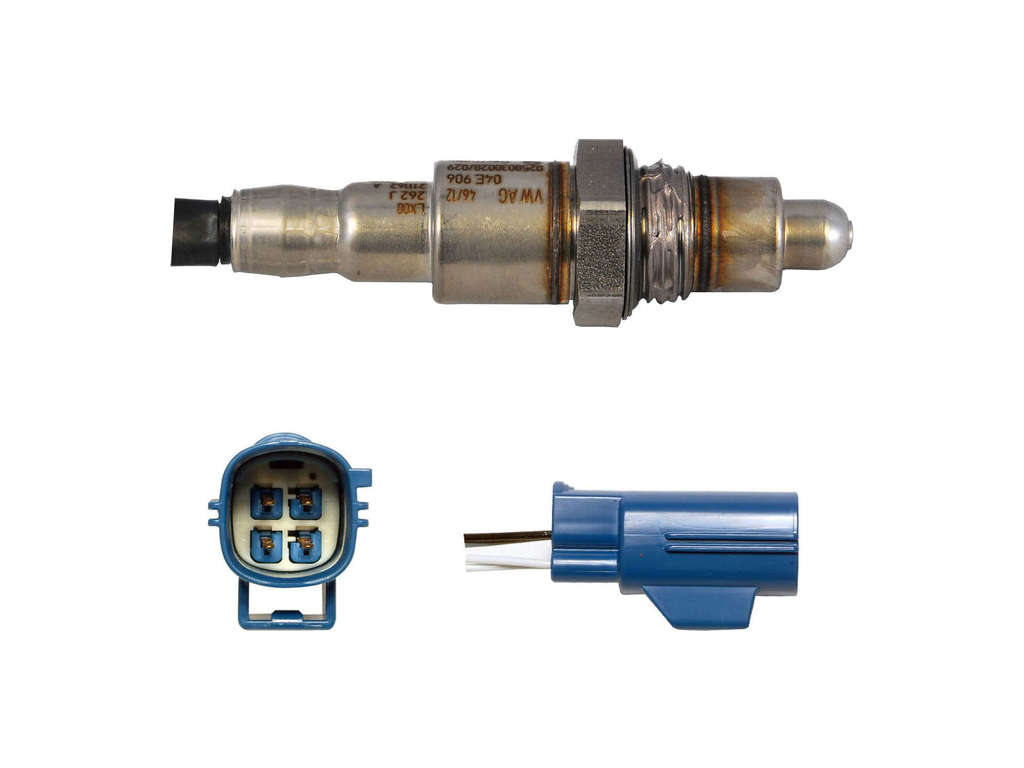
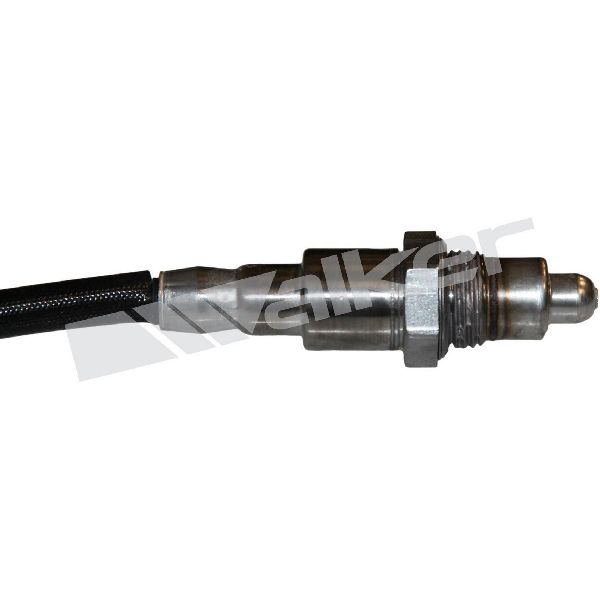
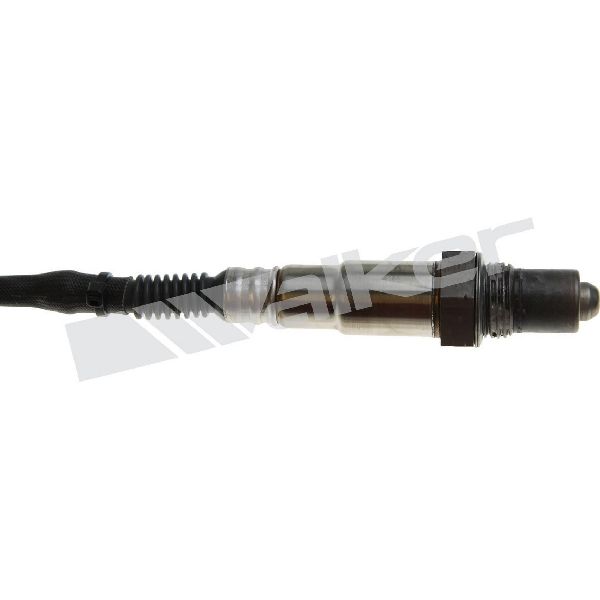
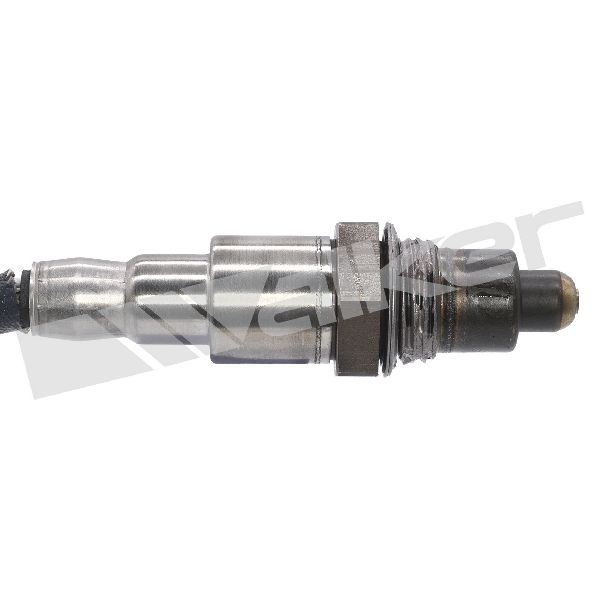
- Heated Oxygen Sensor (Bank 2, Sensor 3)
(OEM #C2D23702)— This is the component that contains the heater element that fails, triggering the P0063 code. Jaguar TSBs confirm this is the most common failure point.
Trusted brands: Jaguar (OEM), Bosch (OEM supplier, p/n 16032), Denso, NGK (p/n 25749)
OEM price range: $120-$200
Aftermarket price range: $60-$150
Related Codes That Often Appear With This One
- P0062 — This code is for 'HO2S Heater Control Circuit (Bank 2 Sensor 3)', a general malfunction, while P0063 specifies a 'Low' circuit condition. They point to the same sensor and often appear together.
- P0064 — This code is for 'HO2S Heater Control Circuit High (Bank 2 Sensor 3)'. While less common to see with a 'Low' code, it indicates a fault in the same circuit and can sometimes be triggered intermittently along with P0063.
Technical Service Bulletins (TSBs) & Recalls
- SSM72477: Notes that the HO2S sensor is often the root cause of the fault, even with no visible wiring issues.
- JTB-00392-NAS-3: Groups P0063 with other HO2S codes related to sensor faults and potential PCM software errors.
- JTB00392NAS1: An earlier version of the above TSB, also identifying P0063 as related to HO2S failures.
Platform-Specific Known Issues
- Jaguar issued Technical Service Bulletin #SSM72477 which groups P0063 with many other HO2S codes, noting that upon diagnosis, the fault is often determined to be with the sensor itself, not the wiring harness or connector.
- TSBs #JTB-00392-NAS-3 and #JTB00392NAS1 also list P0063 among a wide range of HO2S codes related to sensor failures, sometimes pointing to a software update, but more often a sensor replacement.
- Owners on forums frequently report this specific code and confirm that replacing the Bank 2, Sensor 3 O2 sensor resolves the issue.
Mechanic-Grade Diagnostic Values
- O2 Sensor Heater Element Resistance — expected: 3 to 15 Ohms at ambient temperature.. Failure: An open circuit (OL on multimeter) or resistance significantly outside the expected range indicates a failed internal heater element.
- Heater Circuit Power Supply Voltage (at harness connector) — expected: ~12 Volts (Battery Voltage) with Key On, Engine Off (KOEO).. Failure: Low or no voltage points to an issue upstream of the sensor, such as a blown fuse (F13 in engine bay fuse box) or a wiring fault.
- Heater Circuit Ground Control (at harness connector) — expected: The PCM-controlled ground wire will switch to near 0V when the heater is commanded on.. Failure: If the ground does not switch or is permanently grounded, it could indicate a wiring short or a faulty PCM driver.
Hidden / Shadow Codes Worth Checking
- Mode 6, TID $81-$84 (varies by specific ECU calibration): Mode 6 provides raw test data from the PCM's non-continuous monitors. Test IDs (TID) related to the O2 sensor heater monitor can show the measured circuit current or resistance values from the last drive cycle. This can help confirm a failure before it becomes a persistent hard fault. (see via Advanced OBD-II scan tools that support Mode 6 data display, such as Torque for Android, OBD Auto Doctor, or professional-grade scanners.)
Scan Tool Commands That Help
- Jaguar SDD / Pathfinder: Datalogger - HO2S Heater Command/Status — This function allows a technician to view the live status of the heater circuit as commanded by the PCM. It can be used to verify if the PCM is attempting to activate the heater and to monitor the circuit's response, which is useful for diagnosing intermittent faults or confirming a PCM driver issue.
Wiring & Ground Locations
- Bank 2 Heater Circuit Wiring — On the vehicle-side harness connector for the Bank 2 downstream sensor.. A forum post for a similar Jaguar model identifies the heater power wire as White/Red and the PCM-controlled ground as Blue/Yellow. Verifying power and ground on these specific wires is critical for diagnosing a wiring fault vs. a sensor fault.
- G1D132B — A ground point located in the engine bay, often near the right rear of the engine.. While the O2 sensor heater circuit is typically grounded through the PCM, other engine sensors rely on chassis grounds like this one. A poor engine ground can cause floating voltages and erratic sensor behavior, so ensuring main engine bay grounds are clean and tight is a good secondary check for any electrical fault.
OEM Part Supersession History
C2D23702→C2D54166, which was then superseded by T2H48050— Standard part evolution, likely for improved durability or manufacturing process changes.
Heads up: The parts are listed as direct supersessions, indicating they are interchangeable. Bosch (16032) and NGK (25749) are listed as compatible aftermarket alternatives.
Model Year Variations Within This Range
- 2013-2015 (X250) vs 2016 (X260): The 2016 model year introduced the redesigned X260 chassis. While the 3.0L V6 and 5.0L V8 engines were carried over, there were significant changes to the vehicle's electrical architecture and interior. However, the oxygen sensors, their function, and the common failure pattern related to P0063 remained the same across the transition.
Helpful Videos
Used OEM Parts in Stock
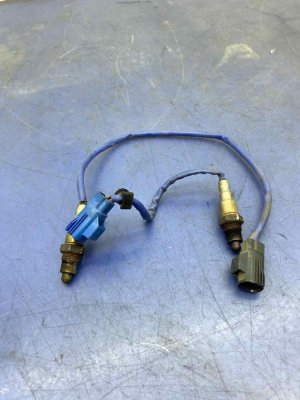
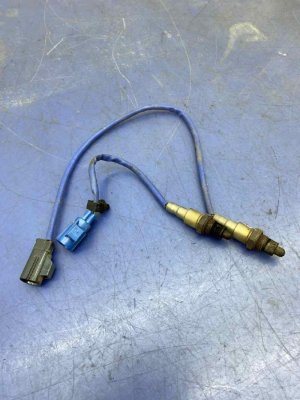
New Aftermarket Parts Available

The information in this article is provided for general reference and educational purposes only. Vehicle specifications, procedures, and part compatibility can vary by production date, trim level, and region. Always consult your vehicle's factory service manual and verify part numbers before purchasing or performing repairs. Safety-critical components such as airbags, seat belts, and braking systems should be installed by a qualified professional.
- Jaguar XF:
- 🎬 Helpful Videos
- 🛍️ Shop This Part
- What's Unique About the 2013-2016 Jaguar XF
- Diagnostic Flowchart
- Symptoms You May Notice
- Most Likely Causes
- Rare But Worth Checking
- Diagnosis Steps
- Parts You'll Likely Need
- Related Codes That Often Appear With This One
- Technical Service Bulletins (TSBs) & Recalls
- Platform-Specific Known Issues
- Mechanic-Grade Diagnostic Values
- Hidden / Shadow Codes Worth Checking
- Scan Tool Commands That Help
- Wiring & Ground Locations
- OEM Part Supersession History
- Model Year Variations Within This Range
- 🎟️ Get 5% Off