

P0062 on 2013-2016 Land Rover Range Rover Evoque: HO2S Heater Fault Causes and Fixes
On a 2013-2016 Evoque, P0062 almost always means the downstream oxygen sensor on the driver's side has failed. This is due to a known manufacturing defect acknowledged by Land Rover in multiple service bulletins. Replacing the sensor (Part No. LR098290) is the definitive fix, costing around $50-$180 for the part. A PCM software update may also be required after replacement.
- P0062 on a 2013-2016 Evoque almost certainly points to a failed downstream oxygen sensor on the driver's side.
- This is a known issue backed by Land Rover service bulletins, making the sensor itself the primary suspect over wiring or fuse problems.
- The correct part is the Bank 2, Sensor 3 O2 sensor (OEM part # LR098290).
- While a DIY-friendly repair, the old sensor can be seized in the exhaust and may require heat and a good wrench to remove.
- Ignoring the code will lead to a failed emissions test and can cause long-term damage to expensive components like the catalytic converter.
What's Unique About the 2013-2016 Land Rover RANGE ROVER EVOQUE
For this specific generation of Range Rover Evoque, the P0062 code is strongly linked to a known manufacturing defect in the oxygen sensors themselves. Land Rover issued Technical Service Bulletin (TSB) #SSM63157, which points to a "Manufacturing fault at the supplier - misalignment with in the sensor leading to side load on the ceramic internal to the sensor." This internal fault makes outright sensor failure a much higher probability on this vehicle compared to others. Another TSB, LTB00671, notes that failures can also be caused by thermal shock when water contacts the hot sensor element. Finally, TSB SSM72556 identified a specific "parts quality issue" with a batch of sensors made in Brasil.
Diagnostic Flowchart
Tap your situation to follow the diagnostic path that matches what you're seeing on this vehicle.
Symptoms You May Notice
- Check Engine Light is on
- Vehicle fails emissions testing
- Slightly reduced fuel economy
- Rough or extended idle on a cold start
- Replacing the wrong oxygen sensor. It is critical to correctly identify the 'Bank 2, Sensor 3' location (downstream, driver's side) before purchasing and replacing parts.
- Assuming the sensor is good because it's new. TSB SSM63157 specifically warns about bad stock and advises checking the manufacturing date code on the replacement part to ensure it is from a revised batch (made after June 1, 2013).
Most Likely Causes
- Faulty Heated Oxygen Sensor (Bank 2, Sensor 3) 🔴 High Probability As documented in Land Rover TSB #SSM63157, a batch of sensors had a manufacturing defect causing 'misalignment within the sensor leading to side load on the ceramic internal to the sensor', leading to premature failure. Other TSBs point to failure from thermal shock due to water contact.
How to confirm: After checking for power and ground at the sensor connector, test the resistance of the heater circuit within the sensor itself using a multimeter. Disconnect the sensor and measure across the two same-colored heater wires. A reading far outside the typical 5-20 ohm range, or an open circuit (infinite resistance), confirms a failed heater element.
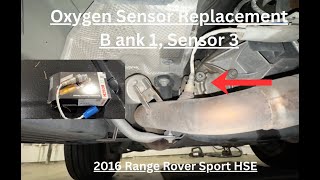
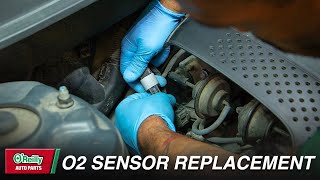
Typical fix: Replace the Bank 2, Sensor 3 oxygen sensor. This is located on the driver's side of the exhaust, after the catalytic converter. When purchasing a replacement, TSB SSM63157 advises ensuring the date code on the new sensor is 1st June 2013 or later. The sensor can be extremely tight; 🎬 Watch a pro demonstrate how to remove a stuck oxygen sensor. penetrating oil and heat from a torch may be required for removal.
Est. part cost: $48 - $180 - Damaged Wiring or Connector 🟡 Medium Probability The sensor's wiring is located under the vehicle and is exposed to heat, moisture, and road debris, which can lead to corrosion, chafing, or melting over time. The plastic connector clips can also become brittle and break.
How to confirm: Visually inspect the wiring harness and connector leading to the sensor for any signs of physical damage, melting, or corrosion in the pins. Perform a voltage and ground check at the connector with the key on. TSB SSM72448 notes that diagnosis often reveals no fault with the wiring, pointing back to the sensor itself.
Typical fix: Repair the damaged section of wiring or clean/replace the connector. Apply dielectric grease to the connector pins to protect against future corrosion.
Est. part cost: $5 - $50 - Blown Fuse for O2 Heater Circuit ⚪ Low Probability A short circuit in the sensor itself or its wiring (sometimes from water intrusion) can cause the fuse to blow as a protective measure.
How to confirm: Consult the owner's manual or a fuse diagram to locate the fuse for the oxygen sensor heaters. A forum post suggests Fuse 2 in the engine compartment fuse box may be the correct one for some models. Visually inspect the fuse and test for continuity.
Typical fix: Replace the blown fuse. If the new fuse blows immediately, it indicates a short circuit in the wiring or the sensor itself that must be found and repaired.
Est. part cost: $1 - $5 - Outdated PCM Software ⚪ Low Probability TSB LTB00671NAS6 indicates that after replacing a failed oxygen sensor, a Powertrain Control Module (PCM) software update is recommended to 'prevent any further concerns'. This suggests the original software may have been too sensitive or did not handle sensor degradation correctly.
How to confirm: A Land Rover dealer or a specialist with the appropriate diagnostic tool can check the current software version of the PCM and determine if an update is available.
Typical fix: Update the PCM software. This is typically done after the physical sensor has been replaced.
Est. part cost: $0 - $250 (May be covered, otherwise dealer labor)
Rare But Worth Checking
- Powertrain Control Module (PCM) Fault: This is extremely rare. The PCM is responsible for supplying the pulse-width modulated ground signal to the heater circuit. All other possibilities, especially the sensor itself and its wiring, should be exhaustively ruled out before considering PCM replacement.
Diagnosis Steps
- Read the fault codes with an OBD-II scanner to confirm P0062 is active.
- Raise the vehicle safely. Using the air suspension's highest setting may provide enough clearance.
- Locate the Bank 2, Sensor 3 oxygen sensor. It is on the driver's side exhaust pipe, downstream of the catalytic converter, roughly under the driver's seat area.
- Visually inspect the sensor's wiring harness and connector for any obvious damage like melting, chafing, or corrosion.
- Check the fuse for the oxygen sensor heater circuit.
- If the fuse and wiring appear intact, disconnect the sensor. With the ignition on, use a multimeter to verify that the vehicle-side connector is receiving battery voltage (approx. 12V) and has a good ground connection.
- If power and ground are present, measure the resistance across the two heater circuit pins on the sensor itself (usually the two same-colored wires). A reading should be within 5-20 ohms. A reading of infinite resistance (open loop) or very low resistance (short) indicates a failed sensor.
- If the sensor and wiring test good, contact a dealer to check if a PCM software update is available per TSB LTB00671NAS6.
- If the sensor's resistance is within spec and software is up to date but the code persists, the issue may be intermittent or, in very rare cases, a problem with the PCM.
Parts You'll Likely Need
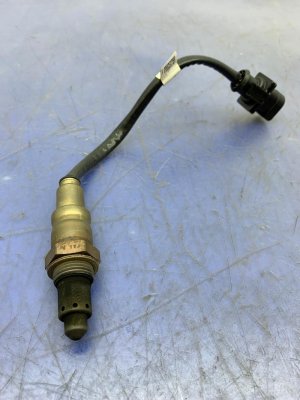
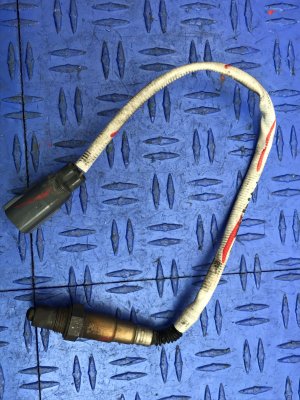
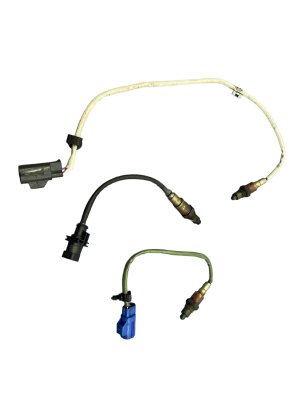
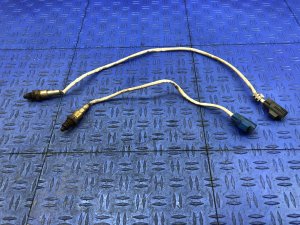
- Heated Oxygen Sensor (Bank 2, Sensor 3)
(OEM #LR098290)— This is the most common failure point for code P0062 on this vehicle, due to a known manufacturing defect cited in TSB #SSM63157.
Trusted brands: Bosch (OEM supplier), Denso, NTK
OEM price range: $150-$220
Aftermarket price range: $48-$100
Related Codes That Often Appear With This One
- P0042 — Relates to the heater control circuit for Bank 1, Sensor 3. TSB #SSM63157 lists both codes as resulting from the same sensor manufacturing fault 🎬 See how to swap the sensor to clear P0042 and related codes., so seeing them together is common.
- P0061 — Relates to the heater resistance for Bank 2, Sensor 3. It points to the same sensor and is often caused by the same underlying failure.
- P0162 — Indicates a malfunction in the O2 sensor circuit itself (not just the heater) for Bank 2, Sensor 3. TSB #SSM63157 also includes this code, suggesting the manufacturing defect can cause various failures within the sensor.
Technical Service Bulletins (TSBs) & Recalls
- SSM63157: The primary TSB, noting a manufacturing fault ('internal misalignment') within the supplier's oxygen sensor as the root cause. Advises checking the date code on replacement parts.
- SSM72448: Mentions that P0062 can be stored, but upon diagnosis, no fault is found with the wiring or connector, suggesting the sensor itself is the likely point of failure.
- LTB00671NAS3/6: Groups P0062 with other O2 sensor codes. Identifies 'thermal shock' from water contact as a possible cause and recommends a PCM software update after sensor replacement.
Platform-Specific Known Issues
- A high failure rate of oxygen sensors is documented in Land Rover Technical Service Bulletin #SSM63157, which attributes the problem to a manufacturing fault at the supplier causing 'misalignment within the sensor leading to side load on the ceramic'.
- TSB #SSM72448 also lists P0062 among a group of codes where diagnosis often reveals no fault with the wiring or connectors, further pointing to the sensor itself as the root cause.
- TSB #LTB00671 notes that 'thermal shock when water contacts the heated sensing element' can also cause sensor failure.
- TSB #LTB00671NAS6 recommends a PCM software update after sensor replacement to prevent future issues.
Mechanic-Grade Diagnostic Values
- O2 Sensor Heater Element Resistance — expected: Generally 5-20 Ohms, with some sources citing 6-20 Ohms. Tighter specs can be 1-2 Ohms. A real-world test on a good sensor showed 2.8 Ohms.. Failure: An open circuit (OL/infinite resistance) or a reading significantly outside the expected range.
- Heater Circuit Voltage Supply (Key On, Engine Off) — expected: 12.0V - 13.5V (Battery Voltage) at the harness-side connector.. Failure: Low or no voltage indicates a problem with the fuse or supply wiring.
- Heater Circuit Ground Control Signal — expected: A pulsing ground signal from the PCM (Pulse Width Modulated). A test light connected to battery positive should pulse when probing the ground control wire at the connector during engine start.. Failure: No pulse (constant open) or a constant ground indicates a wiring or PCM driver issue.
Hidden / Shadow Codes Worth Checking
- Fault codes ending in -11, -12, -14, -15: These sub-codes often indicate a short-circuit condition within the component's circuit. If P0062 is caused by a short, one of these may be stored alongside it. (see via Dealer-level diagnostic tools like JLR SDD (Symptom Driven Diagnostics) or Pathfinder.)
Scan Tool Commands That Help
- JLR SDD (Symptom Driven Diagnostics): Service Functions -> Body systems - Enable Protected Outputs — After repairing a short circuit (like replacing a shorted O2 sensor), the control module may disable the circuit to protect itself. This function is used to command the module to re-enable the output and restore power to the circuit.
Wiring & Ground Locations
- Fuse 2 (Engine Compartment Fuse Box) — In the main fuse box located in the engine compartment.. Based on forum discussions for similar Land Rover models, this fuse may provide the 12V power supply to the heater circuits for the oxygen sensors. A blown fuse here would cut power to the heater.
- G1D108 / G1D130A — G1D108 is located near the battery. G1D130A is in the left front of the engine compartment.. These are primary engine compartment ground points. The PCM and its sensor circuits rely on clean, solid grounds to function correctly. A poor ground at these locations can cause various electrical issues, including sensor circuit faults.
- Heater Circuit Wires — Within the 4-wire connector for the oxygen sensor.. The two wires for the heater circuit are typically the same color (e.g., two white or two black wires). These are the specific wires to probe when testing resistance on the sensor or checking for power/ground on the harness side.
Real Owner Repair Stories
- Land Rover Forums user (Range Rover (model year not specified, but context and part numbers align with Evoque)) — Check Engine Light with code P0062.
❌ Tried (didn't work) Attempting to remove the sensor with only penetrating oil and a wrench.
✅ What actually fixed it The user replaced the driver's side, rear (post-catalyst) oxygen sensor. They had to cut the wire on the old sensor to fit a box-end wrench and used a torch to heat the exhaust bung to break it free. The replacement part was a Bosch sensor (equivalent to LR098290) which resolved the code.
OEM Part Supersession History
LR035748→LR098290— Part update/revision by the manufacturer.LR098290→LR136928— Part update/revision by the manufacturer.
Heads up: LR136928 is the latest known OEM part number in this supersession chain.
Model Year Variations Within This Range
- 2014-2016: For the 2014 model year, the 6-speed automatic transmission was replaced with a new ZF 9-speed automatic. While this does not directly impact the P0062 fault, it is a major mechanical difference within this vehicle range. The 2014 update also introduced new optional 'Active Driveline' AWD systems.
Helpful Videos
We Have This Part in Stock



The information in this article is provided for general reference and educational purposes only. Vehicle specifications, procedures, and part compatibility can vary by production date, trim level, and region. Always consult your vehicle's factory service manual and verify part numbers before purchasing or performing repairs. Safety-critical components such as airbags, seat belts, and braking systems should be installed by a qualified professional.
- Land Rover RANGE ROVER EVOQUE:
- 🎬 Helpful Videos
- 🛍️ Shop This Part
- What's Unique About the 2013-2016 Land Rover RANGE ROVER EVOQUE
- Diagnostic Flowchart
- Symptoms You May Notice
- Most Likely Causes
- Rare But Worth Checking
- Diagnosis Steps
- Parts You'll Likely Need
- Related Codes That Often Appear With This One
- Technical Service Bulletins (TSBs) & Recalls
- Platform-Specific Known Issues
- Mechanic-Grade Diagnostic Values
- Hidden / Shadow Codes Worth Checking
- Scan Tool Commands That Help
- Wiring & Ground Locations
- Real Owner Repair Stories
- OEM Part Supersession History
- Model Year Variations Within This Range
- 🎟️ Get 5% Off