

P0061 on 2013-2016 Land Rover Range Rover Evoque: O2 Sensor Heater Fault Causes & Fixes
On a 2013-2016 Evoque, code P0061 almost always means the downstream oxygen sensor has failed due to a known manufacturing defect. Replacing the sensor is the standard fix, with aftermarket parts costing $70-$150 and OEM parts costing more. This is a well-documented issue covered by Land Rover TSBs.
- P0061 on a 2013-2016 Evoque is overwhelmingly likely to be a failed downstream oxygen sensor.
- A Land Rover Technical Service Bulletin (TSB #SSM63157) confirms a known manufacturing defect with these sensors, specifically an internal misalignment causing premature failure.
- Don't be confused by the 'Bank 2' in the code name; on this I4 engine, it refers to the downstream sensor on Bank 1.
- Diagnosis is straightforward: test the resistance of the sensor's heater circuit. If it's outside the typical 4-20 Ohm range, replace the sensor.
- This is a DIY-friendly repair for those with basic tools and an O2 sensor socket, which can save significant labor costs.
What's Unique About the 2013-2016 Land Rover RANGE ROVER EVOQUE
The 2.0L engine in the Range Rover Evoque is an inline-four (I4), which only has one cylinder bank (Bank 1). The "Bank 2" designation in the P0061 code definition is a software quirk; the code actually refers to a fault in the downstream (post-catalytic converter) oxygen sensor. Most importantly, Land Rover issued Technical Service Bulletin #SSM63157, which identifies a "Manufacturing fault at the supplier - misalignment with in the sensor" as the cause. This internal stress leads to premature failure, making a faulty sensor the most common cause for this code on this vehicle.
Diagnostic Flowchart
Tap your situation to follow the diagnostic path that matches what you're seeing on this vehicle.
Symptoms You May Notice
- Check Engine Light is on
- Vehicle will fail an emissions inspection
- Slightly reduced fuel economy (e.g., 2-4% drop).
- No noticeable impact on general drivability or engine performance once warm.
- Possible cold-start delay or brief hesitation after startup.
- Replacing the upstream (pre-catalytic converter) oxygen sensor instead of the correct downstream (post-catalytic converter) sensor.
- Assuming a complex wiring problem exists before testing the sensor itself, contrary to TSB guidance which points to a high rate of sensor-specific failures.
- Replacing the wrong sensor due to the confusing 'Bank 2' designation on a single-bank engine.
Most Likely Causes
- Faulty Downstream Oxygen Sensor 🔴 High Probability Land Rover TSB #SSM63157 explicitly states that a 'Manufacturing fault at the supplier - misalignment with in the sensor' is a known cause for this and related codes on the 2013 Evoque and other models. The bulletin explains this creates internal stress that leads to premature failure.
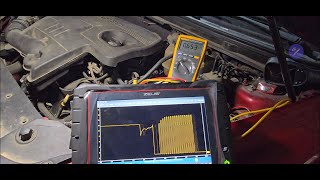
How to confirm: Disconnect the sensor and measure the resistance across the two heater circuit pins (often the two same-colored wires) with a multimeter. 🎬 Watch: A step-by-step guide to testing O2 sensor heater circuits. An open circuit (infinite resistance) or a reading outside the manufacturer's specification (typically 4-20 Ohms) confirms a failed heater element. Some sources suggest a tighter range of 0.5-2.5 Ohms is expected.
Typical fix: Replace the downstream oxygen sensor. Per TSB SSM63157, replacement sensors should have a date code of June 1st, 2013, or later to ensure the manufacturing defect has been corrected.
Est. part cost: $70-$250 - Damaged Wiring or Connector ⚪ Low Probability While possible due to exposure to road debris and exhaust heat, TSB #SSM72448 notes that for this group of codes, diagnosis often reveals 'NO FAULT IS FOUND WITH THE WIRING HARNESS OR CONNECTOR', strongly pointing to the sensor itself.
How to confirm: Visually inspect the sensor's wiring harness for any signs of melting, chafing, or corrosion. Test for battery voltage and a good ground at the harness-side connector with the key on, engine off.
Typical fix: Repair the damaged section of wire or clean/replace the connector.
Est. part cost: $10-$50
Rare But Worth Checking
- Blown Fuse: The oxygen sensor heater circuit is protected by a fuse. While uncommon for it to blow without a reason (like a short in the wiring), it's a quick and easy check before replacing more expensive parts.
- Faulty Powertrain Control Module (PCM): This is extremely rare and should only be considered after the sensor, wiring, and fuses have been thoroughly tested and proven to be good. A PCM failure is the least likely cause.
Diagnosis Steps
- Connect an OBD-II scanner to confirm the presence of P0061 and any other related codes.
- Visually inspect the downstream oxygen sensor's wiring harness and connector for obvious damage like melting, chafing, or corrosion.
- Disconnect the oxygen sensor connector. With the ignition key in the 'On' position (engine off), use a multimeter to verify that one pin of the harness-side connector has battery voltage (approx. 12V) and another has a good ground.
- With the sensor still disconnected, set the multimeter to measure resistance (Ohms) and probe the two heater circuit pins on the sensor itself (these are often the two wires of the same color). Compare the reading to the manufacturer's specification. A typical healthy range is 4-20 Ohms when cold. An infinite reading (open) or zero reading (short) indicates a failed sensor.
- If the sensor and wiring test good, check the fuse for the O2 sensor heater circuit in the vehicle's fuse box.
- If all other steps fail to find a fault, the issue may be with the PCM, which requires professional diagnosis. This is highly unlikely for this specific code on this vehicle.
Parts You'll Likely Need
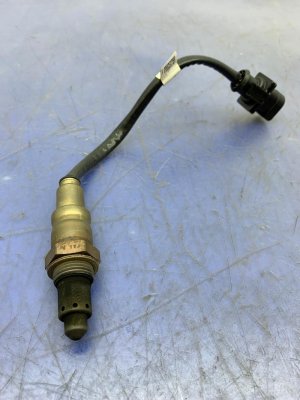
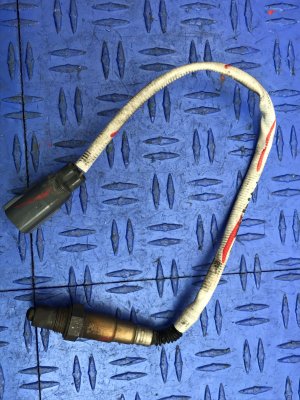
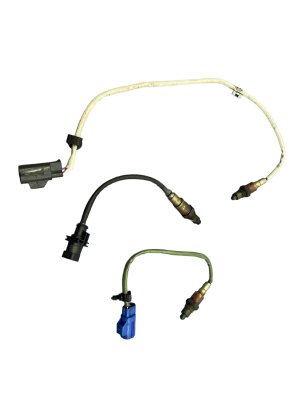
- Downstream Oxygen Sensor
(OEM #LR028916)— This is the most common failure point for code P0061 on this vehicle, as confirmed by Land Rover TSB #SSM63157, which points to a manufacturing defect. Note: Part numbers can be superseded; always verify with the vehicle's VIN.
Trusted brands: Bosch, Denso, NTK, Walker
OEM price range: $160-$250
Aftermarket price range: $70-$150
Related Codes That Often Appear With This One
- P0042 — This and other O2 sensor codes are listed together with P0061 in TSB #SSM63157 as stemming from the same supplier manufacturing fault.
- P0062 — This and other O2 sensor codes are listed together with P0061 in TSB #SSM63157 as stemming from the same supplier manufacturing fault.
- P0162 — This and other O2 sensor codes are listed together with P0061 in TSB #SSM63157 as stemming from the same supplier manufacturing fault.
- P0142 — Also listed in TSB #SSM63157 as being caused by the same defective batch of oxygen sensors.
Technical Service Bulletins (TSBs) & Recalls
- SSM63157: Notes that a 'Manufacturing fault at the supplier' is the cause for a group of oxygen sensor codes, including P0061, on 2013 models. It details the fault as 'misalignment with in the sensor leading to side load on the ceramic'.
- SSM72448: Suggests that for a wide range of O2 sensor codes, including P0061, diagnosis often finds no fault with the vehicle's wiring or connectors, pointing towards the component itself as the culprit.
Platform-Specific Known Issues
- A known manufacturing defect in oxygen sensors, documented in Land Rover TSB #SSM63157, makes premature sensor failure the leading cause for P0061. The TSB specifically mentions 'misalignment within the sensor leading to side load on the ceramic'.
- The vehicle's software uses a 'Bank 2' code designation (P0061) for a downstream sensor, which can be confusing for technicians and DIYers since the I4 engine only has one bank.
- TSB SSM63157 advises technicians to check the date code on replacement sensors and ensure they are from June 1, 2013 or later to avoid installing another defective part.
Mechanic-Grade Diagnostic Values
- O2 Sensor Heater Element Resistance — expected: Between 5 to 10 Ohms when cold. Some general sources suggest a wider range of 4-20 Ohms, while others suggest a tighter 0.5-2.5 Ohms.. Failure: An open circuit (infinite resistance, 'OL' on multimeter) or a reading significantly outside the 5-10 Ohm range confirms a failed heater element.
- Voltage at Harness Connector (Heater Circuit Power Supply) — expected: Approximately battery voltage (12V+) with the Key On, Engine Off (KOEO).. Failure: Low or no voltage points to a problem upstream of the sensor, such as a blown fuse, faulty relay, or wiring issue.
- Voltage Drop on Heater Circuit Ground — expected: Less than 0.5 Volts.. Failure: A reading above 0.5V indicates excessive resistance in the ground side of the circuit, which could be a corroded ground point or damaged wire.
Hidden / Shadow Codes Worth Checking
- Mode $06, TID:$80-$84: Land Rover uses Mode $06 test IDs to monitor individual O2 sensor performance, including heater circuit timing and response. A failure in these tests can precede a full-blown trouble code. For example, on a similar Land Rover model, TID:$80 and TID:$81 for 'O2 Bank 1 Sensor 4' showed a FAIL status, directly corresponding to the heater circuit issue. (see via A professional scan tool or an advanced DIY scanner (like Torque for Android) that can access and interpret Mode $06 data.)
Scan Tool Commands That Help
- Land Rover SDD (Symptom Driven Diagnostics): Data Logger / Live Data — After a repair, or for intermittent faults. Use the Data Logger to monitor the O2 sensor heater voltage and current in real-time to confirm the circuit is operating correctly. The software allows you to select specific parameters to graph and record.
- Land Rover SDD (Symptom Driven Diagnostics): Read and Clear DTCs — This is the basic function used to confirm the P0061 code is present and to clear it after the repair is complete. The software guides the user to turn the key on/off as needed to properly clear the fault from the module's memory.
Wiring & Ground Locations
- Downstream HO2S Connector (C1E717G) — The downstream oxygen sensor is located in the exhaust pipe after the catalytic converter. Its connector, potentially labeled C1E717G, links it to the main engine harness.. This is the primary connector to test for voltage, ground, and resistance. A wiring diagram shows the heater circuit wires are typically the two wires of the same color (e.g., two white wires or two black wires). For this vehicle, a diagram indicates a White/Blue wire and a Blue/Orange wire may be involved in the sensor circuit, which need to be tested.
- Heater Circuit Ground — The ground for the O2 sensor heater circuit is typically provided by the Powertrain Control Module (PCM) itself, not a direct chassis ground. The PCM switches the ground on and off to control the heater.. A bad ground connection at the PCM or a fault in the PCM's driver circuit can cause P0061. This is why testing for voltage at the sensor connector is crucial; if power is present but the heater doesn't work, the issue could be the sensor's internal ground path or the PCM's ground control.
Real Owner Repair Stories
- Land Rover Forums (landroverforums.com) (Land Rover Discovery (similar O2 sensor setup)) — O2 sensor heater fault code present.
❌ Tried (didn't work) Attempting to test resistance from the ECM connector pins (C0635) gave confusing 'open' readings even for known good sensors.
✅ What actually fixed it The user confirmed that testing resistance directly at the sensor connector is the correct method. After replacing the faulty sensor identified through connector testing, the code was resolved. This highlights the importance of testing at the component rather than from the main ECU connector for this specific test.
OEM Part Supersession History
LR028916→LR068916 (Potentially), LR049884— Part number updates and supplier changes.
Heads up: The part number LR028916 is for the O2 sensor. A search for LR068916 returns a wheel, indicating a likely typo or data error in some databases. Other part numbers like LR049884 also appear for Evoque oxygen sensors. It is absolutely critical to verify the correct part number with the vehicle's VIN at a Land Rover dealership or with a trusted parts supplier before ordering.
Helpful Videos
We Have This Part in Stock



The information in this article is provided for general reference and educational purposes only. Vehicle specifications, procedures, and part compatibility can vary by production date, trim level, and region. Always consult your vehicle's factory service manual and verify part numbers before purchasing or performing repairs. Safety-critical components such as airbags, seat belts, and braking systems should be installed by a qualified professional.
- Land Rover RANGE ROVER EVOQUE:
- 🎬 Helpful Videos
- 🛍️ Shop This Part
- What's Unique About the 2013-2016 Land Rover RANGE ROVER EVOQUE
- Diagnostic Flowchart
- Symptoms You May Notice
- Most Likely Causes
- Rare But Worth Checking
- Diagnosis Steps
- Parts You'll Likely Need
- Related Codes That Often Appear With This One
- Technical Service Bulletins (TSBs) & Recalls
- Platform-Specific Known Issues
- Mechanic-Grade Diagnostic Values
- Hidden / Shadow Codes Worth Checking
- Scan Tool Commands That Help
- Wiring & Ground Locations
- Real Owner Repair Stories
- OEM Part Supersession History
- 🎟️ Get 5% Off