

P0060 on 2013-2016 Jaguar XF: HO2S Heater Resistance Causes and Fixes
P0060 on a Jaguar XF almost always means the internal heater in the Bank 2, Sensor 2 oxygen sensor has failed. The most common fix is to replace the sensor, which is located after the catalytic converter on the driver's side of the engine (for US models). Expect to pay $85-$250 for an aftermarket sensor (NTK/NGK, Bosch, Denso) or $270-$375 for an OEM Jaguar part. Before replacing, check the associated fuse, though sensor failure is far more common.
- P0060 on a 2013-2016 Jaguar XF points directly to the heater circuit of the downstream oxygen sensor on the driver's side (Bank 2).
- The most probable cause is a failed sensor. Don't assume it's a complicated wiring problem; Jaguar's own service documents suggest this is rarely the case.
- Confirm the failure by testing the sensor's heater resistance with a multimeter before buying parts.
- Replacing the correct sensor (Bank 2, Sensor 2) is a common DIY fix that can save significant labor costs and will resolve the check engine light and allow the vehicle to pass emissions.
- The correct OEM part number for the downstream sensor is often C2D23703 or a superseding number like T2R54607.
What's Unique About the 2013-2016 Jaguar XF
Jaguar has issued multiple Technical Service Bulletins (TSBs) for a wide range of oxygen sensor heater codes on this platform, including P0060. These bulletins, like SSM72477, highlight a common scenario where technicians find no fault with the vehicle's wiring harness, pointing instead to a higher-than-normal failure rate of the sensor itself. Furthermore, TSB JTB-00392-NAS-3 suggests that a PCM software update may be required in conjunction with sensor replacement to prevent future issues, indicating a potential software sensitivity to sensor resistance values. A video demonstration using the Jaguar SDD tool on a 2014 F-Type 🎬 Watch: A professional walkthrough of the Jaguar software update process. confirmed that one of the first recommended steps for O2 sensor codes is to check for and apply a software update, as the cause can be a 'post catalyst sensor software error'.
Diagnostic Flowchart
Tap your situation to follow the diagnostic path that matches what you're seeing on this vehicle.
Generation note: This year range covers the end of the first-generation Jaguar XF (X250, through 2015) and the start of the second-generation (X260, from 2016). The cited TSBs and most common issues are related to the X250 platform with the AJ126 (V6) and AJ133 (V8) engines. While the code's meaning is identical, sensor part numbers and locations may differ slightly between generations and engine types. The 2.0L I4 is a Ford EcoBoost engine and may have different failure patterns. The X260, starting in 2015, uses the AJ126 engine and has different part numbers for its 4-circuit downstream diagnostic probes.
Symptoms You May Notice
- Check Engine Light is illuminated.
- Failure to pass a vehicle emissions test.
- Slightly decreased fuel economy (often not noticeable to the driver).
- Rough idle or poor engine performance, particularly before the engine has fully warmed up.
- Black smoke from the exhaust due to a rich fuel mixture.
- Replacing the wrong oxygen sensor (e.g., Bank 1 instead of Bank 2, or an upstream sensor instead of downstream).
- Assuming a complex wiring issue exists before testing the sensor itself. Jaguar TSB SSM72477 specifically notes that diagnosis often reveals no fault with the wiring harness, strongly pointing to the sensor.
- Replacing hardware before checking for required software updates. TSBs indicate a PCM software update may be the primary fix or a required step after sensor replacement.
Most Likely Causes
- Failed Bank 2, Sensor 2 Oxygen Sensor 🔴 High Probability As noted in Jaguar's TSBs, the sensors on this platform are a common point of failure. The internal heater element simply burns out over time like a lightbulb filament. Thermal shock from water contacting the hot sensor can also cause failure.
How to confirm: Disconnect the sensor and use a multimeter to test the resistance between the two heater pins on the sensor side 🎬 Watch: How to test an O2 sensor using a multimeter. of the connector (often the two same-colored wires). A good heater will have a low resistance, typically between 4 and 9 Ohms when cold. Some sources state a universal resistance of 8 Ohms is normal, while others cite a range of 3-5 Ohms. An open circuit (infinite resistance or 'OL') or a reading of 0 Ohms confirms a failed heater.
Typical fix: Replace the Bank 2, Sensor 2 oxygen sensor. A PCM software update may also be required per TSB JTB-00392-NAS-3.
Est. part cost: $85-$375 - Damaged Wiring or Connector ⚪ Low Probability The sensor is located under the vehicle, exposed to road debris, water, and high exhaust temperatures, which can make the wiring and connector brittle over time. Water intrusion into the connector is a known issue that can cause shorts.
How to confirm: Visually inspect the wiring harness and connector leading to the sensor for any signs of melting, chafing, corrosion, or broken wires. Perform a voltage and ground test at the connector with the key on, engine off. You should have ~12V on one heater wire and a good ground on the other. A forum user on a similar Jaguar model reported only getting 8 volts at the harness, indicating a wiring issue upstream.
Typical fix: Repair the damaged section of wiring or replace the connector pigtail.
Est. part cost: $15-$50 - Blown Fuse or Faulty Relay ⚪ Low Probability While possible, it's less common than sensor failure. On some Jaguar models, the O2 sensor heaters are not on a simple, dedicated fuse but are powered via the fuel pump relay, making diagnosis more complex. A forum user with a 2014 XF was unable to locate a specific fuse and suspected it was integrated elsewhere.
How to confirm: Consult the vehicle service manual to attempt to locate the fuse for the oxygen sensor heater circuits. Check for power at the vehicle-side harness connector. If no voltage is present, trace the circuit back from the relay or power source.
Typical fix: Replace the blown fuse or faulty relay. If a fuse blows again, a short circuit exists in the wiring or the sensor itself.
Est. part cost: $1-$30
Rare But Worth Checking
- Faulty Powertrain Control Module (PCM): This is extremely rare. The PCM's internal driver for the heater circuit can fail, but TSB JTB-00392-NAS-3 also notes that a software update for the PCM is sometimes required to resolve recurring codes, suggesting a calibration issue rather than a hardware fault. All other possibilities should be exhausted before considering PCM replacement.
Diagnosis Steps
- Confirm the presence of the P0060 code using an OBD-II scanner.
- Identify Bank 2 (driver's side in the US) and locate Sensor 2 (the downstream sensor, after the catalytic converter).
- Visually inspect the sensor's connector and wiring for any signs of melting, corrosion, or physical damage.
- Disconnect the sensor. Using a multimeter set to Ohms (Ω), measure the resistance across the two heater circuit pins on the sensor itself (usually the two wires of the same color). A good heater will have a low resistance (typically 4-9 Ohms). An infinite reading (OL) or zero reading indicates the heater is broken and the sensor must be replaced.
- If the sensor's resistance is good, test the vehicle-side connector. With the ignition on (engine off), check for battery voltage (~12V) on one of the heater circuit pins and check for a good ground on the other.
- If voltage is missing, investigate the O2 sensor heater fuse or relay. On these vehicles, power may come from the fuel pump relay, not a dedicated fuse.
- If the fuse/relay is good but voltage is still absent, there is a break in the wiring between the power source and the sensor.
- If all wiring, power sources, and the sensor itself test good, consider the possibility of an intermittent fault or a PCM software issue as described in TSB JTB-00392-NAS-3.
- After replacement, clear the codes and perform a drive cycle to ensure the fault does not return.
Parts You'll Likely Need
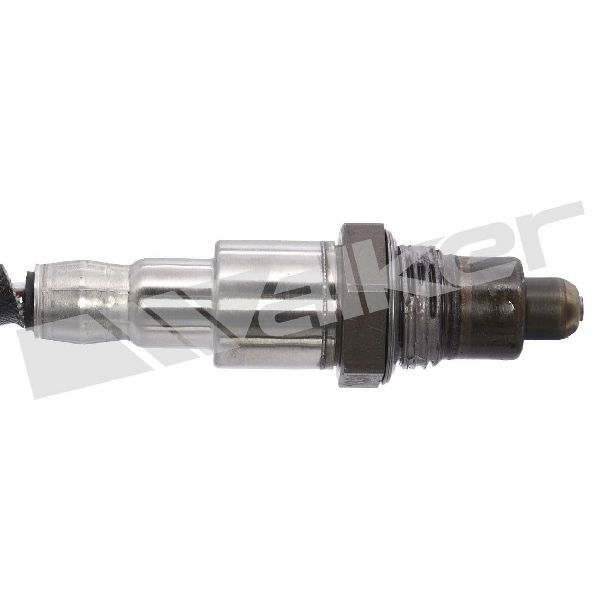
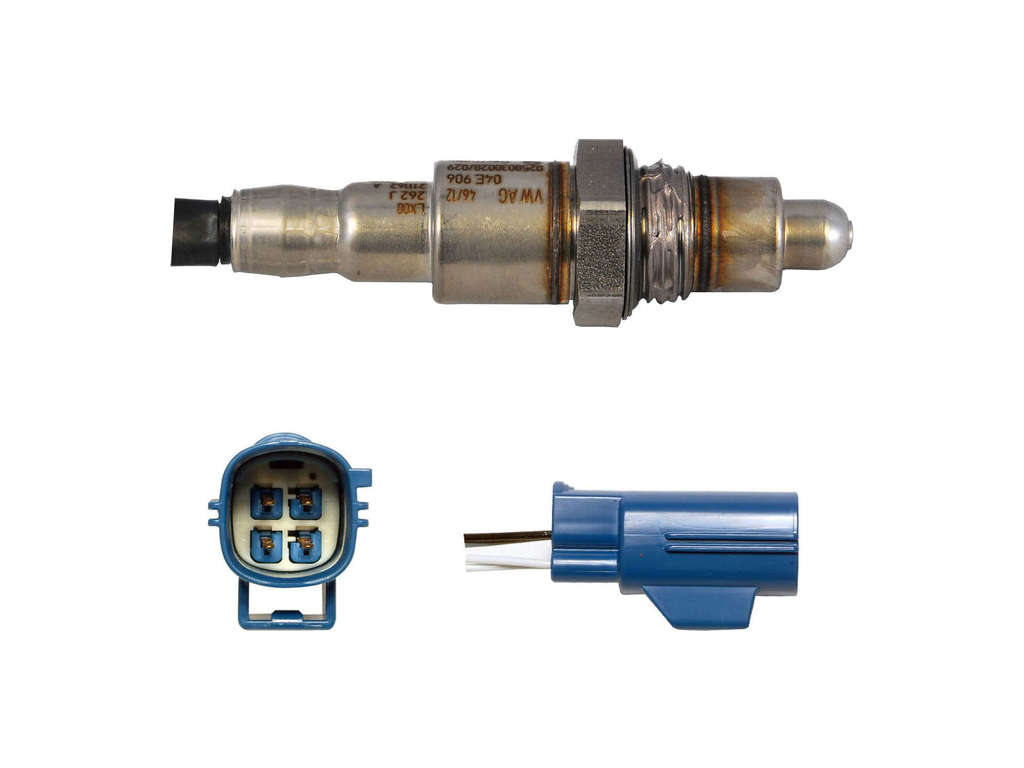
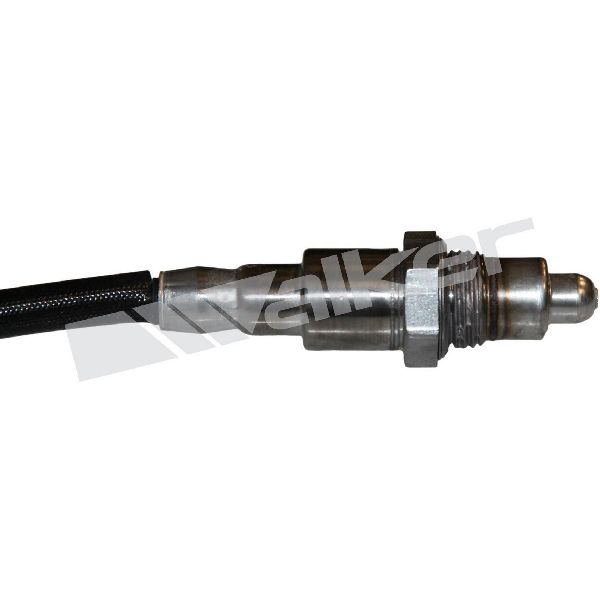
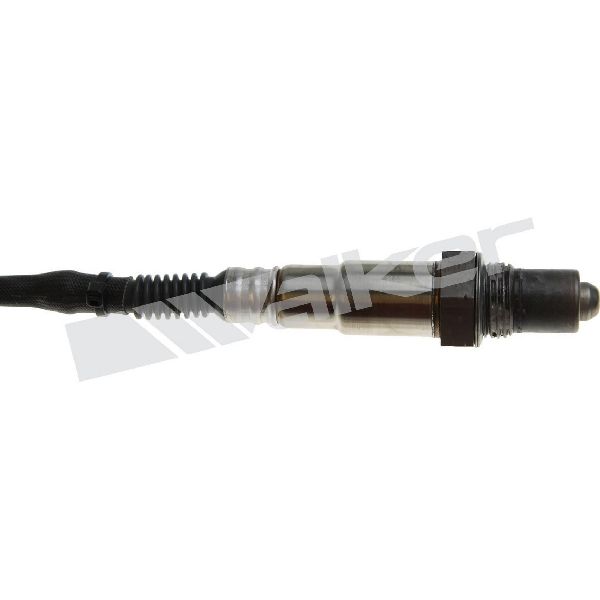
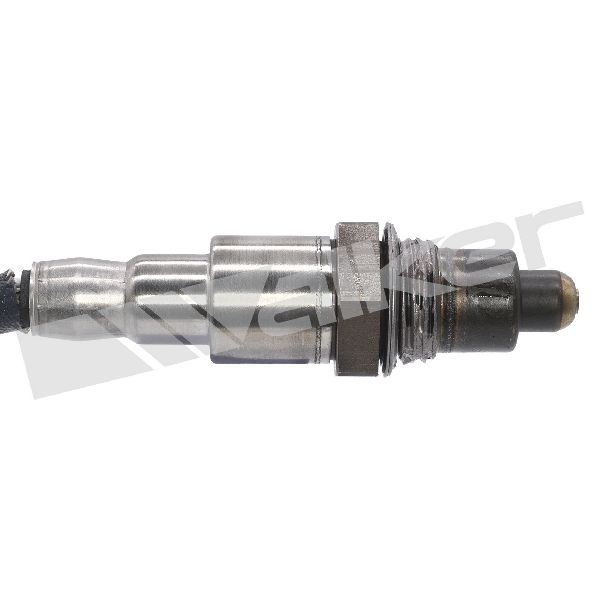
- Downstream Oxygen Sensor (Bank 2, Sensor 2)
(OEM #C2D23703)— This is the component that contains the heater element reported as faulty by the P0060 code. The internal heater is the most common failure point. This part number has been superseded by T2R54607.
Trusted brands: Bosch, Denso, NTK/NGK
OEM price range: $270-$375
Aftermarket price range: $85-$250
Related Codes That Often Appear With This One
- P0056 — This code refers to the same sensor (Bank 2, Sensor 2) but for a different aspect of the heater circuit (HO2S Heater Control Circuit). They often appear together.
- P0156 — This code indicates a circuit malfunction for the sensor signal itself, not the heater, on Bank 2, Sensor 2. They can appear together if the sensor has multiple internal failures.
- P0161 — This is another heater circuit malfunction code for Bank 2, Sensor 2, very similar in nature to P0060 and often listed in the same TSBs.
Technical Service Bulletins (TSBs) & Recalls
- SSM72477: Notes that diagnosis often finds no fault with the wiring harness for a list of HO2S codes including P0060.
- JTB-00392-NAS-3: Mentions P0060 in a list of codes related to a software error. Recommends replacing the affected sensor and then updating the PCM software.
- JTB00392NAS1: An earlier TSB also listing P0060 in the context of HO2S issues, later superseded by JTB-00392-NAS-3.
Platform-Specific Known Issues
- Jaguar has issued multiple Technical Service Bulletins (TSBs) related to oxygen sensor heater circuit faults on this platform. Specifically, TSB SSM72477, JTB-00392-NAS-3, and JTB00392NAS1 all list P0060 among a large group of HO2S codes.
- The key takeaway from SSM72477 is the statement: 'UPON DIAGNOSIS NO FAULT IS FOUND WITH THE WIRING HARNESS', which strongly implies that the sensor itself is the most likely failure point.
- TSB JTB-00392-NAS-3 from 2016 notes that for a range of HO2S codes including P0060, the cause may be a 'post-catalyst heated oxygen sensor (HO2S) software error' and instructs technicians to update the PCM software after replacing the faulty sensor.
Mechanic-Grade Diagnostic Values
- O2 Sensor Heater Circuit Resistance — expected: 3-9 Ohms (cold). A common universal value is 8 Ohms.. Failure: Open circuit (OL or infinite resistance) or a short (0 Ohms).
- O2 Sensor Heater Circuit Voltage (at harness connector) — expected: Should be equal to battery voltage, approximately 12.6V or higher with the engine running.. Failure: Low or no voltage indicates a problem with the fuse, relay, or wiring. A user with a similar Jaguar model reported only 8V, pointing to a wiring fault.
- Engine Grounding Strap Voltage Drop — expected: Well under 0.5V (500mV) while cranking the engine.. Failure: A reading higher than 0.5V indicates a poor ground connection, which can cause various electrical issues.
Hidden / Shadow Codes Worth Checking
- Mode 6 Data Failures: Before a full DTC like P0060 is set, the OBD-II system's Mode 6 may show failures for O2 sensor tests like 'Rich to lean sensor switch time' or 'Minimum sensor voltage for test cycle'. These can be early warnings of a failing sensor. (see via An advanced OBD-II scanner capable of displaying Mode 6 test results, such as a BlueDriver or similar tool.)
Scan Tool Commands That Help
- Jaguar SDD (Symptom Driven Diagnostics): Recommendations > Technical Service Bulletin Check — This should be one of the first steps. For O2 sensor codes, the SDD software often directs the technician to check for a relevant TSB, which may recommend a software update as the primary fix before replacing parts.
- Jaguar SDD (Symptom Driven Diagnostics): Recommendations > Run > Complete vehicle – Datalogger — To monitor live data from the oxygen sensors and their heater circuits. This allows a technician to observe voltage and other parameters in real-time to confirm a fault.
- Jaguar SDD (Symptom Driven Diagnostics): Extras > Configure existing powertrain control module — This function is used to apply a software update to the PCM, which is a required step in some TSBs for resolving recurring O2 sensor codes after the physical sensor has been replaced.
Wiring & Ground Locations
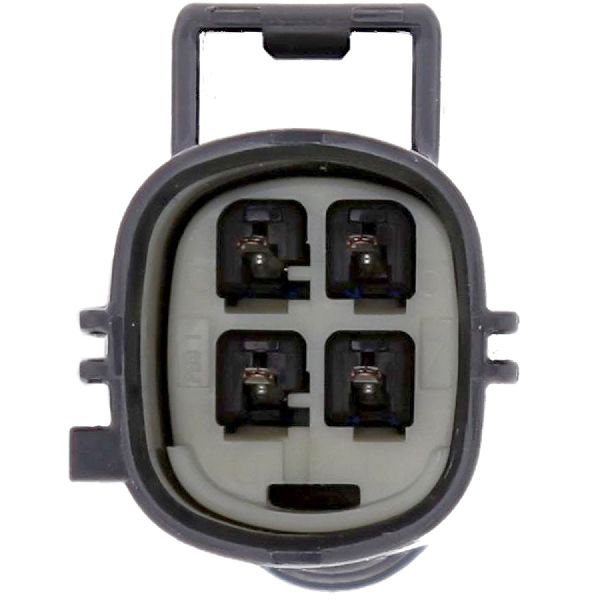
- Downstream O2 Sensor Connector (Vehicle Side) — Under the vehicle, near the catalytic converter on Bank 2 (driver's side for US models).. This is where voltage and resistance tests are performed. For Bank 2 on a similar Jaguar model, the pinout was reported as: Pin 1 (Blue/Yellow) = Heater Ground, Pin 2 (White/Red) = Heater Power, Pin 3 (White) = Sensor Ground, Pin 4 (Brown) = Signal. Always verify with a model-specific diagram.
- Engine Ground Strap — On some Jaguar V8 models, a primary ground strap is located on the right side, connecting the transmission bellhousing area to the frame, directly under the starter. Another may be on the left side between the inner wing and the engine/gearbox mount.. A poor engine ground can cause a wide range of phantom electrical issues, including incorrect sensor readings. Cleaning the contact points for the main engine-to-chassis ground is a crucial diagnostic step when electrical faults are suspected.
- G1D120 / G1D123 — Ground points located at the right rear of the engine compartment.. These are major grounding points for various engine components. According to wiring diagrams for the 2014 XF, the Engine Control Module (ECM) uses these grounds. A fault here could impact ECM function and its ability to correctly read sensor data.
Real Owner Repair Stories
- JaguarForums.com user 'saajaguarx' (2013 Jaguar XF 3.0 SC) — Check Engine Light with code P0062 (HO2S Heater Control Circuit Bank 2 Sensor 3 - note: some 3.0L engines have 3 sensors per bank).
❌ Tried (didn't work) Initially ordered a DENSO 234-4749 based on the parts manual, but found its electrical connector was keyed for the right side of the vehicle, not the left (Bank 2).
✅ What actually fixed it The user discovered the left and right downstream sensors had different, non-interchangeable connectors. They sourced the correct sensor for the left side (NTK 25749) and replaced both left and right sensors, which resolved the code.
OEM Part Supersession History
C2D23703→C2D54167, which was then superseded by T2R54607.— Unspecified, but supersessions are common to improve reliability, change suppliers, or consolidate parts.
Heads up: The downstream sensors for Bank 1 and Bank 2 can have physically different connectors and are not interchangeable. Care must be taken to order the correct part for the specific side of the vehicle.
Model Year Variations Within This Range
- 2013-2015 (X250): These models are specifically mentioned in TSBs related to PCM software updates for oxygen sensor faults. A software update (per TSB JTB-00392-NAS-3 or H231) may be required to fix the root cause, not just a hardware replacement.
- 2016 (X260): The second-generation XF (X260) began this year. While it uses the same 3.0L V6 (AJ126) engine, the downstream oxygen sensors are listed as 4-circuit 'Diagnostic Probes' and may have different part numbers than the earlier X250 generation.
- 2013-2015 3.0L V6: Some 3.0L V6 models may be equipped with six oxygen sensors (three per bank: upstream, center, and downstream) instead of the more common four. This is critical for diagnosis, as P0060 (Sensor 2) could refer to the center sensor, while a code like P0062 could refer to Sensor 3 (the final downstream sensor).
Helpful Videos

Used OEM Parts in Stock
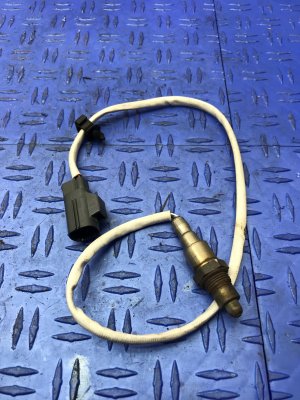
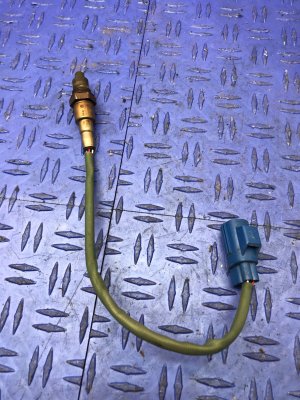
New Aftermarket Parts Available

The information in this article is provided for general reference and educational purposes only. Vehicle specifications, procedures, and part compatibility can vary by production date, trim level, and region. Always consult your vehicle's factory service manual and verify part numbers before purchasing or performing repairs. Safety-critical components such as airbags, seat belts, and braking systems should be installed by a qualified professional.
- Jaguar XF:
- 🎬 Helpful Videos
- 🛍️ Shop This Part
- What's Unique About the 2013-2016 Jaguar XF
- Diagnostic Flowchart
- Symptoms You May Notice
- Most Likely Causes
- Rare But Worth Checking
- Diagnosis Steps
- Parts You'll Likely Need
- Related Codes That Often Appear With This One
- Technical Service Bulletins (TSBs) & Recalls
- Platform-Specific Known Issues
- Mechanic-Grade Diagnostic Values
- Hidden / Shadow Codes Worth Checking
- Scan Tool Commands That Help
- Wiring & Ground Locations
- Real Owner Repair Stories
- OEM Part Supersession History
- Model Year Variations Within This Range
- 🎟️ Get 5% Off