

OBD-II Code P0059: HO2S Heater Resistance (Bank 2, Sensor 1)
What P0059 means, why it triggers, and how to fix it
- The most common cause of code P0059 is a burnt-out internal heater inside the Bank 2, Sensor 1 oxygen sensor.
- Always check the 15A or 20A 'O2 HTR' fuse in the under-hood fuse box before buying replacement parts.
- Driving with P0059 reduces fuel economy by up to 5% and causes automatic failure during state emissions testing.
- Use an OEM replacement sensor (like Motorcraft, ACDelco, or Mopar), as aftermarket sensors often have incorrect resistance and trigger the code again.
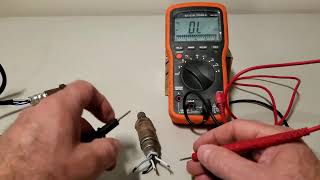
- Test the sensor's heater pins with a multimeter; a reading outside the typical 3 to 10 Ohms confirms the sensor is dead.
What Does P0059 Mean?

The Powertrain Control Module (PCM) detected abnormal electrical resistance in the Bank 2, Sensor 1 oxygen sensor heater. This heater warms the sensor to 600°F for accurate exhaust readings. If resistance falls outside the specified range (typically 3-10 Ohms), P0059 triggers.
Technical definition: The SAE/OBD-II definition is "HO2S Heater Resistance (Bank 2, Sensor 1)". The PCM continuously monitors the upstream oxygen sensor's heater circuit on the engine bank opposite cylinder #1. If the electrical resistance varies by more than 10% from the expected cold-start value, the PCM sets the code.
Can I Drive With P0059?
Yes, But With Caution. Yes, but address it within a few hundred miles. Driving with P0059 reduces fuel economy and increases emissions. Ignoring it long-term damages the catalytic converter, leading to repairs exceeding $1,000.
Common Causes

- Faulty Heated Oxygen Sensor (HO2S) (Very Common) — The internal heating element burns out from extreme heat cycles. Heating to over 500°F on every startup eventually breaks the internal resistance wire or causes internal contamination.
- Blown Oxygen Sensor Fuse (Common) — A blown 'O2 HTR' fuse cuts power to the heater circuit entirely. This is often the result of a shorted sensor or damaged wiring grounding out against the exhaust.
- Damaged Wiring or Connectors (Common) — Wires melt from contact with the hot exhaust manifold, or connector pins corrode from road salt and moisture. This alters the circuit's resistance or breaks the connection.
- Incompatible Aftermarket Sensor (Less Common) — Non-OEM sensors often have incorrect internal resistance out of the box. Vehicles from Chrysler, BMW, and GM are highly sensitive to these slight resistance variances.
- Faulty Powertrain Control Module (PCM) (Rare) — The internal driver circuit inside the PCM that controls the oxygen sensor heater fails. This is a last-resort diagnosis after verifying the sensor, wiring, and fuses.
Symptoms
- Check Engine Light On — The PCM illuminates the MIL immediately after detecting the resistance fault during a cold start.
- Decreased Fuel Economy — The engine stays in open-loop mode longer, running a rich fuel mixture that drops fuel efficiency by 2-5%.
- Rough Idle on Cold Starts — The engine hesitates or idles poorly in cold weather due to an incorrect air-fuel mixture while the sensor slowly warms up via exhaust gas alone.
- Failed Emissions Test (also visible on scanner) — The vehicle releases excess pollutants and fails the OBD-II plug-in emissions inspection due to an incomplete O2 heater readiness monitor.
Diagnostic Flowchart

Tap your situation to follow the diagnostic path that matches what you're seeing on this code.
Common Fixes & Costs
- Replace Heated Oxygen Sensor (Bank 2, Sensor 1) — Parts: $50-$250, Labor: $100-$200, ~0.8 hr book time (DIY)
- Replace Blown Fuse — Parts: $1-$5, Labor: $0-$50, ~0.2 hr book time (DIY)
- Repair or Replace Damaged Wiring/Connector — Parts: $10-$50, Labor: $100-$300, ~1.5 hr book time (Intermediate)
- Professional Diagnosis — Parts: $0, Labor: $150-$165, ~1 hr book time (Professional)
- Replace Powertrain Control Module (PCM) — Parts: $500-$1200, Labor: $150-$300, ~1.5 hr book time (Professional)
DIY vs Professional
- Replace Blown Fuse — Beginner:
Tools: Owner's Manual, Fuse Puller. - Replace Heated Oxygen Sensor — Beginner:
Tools: Jack/stands, O2 sensor socket, penetrating oil, anti-seize, torque wrench. - Repair Damaged Wiring — Beginner:
Tools: Multimeter, wiring diagrams, wire strippers, crimpers, heat shrink, soldering iron. - Replace PCM — Beginner:
Tools: Advanced scan tools for programming, socket set.
Used vs. New Parts: Buying Guide
When a used part is worth it: Never buy a used oxygen sensor. They are wear-and-tear items with a finite lifespan. The low cost of a new sensor versus the labor to install it makes buying used a poor value.
Donor-vehicle mileage cap: roughly under 10000 miles for the part to have meaningful remaining life.
Donor quality checklist:
- Avoid used sensors entirely.
- If using one for temporary diagnosis, pull it from a known-good, low-mileage vehicle.
- Never buy used electrical sensors from online marketplaces for permanent installation.
Decision logic:
- If The part is an oxygen sensor → Always buy new from a reputable brand (OEM, Denso, Bosch, NTK).
- If The cost of a new sensor is less than one hour of shop labor → Buy new; the risk of a used part failing and requiring repeat labor is too high.
- If You are diagnosing a problem and have a known-good used part on hand → Use for testing purposes only, then install a new part for the final repair.
Warranty tradeoff: Used sensors have no warranty. Aftermarket new sensors have a 1-year to limited lifetime warranty. OEM parts carry a 1-2 year warranty.
Worst-case if a used part fails: $200-$400. If the used sensor fails, you pay the labor charge again plus the cost of the new sensor you should have bought initially.
What Happens If You Wait — Timeline
- 0-2 weeks: Code P0059 sets. The PCM runs in open-loop mode longer during cold starts. No major symptoms are perceived. (MPG impact: 0-3%% · Added cost: $0)
- 2 weeks - 3 months: Fuel economy drops noticeably. The driver experiences slight hesitation or a rough idle immediately after cold starts. (MPG impact: 2-5%% · Added cost: $25-$75 in wasted fuel)
- 3-9 months: Prolonged rich fuel mixture overheats the catalytic converter. Spark plugs become fouled with carbon. (MPG impact: 5-10%% · Added cost: $200-$500 (spark plug fouling and early catalyst damage))
- 9+ months: The catalytic converter melts and clogs, causing severe power loss and requiring expensive replacement. (MPG impact: 10-25%+% · Added cost: $1,200-$3,000+ (catalytic converter replacement))
Cost of Not Fixing It
- 0-3 months: Noticeable drop in fuel economy, increased emissions, and rough idle on cold starts. (Added cost: $50-$150 in wasted fuel)
- 3-12 months: Prolonged rich fuel mixture overheats the catalytic converter and fouls spark plugs with carbon buildup. (Added cost: $200-$400 for spark plug replacement plus continued fuel cost)
- 12+ months: Complete failure of the catalytic converter due to melting or clogging from the incorrect fuel mixture. (Added cost: $1200-$2800 for catalytic converter replacement)
Diagnosis Steps
- Read All Stored Codes
Use an OBD-II scanner to document all codes. If P0053 or P0155 are also present, suspect a shared electrical problem like a blown fuse rather than a single bad sensor.
Tools: OBD-II Scanner (Beginner) - Inspect the O2 Heater Fuse
Locate the fuse box using your owner's manual. Find the fuse labeled 'O2 HTR' or similar. Visually inspect it and replace it if blown.
Tools: Owner's Manual, Fuse Puller (Beginner) - Visually Inspect Wiring and Sensor
Examine the Bank 2, Sensor 1 wiring harness. Look for melted insulation touching the exhaust, frayed wires, or green corrosion inside the connector housing.
Tools: Flashlight, Safety Glasses (Beginner) - Test Heater Circuit Resistance at Sensor
Disconnect the sensor. Use a multimeter set to Ohms (Ω) to measure resistance between the two heater pins (usually the two same-colored wires). A reading outside 3-10 ohms, or 'OL' (open loop), confirms a dead sensor.
Tools: Multimeter, Repair Manual (Intermediate) - Check Voltage and Ground at Connector
Turn the key ON (engine off). Use a multimeter to verify 12V battery voltage on the power supply pin of the vehicle-side connector, and test for a solid ground on the ground pin.
Tools: Multimeter, Repair Manual (Intermediate) - Test Heater Circuit Amperage Draw
Clamp a DC amp meter around one heater wire and start the cold engine. Normal draw is 0.25 to 1.75 amps. Zero amps means an open circuit; excessive amps indicates a short.
Tools: DC Amp Clamp Meter (Advanced) - Perform a Voltage Drop Test
Connect the multimeter across the power circuit while the sensor is plugged in and operating. A reading above 0.5V indicates excessive hidden resistance in the wiring.
Tools: Multimeter (Advanced) - Test Wiring Harness Continuity
If voltage is missing at the connector, test for continuity between the PCM connector and the O2 sensor connector to locate breaks in the wiring harness.
Tools: Multimeter, Repair Manual (Advanced) - Analyze with a Lab Scope
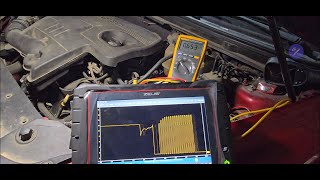
View the PCM's pulse-width modulated (PWM) heater control signal. A flat line indicates a PCM or wiring fault, while a distorted square wave points to a failing sensor heater.
Tools: Oscilloscope, Repair Manual (Professional)
When This Code Triggers (Freeze-Frame Conditions)
- Engine Coolant Temp: Below 122°F (50°C) (During engine warm-up phase after a cold start. The heater test runs before the engine reaches full operating temperature.)
- RPM: Idle (700-900 RPM) (The heater circuit test is performed shortly after startup during the initial idle period.)
- Engine Load: Low (under 25%) (The test runs under no-load or light-load conditions.)
- Time After Start: 10-120 seconds (The PCM checks heater resistance immediately after startup to ensure rapid sensor heating.)
Related Codes
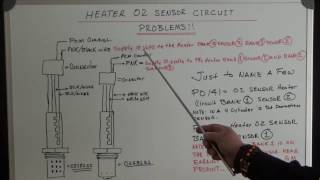
- P0155 — Also indicates a Bank 2, Sensor 1 heater circuit malfunction. While P0059 is specific to out-of-range resistance, P0155 is a general circuit code triggered by opens, shorts, or excessive current draw.
- P0053 — The exact equivalent of P0059, but for Bank 1, Sensor 1. Seeing both codes together strongly suggests a shared blown fuse or ground issue, not two simultaneously failed sensors.
- P0030 — The generic code for a Bank 1, Sensor 1 heater circuit malfunction. Appearing alongside P0059 points to a widespread electrical issue affecting both engine banks.
- P0060 — Indicates HO2S Heater Resistance for Bank 2, Sensor 2 (downstream). Seeing P0059 and P0060 together indicates a wiring issue specific to the Bank 2 harness.
Climate & Environmental Factors
- Cold Climates: Rough idle and poor fuel economy are highly pronounced in winter. The engine relies heavily on the O2 heater during cold starts; without it, the system stays in inefficient open-loop mode much longer.
- High Humidity / Road Salt: Moisture and salt accelerate corrosion on electrical connector pins and compromise wire insulation, leading directly to shorts or high resistance in the heater circuit.
How to Talk to a Mechanic About This Code
Say this: "I have code P0059 for the Bank 2 Sensor 1 heater circuit. Please test the circuit's resistance and check for power and ground at the connector before recommending a part replacement."
This directs the mechanic to perform a thorough diagnosis, preventing them from simply replacing the sensor without verifying if a blown fuse or broken wire is the actual cause.
Avoid saying:
- 'Just fix whatever's wrong'
- 'My check engine light is on, can you look at it?'
- 'Whatever you recommend'
Questions to ask before authorizing the repair:
- Did you test the resistance of the original sensor's heater circuit, and what was the reading?
- Did you confirm there is 12-volt power and a good ground at the sensor connector?
- If the sensor is the issue, what is the cost for an OEM vs. a quality aftermarket part?
- What is your warranty on this specific repair, including parts and labor?
Where to Take It: Dealer vs Independent vs Chain
- Dealer:
Best for: Vehicles still under a powertrain or emissions warranty, Vehicles with known manufacturer TSBs requiring PCM software updates, Complex electrical issues requiring factory diagnostic tools
Downsides: Higher labor rates (1.5-2x vs. independent shops), May default to replacing expensive harnesses rather than repairing wires (Typical cost: +50% vs. baseline) - Independent Shop:
Best fit. P0059 is common, and a competent independent mechanic diagnoses and repairs sensor, wiring, or fuse issues more affordably than a dealer.
Best for: Most out-of-warranty vehicles, Straightforward sensor replacements or wiring repairs
Downsides: Shop quality varies; check for ASE certifications, May lack access to the latest manufacturer software updates (Typical cost: +0% vs. baseline) - Chain Shop:
Use with caution. Acceptable if you are certain the sensor needs replacing. Avoid for initial diagnosis, as they often replace parts without circuit testing.
Best for: Getting the code read for free, Simple part replacements if you've already diagnosed the issue yourself
Downsides: Technician skill varies dramatically, High pressure to upsell services, Often unequipped for in-depth electrical diagnostics (Typical cost: -10% vs. baseline)
When to Walk Away From the Repair
If the estimated repair cost exceeds 40-50% of the car's private-party value, seriously consider not fixing it, especially on an older, high-mileage vehicle.
- Car worth $4000, fix is $2000: Borderline — get a 2nd opinion. This repair is 50% of the car's value.
- Car worth $12000, fix is $1800: Fix it — well below the threshold and a worthwhile investment in reliability.
- Car worth $2500, fix is $1500: Walk away — the repair cost is 60% of the car's value.
What Scan Tool You Need for This Code

Minimum: A basic OBD-II code reader that reads and clears engine trouble codes.
A $20 reader offers no insight into live circuit behavior. A scanner with live data shows O2 sensor voltage in real-time, confirming the sensor functions properly after the heater issue is fixed.
Budget: BlueDriver Pro (~$100) — Connects via Bluetooth. Reads/clears P0059, views freeze-frame data, and displays live O2 sensor data graphically to confirm the repair.
Mid-range: Innova 5610 (~$330) — Provides live data graphing and helps run O2 monitor tests, giving advanced diagnostic information beyond the engine code.
Professional: Autel MaxiCOM MK808S (~$500) — Offers full bidirectional control to command the O2 sensor heater circuit on and off, crucial for troubleshooting complex wiring issues.
How to Clear the Code After You Fix It
- Use an OBD-II scan tool to clear the P0059 code.
- Perform a complete drive cycle to allow the onboard diagnostics to run and confirm the fix.
- Check readiness monitors with the scan tool to ensure the O2 Sensor and Catalyst monitors have completed.
Drive cycle (~20 minutes): Start with a cold engine (sat for 8+ hours). Idle for 2-3 minutes with electrical loads on (A/C, rear defroster). Drive at a steady 55 mph for 5-10 minutes. Decelerate to 20 mph without braking, then accelerate moderately back to 55 mph.
Readiness monitors affected: O2 sensor monitor, O2 sensor heater monitor, Catalyst monitor
Before emissions retest: drive at least 50 miles to fully set monitors.
Watch out for:
- Disconnecting the battery clears the code but resets all readiness monitors, causing an immediate emissions test failure.
- The code returns immediately if the underlying electrical fault (bad sensor, wiring, fuse) was not fixed.
- Failing to start with a completely cold engine prevents the O2 heater monitor from running.
Will This Fail Emissions / State Inspection?
Yes — this code typically fails an OBD-II emissions inspection.
- California: P0059 is an automatic failure for a Smog Check. The check engine light must be off, and all required readiness monitors must be 'Ready'.
- New York: The NYS DMV inspection includes an OBD-II scan. P0059 causes an immediate failure. The issue must be repaired and monitors completed before a re-test.
- Texas: In emissions-testing counties, an illuminated Check Engine Light with a P0059 code fails the inspection.
Most Commonly Affected Vehicles

- Ford F-150, Fusion, Escape (2004-2010) — On the 5.4L V8, Bank 2 is the driver's side. Wiring harnesses are highly susceptible to heat damage. P0059 is frequently caused by a blown fuse or dead sensor.
- Chevrolet Silverado, Cruze, Malibu, Tahoe (2007-2013) — On V8 trucks, Bank 2 is the passenger side. Owners frequently report aftermarket sensors failing to clear the code due to incorrect resistance.
- Dodge Ram 1500 (2009-2014) — Often appears alongside P0053, pointing to a shared power or ground issue. OEM Mopar sensors are strictly recommended.
- Jeep Grand Cherokee (2005-2010) — Internal sensor failure is common. Location on V8 models makes DIY replacement challenging due to tight exhaust access.
- Lincoln Navigator (2005-2014) — Shares the F-150 platform. A faulty oxygen sensor is the primary cause, leading to a severe drop in fuel economy.
- BMW 3 Series, X5 (2006-2013) — Highly sensitive to aftermarket parts. Ensure the replacement part number perfectly matches the OEM specification.
- Nissan Altima, Pathfinder (2008-2015) — Corrosion on the connector pins is a frequent cause, especially in wet climates.
- Toyota Tundra, Tacoma, 4Runner (2005-2015) — Bank 2 is the driver's side on many V-engines. Accessing the sensor often requires a specialized low-profile O2 socket.
Manufacturer-Specific Notes
- General Motors (GM): Recall #14001 covers some 2014 vehicles where condensation fractures the O2 sensor, requiring replacement of both Bank 2 sensors and an ECM reprogram. TSB 15-06-04-001 notes mis-routed wiring causing shorts.
- Chrysler/Dodge/Jeep: Highly sensitive to aftermarket sensors; OEM Mopar is required. TSB 25-002-14 for 2010-2012 Ram trucks addresses O2 sensor DTCs by installing an overlay wiring harness.
- Ford: A PCM software update is sometimes required to correct an overly sensitive heater circuit monitor. On F-150s, multiple O2 codes can point to a faulty pin at the cam phaser solenoid.
- Toyota: TSB-0005-14 for 2012-2014 models involves an ECM software update to address MIL illumination with various DTCs, indicating a history of software sensitivity.
Real Owner Stories
2010 Ford F-150 with 125K miles
Check Engine Light appeared on startup. Code reader showed P0059.
What they tried:
- Ignored the light, noticed a 2-3 MPG drop.
- Replaced the Bank 2, Sensor 1 O2 sensor with a Bosch aftermarket part.
- The code returned two days later.
Outcome: The owner inspected the under-hood fuse box and found a blown 15A fuse for the O2 sensor heaters. Replacing the $3 fuse permanently cleared the code.
Lesson: Always check for a blown fuse before replacing parts. A shorted wire or failed sensor blows the fuse, meaning a new sensor won't work until the fuse is replaced.
2012 Chevrolet Silverado at 95K miles
Rough idle on cold mornings. Check Engine Light on for P0059 and P0053 (both upstream heater circuits).
What they tried:
- Suspected a shared power or ground issue rather than two simultaneous sensor failures.
- Visual inspection revealed no obvious wiring damage.
Outcome: A mechanic found a corroded ground wire shared by both sensors. Cleaning the ground connection on the engine block cleared both codes permanently.
Lesson: When codes for both banks appear together, the problem is almost always a shared element like a fuse, relay, or ground connection.
2006 Ford Fusion with 150K miles
Car threw P0059 along with P0020 and P0022.
What they tried:
- Replaced the Bank 2, Sensor 1 oxygen sensor with a cheap aftermarket part.
Outcome: The Check Engine Light and all codes remained. The underlying issue was a complex wiring problem common to all flagged components. The owner sold the car as-is.
Lesson: Don't focus on one code when multiple are present. A cheap part-swap without proper diagnosis wastes time and money.
How to Prevent This Code From Triggering
- Use Top Tier certified gasoline (Every fill-up) — Detergents prevent carbon buildup on the oxygen sensor tip, keeping it accurate and less prone to contamination.
- Replace upstream O2 sensors proactively (Every 80,000-100,000 miles) — Sensors slow down with age. Proactive replacement maintains peak fuel efficiency and prevents future codes.
- Avoid short trips and extended idling (Daily habit) — Short trips prevent the exhaust from burning off condensation, accelerating sensor corrosion. Idling causes carbon buildup.
- Perform regular engine maintenance (Per owner's manual schedule) — Fresh spark plugs and air filters prevent rich fuel conditions that foul the oxygen sensor with soot.
- Visually inspect wiring during oil changes (Every 5,000-7,500 miles) — Checking for wires touching hot exhaust pipes catches potential failures before they happen.
Frequently Asked Questions
What are the most common mistakes when diagnosing P0059?
The single most common mistake is replacing the oxygen sensor without performing any diagnosis. While the sensor is often the culprit, the actual problem is sometimes a simple blown fuse or a damaged wire. Always verify the sensor location (Bank 2, Sensor 1) for your specific vehicle before starting.
Why did the P0059 code come back after replacing the sensor?
If the code returns after replacement, the issue lies in the circuit itself. This points to damaged wiring, a corroded connector, a blown fuse, or an incompatible aftermarket sensor. In rare cases, it indicates a faulty PCM requiring reprogramming.
What does 'Bank 2, Sensor 1' mean?
Bank 2 is the side of the engine that does not contain cylinder #1. Sensor 1 is the 'upstream' oxygen sensor located before the catalytic converter. For example, on many Ford V8s, Bank 1 is the passenger side, making Bank 2 the driver's side.
Can I fix P0059 myself?
Yes, replacing a bad oxygen sensor or a blown fuse is a straightforward repair for a DIYer with basic tools. However, diagnosing complex wiring issues requires a multimeter and wiring diagrams. If the sensor is seized in the exhaust, you need professional tools to remove it.
How much does it cost to fix P0059?
A simple fuse replacement costs under $5. Replacing the oxygen sensor yourself costs $50 to $250 for parts, while a shop charges $200 to $450 including labor. Professional electrical diagnosis typically adds $150 to the total bill.
Will a P0059 code clear itself?
No, this code indicates a hard electrical fault that the PCM actively monitors. The check engine light remains on until the underlying problem is repaired and the code is cleared with a scan tool. The PCM must verify the heater circuit resistance is correct on the next startup.
Can a vacuum leak cause a P0059 code?
No, a vacuum leak does not cause a P0059 code. Vacuum leaks cause lean condition codes (like P0171) because unmetered air enters the engine. Code P0059 is strictly an electrical fault with the sensor's internal heater circuit.
Can I clean an oxygen sensor to fix this code?
No, cleaning the outside of the oxygen sensor will not fix an internal heater resistance problem. Code P0059 relates to a broken electrical heating element sealed inside the sensor body. If the heater fails its resistance test, you must replace the entire sensor.
Key Takeaways
- The most common cause of code P0059 is a burnt-out internal heater inside the Bank 2, Sensor 1 oxygen sensor.
- Always check the 15A or 20A 'O2 HTR' fuse in the under-hood fuse box before buying replacement parts.
- Driving with P0059 reduces fuel economy by up to 5% and causes automatic failure during state emissions testing.
- Use an OEM replacement sensor (like Motorcraft, ACDelco, or Mopar), as aftermarket sensors often have incorrect resistance and trigger the code again.
- Test the sensor's heater pins with a multimeter; a reading outside the typical 3 to 10 Ohms confirms the sensor is dead.
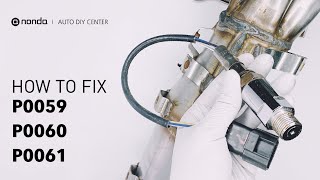
Helpful Videos


The information in this article is provided for general reference and educational purposes only. Vehicle specifications, procedures, and part compatibility can vary by production date, trim level, and region. Always consult your vehicle's factory service manual and verify part numbers before purchasing or performing repairs. Safety-critical components such as airbags, seat belts, and braking systems should be installed by a qualified professional.
- 🎬 Helpful Videos
- What Does P0059 Mean?
- Can I Drive With P0059?
- Common Causes
- Symptoms
- Diagnostic Flowchart
- Common Fixes & Costs
- DIY vs Professional
- Used vs. New Parts: Buying Guide
- What Happens If You Wait — Timeline
- Cost of Not Fixing It
- Diagnosis Steps
- When This Code Triggers (Freeze-Frame Conditions)
- Related Codes
- Climate & Environmental Factors
- How to Talk to a Mechanic About This Code
- Where to Take It: Dealer vs Independent vs Chain
- When to Walk Away From the Repair
- What Scan Tool You Need for This Code
- How to Clear the Code After You Fix It
- Will This Fail Emissions / State Inspection?
- Most Commonly Affected Vehicles
- Manufacturer-Specific Notes
- Real Owner Stories
- 2010 Ford F-150 with 125K miles
- 2012 Chevrolet Silverado at 95K miles
- 2006 Ford Fusion with 150K miles
- How to Prevent This Code From Triggering
- Frequently Asked Questions
- What are the most common mistakes when diagnosing P0059?
- Why did the P0059 code come back after replacing the sensor?
- What does 'Bank 2, Sensor 1' mean?
- Can I fix P0059 myself?
- How much does it cost to fix P0059?
- Will a P0059 code clear itself?
- Can a vacuum leak cause a P0059 code?
- Can I clean an oxygen sensor to fix this code?
- Key Takeaways
- 🎟️ Get 5% Off