

P0055 on 2013-2016 Land Rover Range Rover Evoque: Heater Resistance Causes & Fixes
This code indicates a fault in the heater circuit of the Bank 1, Sensor 3 oxygen sensor. The most common cause is a failed sensor, a known issue acknowledged by Land Rover in TSB SSM63157. Replacing the rearmost oxygen sensor (Part No. LR035748, which may be superseded by LR098290) is the typical fix. The issue is due to a manufacturing flaw causing internal stress on the sensor.
- P0055 on a 2013-2016 Evoque almost always points to a failed rearmost oxygen sensor (Bank 1, Sensor 3).
- The failure is often due to a known manufacturing defect acknowledged by Land Rover in TSB SSM63157, which caused internal stress on the sensor's ceramic element.
- The fix is typically to replace the sensor (part LR035748 or its supersession LR098290), which is a DIY-friendly job with a difficulty of 2 out of 5.
- Before buying a new sensor, it's wise to test the old one's heater resistance with a multimeter (expect 4-10 ohms) and check the wiring harness for damage, especially near the transfer case.
What's Unique About the 2013-2016 Land Rover RANGE ROVER EVOQUE
For this specific generation of Range Rover Evoque, the P0055 code is strongly linked to a known manufacturing defect. Land Rover issued Technical Service Bulletin #SSM63157, which points to a "Manufacturing fault at the supplier" causing "misalignment with in the sensor leading to side load on the ceramic internal to the sensor." This design flaw created pre-stress that, combined with normal use, leads to premature failure. This makes a faulty sensor itself the most probable cause, more so than on other vehicles where wiring or other issues might be more common. The TSB advises that replacement sensors should have a date code of June 1, 2013, or later to ensure the defect is corrected.
Diagnostic Flowchart
Tap your situation to follow the diagnostic path that matches what you're seeing on this vehicle.
Symptoms You May Notice
- Check Engine Light is on
- Vehicle fails emissions testing
- Slightly decreased fuel economy over time
- Rough idle or stalling on cold starts.
- Black smoke from exhaust on cold starts.
- Replacing the wrong oxygen sensor (e.g., Sensor 1 or 2 instead of Sensor 3). 🎬 Watch: This guide explains sensor locations and bank numbers.
- Replacing the PCM before thoroughly testing the sensor and wiring.
- Ignoring a wiring harness issue, such as rodent damage or chafing, and incorrectly blaming the sensor.
Most Likely Causes
- Failed Oxygen Sensor (Bank 1, Sensor 3) 🔴 High Probability As documented in Land Rover TSB #SSM63157, a supplier manufacturing fault caused internal misalignment and stress on the sensor's ceramic element, leading to a higher-than-normal failure rate. The bulletin specifically notes this pre-stress leads to "premature component malfunction".
How to confirm: Disconnect the sensor and measure the resistance between the two heater circuit pins (often the two wires of the same color). A reading outside the typical 2-10 ohm range, or an open (OL) or shorted (near 0 ohms) circuit, confirms the sensor has failed. 🎬 See how to fix P0055 and test heater resistance. A good new sensor should read within specification.
Typical fix: Replace the Bank 1, Sensor 3 oxygen sensor. Ensure the replacement part has a manufacturer date code of June 2013 or later per TSB guidance.
Est. part cost: $80-$220 - Wiring or Connector Issue 🟡 Medium Probability The sensor and its wiring are located underneath the vehicle and are exposed to road debris, moisture, and high heat from the exhaust, which can cause damage over time. A JLR document also notes that for P0055, the harness at the rear of the transfer case should be inspected for contact with the output flange.
How to confirm: Visually inspect the wiring harness and connector for any signs of melting, chafing, corrosion, or broken wires. Pay special attention to the harness routing near the transfer case. Check for battery voltage (approx. 12V) at the harness-side connector with the key on, engine off.
Typical fix: Repair the damaged section of the wiring harness or replace the connector pigtail. When splicing O2 sensor wires, they must be crimped, not soldered, to avoid resistance changes and ensure the sensor gets a proper reference air signal.
Est. part cost: $20-$50 - Blown Fuse ⚪ Low Probability
How to confirm: Check the vehicle's fuse box diagram for the fuse related to the oxygen sensor heaters and inspect it to see if it has blown. The fuse may be labeled 'A/F Sensor' or similar.
Typical fix: Replace the blown fuse. If it blows again, a short circuit in the wiring or sensor is likely the root cause.
Est. part cost: $1-$5
Rare But Worth Checking
- Powertrain Control Module (PCM) Fault: This is very rare. Before condemning the PCM, all other possibilities, including the sensor, wiring, and fuses, must be exhaustively ruled out. A PCM fault can sometimes cause the heater driver circuit to fail or trigger the code falsely.
Diagnosis Steps
- Read the trouble codes with an OBD-II scanner to confirm P0055 is the primary code.
- Visually inspect the Bank 1, Sensor 3 oxygen sensor (the rearmost sensor on the exhaust), its connector, and the wiring harness for any obvious damage like melting, corrosion, or breaks. Also inspect the harness near the rear of the transfer case for any chafing.
- Check the fuse for the oxygen sensor heater circuit in the vehicle's fuse box.
- If no visible issues are found, disconnect the oxygen sensor connector.
- Using a multimeter set to Ohms, measure the resistance between the two heater circuit pins on the sensor side (these are typically the two wires of the same color). A correct reading is typically between 2-10 ohms. A reading of OL (Open Loop) or near zero indicates a failed sensor.
- With the key on and engine off, use a multimeter to verify battery voltage (approx. 12V) is present on the power supply wire of the harness-side connector.
- If the sensor tests bad, replace it. A 22mm oxygen sensor socket or wrench is required.
- After the repair, clear the code with the scanner and perform a test drive to ensure the fault does not return.
Parts You'll Likely Need
- Oxygen Sensor (Bank 1, Sensor 3)
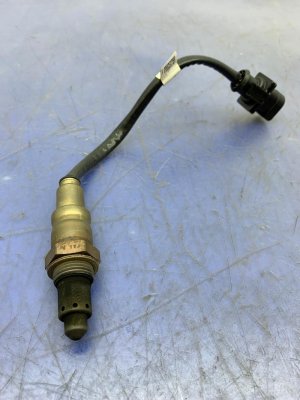
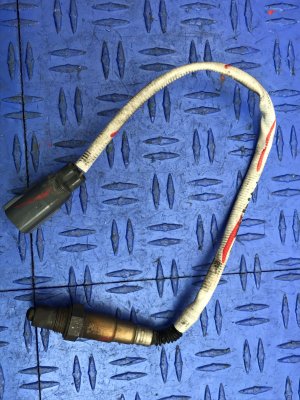
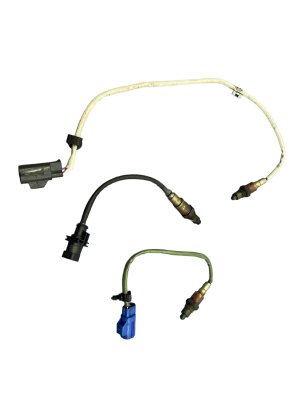
(OEM #LR035748)— This is the most common failure point for code P0055 on this vehicle, due to a known manufacturing defect. Part number LR035748 is specified for the rear O2 sensor in the TSB. Parts suppliers show LR098290 and subsequently LR136928 as superseding numbers.
Trusted brands: Bosch, Denso, Walker, Autopart Premium
OEM price range: $150-$220
Aftermarket price range: $80-$140
Related Codes That Often Appear With This One
- P0142 — P0142 ('O2 Sensor Circuit Malfunction Bank 1 Sensor 3') is a related code for the same sensor, indicating a general circuit problem rather than a specific resistance fault. TSB SSM63157 lists both P0055 and P0142 as potential codes resulting from the same manufacturing defect.
- P0042 — This code, along with P0043, P0061, P0062, and P0063, are also listed in TSB SSM63157 as being related to the same batch of faulty oxygen sensors from the supplier.
Technical Service Bulletins (TSBs) & Recalls
- SSM63157: Notes a manufacturing fault ('misalignment within the sensor') causing premature failure and advises checking the date code on replacement parts.
- SSM72448: Mentions that P0055 is one of several O2 sensor codes that may be stored even when no direct fault is found upon diagnosis.
Platform-Specific Known Issues
- Technical Service Bulletin SSM63157 explicitly notes a 'Manufacturing fault at the supplier' leading to 'misalignment with in the sensor' that causes premature failure of this part on 2013 models. It advises using replacement parts with a date code of June 1, 2013 or later.
- Technical Service Bulletin SSM72448 lists P0055 among a large group of O2 sensor codes where sometimes 'no fault is found', suggesting the possibility of intermittent connection issues or software glitches that can be hard to trace.
- A JLR internal communication from 2017 suggests that if P0055 is present, technicians should inspect the wiring harness at the rear of the transfer case for damage from contact with the output flange.
Mechanic-Grade Diagnostic Values
- O2 Sensor Heater Circuit Resistance — expected: 2 to 10 Ohms when the sensor is cold. Some sources cite a more specific range of 11.7-14.5 Ohms for post-catalyst sensors on similar Land Rover models.. Failure: A reading of infinite resistance (Open Loop / OL) or close to zero Ohms (short circuit) indicates a failed heater element.
- Voltage Supply at Harness Connector (Key On, Engine Off) — expected: 11-14 Volts (Battery Voltage) at the power supply pin.. Failure: A lack of voltage points to a problem with the fuse, relay, or the power supply wiring.
Hidden / Shadow Codes Worth Checking
- P0055-00: This is the common format for this DTC in JLR systems. The '-00' suffix indicates 'No Sub Type Information,' meaning the PCM has detected a resistance fault but has no more specific data on the failure type (e.g., short to ground vs. open circuit). (see via Dealer-level diagnostic tools like JLR SDD (Symptom Driven Diagnostics).)
Scan Tool Commands That Help
- JLR SDD (Symptom Driven Diagnostics): Live Data Monitoring / Datalogger — Use this to monitor the O2 sensor heater status, current draw, and sensor voltage in real-time. This helps confirm if the PCM is commanding the heater on and if the sensor is responding as expected, which can help rule out a PCM driver issue before replacing the sensor.
Wiring & Ground Locations
- Heater Circuit Wires — Within the 4-wire oxygen sensor connector.. On a typical 4-wire sensor, two wires of the same color (e.g., both white) are for the heater circuit. These are the pins to test for resistance on the sensor side and for voltage/ground on the harness side.
- Wire Splice/Repair Method — Anywhere on the O2 sensor harness if a repair is needed.. O2 sensor wires must be repaired using crimp connectors, not solder. Soldering can change the wire's resistance, leading to incorrect signals. Furthermore, some sensors draw reference air through the wire strands, and solder can block this path, causing faulty readings.
OEM Part Supersession History
LR035748→LR098290— Part update or manufacturer change.LR098290→LR136928— Part update or manufacturer change.
Model Year Variations Within This Range
- 2013-2014: TSB #SSM63157, which identifies the manufacturing defect, specifically advises that replacement sensors should have a date code of June 1, 2013, or later, indicating parts made before this date are suspect.
- 2015-2016: Around 2015-2016, Land Rover began replacing the Ford-derived 2.0L Si4 engine with its own 2.0L 'Ingenium' engine. While the P0055 code's meaning is the same, wiring, connector locations, or PCM software could differ between vehicles with the Si4 vs. the Ingenium engine.
Helpful Videos
![What is P0055 Engine Code [Quick Guide]](https://img.youtube.com/vi/gMePp5vTefs/mqdefault.jpg)
We Have This Part in Stock



The information in this article is provided for general reference and educational purposes only. Vehicle specifications, procedures, and part compatibility can vary by production date, trim level, and region. Always consult your vehicle's factory service manual and verify part numbers before purchasing or performing repairs. Safety-critical components such as airbags, seat belts, and braking systems should be installed by a qualified professional.
- Land Rover RANGE ROVER EVOQUE:
- 🎬 Helpful Videos
- 🛍️ Shop This Part
- What's Unique About the 2013-2016 Land Rover RANGE ROVER EVOQUE
- Diagnostic Flowchart
- Symptoms You May Notice
- Most Likely Causes
- Rare But Worth Checking
- Diagnosis Steps
- Parts You'll Likely Need
- Related Codes That Often Appear With This One
- Technical Service Bulletins (TSBs) & Recalls
- Platform-Specific Known Issues
- Mechanic-Grade Diagnostic Values
- Hidden / Shadow Codes Worth Checking
- Scan Tool Commands That Help
- Wiring & Ground Locations
- OEM Part Supersession History
- Model Year Variations Within This Range
- 🎟️ Get 5% Off