

P0046 on 2015 Ram 3500 6.7L Cummins: Turbo Actuator Causes and Fixes
On a 2015 Ram 3500 with the 6.7L Cummins, code P0046 almost always means the electronic turbocharger actuator has failed. This is a well-documented issue with a manufacturer warranty extension (X99). The fix is to replace the actuator, which is a serviceable part separate from the turbocharger itself, and then perform a mandatory calibration with a scan tool.
- P0046 on a 2015 Ram 3500 with the 6.7L Cummins almost always points to a failed electronic turbocharger actuator.
- This is a known issue acknowledged by Ram with a warranty extension (X99), so check with a dealer to see if your vehicle is covered.
- The fix involves replacing the actuator, which is a bolt-on part, but it requires a special calibration procedure with a scan tool.
- While wiring issues are possible, do not replace the entire turbocharger unless the actuator replacement and calibration fails to resolve the code.
What's Unique About the 2015-2015 Ram 3500

The 6.7L Cummins engine uses a Holset VGT, and its electronic actuator is a known high-failure part. The issue is so common that FCA (the parent company of Ram) issued Technical Service Bulletin (TSB) 09-005-22 REV. A and warranty extension X99 specifically to cover the replacement of the turbo actuator for this exact code. Unlike many vehicles where P0046 could have a wide range of causes, on this specific truck, the evidence points overwhelmingly to actuator failure.
Diagnostic Flowchart
Tap your situation to follow the diagnostic path that matches what you're seeing on this vehicle.
Symptoms You May Notice
- Check Engine Light (Malfunction Indicator Lamp) is on.
- Significant loss of engine power and sluggish acceleration.
- Exhaust brake not functioning or working intermittently.
- Audible noises from the turbo area, such as whistling or squealing, as the actuator attempts to function.
- Reduced fuel economy.
- Truck enters 'limp mode' with reduced power.
- Replacing the entire turbocharger assembly when only the bolt-on electronic actuator has failed. The actuator is a separate, serviceable part.
- Replacing boost pressure sensors. This code points to a circuit performance issue with the control actuator, not necessarily an incorrect boost reading.
Most Likely Causes
- Failed Electronic Turbocharger Actuator 🔴 High Probability The actuator is located in a high-heat, high-vibration environment on the turbocharger, leading to a high rate of internal electronic and motor failure. FCA has acknowledged the issue with warranty extensions (X99 and X93) for this part due to internal electrical failures.
How to confirm: Use a high-end bidirectional scan tool to run the 'VGT Actuator Test' or 'VGT Actuator Self-Calibration'. A failure during this test confirms a bad actuator. Another check is to measure resistance between the two middle CAN bus pins on the actuator connector; it should be between 115-125 ohms. A reading outside this range indicates a faulty actuator.
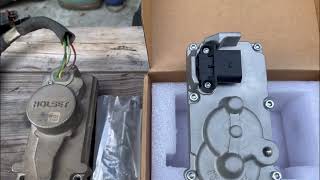
Typical fix: Replace the turbocharger actuator and perform the scan tool calibration routine. The actuator is a bolt-on part and does not require replacing the entire turbocharger. 🎬 Watch: Step-by-step guide to removing and installing the actuator.
Est. part cost: $400-$700 - Wiring Harness or Connector Damage 🟡 Medium Probability The harness is routed in a hot engine bay and can become brittle, corroded, or chafed over time, leading to a poor connection to the actuator. This can cause intermittent communication loss.
How to confirm: Visually inspect the entire length of the turbo actuator wiring harness for melted sections, chafing, or broken wires. Check the connector at the actuator for corrosion, pushed-out pins, or moisture. Wiggling the harness while checking for codes can sometimes pinpoint an intermittent connection.
Typical fix: Repair the damaged section of the wiring harness or replace the connector pigtail. Clean any corrosion from connector pins using a specialized cleaner like Deoxit D5.
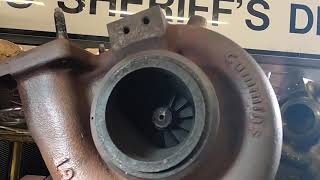
Est. part cost: $20-$100 - Sticking VGT Vanes ⚪ Low Probability Soot and carbon can build up inside the turbo's exhaust housing, causing the variable vanes to stick. This prevents the actuator from moving the vanes through their full range of motion, which can trigger a performance code. This is often referred to as 'Stuck Turbo Syndrome'.
How to confirm: This is difficult to confirm without first ruling out the actuator and wiring. After removing the actuator, manually move the VGT linkage arm on the turbocharger. It should move smoothly through its range of motion (about one inch) without binding. If it is stiff or gets stuck, the turbo vanes are the problem.
Typical fix: Clean the turbocharger's variable geometry mechanism. In severe cases, the entire turbocharger assembly must be replaced. Regularly using the exhaust brake can help keep the vanes clean by forcing them to cycle.
Est. part cost: $1000-$3000
Rare But Worth Checking
- Faulty Powertrain Control Module (PCM): This is extremely rare. The PCM should only be considered after all other possibilities, including the actuator, wiring, and the turbo itself, have been definitively ruled out.
Diagnosis Steps

- Connect an OBD-II scanner and verify that P0046 is present. Check for any other codes, particularly U010C, P003A, P00AF, or P0234.
- If U010C is present, diagnose it first as it indicates a communication failure that will prevent further testing.
- Perform a thorough visual inspection of the turbo actuator's wiring harness and connector. Look for any signs of melting, chafing against the engine block, or corrosion in the connector.
- Using a high-end bidirectional scan tool, command the 'VGT Actuator Self-Test' or 'VGT Actuator Installation and Calibration' routine. This is the most effective diagnostic step.
- If the actuator test fails, and the wiring is confirmed to be intact, replace the turbocharger actuator.
- If the actuator test passes, there may be an intermittent wiring issue or a mechanical problem with the VGT vanes sticking inside the turbo. To check for sticking vanes, remove the actuator and manually move the linkage on the turbo. It should move freely. 🎬 See how to check the VGT linkage and install the actuator.
- After replacing the actuator, clear all DTCs and perform the 'VGT calibration/install' procedure with the scan tool to ensure the new part is learned by the PCM. This step is mandatory.
Parts You'll Likely Need

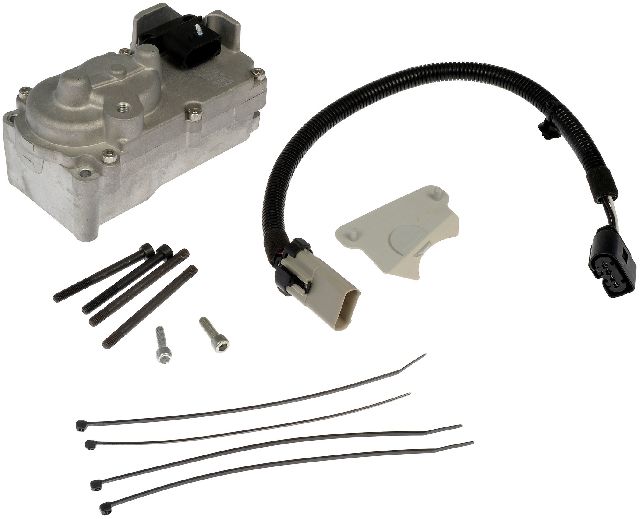
- Turbocharger Actuator
(OEM #68481772AA)— This is the most common failure point for the P0046 code on this vehicle, as documented by manufacturer TSBs X99 and X93. This part number supersedes previous versions like 68232771AA, 68244609AA, 68307025AA, and 68445522AA. A remanufactured OEM part is also available under part number R8481772AA.
Trusted brands: Holset (OEM), Mopar
OEM price range: $500-$700
Aftermarket price range: $400-$600
Related Codes That Often Appear With This One
- P003A — This code, 'Turbocharger Boost Control Module Position Exceeded Learning Limit', is also directly related to the actuator's inability to calibrate or move correctly and is listed in the same TSBs (X99, X93).
- U010C — This code means 'Lost Communication With Turbocharger/Supercharger Control Module'. It indicates a total communication breakdown between the PCM and the actuator, often due to a failed actuator or a severe wiring problem. TSBs instruct to diagnose this code first if present.
- P00AF — 'Turbocharger Boost Control Module Performance' is another closely related code pointing to the actuator's performance, often set alongside P0046 and included in the same TSBs.
- P0234 — 'Turbocharger Overboost Condition' can be set if the actuator fails in a position that causes the vanes to create excessive boost. This code is also listed in the X99 and X93 warranty extensions.
Technical Service Bulletins (TSBs) & Recalls
- Bulletin #09-005-22 REV. A: This is the master TSB for the X99 warranty extension, listing P0046 as a primary DTC indicating a failed turbo actuator that requires replacement on 2015 Ram 2500/3500 trucks.
- Warranty Extension X99: Specifically for the 2015 Ram 2500/3500, this program covers the replacement of the turbo actuator for 15 years/150,000 miles.
- Warranty Extension X93: Covers the same issue for 2013-2015 Ram 4500/5500 Cab Chassis models, also listing P0046.
Platform-Specific Known Issues
- FCA issued warranty extension X99 for the 2015 Ram 2500/3500, extending coverage for the turbocharger actuator to 15 years or 150,000 miles (240,000 km in Canada) due to high failure rates causing P0046 and related codes.
- A similar TSB and warranty extension (X93) was issued for 2013-2015 Ram 4500/5500 Cab Chassis models, extending the warranty to 10 years or 185,000 miles.
- Owner experiences confirm that even after replacing the actuator, the code can return if the wiring harness is damaged or if the VGT vanes in the turbo are sticking.
Mechanic-Grade Diagnostic Values
- CAN Bus Terminating Resistance (at harness connector) — expected: 115 - 125 Ohms. Failure: A reading outside this range, especially an open (OL) or short, indicates a problem in the wiring harness or the other terminating resistor on the bus.
- CAN Bus Terminating Resistance (at actuator pins) — expected: 115 - 125 Ohms. Failure: A reading outside this range when testing the two middle pins on the actuator itself confirms internal failure of the actuator's electronics.
- Actuator Power Supply Voltage (at harness connector) — expected: Within 1.0V of battery voltage. Failure: Low or no voltage between the power (Pin 1) and ground (Pin 2) wires indicates a problem in the supply circuit, not the actuator itself.
Scan Tool Commands That Help

- wiTECH (Dealer Scan Tool): Variable Geometry Turbocharger Function Test (2551-08-03-02) — This is the primary diagnostic test to graphically sweep the actuator's range of motion. It can accurately identify sticking points or electronic failure. The results can differentiate between a failed actuator and a mechanically stuck turbo. This test supersedes the older 'Full Stroke Test'.
- High-End Bidirectional Scanners (Autel, Snap-on, etc.): VGT Actuator Installation and Calibration / VGT Actuator Self-Test — This is a mandatory procedure required immediately after installing a new actuator. It allows the actuator to learn its mechanical travel limits and report them to the PCM. Failure to perform this calibration will cause the P0046 code to return.
Wiring & Ground Locations
- Turbo Actuator Connector — On the actuator body, located at the lower right front of the engine, accessible through the passenger side wheel well.. This 4-pin, light grey connector is a critical failure point. The pins are: Pin 1 (Power), Pin 2 (Ground), Pin 3 (CAN C High), Pin 4 (CAN C Low). Heat and vibration can cause corrosion, loose pins, or harness chafing nearby, leading to intermittent communication loss (U010C) or circuit performance codes (P0046).
When the Usual Fixes Don't Work
- A common owner experience is replacing the turbo actuator—the most frequent cause—only for the P0046 code to return. In a documented case on RamForum.com, a 2014 owner replaced the actuator and still had intermittent issues with P0046, P003A, and U010C. The community's consensus for next steps pointed to two likely secondary causes: 1) a damaged or chafed wiring harness leading to the actuator, causing intermittent communication loss, or 2) mechanically sticking VGT vanes inside the turbocharger, which prevents the new actuator from moving freely and triggers a performance fault. This highlights the need to inspect wiring and manually check for smooth vane movement (with the actuator removed) even when the actuator is the primary suspect.
OEM Part Supersession History
68232771AA, 68244609AA, 68307025AA, 68445522AA→68481772AA (New), R8481772AA (Remanufactured)— Standard part evolution to improve reliability and address failure modes of earlier versions.
Heads up: While all listed parts are for the HE300VG turbo on 2013+ models, it is always recommended to use the latest available part number (68481772AA) for the most current revisions.
Helpful Videos
Used OEM Parts in Stock

New Aftermarket Parts Available


The information in this article is provided for general reference and educational purposes only. Vehicle specifications, procedures, and part compatibility can vary by production date, trim level, and region. Always consult your vehicle's factory service manual and verify part numbers before purchasing or performing repairs. Safety-critical components such as airbags, seat belts, and braking systems should be installed by a qualified professional.
- Ram 3500:
- 🎬 Helpful Videos
- 🛍️ Shop This Part
- What's Unique About the 2015-2015 Ram 3500
- Diagnostic Flowchart
- Symptoms You May Notice
- Most Likely Causes
- Rare But Worth Checking
- Diagnosis Steps
- Parts You'll Likely Need
- Related Codes That Often Appear With This One
- Technical Service Bulletins (TSBs) & Recalls
- Platform-Specific Known Issues
- Mechanic-Grade Diagnostic Values
- Scan Tool Commands That Help
- Wiring & Ground Locations
- When the Usual Fixes Don't Work
- OEM Part Supersession History
- 🎟️ Get 5% Off